
Heat pump running all the time in Waterloo, IA

Skip the calls

A heat pump that never shuts off in a Waterloo winter is telling you something is wrong. Maybe it's still keeping the house warm, maybe it's falling behind, but either way it shouldn't be running nonstop, and letting it go on like that costs you even with power priced the way it is here. Finding someone to look at it usually means searching around, calling a few places, explaining the same thing more than once, then waiting on quotes to see who gets back to you first. This page skips that. You tell it what the heat pump is doing, and it goes to one contractor, local to this area and licensed, who works on heat pumps all winter and has a good sense of what makes one run constantly before even seeing it. No other company calls you about this. Fill in what's happening and let the button send it.

Why does my heat pump run all the time in winter?

You've noticed the outdoor unit never cycles off, even when it's cold out. You're not sure if that's just how heat pumps work in weather like this, or if something's actually wrong. The house might feel fine, or it might not be keeping up, and either way the constant running has you wondering what's going on and whether it's going to show up on your power bill.

It's working harder because of the cold, but it may also be losing the fight

A heat pump pulls heat from outside air, and the colder that air gets, the longer it has to run to move the same amount of heat indoors. Below freezing, long runtimes are normal. But a Waterloo winter gets well below freezing for weeks at a time, and if the unit is running nonstop and the house still isn't warm enough, something is keeping it from keeping up: a low refrigerant charge, a failing defrost control, a dirty outdoor coil, or a backup heat source that isn't kicking in when it should. The fix depends on which one it is, and that takes someone checking the system itself.

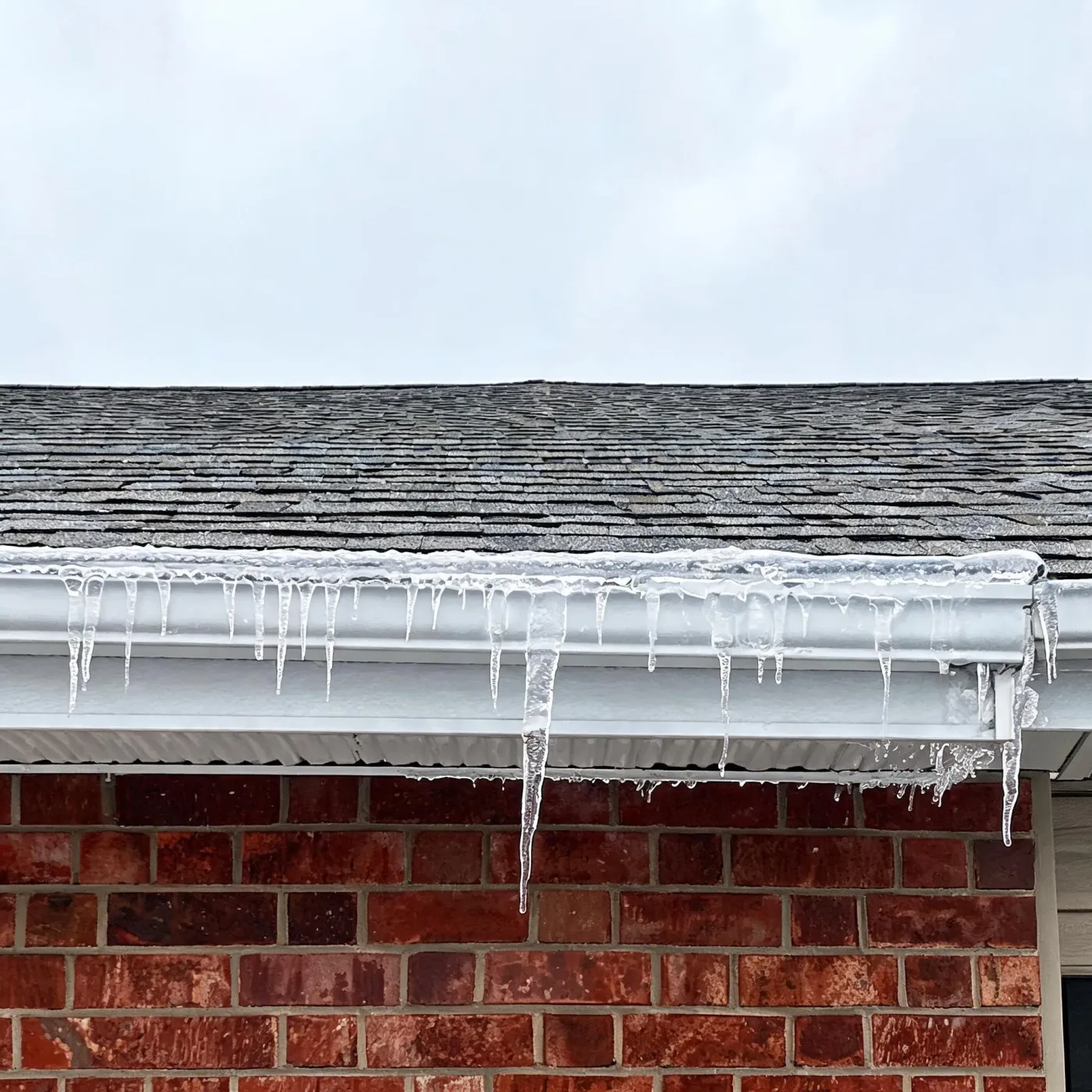
Icicles hanging from a white gutter and soffit below an asphalt-shingle roof on a red brick house, against an overcast sky.

Black Hawk County's overnight lows average 13°F through December, January and February, a figure from NOAA climate records. A heat pump pulls warmth from outside air, and at 13 degrees there's not much of it to pull. It has to run longer to move the same amount of heat it would gather in milder weather, so stretches of nonstop operation on the coldest nights aren't unusual by themselves. What's worth noticing is whether the house is actually keeping up. If the air coming from the vents feels cool to the touch, or the thermostat can't close the gap to the set temperature, the unit isn't just working hard in the cold. It's falling behind.

NOAA nClimDiv 1991-2020

Running Nonstop: Normal or Not

Normal for the cold

  • The outdoor unit runs long stretches on single-digit nights because there's little heat left in that air to pull.
  • Even running close to nonstop, your house holds a steady temperature and the air coming out of the vents still feels warm.
  • The backup heat strip kicks in during the coldest hours and that's expected, not a sign of failure.
  • Your thermostat never has to call for more heat than the system is already putting out.
  • Frost builds on the outdoor coil and clears on its own within an hour or so as the unit defrosts.

Running but losing ground

  • The house is a few degrees cooler than the thermostat setting no matter how long the unit runs.
  • Air from the vents feels cool or barely warm instead of the steady warm air a working heat pump puts out.
  • The outdoor unit stays coated in frost or ice well past a normal defrost cycle.
  • Backup heat is running most of the time instead of only during the coldest stretches.
  • The system has started short cycling, shutting off and restarting every few minutes instead of running one long stretch.
  • Energy use has climbed noticeably compared to past winters without the house getting any warmer.
A gray outdoor air conditioner or heat pump unit on a concrete pad beside a house with horizontal lap siding, with conduit and refrigerant lines running up the wall and green shrubs and mulch at left.

Running clean

This is a unit moving air the way it should. The lines stay clear, the grille stays open, and nothing blocks the airflow it needs to pull warmth from outside. A heat pump in this shape can run long hours on a cold night and still be doing fine.


An outdoor air conditioning condenser unit on a concrete pad beside a house with horizontal siding and a concrete foundation, with refrigerant lines running to a wall-mounted disconnect box and shrubs at left.

Choked with dust

A grille caked in dust like this cuts off the airflow the unit depends on. It has to run longer to move the same heat, and in a hard Waterloo winter that longer runtime stretches toward nonstop. A contractor can tell you if buildup like this is why yours won't shut off.

A woman in a gray sweatshirt with her hair pinned up sits in a living room looking off to the side, with a pale sectional sofa, cushions, a potted plant, framed wall art and a large window behind her.
A woman with long wavy brown hair in a gray top and dark cardigan stands near a window, looking to the side, with a living room, fireplace and round mirror blurred behind her.
A woman with curly dark hair in a grey long-sleeved top sits on a grey couch with patterned cushions, looking off to the side in a softly lit living room.
A woman in a gray knit sweater with her hair in a bun sits on a couch indoors, smiling and looking off to the side, with a dining area and framed picture blurred in the background.
A gray outdoor condenser unit of an air conditioner or heat pump sits on a concrete pad beside a house with horizontal lap siding, with a wall-mounted disconnect box and conduit above it, mulched beds, shrubs and grass nearby.

Describe it once

Your request goes to one pro, not a list of companies.

Explain the job once and skip repeating it on every call.

Reach a local pro

Sending the form costs nothing.

Why does a Waterloo heat pump have to work this hard for this long?

  • Winter nights average 13°F

    At 13°F there's barely any warmth left in the outdoor air, so the unit has to move more of it, for longer, to keep up with the house.

  • Heat runs October through May

    Eight months of heat means this isn't an occasional job. Any weak part gets worn down over a long stretch, not just a few cold snaps.

  • Cooling runs June through August

    Three months of cooling in summer gives the same equipment a second long season of work, with less time in between to rest or get looked at.

NOAA nClimDiv 1991-2020

What you'll notice first

The outdoor unit runs through the night and into the morning without a break. You might catch the indoor air feeling cooler than the thermostat setting, or the auxiliary heat kicking on more than it used to. Rooms farther from the main return may lag behind the rest of the house. Your gas furnace backup, if your system has one, may be kicking on more often to make up the difference. None of this means the house goes cold right away. It means the system is working harder to hold the line, and that effort shows up before comfort actually slips.

What it costs you over time

A heat pump that can't cycle off is pulling power the whole time it runs, and in a Waterloo winter that stretches across weeks, not days. The electric bill reflects that even with cheap power here, because the unit is drawing current nonstop instead of in bursts. Parts wear differently under continuous load too. The compressor and the outdoor fan motor don't get the rest they were built around, and whatever is already causing the long runtimes, low refrigerant, a failing part, ice buildup, tends to get worse the longer it runs unresolved.

Power here costs 11.96 cents per kilowatt-hour

At just under 12 cents a kilowatt-hour, a heat pump running long hours costs you less here than it would somewhere with pricier power. That doesn't mean nonstop running is fine. A unit struggling to keep up still runs up your bill, even at this rate.

EIA-861 2025

A heat pump that runs long hours on a cold Waterloo night isn't necessarily broken. One that runs nonstop and still can't hold the house at temperature is. The difference is in what the house feels like, not how long the outdoor unit runs. A system working the way it should will keep the rooms warm and the air at the vents will still feel warm, even at 13 below zero out there. A system in trouble will fall behind no matter how long it runs, and you'll feel that in the rooms farthest from the unit first. Ice on the lines, a blocked outdoor coil, a dirty filter, refrigerant that's low, all of these make a heat pump work harder for less heat, and none of them get better by waiting out the winter. If your house is holding steady and feels warm, the long runtime is just the cold doing what cold does here. If it isn't, something in the system needs a look before the next cold stretch.

A woman with her hair in a bun holds a sleeping boy against her shoulder, both wrapped in a thick cream knit blanket on a couch in a dim room with a lit lamp, potted plants and a shelf behind them.
A smiling older woman with gray hair in a loose bun wearing a ribbed beige sweater stands in a dimly lit kitchen beside a window showing darkness outside, with a loaf of crusty bread on a wooden board in the foreground.

Heat Pump Repair

No calling every shop in Black Hawk County

The pro who gets in touch is licensed in Iowa and works in Black Hawk County.

A black smartphone standing upright against a plain light gray background, its screen filled with solid green.
RepairHeat PumpBlack Hawk County, IA
Step 1 of 2

What ZIP code is the job in?