
Heat pump stuck on emergency heat in Indianola, IA

Send the request today and let a heat pump pro reach out to you.

Hand off the search

Why is my heat pump stuck on emergency heat?

You flip the switch back to normal and the system stays on emergency heat anyway, or you notice the light on for no reason you can see. With Indianola winters as hard as they get, you don't want backup heat running by itself night after night without knowing why.

The thermostat put it there, or the switch is stuck

Emergency heat is a setting, not a failure on its own. Something told the system to use it. Most often the outdoor unit has stopped running, maybe a frozen coil, a tripped breaker, or a compressor that won't start, and the thermostat shifted to backup heat to keep the house warm. Sometimes it's simpler than that: the switch on the thermostat itself got bumped or has a short underneath it. On a cold night in Warren County that backup heat can carry the house fine, but it's not built to run for days. If the outdoor unit isn't the problem, a stuck switch or a wiring fault at the thermostat usually is.

A gray outdoor condenser unit on a concrete pad beside a house with horizontal lap siding, connected by conduit and lines to a wall-mounted disconnect box, with a shrub and gravel bed to the left.

The outdoor unit cycling as it should

Here the outdoor unit sits clean against the wall, lines running up to the disconnect box. In normal operation it cycles on and off, pulling heat from the outside air even on a cold day, and the emergency heat light stays off because it never needs to come on.


An outdoor air conditioner condenser unit on a concrete pad beside a house with horizontal lap siding, with refrigerant lines and a gray electrical disconnect box on the wall, surrounded by bare dirt.

A unit that can't keep up

A coil guard and fan grille caked in dirt like this block the airflow the unit needs to pull heat from outside. When the coil can't do its job, the system leans on emergency heat to keep the house warm, and the light stays on long after you've switched it back.

What you're noticing around the house right now

The air coming out of the vents feels hotter than usual, almost like a furnace instead of a heat pump. The outdoor unit isn't running at all, even though it's cold enough that it should be. Your power bill is higher than last month for no reason you can point to, since emergency heat relies on electric resistance strips instead of the heat pump doing the work. Some homeowners notice the indoor unit running almost constantly, trying to keep up. Left alone through a hard Indianola winter, this adds up fast on the electric bill, and it usually means something in the system, like the outdoor unit or the thermostat setting, isn't working the way it should.

A smiling bearded man in a dark blue henley shirt sits leaning back on a light grey sofa in a living room, with a bowl of popcorn on a wooden coffee table and a large window behind him.
A bearded man in a dark quarter-zip sweater sits smiling on a brown sofa in a dimly lit living room, with a bowl of popcorn and a mug on a table in the foreground and a potted plant near a window behind him.
A smiling man with graying dark hair and a beard, wearing an olive sweater, sits on a sofa in a living room beside a bowl of popcorn on a wooden table.
A smiling man in a dark green henley shirt sits on a gray sofa in a living room with a lit table lamp, wooden shelving unit, and a bowl of popcorn in the foreground.
A gray outdoor condenser unit on a concrete pad beside a light-colored lap-sided house, with a wall-mounted disconnect box, refrigerant lines, mulch bed and shrubs, and a concrete walkway in the foreground.
A unit like this one, with rust starting on the top grille and dirt built up around the base, is more likely to trip a fault that forces emergency heat.
An outdoor air conditioner condenser unit with rust spots on its top grille sits on a concrete pad beside a house with light horizontal siding, with conduit lines and an electrical box on the wall and a mulch bed to the right.
Conduit and age alone don't cause the switch, but a worn unit like this is the one more likely to have a frozen coil or a failed sensor behind it.

How cold does it get here, and how long does your heat pump have to work?

  • Winter nights average 17°F

    Overnight lows this cold are exactly when a heat pump leans on backup heat, so a stuck switch costs more here than somewhere milder.

  • Heat runs October through May

    Eight months of heat means more hours for whatever is forcing the switch to show up and keep showing up.

  • Cooling runs June through September

    Four months of cooling is the stretch where that outdoor unit gets a break, so problems with it tend to surface once heat starts back up.

NOAA nClimDiv 1991-2020

A dimly lit bedroom at dusk with a made bed, a table lamp on a nightstand, and a condensation-covered sash window with a dark curtain.

It's past eleven on a January night and the bedroom is too warm, the kind of warm that makes you kick the blanket off and still not cool down. The vents are pushing air hot enough to feel like a furnace running flat out. Outside the window, past the frost creeping in at the corners, the outdoor unit sits dark and still against the side of the house. No hum, no fan turning. Just quiet, when it should be working. You lie there doing the math on what this is costing per hour, and whether it'll still be running like this at six when the alarm goes off.

Hand off the search today

Explain the heat pump problem once instead of to every shop in Warren County.

It costs nothing to send, and you don't have to hire anyone.

A heat pump stuck on emergency heat runs the backup heat strips instead of the outdoor unit, and strip heat pulls far more electricity to produce the same warmth.

Power here is cheap, but running strip heat through a Warren County winter night after night still shows up on the bill long before the problem gets fixed.

A woman in a dark knit turtleneck sweater reclines on a couch under a cream knit blanket, looking down at an open book, with a lit table lamp and framed pictures behind her.
A smiling middle-aged man in a dark green sweater sits at a candlelit table with wine glasses and a plate of greens in a dimly lit interior.

Call a contractor now

A thermostat or control board fault can get diagnosed and reset the same visit, so the heat pump goes back to pulling heat from outside air instead of the strips.

Answer a few questions

Wait and see

Every night it stays stuck, the strips keep carrying the load a cold Warren County night puts on your heating system, and your bill reflects every hour of it.

Answer a few questions

Call Now or Wait It Out

Call now

  • A stuck emergency heat light usually traces back to the thermostat setting or a control board signal, and a contractor checks both in the same visit.
  • Once that fault is found, the system can switch back to pulling heat from the outside air instead of running the strips all night.
  • Your power bill stops climbing the moment the heat pump goes back to normal operation instead of backup heat.
  • A contractor can tell you if the outdoor unit itself is the problem or if it's just a signal telling it not to run.
  • You stop guessing at the thermostat switch and checking the breaker box every few hours.

Wait and see

  • Every night on emergency heat means the strips are doing the work the outdoor unit is built to do.
  • The outdoor unit sits idle while the fault that's blocking it goes unaddressed.
  • A control board or sensor issue behind the switch doesn't fix itself by flipping the thermostat setting again.
  • The longer the strips carry the load through a Warren County winter, the more that shows up on the bill.
  • If the cause is a refrigerant or compressor problem, running on backup heat doesn't stop it from getting worse.
A gray outdoor condenser unit on a concrete pad beside a house with stacked stone and horizontal siding, surrounded by gray gravel and a plain light wall.

Checking the thermostat setting first

Most thermostats have a separate mode for emergency heat, usually marked with an E or EM next to the normal heat setting. Someone may have bumped it, or a dead thermostat battery can cause it to default there and stay. It takes a few seconds to check the display and confirm which mode it's actually in, not just which one you think you set it to last.

A dark gray outdoor heat pump unit sits on a concrete pad beside a white stucco wall and lap-sided house corner, with mulch and a small shrub in the foreground.

When the fault sits in the system

If the thermostat shows normal heat and the system still runs the strips, the problem is past the thermostat. A control board can send the wrong signal to the outdoor unit, or a sensor can report a fault that locks it out of normal operation. That's not something to keep testing by flipping the switch back and forth. A contractor can trace the signal and find where it stops.

A heat pump stuck on emergency heat has a cause, either the thermostat is set wrong or a control board signal is telling it to stay there, and a contractor finds out which the same visit. Once that's fixed, the outdoor unit goes back to doing the work and the strips stop running every time the heat kicks on. You don't have to spend tonight searching review sites, calling a handful of contractors to see who answers, explaining the emergency heat light three different times, then sitting with quotes trying to guess which one is fair. Send the form and that part is done. Somebody licensed to work on your system gets the details and takes it from there. Through a Warren County winter, with lows what they are and eight months of heating ahead, that's the switch worth fixing now rather than living with.

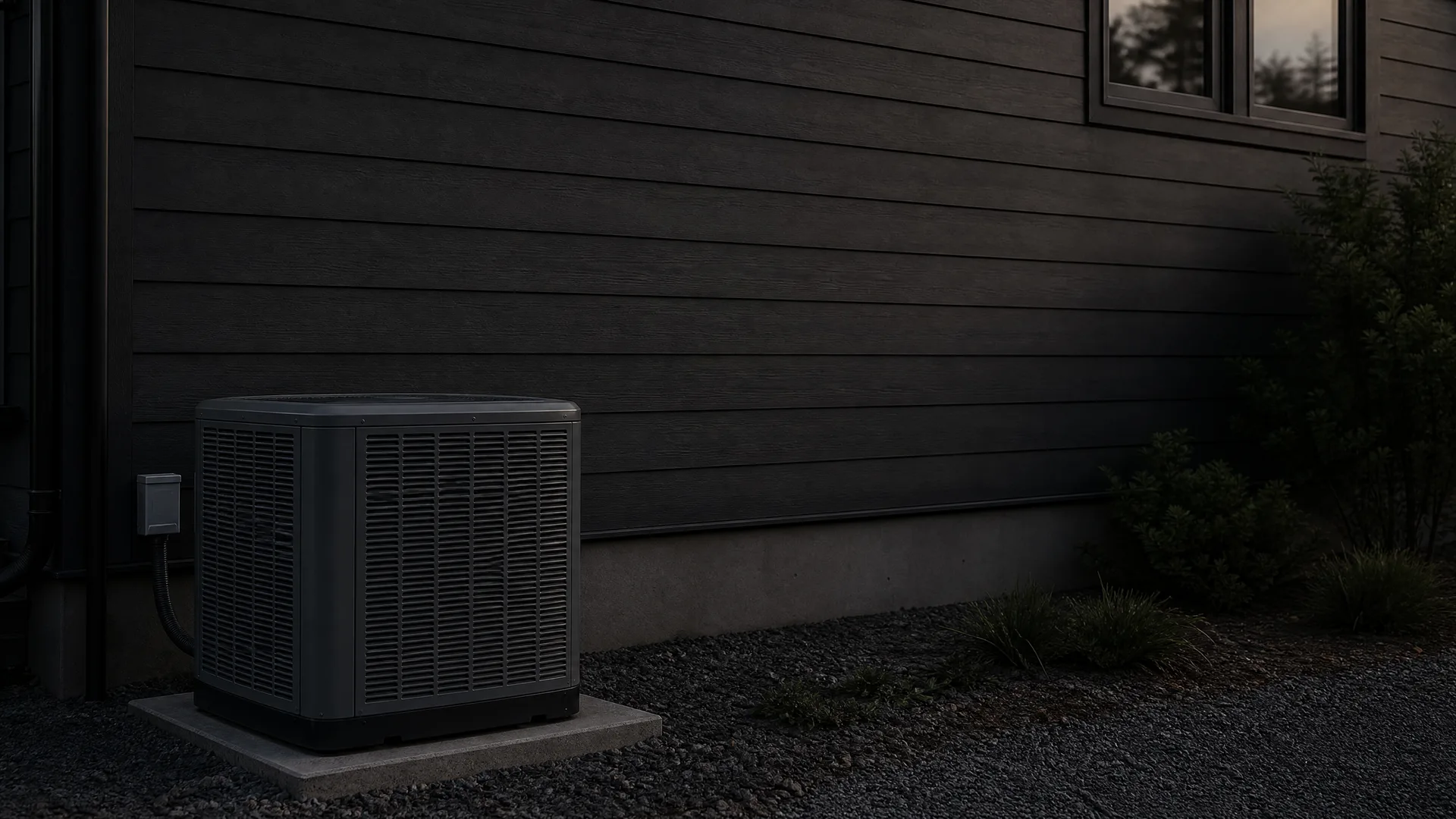
An outdoor condenser unit on a concrete pad beside a dark horizontal-lap-sided house, with gravel, shrubs and a small electrical disconnect box on the wall, in dim light.

Send one request and you're done looking

Explain the job once and skip repeating it on every call.

RepairHeat PumpWarren County, IA
Step 1 of 2

What ZIP code is the job in?