Furnace Repair in Iowa
Homes in Iowa are older than in 40 of the other 49 states.
Tell us about the job
Takes about a minute. No obligation.
- 15°Fwinter overnight low where people live
- 8 monthsof heat, October through May
- $9.69 per million Btuwhat homes paid for natural gas in 2024 (Btu means British thermal units, a measure of heat)
- 2,365winter storms from 2015 to 2024
Iowa runs its furnace hard. Eight months of cold nights.
- Northern counties need about 11% more heat than southern ones
- Winter nights average 15°F where people live
- Heat runs October through May
- 2,365 winter storms from 2015 to 2024
- Climate zones 5A and 6A across the state
- 15% of homes lost power a day or more in 2024

Half of Iowa's homes were built in 1972 or earlier.
September is worth a look before the first cold night, not after. A furnace that sat idle since spring can have a cracked igniter or a dead flame sensor, and you won't know until it tries to fire up on demand. Catching that in September means a repair. Catching it in October, when every other furnace in the state is starting up too, means waiting your turn in the cold.
Iowa needs heat from October through May, longer than in most states, and a furnace that runs that many months a year takes more wear on its igniter, blower motor and heat exchanger than one that only runs a few. Whatever was already marginal tends to fail when the system is asked for full output night after night, not while it was idling along in September.
Why the coldest nights find the weak part
Eight months of heat means plenty of nights down around 15 degrees, and that's the stretch to watch. A furnace works harder to keep a house warm the colder it gets outside, and Iowa's nights run colder than 40 of the other states. Whatever is marginal in the blower motor or heat exchanger tends to show itself on those coldest nights, not the mild ones in between. If yours is short-cycling, running loud, or losing the flame when it's coldest out, that's worth having someone look at rather than just resetting it and hoping it holds.


3 months of cooling, June through August
8 months of heat, October through May
What does a furnace in Iowa face?
How cold do winter nights get?
15°Faverage overnight low where people live
North Dakota4°F
Hawaii65°F
How many months does the heat run?
8 monthsof heating a year
Hawaii0 months
Alaska12 months
What does natural gas cost?
$9.69per million Btu, what homes paid in 2024
Montana$7.77
Hawaii$53.25
How often do storms hit?
206severe weather events per county from 2015 to 2024
Alaska5
Wyoming1,057
How many homes lost power for a day or more?
15%of homes in 2024
Arizona7%
Maine54%
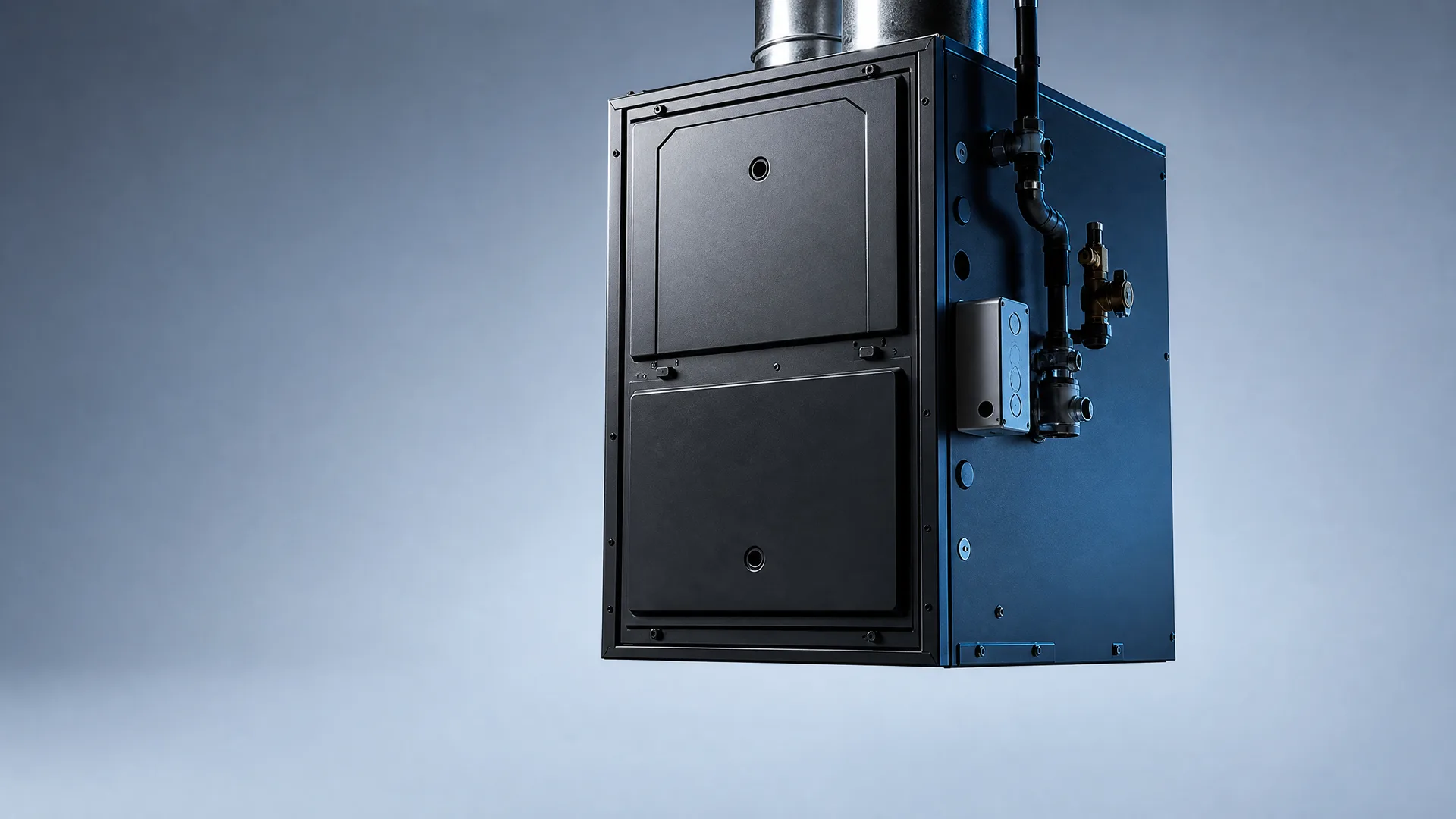
What actually breaks on a furnace
The igniter is a thin strip that glows hot enough to light the gas. It gets more brittle every time it heats and cools, until it cracks and stops glowing. The flame sensor sits in the burner flame and its only job is confirming the flame is lit. Soot coats it over time, and once coated it can't sense the flame even when there is one, so the furnace shuts itself off as a safety measure. That's often mistaken for a bigger problem when it just needs cleaning. The blower motor wears from plain use. Its bearings go, it starts running hot, and a failing one usually squeals or grinds before it quits for good. The heat exchanger separates the flame from the air moving through the house. It expands and contracts on every cycle, and enough cycles can crack it. That one doesn't get patched. A cracked heat exchanger takes the furnace out of service until it's replaced. The inducer motor has to clear the exhaust path before the burners are allowed to light. When it's weak, the pressure switch never sees what it needs, and the furnace sits there trying to start and failing.
Repair it or replace it
Age is the first thing to weigh. A furnace that's still young is usually worth repairing almost regardless of what broke. An old one shifts the calculation, not because it suddenly gets worse, but because the parts failing start to be the expensive ones, and the ones still ahead of it are running on borrowed time too. A cracked heat exchanger is the clearest line there is. It isn't a repair. It's the end of that furnace, and the only question left is what replaces it. Everything else on a furnace can be swapped, igniters, flame sensors, blower motors, inducer motors. The real question isn't whether a given part can be fixed. It's whether you want to keep fixing parts on a furnace old enough that the next failure is never far off. A furnace that's needed several service calls in close succession is telling you something about where it's headed, even if each visit was a small fix on its own.
Running it doesn't buy time
A furnace that's struggling still tries to do what it's told, and that's what makes it worse. A cracked heat exchanger doesn't stop the burners from lighting. A weak inducer motor doesn't stop the blower from pushing air. So the furnace keeps running the way it always has, except now a bad part is doing its job under full load instead of getting looked at. A flame sensor coated in soot will still catch the flame often enough to keep firing for a while, until the night it doesn't, usually when the furnace is working hardest. A blower motor with worn bearings fails the same way. It runs hotter each cycle, and the heat finishes what the wear started. None of that gives the part a chance to rest. It just means the next cycle asks more of something that already has less to give.
An Iowa furnace that's already shown you a problem once will show you again before winter's over.
Tell us about the job
Takes about a minute. No obligation.
Fill out the form and a licensed Iowa contractor gets in touch to look at what's going on.