




A illuminated two-story red brick house on a quiet residential street at dusk, flanked by mature trees under a deep blue evening sky.

Furnace Repair in Independence, IA

Tell us about the job

Takes about a minute. No obligation.

RepairFurnace or heatingBuchanan County, IA
Step 1 of 2

What ZIP code is the job in?

Furnaces in Buchanan County run about eight months a year, October through May. That's most of the calendar spent cycling on and off to keep the house warm. A furnace that only has to run a few months somewhere warmer doesn't see that kind of use. More runtime means more cycles on the igniter, more hours on the blower motor, more chances for a part to wear past the point of working right. When something goes wrong here, it's often not bad luck. It's a system that's been asked to do more than most, and it's finally showing it.

8 months
October through May, your furnace is on duty
13°F
the average winter night it heats against
52%
of homes here heat with gas, so most furnaces here burn gas
23 winter storms
in ten years, the nights a failure hurts most
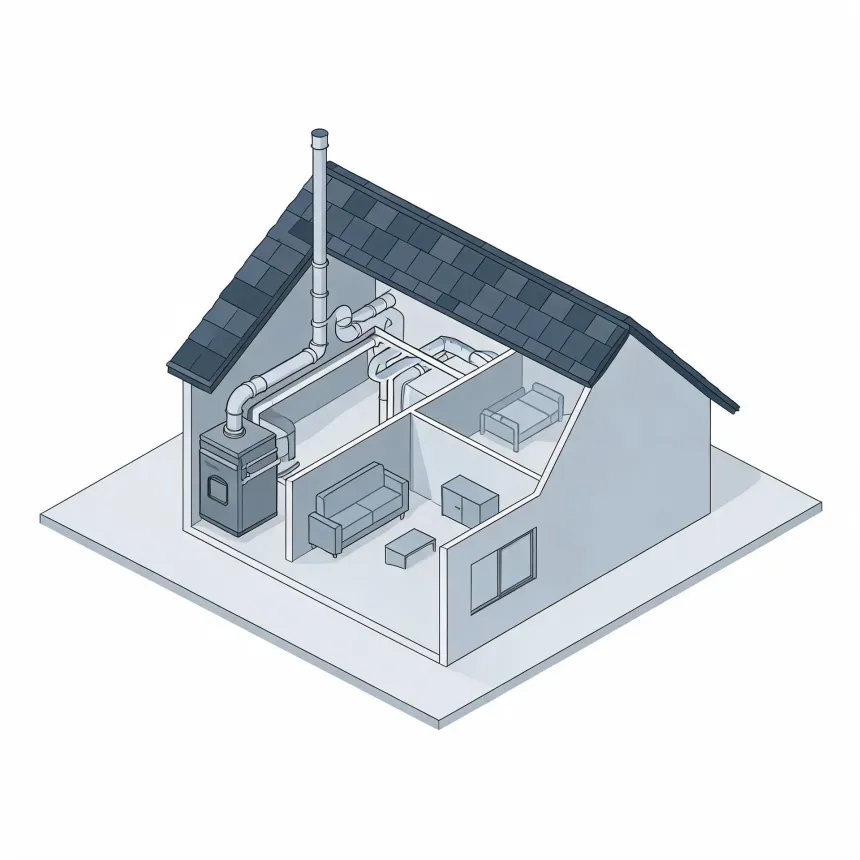
Isometric cutaway illustration of a small gabled house showing a furnace with flue pipe and ductwork connecting to interior rooms containing a sofa, bed, and cabinets.
Your furnace works hardest from November through March.

NOAA nClimDiv, 1991–2020 normals

An igniter only has so many heat cycles in it before it cracks or stops glowing hot enough to catch the gas.

A furnace that cycles on and off for most of the year burns through those cycles faster than one that barely runs.

Half the homes here were built by 1973, and so was the furnace

Half the homes here were built by 1973
Climate zone 5A
Heat runs October through May
The First Cold Snap Finds the Weak PartHeat starts going on in October here, and that first real load is when a tired part gives out.

If your furnace came with a house built in 1973 or earlier, ask the contractor straight out how many years it has left before you pay for this repair. A furnace near the end of its life can still be worth fixing. A cracked igniter or a bad flame sensor is cheap next to a new system. But if the heat exchanger is going, or the contractor is quoting the same repair for the second time, that's different money. Get the age of the unit itself, not just the house, before you decide. A furnace replaced since then isn't the same question as one that's never been swapped out.

This furnace has been running since October. Get the real problem fixed, not just the symptom.

Eight months of runtime a year wears parts down faster than a furnace built for a short winter. Have the contractor find out what actually failed before they fix it, so the repair holds for the rest of the season.

Find a contractor
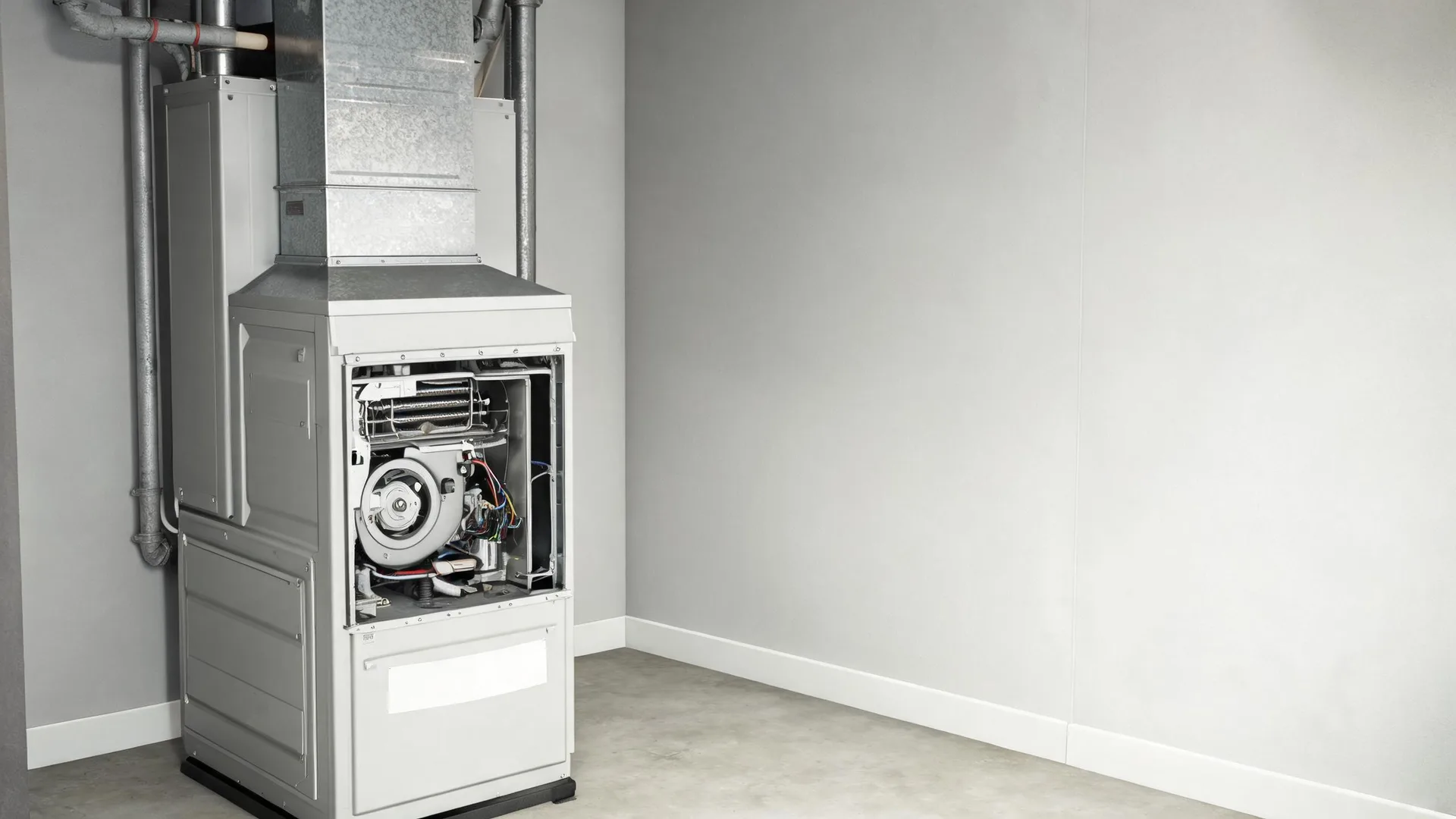
A gray gas furnace with attached ductwork and piping installed in an unfinished concrete basement.

Why Waiting Rarely Helps

A furnace that's struggling doesn't fix itself by staying on. A cracked heat exchanger gets worse under heat, not better. A blower motor pulling too much current will keep pulling it, cycle after cycle, until it seizes. Even something as small as a dirty flame sensor tends to get worse the longer it runs, since the coating that fouls it builds up with every cycle. Some parts fail clean: one day they work, the next they don't. Others fail slow, and every hour of runtime between noticing the problem and calling for help is an hour spent making the eventual repair bigger. A furnace that's short-cycling, making a new noise, or tripping its limit switch is telling you something before it quits outright.

What You'll Notice First

A furnace that needs attention usually says so before it quits. The burner flame looks yellow or ragged instead of steady blue. The blower runs loud, or it keeps running after the house has reached temperature. Some rooms stay cold while others heat fine, which points to a duct or blower problem rather than the burner itself. A furnace that turns on and off every few minutes instead of running a full cycle is short-cycling, and that's hard on every part inside it.

What To Do With What You Notice

None of these signs mean the same thing, so don't guess at the fix. A burner flame that's yellow instead of blue points to a combustion problem, and that's worth a same-day call since it can mean gas isn't burning clean. A noisy blower or uneven heat can usually wait for a scheduled visit. Tell the contractor exactly what you saw and when it started. That detail narrows down the problem before they ever open the panel.

An unfinished basement containing a gas furnace with ductwork in the foreground and miscellaneous stored items along the far concrete wall.

A new furnace would cut about $120 a year off heating for a typical Buchanan County home.

  • A new high-efficiency furnace$470 a year
  • An older furnace$590 a year

Estimates for a typical Buchanan County home, compared with an older unit built to the previous federal minimum, from EIA household energy data, Iowa fuel prices and NOAA climate normals. Your home will differ.

Repair makes sense when one part has failed and the heat exchanger is sound.

Replacement makes sense when the heat exchanger is cracked or the furnace keeps needing parts.

A diagnostic visit starts before any panel comes off. The contractor asks what the furnace was doing, when it started, and whether it's happened before, because that narrows down where to look. Then it's a sequence: check the thermostat call, check for power at the control board, check for a flame, check how that flame burns. A multimeter tells them whether the igniter is pulling the right current, whether a safety switch is open when it shouldn't be, whether the flame sensor is reading a flame at all. None of this is guesswork. Each test rules something out so the next one means something. By the time the panel goes back on, the contractor should be able to tell you which part failed and why, not just which part got replaced.