A Pilot That Holds
A steady blue flame burns without wavering, and the furnace cycles on and off on its own schedule, not yours. The gas piping runs clean along the wall, and the cabinet shows no rust at the seams or around the flue pipe.

Your furnace keeps shutting down and when you check it, the pilot has gone out again. Relighting it works for a while, then you're back in front of the furnace doing it again. With how cold Iowa winters get, a pilot light that won't stay lit is the kind of thing that turns into a house with no heat overnight, and that's worth getting looked at rather than relit again and again.
The thermocouple is the small rod that sits in the pilot flame and tells the gas valve the flame is lit. When it gets coated with soot or starts to wear out, it reads the flame as out even when it's burning, and the valve shuts the gas off. A draft blowing across the pilot can do the same thing, and so can a gas valve that's starting to fail. In an Iowa winter, a furnace that keeps losing its pilot doesn't just need relighting. It needs someone to find which of these it is before a hard freeze finds the house without heat.

A steady blue flame burns without wavering, and the furnace cycles on and off on its own schedule, not yours. The gas piping runs clean along the wall, and the cabinet shows no rust at the seams or around the flue pipe.

Rust spreads across the cabinet and the flue pipe shows its age. A thermocouple worn down or a draft finding its way in can snuff the flame out again and again, and relighting it only buys a few hours.
You notice it most when it's below freezing outside and the furnace has been running for hours. The flame sputters, goes orange instead of blue, or disappears outright, and the house starts cooling off before anyone notices. You relight it, hear the gas catch, and it holds for a bit before going out again. Some nights you're doing this two or three times before you give up and go to bed hoping it lasts until morning. A pilot that won't stay lit on the nights you need heat most isn't a small annoyance. If it goes out while everyone is asleep, the house can get cold enough to matter, especially for anyone in it who can't easily tell you something's wrong.




A pilot that won't stay lit usually comes down to a thermocouple that's worn out, a draft finding its way into the cabinet, or a buildup of soot or dust around the pilot assembly. None of those get better on their own, and relighting it every few hours doesn't fix whatever's actually causing it. A furnace technician who works on these all winter in Iowa has seen the same failure play out in plenty of other houses and knows which of those three to check first. Getting someone out while it's still an intermittent problem, rather than waiting until the furnace won't stay running at all, matters more here than in places where a cold night is just uncomfortable. You're not stuck figuring out the part yourself or finding someone to call. Put in your information and a licensed local contractor who handles this kind of repair will reach out directly, so you're dealing with one person who knows the equipment, not a list of names to sort through yourself.

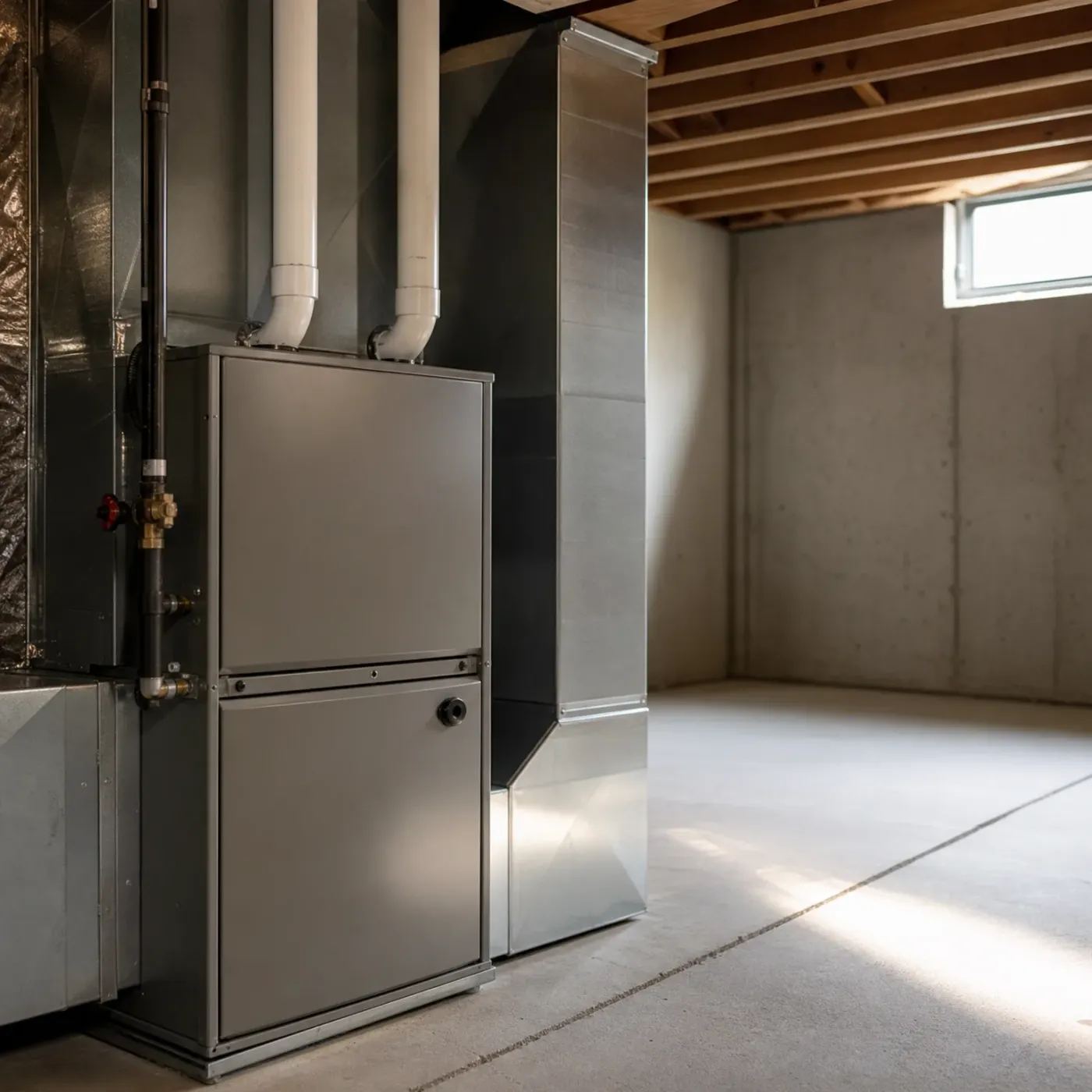
This is what a furnace looks like when the pilot isn't the problem. The cabinet is tight, the PVC intake and exhaust run straight to the outside, and the gas line is copper and solid. Air moves through the ductwork without the furnace fighting a draft to keep its flame lit.

This furnace is older, and the flexible conduit and condensate line hint at repairs done over the years, not a clean original setup. A unit like this has had more chances for a thermocouple to wear out or a seam to let in air, and that's often enough to pull a pilot flame out on its own.


The thermocouple is a thin rod that sits right in the pilot flame. Once it's hot enough, it tells the gas valve the pilot is lit and it's safe to let gas flow to the burners. If the rod has weakened or sits out of position, it cools off faster than it should and the valve shuts the gas off, taking the flame with it. This happens whether it's zero outside or forty. A furnace can run on a bad thermocouple for a while before it starts failing on a regular basis.
A furnace that runs for hours straight pulls more air through the cabinet, and any small gap around the flue or the door seal lets in more of a draft while it's running. That draft can reach the pilot and push the flame off the thermocouple just enough to cool it down. It's not that the cold outside gets to the pilot directly. It's that longer run times give a marginal draft or a dirty pilot more chances to cause a problem that a milder night wouldn't expose.
Overnight lows average 15°F across Iowa in December, January and February. At that temperature your furnace is running long stretches to keep up, and a pilot that's already struggling with a weak thermocouple or a draft won't make it through the night.
NOAA nClimDiv 1991-2020 county normals weighted by homes
A pilot that won't hold is almost always a worn thermocouple, a draft reaching the burner compartment, or soot built up where the flame sits, and none of those sort themselves out with another relight. Iowa winters don't give a furnace much room for that kind of problem to sit unresolved, not when nights are sitting near 15°F for weeks at a stretch. A contractor who works on furnaces all winter in your area has seen this exact failure plenty of times and knows which of the three it usually is before they even open the cabinet. You'll be matched with one licensed contractor local to you, not a handful of companies competing for the job, so the person who calls you back is the one who's actually coming out to look at your furnace. Once the thermocouple or the draft is sorted out, the pilot holds and the relighting stops.
The pro who reaches out is licensed in Iowa.
No fee to send it, and nothing to sign.