




Repair or replace an aging furnace in Iowa

Send the form and the search for an installer is over.

Let a pro reach out

Should I repair my furnace or just replace it this year?

You've got a furnace acting up again and you're trying to figure out if it's worth fixing or if this is the year you replace it. Iowa winters don't give you much room to guess wrong, and you'd rather make the call now than get stuck in January with a dead furnace and no plan. The repair bill alone doesn't tell you what you need to know.

Replace it if the furnace is 15 years or older or this is its second repair in a couple years

A furnace that's 15 years or older and needs a repair is usually better replaced than fixed. Parts for older furnaces get harder to find and cost more to source, and a furnace that's already failed once tends to fail again the next cold snap. If this is the second repair in a couple of years, that pattern matters more than the age on its own. Most homes in Iowa heat with gas, and a furnace that's struggling to keep up in October is going to struggle a lot more in January when it's running most of the day. If the furnace is newer and this is its first issue, a repair makes sense. If it's older and this keeps happening, replacing it now means it's done before the hard cold sets in.

A man in a blue sweatshirt reclines with closed eyes in a brown leather armchair in a living room with a bookshelf, houseplant, sofa, window, and a side table holding newspapers and a dark mug.
A bearded man in a gray pullover reclines with closed eyes on a brown leather sofa in a sunlit room with a window, framed picture, potted plant, and a wooden cabinet holding papers and a dark mug.
A man in a gray sweater leans back with closed eyes in a brown leather armchair beside a wooden side table holding a dark mug and a folded newspaper, with bookshelves and a window seat behind him.
A man in a green sweater reclines in an armchair with his eyes closed and a slight smile, beside a window with plants, a small table holding a mug and folded newspaper, and bookshelves behind him.

When a repair makes sense

A furnace that's otherwise worked fine and just threw one bad part is usually worth fixing. An igniter, a flame sensor, a blower motor, these fail on their own without the rest of the system going bad at the same time. If this is the first real breakdown you've had, and the furnace has run the way you expect every other winter, repairing it gets you through this season without spending more than you need to. Ask the contractor what else is showing wear while they're in there so you're not guessing next year too.


When replacement is the better call

A cracked heat exchanger isn't something you patch, and if a contractor finds one, replacement is the only real option. The same goes for a furnace that's needed a repair call more than once or twice in the past couple years. Every repair after the first one is money that doesn't carry forward into anything. If yours is old enough that parts are getting harder to source, or your gas bills have been climbing while it works harder to do the same job, a new furnace stops that slide instead of just slowing it down.

A beige gas furnace with a metal flue pipe stands in a basement against concrete block walls, beside sheet-metal ductwork, copper and white plastic pipes, and a water heater at right.
Before you get your furnace installation
A gray high-efficiency furnace with white PVC vent pipes stands beside sheet-metal ductwork and a water heater in an unfinished basement with concrete walls and wood framing.
After you get your furnace installation

A furnace that quits in January doesn't wait for a convenient week. You're left calling around for someone who can get to you before the house drops into the 50s, comparing bids while your family is cold.

Send one form instead and the search is over. A contractor gets in touch, looks at what you've actually got, and tells you straight whether it's worth fixing or time to replace it.

Winter nights average 15°F statewide

At 15°F, a furnace that's limping along on a cracked heat exchanger or a weak blower doesn't have a buffer. It has to hold that line for three months straight. A unit on its last leg shows it fastest on the coldest nights, not the mild ones.

NOAA nClimDiv 1991-2020 county normals weighted by homes

When the repair bill decides for you

A blower motor or an igniter runs a few hundred dollars. A cracked heat exchanger or a failed control board can run close to what a new furnace would cost once you add up the labor. When the estimate gets that close to replacement, you're not really choosing between repair and replace anymore. You're paying most of the price of a new furnace and still ending up with the old one. That's the point where most homeowners stop asking the contractor to patch it and start asking what installation looks like instead.

What age adds to every repair

A furnace in its first ten years usually fails one part at a time, and fixing that part is a reasonable bet. Past fifteen or so years, the parts around it have logged the same hours as the one that just broke. You fix the blower motor this month and the pressure switch shows up next winter. Each repair is small on its own, but they stack, and every one of them is a trip and a wait on a cold day. Replacement stops that pattern instead of chasing it one part at a time.

An older man with gray hair and a beard leans back on a beige sofa with his eyes closed, in a sunlit room with potted plants, a wicker chair and large windows behind him.
A woman in a cream knit sweater sits in an armchair with her eyes closed and a slight smile, beside an open window showing orange autumn foliage, with a mug, books and a lit candle on a small side table.
An unfinished basement with a concrete floor, pink insulation on one wall, exposed joists, galvanized sheet-metal ductwork, PVC vent pipes, and a tall gray furnace with attached gas and electrical lines.

Finding a pro stops being your job

Skip collecting and comparing quotes for the new furnace.

Send it once and finding someone is no longer on you.

I'm done searching

No fee to send it, and nothing to sign.

What's your furnace doing right now

Listen to it. A furnace that short cycles, clicking on and off every few minutes instead of running a full stretch, is struggling to stay lit or overheating and shutting itself down. One that runs and runs without the house ever feeling warm is losing the fight against the cold outside. Check the color of the flame through the little window. It should burn blue. Yellow or flickering means it's not burning clean, and that's not something to leave alone. A burning smell that doesn't fade after the first run of the year, rattling in the cabinet, or rooms that stay cold no matter what the thermostat says all point the same direction. Ignore it long enough and you risk a full breakdown on the night you need heat most.

  1. Thermostat calls for heat and opens the gas valve

  2. Igniter heats up or sparks to light the burners

  3. Burners fire and heat the exchanger inside

  4. Blower motor pushes air across the hot exchanger

A closed silver laptop and a ceramic mug of dark coffee sit on a wooden table in front of two chair backs, with a kitchen counter, tiled backsplash, wooden cutting boards, a vase of greenery and a potted plant by a window behind.

What an old furnace puts on the line in your house

A furnace near the end doesn't fail politely. It goes out on the night it's working hardest, usually when it's already in the teens outside and everyone's asleep. Pipes can freeze in a house with no heat faster than most people expect, and a gas furnace that's cracking a heat exchanger can put carbon monoxide into the house before anyone smells anything, because there's nothing to smell. That's not a reason to panic over a furnace that's running fine. It's a reason to stop guessing once yours is acting up.

If you send one form instead, you're not the one calling three companies, repeating what the furnace is doing to each one, and waiting on quotes to come back so you can compare them line by line. That work moves off your plate. A contractor gets back to you, looks at what you've actually got, and tells you straight whether it's worth fixing or whether this is the winter to replace it.

A living room corner with a beige upholstered armchair holding navy and striped cushions, a small round wooden side table with a carved bowl and a potted green plant, a framed landscape picture on a pale wall, built-in shelving, and a curtained window.
A dimly lit interior with wood plank flooring where a small portable heater with a glowing orange element sits near an open doorway, with a stove at left, kitchen cabinets and a potted plant at right, and a wooden table and chair in the foreground.

It's just past six and still dark outside. You're in the kitchen in your coat, waiting on coffee, and the space heater's pulled up close to the table, glowing orange against your shins. The basement door is open behind it, propped so some of that warmth drifts down to the pipes along the far wall. Upstairs everyone's still got blankets pulled to their chins because you told them not to bother coming down until the kitchen warms up. The furnace kicked off sometime after midnight and hasn't turned back on since. You keep checking the thermostat like it might change its answer. Outside, the truck windshield is frosted solid.

A beige high-efficiency furnace in an unfinished basement, with white PVC vent pipes, a yellow gas line, metal ductwork, and exposed wood framing on a concrete floor.
A furnace running the way it should sends heat up through sheet-metal ducts without a fight, the exhaust and condensate lines doing their job quietly beside it.
An older beige furnace with two louvered vent panels stands on a concrete basement floor, connected to galvanized ductwork and a metal flue pipe, with gas piping and flexible conduit on the wall behind.
An older furnace held together with iron pipe and flexible conduit is still burning gas every time it fires, whether or not it's keeping up.
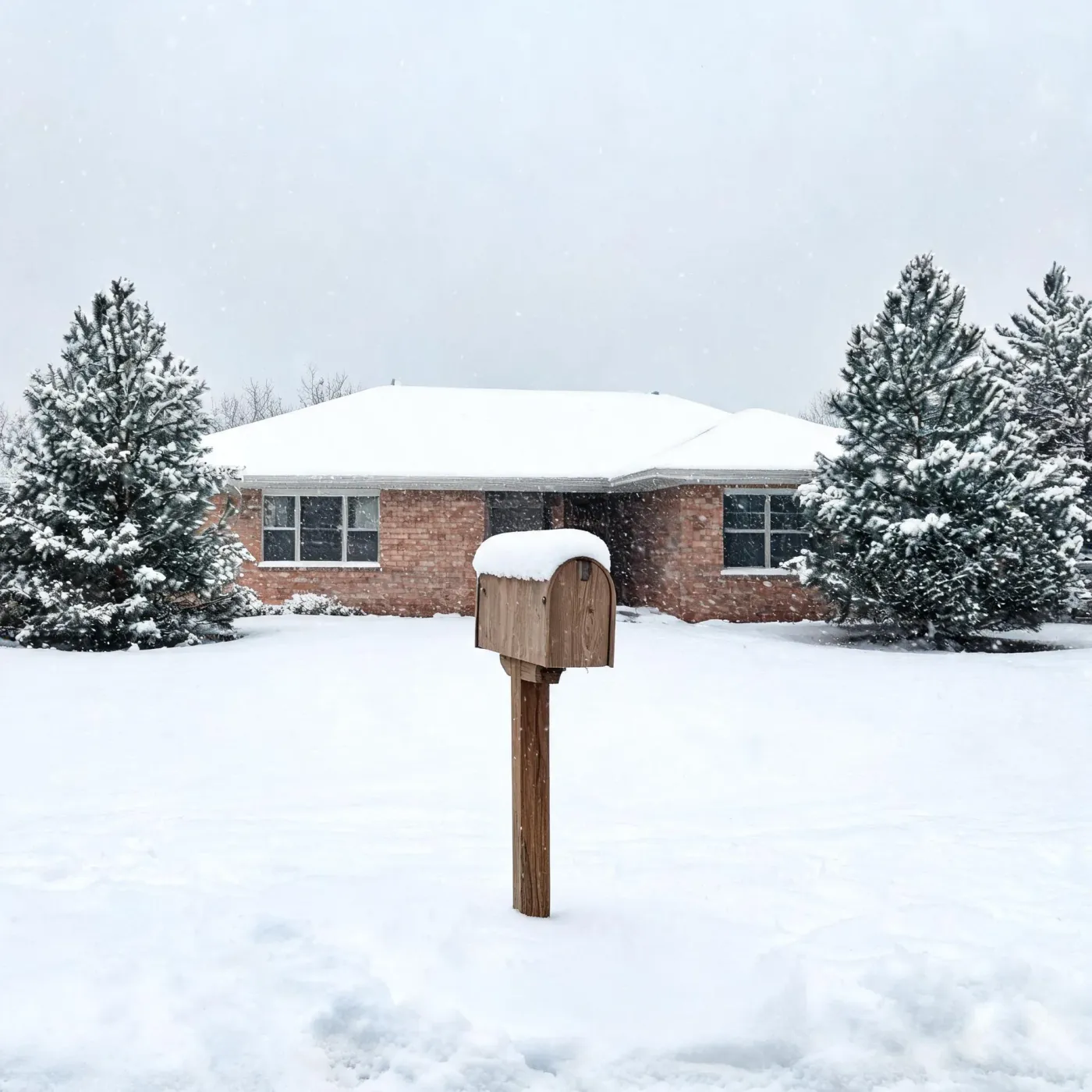
A snow-covered wooden mailbox on a post stands in a snowy yard in front of a single-story brick house flanked by snow-laden evergreen trees during falling snow.

Statewide, winter nights average 15°F. Your furnace doesn't get a mild stretch to recover between cold snaps, it has to hold the house at 68 while the outside air sits near zero for weeks at a time. That's when a weak blower or a heat exchanger that's starting to crack shows itself, usually around three or four in the morning when the burners are working hardest and nobody's watching. If your furnace is already cycling strangely or struggling to keep up on an average night, a night at 15°F is the one that finds out for sure.

NOAA nClimDiv 1991-2020 county normals weighted by homes

A furnace that just needs one part fixed is worth fixing. One that's cracked, short cycling, or close to the cost of a new unit is telling you the decision's already made. Age, the repair bill, and how it's running the night it's coldest, those three things together give you the answer, not any one of them alone. Once you know which side you're on, the only thing left is finding someone to do the work, and that's its own chore in the middle of winter. Instead of calling around to different companies, sitting on hold, explaining the same clicking sound or the same quote three separate times, and then trying to weigh bids that aren't even for the same scope of work, you send one form. From there the search for a contractor is off your plate. You're not guessing anymore about repair or replace, and you're not stuck doing the legwork of finding who can take the job before the next cold night hits.

A gray high-efficiency furnace with two access panels stands on a concrete basement floor, connected to sheet-metal ductwork and white PVC vent pipes, with wood framing and a gas line nearby.

Let someone else find the pro

New system or replacementFurnace or heatingIowa
Step 1 of 2

What ZIP code is the job in?