Profile view of a bearded man wearing a dark baseball cap and a dark gray T-shirt against a plain off-white background.

How long a furnace lasts in Iowa

New system or replacementFurnace or heatingIowa
Step 1 of 2

What ZIP code is the job in?

A gas furnace in Iowa lasts 15 to 20 years. The furnace runs hard from about October through March, and that long, steady stretch of cold is what wears out the heat exchanger and the igniter over time. A furnace that sits idle all summer doesn't get a break from aging, it just ages slower for those months. Most homes here heat with gas, so when a furnace reaches the back half of that range, the part that usually goes first is the heat exchanger cracking or the igniter failing to light on cold mornings. Once a furnace passes 15 years, a breakdown in January isn't bad luck, it's closer to expected. If your furnace came with the house, it's worth finding out how old it actually is rather than guessing from how it sounds or looks.

A gray high-efficiency furnace stands on a concrete basement floor beside sheet-metal ductwork, with white PVC vent pipes and a black flexible line running up to exposed wood floor joists, next to a wood-framed post against a concrete wall.
A newer furnace cycles on without hesitation and heats the house evenly, which is what 15 to 20 years of normal wear looks like.
A beige metal furnace with a louvered front panel stands on a concrete floor against a concrete wall, connected to galvanized sheet-metal ductwork and a metal pipe.
An older furnace that short-cycles, runs loud, or struggles to keep rooms warm is showing its age before a cold snap finds the rest.

A furnace doesn't fail all at once. It fails in the sequence it was built to run. The gas valve won't open until the draft inducer motor proves the exhaust can vent safely outside, so that motor is working before you ever feel heat. Once gas reaches the burners, the igniter has to heat up fast, and it cools down again every time the furnace shuts off. That cycle of heating and cooling, thousands of times over a furnace's life, is what eventually cracks it. The flame sensor is watching too. It has seconds to confirm the flame caught, or the control board cuts the gas valve back off. Meanwhile dust pulled in through the return duct settles on the blower wheel, slowly weakening the airflow that carries heat through the house. And a furnace sized a little too big for the house starts and stops more than it should, which runs this whole sequence more often than it needs to. Every piece of this adds up to one thing: a heat exchanger that eventually cracks, which is why most furnaces get replaced instead of repaired.

How a furnace wears out

  • The heat exchanger cracks open gradually after thousands of cycles, which is the reason most furnaces get replaced rather than repaired.
  • Every time the furnace fires, the igniter heats up and cools down, and that repeated stress is what eventually breaks it.
  • A gas valve opens to let fuel reach the burners only after the draft inducer motor proves it can safely vent exhaust outside.
  • Dust and debris pulled through the return duct settle on the blower wheel and reduce how much air it can push through the house.
  • The flame sensor has to detect a stable flame within seconds of ignition or the control board shuts the gas valve back down.
  • Furnaces installed with a slightly oversized capacity for the house tend to short-cycle, which adds wear with every extra start and stop.
A gray-haired bearded man in a dark coat and scarf dusted with snow stands smiling in a dimly lit entryway with a white front door, a side table with a lit lamp, an oval mirror, and a patterned rug.
An older bearded man in a dark snow-dusted coat and gray scarf stands just inside a dimly lit home entry, with a framed picture, lit table lamp, and an adjoining room with a fireplace behind him, and snow visible through the open door.
A gray-haired, bearded man in a dark snow-dusted coat stands smiling in a dimly lit entry hall with a staircase, a lit table lamp, a framed picture, and a living room visible through a doorway.
An older man with gray hair and a beard, wearing a dark jacket dusted with snow, stands smiling in a dimly lit hallway with lamps and a living room visible behind him.

Iowa winters put a gas furnace through six months of real work, and most of the wear happens in short bursts rather than one long stretch of running.

A furnace built to last 15 to 20 years is rated for roughly that many thousand cycles, so a harsh winter with constant on and off can age it faster than a mild one.

An older beige furnace with louvered front panels stands on a concrete basement floor beside galvanized ductwork, metal and plastic pipes, exposed wood framing, and a cylindrical water heater at right.
Before you get your furnace installation
A gray high-efficiency furnace in a basement with PVC vent pipes, sheet-metal ductwork, copper and insulated pipes, a water heater at left, and an unfinished wood-stud wall at right.
After you get your furnace installation
A gray high-efficiency furnace with white PVC venting pipes stands on blocks in a basement next to sheet-metal ductwork, with exposed wood framing on the left and a concrete wall and floor.

Working the way it should

This is a furnace keeping up with the job. It fires cleanly, moves heat through the ducts without strain, and the PVC intake and flue pipes tell you it's venting the way it was designed to. Nothing here is fighting to keep the house warm.

An older gas furnace with two white PVC vent pipes stands on a concrete basement floor beside galvanized sheet-metal ductwork, flexible conduit, and piping along a wall.

Running out of road

This furnace is older, and it shows. The metal cabinet and the flexible gas line are a different generation of equipment than what's installed in homes today. A furnace that looks like this is closer to the end of its 15 to 20 years than the start, and it's worth having someone look at before the next cold snap finds the weak spot.

How many cycles does a furnace actually go through before it's done?

You've heard the heat exchanger and igniter wear out from cycling, not just from running, and that raises a real question: how many times does the furnace actually fire before it's worn out. It's a fair thing to want a number for, especially if you're trying to figure out where your own furnace stands after a few Iowa winters.

A furnace is built for somewhere around 5,000 to 10,000 cycles over its life

Most manufacturers design a gas furnace around that range, and a cycle means one full firing, from ignition until the burners shut off. In an Iowa winter, a furnace might fire 10 to 20 times a day depending on how cold it is outside, so the count adds up fast over six months of real work. A mild winter means fewer cycles than a harsh one, even across the same number of months. That's why two furnaces installed the same year can wear differently. One that's run through several brutal Iowa winters may be closer to the end of its cycle count than its age alone would suggest.

A beige high-efficiency furnace stands on a concrete basement floor beside sheet-metal ductwork, with white PVC vent pipes, flexible conduit and copper and steel piping running up a concrete wall to an electrical box.

Running the way it should

This furnace fires without hesitation and holds a steady flame. The flue and condensate lines run clean and tight above it, venting exhaust the way they're supposed to. A furnace at this stage is doing the 15 to 20 years of work it was built for, nothing more.

An older gas furnace with a louvered front panel stands on a concrete basement floor beside large sheet-metal ductwork, a metal flue pipe, copper piping and wood framing.

Showing its age

Dust has settled around the base and the exhaust flue looks original to the unit. A furnace this old has already been through most of the cycles it was rated for. Once the heat exchanger or igniter starts to go, keeping it running stops making sense.

Is your furnace starting to struggle this winter?

You might hear it kick on more than it used to, or run longer to get the house to the same temperature. Some rooms stay cold no matter how high you set the thermostat. The blower might sound louder, or you catch a burnt dust smell in the first few minutes after it starts. Your gas bill creeps up even though you haven't changed how you use the house. None of this means it'll quit tomorrow, but a furnace working this hard through an Iowa winter is more likely to leave you without heat on the night you need it most, and a cracked heat exchanger can let exhaust into the air you're breathing.

A woman wrapped in a thick beige fleece blanket sits on a sofa with an open book on her lap, beside a lit table lamp, with a frost-covered window behind her.
A smiling older woman with gray hair in a cream knit sweater stands in a dimly lit kitchen beside a window showing snow outside, with a round loaf of bread on the counter in the foreground.

A pro who works on furnaces

Send it once and finding someone is no longer on you.

There's no charge for the request.

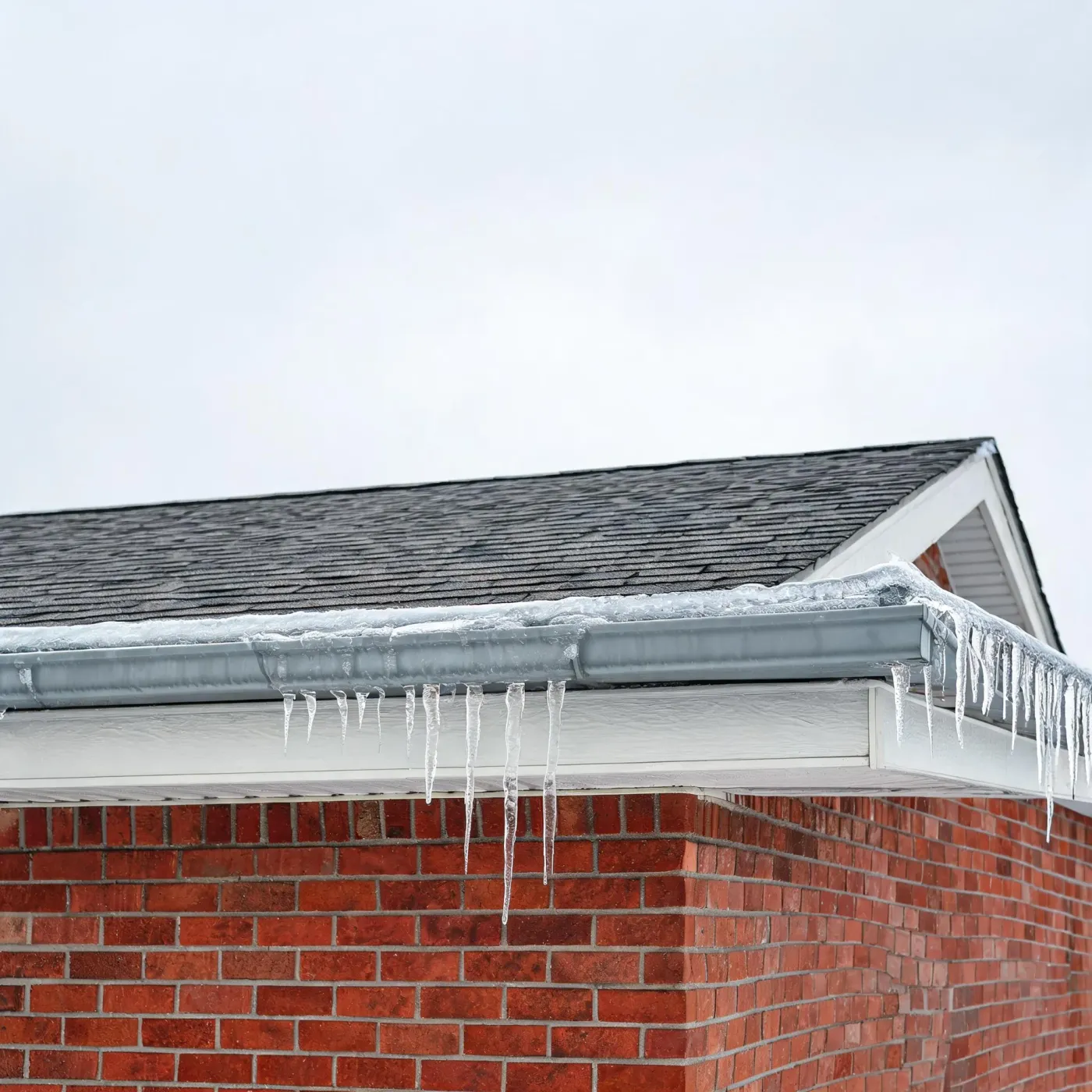
Corner of a brick house with asphalt shingle roof, white soffit and gray gutter, with icicles hanging from the gutter against an overcast sky.

Winter nights average 15°F across Iowa, according to NOAA climate data. That kind of cold means your furnace isn't just cycling on and off through the day, it's holding a flame most of the night to keep the house from losing ground. The burner stays lit longer per cycle, and the blower runs longer too, pushing warm air through the ducts for hours instead of minutes. You'd notice it most around 3 or 4 in the morning, when the thermostat calls for heat and the furnace answers with a longer run than it would on a mild fall evening. That stretch of overnight demand is steady work on the heat exchanger, night after night, all winter.

NOAA nClimDiv 1991-2020 county normals weighted by homes

Keep Repairing or Install New

Keep repairing

  • A single repair, even an igniter or pressure switch, usually runs less than what a new furnace would cost up front.
  • You keep the furnace you already know, and nothing changes about how it vents or how the ductwork ties into it.
  • Repairs buy time if the furnace is only a few years into its 15 to 20 year span and the heat exchanger is still sound.
  • A furnace that's mostly reliable but had one part fail isn't the same problem as one that's cracking or short-cycling on its own.
  • Waiting means living with whatever noise or uneven heat the furnace already has until the next part gives out.

Install new

  • A new furnace stops the pattern of recurring repairs instead of treating each failure on its own.
  • Once the heat exchanger has started cracking, no repair puts it back, and replacement is the only real option left.
  • A new furnace is built for the next 15 to 20 years of Iowa winters, not just the one ahead.
  • Even cycles and a steady flame replace whatever short-cycling or struggling to heat the house has been going on.
  • Installation means the furnace, the venting, and the controls are matched to the house as it is now, not as it was when the old one went in.
  • Once the form is sent, matching with a contractor and getting a call back is no longer something you have to chase down.
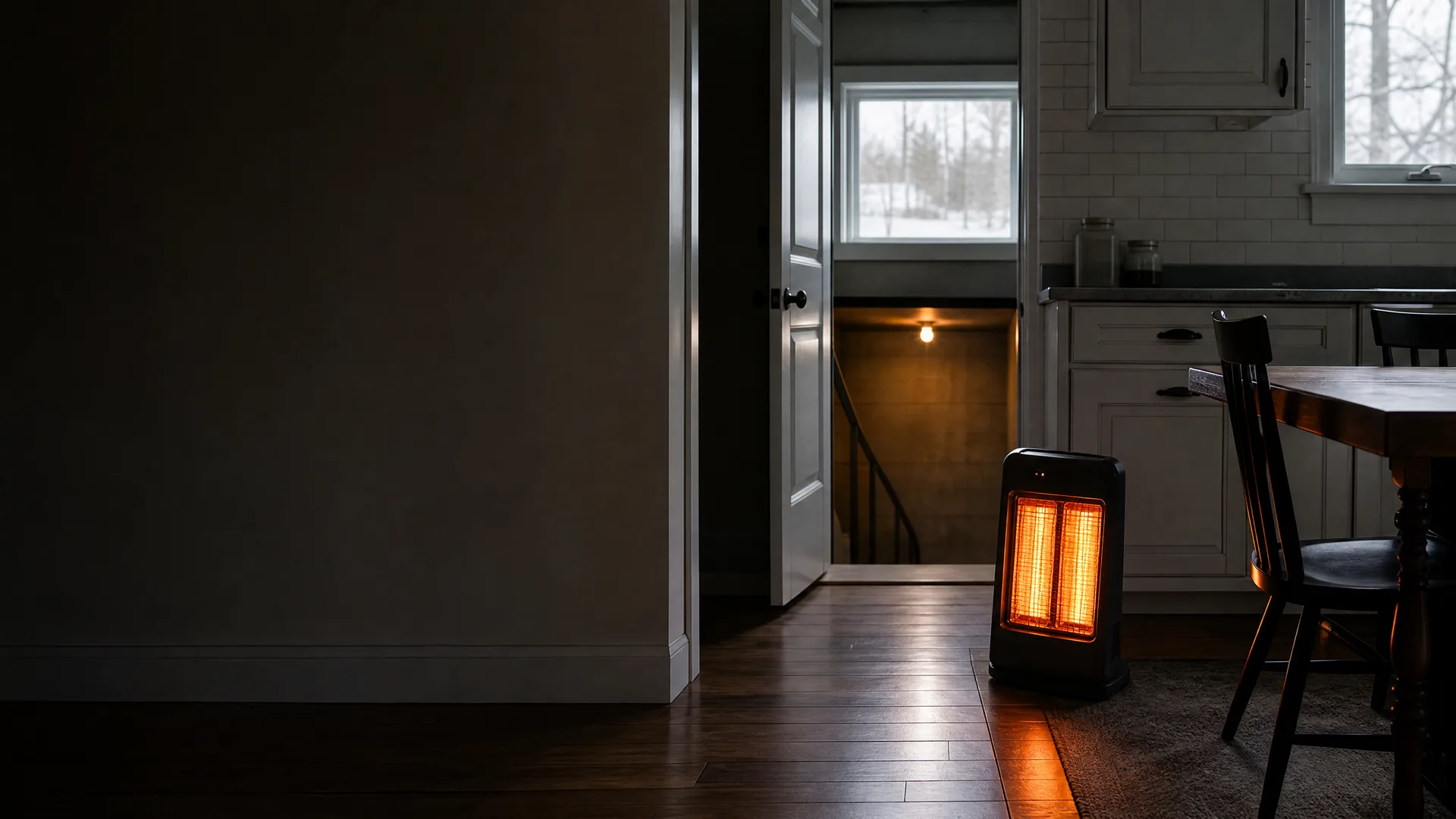
A portable electric space heater with glowing orange elements stands on a dark wood floor in a dim room beside an open door leading to a lit stairway, with a kitchen counter, window and wooden table and chairs at right.

It's just past six and still dark out. You're standing at the kitchen table in a sweater, waiting on coffee, and the space heater is going by your feet because the furnace hasn't caught up yet. The basement door is open behind you, the way you left it last night after going down to check on it again. Outside it's the kind of cold that sits in the teens and doesn't move. You can hear the furnace trying, that long low run that never quite finishes the job. Your hands are still cold around the mug. You're doing the math on how many more mornings you want to start like this.


Winter nights average 15°F statewide

At 15°F, your furnace is running a long flame most of the night, not just quick bursts. Nights that cold ask more of the heat exchanger and igniter than milder weather does, which is why age shows up fastest at 2 a.m.

NOAA nClimDiv 1991-2020 county normals weighted by homes

Where Your Furnace Stands

  • A gas furnace in Iowa holds up for 15 to 20 years when it's venting clean and firing without hesitation.
  • Short cycling, a loud blower, or rooms that stay cold are signs the furnace is past that stretch, not signs to wait out.
  • The heat exchanger and igniter wear from the number of times the furnace fires, so an aging unit tends to fail during the coldest nights, not the mild ones.
  • A repair can buy time on a furnace that's still within its years, but one near 15 to 20 is close to its limit regardless of what breaks next.
  • Once you send the form, finding a contractor is off your plate, and you can wait on the call instead of chasing quotes yourself.

Fifteen to twenty years is the span a gas furnace gets in Iowa, and everything that happens inside it over that time comes down to how many times it's fired and how hard each one worked. A furnace that lights without hesitation, vents clean, and heats the house evenly is still inside that window, no matter how many winters it's seen. One that short cycles, runs loud, or leaves rooms cold is telling you it's near the end of its cycles, and that tends to show up on the coldest nights first, when the heat exchanger and igniter are working longest. A repair can carry a younger furnace through a rough patch. On a furnace already near 15 to 20 years, a repair buys a little time, but it doesn't change what's coming. The part that breaks next matters less than how many winters the unit has already put in. If yours is showing its age, the decision isn't really about the repair bill, it's about whether you want to make this call now or during the next cold snap when there's no time to shop around. Once you send the form, you're not the one tracking down a contractor anymore. That search gets handed off, and you can wait for a call instead of working the phones yourself, which matters most when the forecast is already turning.

A wooden front door with six small glass panes and a narrow sidelight, set in a shingled house entry with white trim, reached by stone steps flanked by a planted urn with purple flowers and leafy branches in the foreground.
Exterior corner of a house with beige horizontal lap siding and a black-framed window, with white hydrangeas, ornamental grasses and low plantings along a flagstone patio.
Corner of a house with tan lap siding and a window, a brick step edge, flowering white hydrangeas and green shrubs beside a flagstone walkway leading to a white picket fence and a tree in backlit sunlight.
House exterior with cream horizontal lap siding, a dark-framed window, a black wall lantern beside a wood door, potted shrubs on stone steps, and white and pink hydrangeas in the foreground garden.
Corner of a cream lap-sided house with a white-framed window and dark shingled roof, beside a white-flowering hydrangea shrub, a clipped hedge, mulched bed and lawn.

Get your furnace to the right pro

Send the form and stop researching installers for the new furnace.

Connect with a pro

You only hire the pro if you want to.