The heat exchanger check
A cracked heat exchanger can let carbon monoxide into the air you breathe. A tune-up includes checking it before the furnace runs every day through winter.

A furnace tune-up before winter means a technician checks the parts that cause most no-heat calls in January. That includes the igniter or pilot assembly, the flame sensor, the gas pressure, and the heat exchanger, which can crack and leak carbon monoxide into the house if it's gone unchecked for years. It also means cleaning the burners and blower, checking the thermostat is talking to the system correctly, and swapping the filter so the furnace isn't fighting itself to push air through the ducts. Gas furnaces run hard across an Iowa winter, often from October into April, and a part that's starting to fail tends to fail on the coldest night, not a mild one. Catching a weak part in October means it gets fixed on a technician's schedule instead of yours at 2 a.m. with the house at 50 degrees.


A cracked heat exchanger can let carbon monoxide into the air you breathe. A tune-up includes checking it before the furnace runs every day through winter.
Gas pressure set too high or too low makes a furnace run poorly or shut down mid-cycle. It gets checked and adjusted as part of the service.

If your furnace hasn't been looked at since last winter, you won't know about a weak igniter or a dirty flame sensor until the week it drops below zero and the furnace won't fire. That's usually a Saturday night, and now you're calling whoever answers, hoping they can come out before Monday. A tune-up done in October or November finds that same problem while it's a scheduled visit instead of an emergency one.
It also matters for what you're paying to run the thing. A furnace with gas pressure set wrong, or a flame sensor coated in residue, works harder to heat the same rooms. You'd otherwise spend an evening searching for someone licensed to work on gas furnaces here, calling two or three companies, explaining the same symptoms each time, then sorting through quotes that don't quite match. This connects you with one local contractor who already knows Iowa furnaces and what tends to fail in them before the cold sets in.


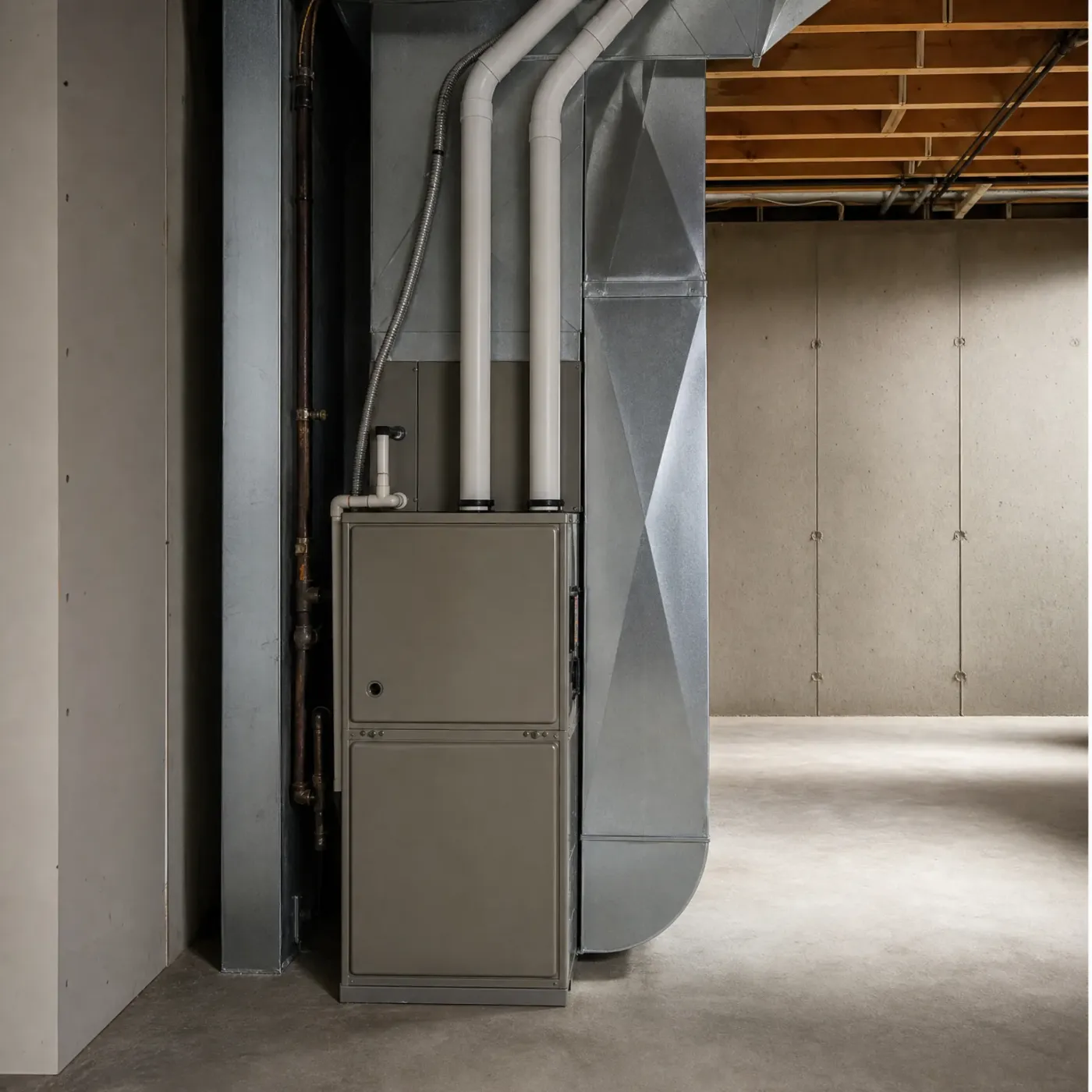
The ductwork is sealed, the condensate line runs clear, and the pump beside the unit is doing its job. A furnace that's been checked fires the same way on the coldest night in January as it did in October.

Nobody's opened those two access panels in years. The grime on the cabinet is the kind that builds up slow, and so does whatever's wrong with the flue or the gas line behind it. You won't know until it quits.




Your request stays with one local pro.
No charge to send it. You decide if you hire them.

A furnace that quits does it without warning, usually once the temperature has already dropped hard. You find a contractor on the spot, explain what's wrong to whoever picks up, and wait to see who can come out and when. Some nights that's fast. Some nights you're the fifth call they've had since the cold front moved in, and you're waiting until morning with the thermostat climbing down toward fifty.

One contractor, local, who services furnaces like yours every fall and knows which parts tend to fail first in an Iowa winter, comes out while the weather is still mild. You explain your furnace once. There's no list of companies to call back, no comparing quotes while the house gets colder. The igniter, the flame sensor, the gas pressure get looked at on a Tuesday afternoon in October instead of a Saturday night in January.
That 15°F average is the overnight low across a typical December, January and February here, not a cold snap. Your furnace has to hold that line night after night for three months straight, which is exactly when a weak igniter or a cracked exchanger tends to show itself.
NOAA nClimDiv 1991-2020 county normals weighted by homes
A furnace tune-up before winter comes down to this: someone checks the igniter, the flame sensor, the gas pressure and the heat exchanger while the weather still gives you room to fix what's wrong. Those are the parts that fail quietly, then show up as a no-heat call on the kind of night Iowa gets plenty of, when the temperature has already settled in near 15 degrees and stays there for weeks.
Finding someone to do that check is its own chore when you wait until the furnace actually quits. You'd be calling around at odd hours, explaining the same problem to whoever answers, then waiting on quotes from companies that don't know your house or your furnace. Scheduled ahead of the cold, it works differently. One licensed contractor local to your area takes the call, hears about your furnace once, and comes out on an afternoon you pick. That's someone who services furnaces in this area all winter and has a working sense of which part tends to go first in a system like yours, not someone meeting your furnace for the first time in the dark with the clock running.
By the end of the visit you know where your furnace stands. Either it's ready to hold that line through December, January and February, or you know now what needs attention, while there's still time to deal with it before the cold settles in for good.
A licensed local pro takes the request for your furnace tune-up.
There's no charge for the request.
