

A dark two-story house with a covered porch stands behind a hedge and large deciduous trees, viewed from a low angle across a mowed lawn under an overcast sky.

Furnace Repair in Muscatine, IA

Tell us about the job

Takes about a minute. No obligation.

RepairFurnace or heatingMuscatine County, IA
Step 1 of 2

What ZIP code is the job in?

Half the homes in Muscatine County were built in 1970 or earlier. A furnace doesn't always last as long as the house does, but in a home from that era, odds are decent nobody's replaced it since the last one wore out. If yours is original to the house, or close to it, a big repair bill is worth a second thought. Ask the tech how many years they'd put on what's left before you pay to fix what just broke.

8 months
October through May, your furnace is on duty
17°F
the average winter night it heats against
70%
of homes here heat with gas, so most furnaces here burn gas
25 winter storms
in ten years, the nights a failure hurts most
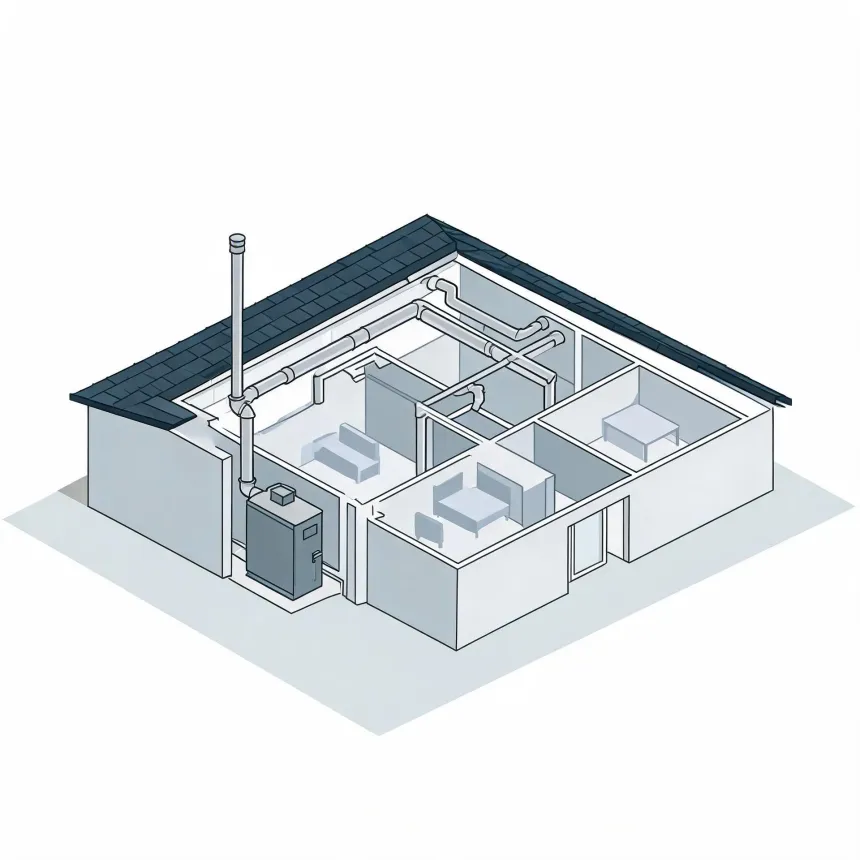
Isometric line illustration of a cutaway single-story house showing interior rooms with furniture, ceiling ductwork, and an exterior furnace unit with a tall flue pipe.
Your furnace works hardest from November through March.

NOAA nClimDiv, 1991–2020 normals

A cracked heat exchanger gets worse every time the furnace fires.

Keep running it and you're not looking at a repair anymore, you're looking at carbon monoxide in the house.

Eight months of heat a year wears a furnace down faster

Heat runs October through May
Winter nights average 17°F
25 winter storms from 2015 to 2024
Furnace trouble shows up first in OctoberHeat starts running in October here, and that first real cold snap is what finds the weak part.

A tech starts by asking what the furnace is doing, or not doing, before touching anything. Short cycling, no heat, a smell on startup, a sound that wasn't there before. That answer narrows things down before the panel even comes off. Next comes a look at the flame, the igniter, the flue, and a check of the gas pressure and the electrical connections. Most calls end with the tech finding one part that's failed, like a cracked igniter, a stuck gas valve, a dead blower motor, or a control board that's not sending signal where it should. They'll also check the heat exchanger, since a crack there means the repair conversation changes entirely. By the end, you should know what failed, why, and what it costs to fix versus what you're looking at if it fails again next winter.

Have it looked at before you decide what to do about it

Eight months of heat a year puts a lot of hours on a furnace, and that kind of use is what tends to catch up with a weak part first. Get a tech out to look at it before you decide whether to fix it or replace it. A proper diagnosis tells you which one actually makes sense for the furnace you have.

Find a contractor
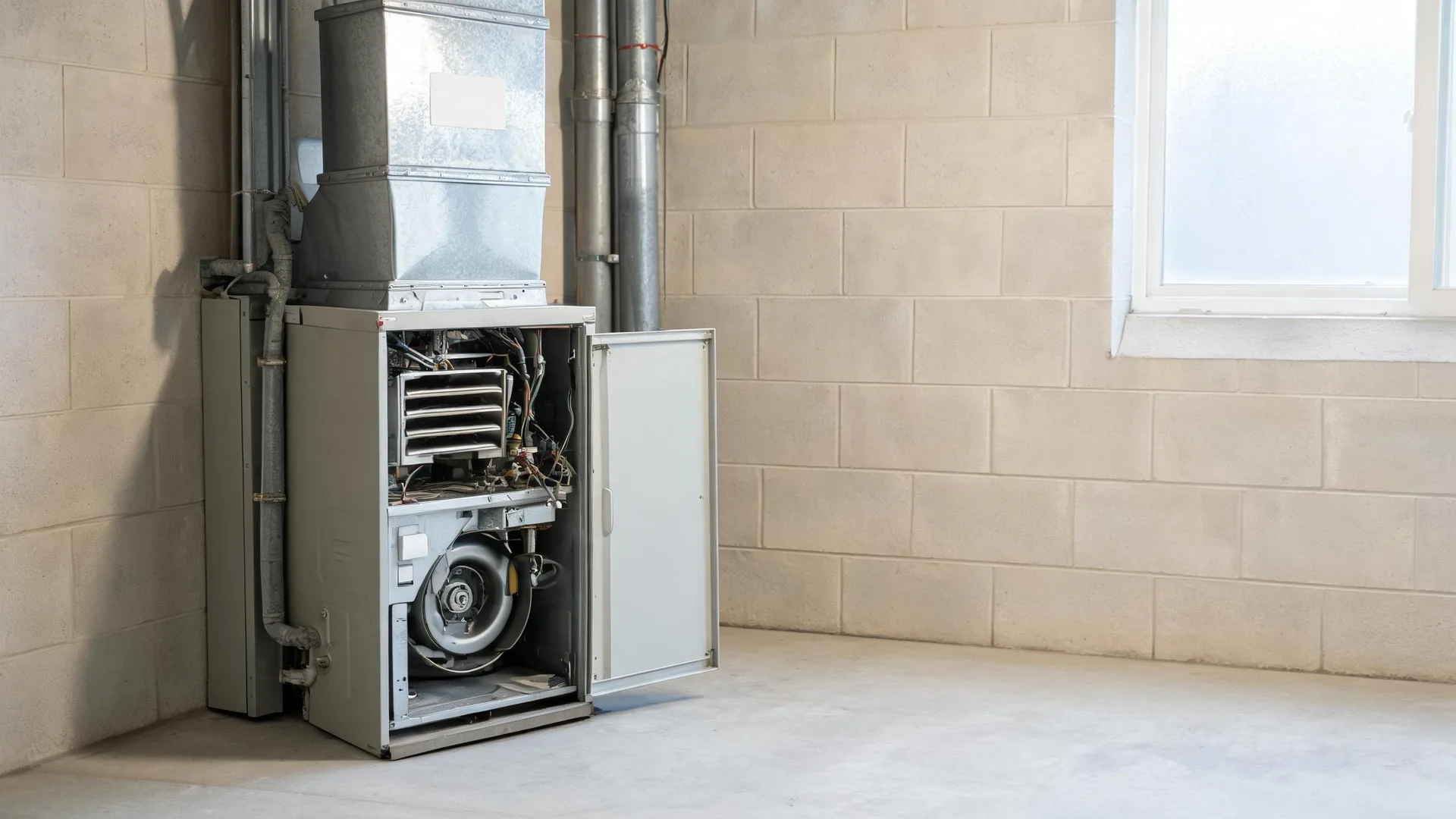
A gray residential gas furnace installed in an unfinished basement, surrounded by ductwork, a metal flue pipe, and a gas supply line.

What to check before you call anyone

Before anyone comes out, you can check a few things yourself. Look at the thermostat first. Make sure it's set to heat, not fan, and that the temperature you want is actually higher than the room. A dead thermostat display usually means a battery, and that's worth swapping before anything else. Next, go to the furnace and check the power switch, it looks like a light switch on or near the unit, and it's easy to bump off without noticing. Check the breaker too. Then pull the filter and hold it up to a light. If you can't see light through it, that's enough to choke off airflow and shut the furnace down on its own safety switch. A dirty filter is the single most common reason a furnace stops working, and it costs nothing to check. Last, look at the furnace door. Most have a safety switch right where the panel sits, and if the door isn't seated all the way, the furnace won't run at all. None of this fixes a cracked heat exchanger or a failed control board, but it rules out the simple stuff before you pay someone to find it for you.

The furnace tells you before it quits outright

A burner that cycles on and off in short bursts is struggling to satisfy the thermostat. Air coming out lukewarm instead of hot points to a flame sensor or ignition problem. A furnace that's noisier than before, with a bang at startup or a rattle while it runs, is telling you a part has worn loose or is about to fail. None of these mean it's dead, but none of them fix themselves either.

Some signs mean stop and call, not wait and see

A burning smell that doesn't fade after the first few minutes, soot around the burner compartment, or a yellow flickering flame instead of a steady blue one are not things to live with until next week. Those point toward combustion problems that can put carbon monoxide into the house. Shut it off and get a tech out rather than running it another night to see if it settles down.

An unfinished basement featuring concrete block walls, exposed floor joists, a bare concrete floor, and a forced-air furnace with a large metal exhaust duct in the corner.

A new furnace would cut about $100 a year off heating for a typical Muscatine County home.

  • A new high-efficiency furnace$420 a year
  • An older furnace$520 a year

Estimates for a typical Muscatine County home, compared with an older unit built to the previous federal minimum, from EIA household energy data, Iowa fuel prices and NOAA climate normals. Your home will differ.

Repair makes sense when one part has failed and the heat exchanger is sound.

Replacement makes sense when the heat exchanger is cracked or the furnace keeps needing parts.

A repair makes sense when the part that failed is a part on its own, something that does one job and does not tell you much about the rest of the furnace. A capacitor, a flame sensor, a pressure switch. Fix it and the furnace goes back to being whatever it was before. A replacement starts to make sense when what failed is something central, like the heat exchanger or the control board, or when the same furnace has needed a tech out more than once or twice in the last couple of years. That pattern usually means the parts around the one that just failed are close behind it. Age matters too, separate from any single repair. A furnace can run fine for a long time and then start failing in different places every season, not because anything was done wrong, but because the parts are all the same age and wearing out together. When a tech tells you what broke, it's worth asking whether it broke on its own or because something else nearby is already going.