



A trimmed hedge borders a mown lawn in front of single-story houses with dark siding and shingled roofs, surrounded by large leafy trees under an overcast sky.

Furnace Repair in Oskaloosa, IA

Tell us about the job

Takes about a minute. No obligation.

RepairFurnace or heatingMahaska County, IA
Step 1 of 2

What ZIP code is the job in?

Furnaces in Oskaloosa run from October through May, about eight months of the year. Overnight lows average 17°F through December, January and February, so the furnace is not just running, it's working to cover a big gap between outside and inside. That kind of stretch wears on an igniter or a blower motor faster than a mild climate would. If something is acting up now, in the thick of that stretch, it's worth having a contractor look at the actual cause rather than patching the symptom. A fix that skips the diagnosis tends to show the same problem again before the season's out.

8 months
October through May, your furnace is on duty
17°F
the average winter night it heats against
53%
of homes here heat with gas, so most furnaces here burn gas
18 winter storms
in ten years, the nights a failure hurts most
Isometric cutaway illustration of a small house showing a furnace unit connected to ductwork running through the interior and attic, with a chimney on the shingled roof and simple furniture in the rooms.
Your furnace works hardest from November through March.

NOAA nClimDiv, 1991–2020 normals

An igniter wears out from being switched on and off, cycle after cycle, until one day it doesn't glow hot enough to light the gas.

A furnace with a dying igniter usually runs through its whole startup sequence and still never gets a flame.

September is the month to get it looked at, not October

Heat runs October through May
Climate zone 5A
Winter nights average 17°F
Oskaloosa furnace repairHalf the homes here were built in 1965 or earlier. Ask what shape yours is in before you pay for the repair.

A short cycle and a cracked heat exchanger can look the same from the thermostat. The furnace won't keep up, or it won't stay on. That's why a contractor checks the actual part before touching anything. Skip that step in December and you're calling again in January, except now it's 17 below outside instead of a problem sitting on a workbench. Get the cause nailed down while there's still room to wait for a part if one's needed.

Get it diagnosed properly

Your furnace works hard here, and that's usually what's behind the problem. Have it diagnosed properly so the fix lasts.

Find a contractor
A gray high-efficiency gas furnace installed in an unfinished basement, surrounded by gas lines, a condensate drain, and sheet-metal ductwork.

What to check before anyone comes out

Before anyone comes out, check the filter. Pull it and hold it up to a light. If you can't see light through it, that's likely choking the airflow, and a furnace that can't breathe will short cycle or blow cold air before it shuts off on high limit. Check the thermostat batteries while you're at it, and make sure it's set to heat, not just on. Walk over to the vents and make sure none are closed or blocked by furniture. If the furnace won't start at all, check the switch that looks like a light switch near the unit, sometimes it gets bumped off, and check the breaker. If you smell gas, don't touch anything, just get out and call the gas company. None of this fixes a cracked heat exchanger or a failing igniter, but it rules out the simple stuff before anyone starts taking the cabinet apart.

A warning sign is not a malfunction to clear

A limit switch trips to stop the furnace before something gets damaged. If it keeps getting reset or bypassed instead of checked, the furnace keeps firing under the same bad condition that tripped it, and a heat exchanger that was fine can crack under that kind of repeated stress.

A struggling motor does not stay a small problem

A blower motor that is starting to fail pulls harder to keep turning. Left running, it draws more current every cycle, and that strain can carry over into the capacitor or the control board that supports it. Shutting it down when it first struggles usually keeps the damage contained to the one part.

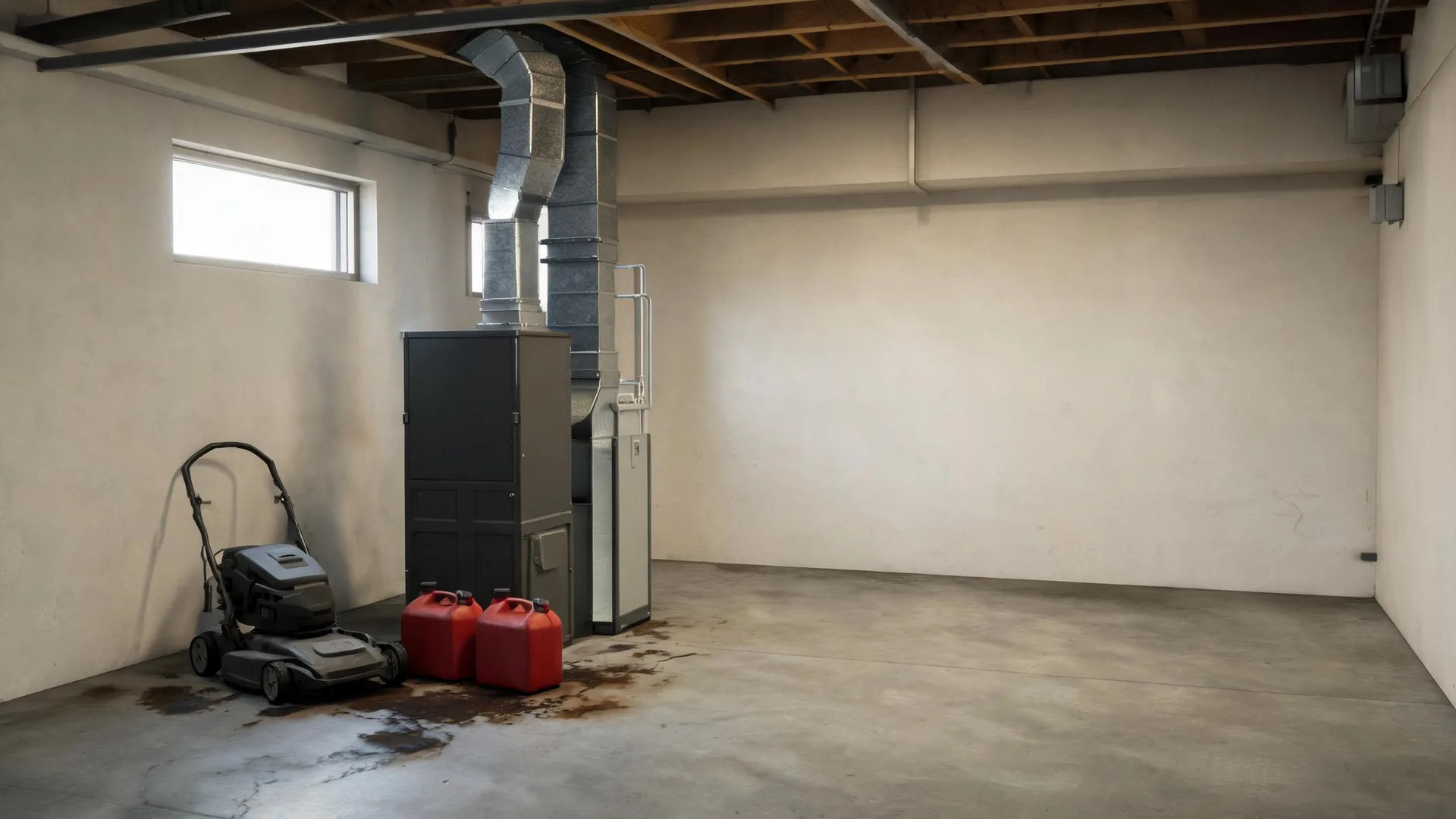
An empty unfinished basement containing a forced-air furnace with overhead ductwork, exposed ceiling joists, and a single hanging light bulb.

A new furnace would cut about $100 a year off heating for a typical Mahaska County home.

  • A new high-efficiency furnace$420 a year
  • An older furnace$520 a year

Estimates for a typical Mahaska County home, compared with an older unit built to the previous federal minimum, from EIA household energy data, Iowa fuel prices and NOAA climate normals. Your home will differ.

Repair makes sense when one part has failed and the heat exchanger is sound.

Replacement makes sense when the heat exchanger is cracked or the furnace keeps needing parts.

A diagnostic visit starts before the cabinet comes off. A tech asks what the furnace was doing, whether it quit outright or started acting up gradually, and whether there's a smell or a sound that goes with it. Then the cover comes off and the flame gets checked first, the color and shape of it, before any part gets touched. Static pressure gets checked too, since that tells you whether the furnace is breathing right or fighting a blocked duct or a dirty coil somewhere else in the system. If the control board keeps an error code, that gets read next, and it usually narrows things down before a single part gets swapped. Only after that does the tech start testing the igniter, the flame sensor or the pressure switch directly. Guessing at a part without that groundwork just means paying for a repair that doesn't fix anything.