





An unfinished basement featuring exposed ceiling joists, a metal HVAC unit with round ductwork, a hanging light bulb, and scattered boxes and debris along the left wall.

Furnace Repair in Grinnell, IA

Tell us about the job

Takes about a minute. No obligation.

RepairFurnace or heatingPoweshiek County, IA
Step 1 of 2

What ZIP code is the job in?

Your furnace in Grinnell runs about eight months a year, October through May. Overnight lows average 15°F through December, January and February, and that's the stretch that finds every weak part in the system. A furnace that's limping along in October can fail outright once it has to hold a house against single digits night after night. That kind of run time wears on the igniter, the blower motor, the heat exchanger, all the parts that only get checked when something already feels wrong. If yours is making noise, short cycling, or not keeping up, get it looked at before the cold sets in further. A proper diagnosis now is what makes the fix hold.

8 months
October through May, your furnace is on duty
15°F
the average winter night it heats against
21 winter storms
in ten years, the nights a failure hurts most
Isometric cutaway illustration of a single-story house showing interior rooms, furniture, a dark furnace unit with a tall vertical flue pipe, and ductwork running under the pitched shingle roof.
Your furnace works hardest from November through March.

NOAA nClimDiv, 1991–2020 normals

Half the homes in Grinnell were built in 1971 or earlier.

A furnace that came with a house that old is old too, and may be closer to done than to fixed.

Eight months of heat starts the strain in October

Heat runs October through May
Winter nights average 15°F
Climate zone 5A

A technician checking a furnace now can tell you what a repair actually buys you. Sometimes it's a cracked igniter or a dirty flame sensor, a quick fix that holds for years. Sometimes the heat exchanger is going, and no repair makes that safe to run through another winter. Either way, a proper diagnosis before the hard cold hits means you're deciding with real information, not guessing during a cold snap when the furnace quits and you need an answer that same day.

Ask what the repair is actually buying you

If your furnace came with the house, ask the technician straight out how much life is left in it before you pay for a repair. That answer should drive the decision, not the other way around.

Find a contractor
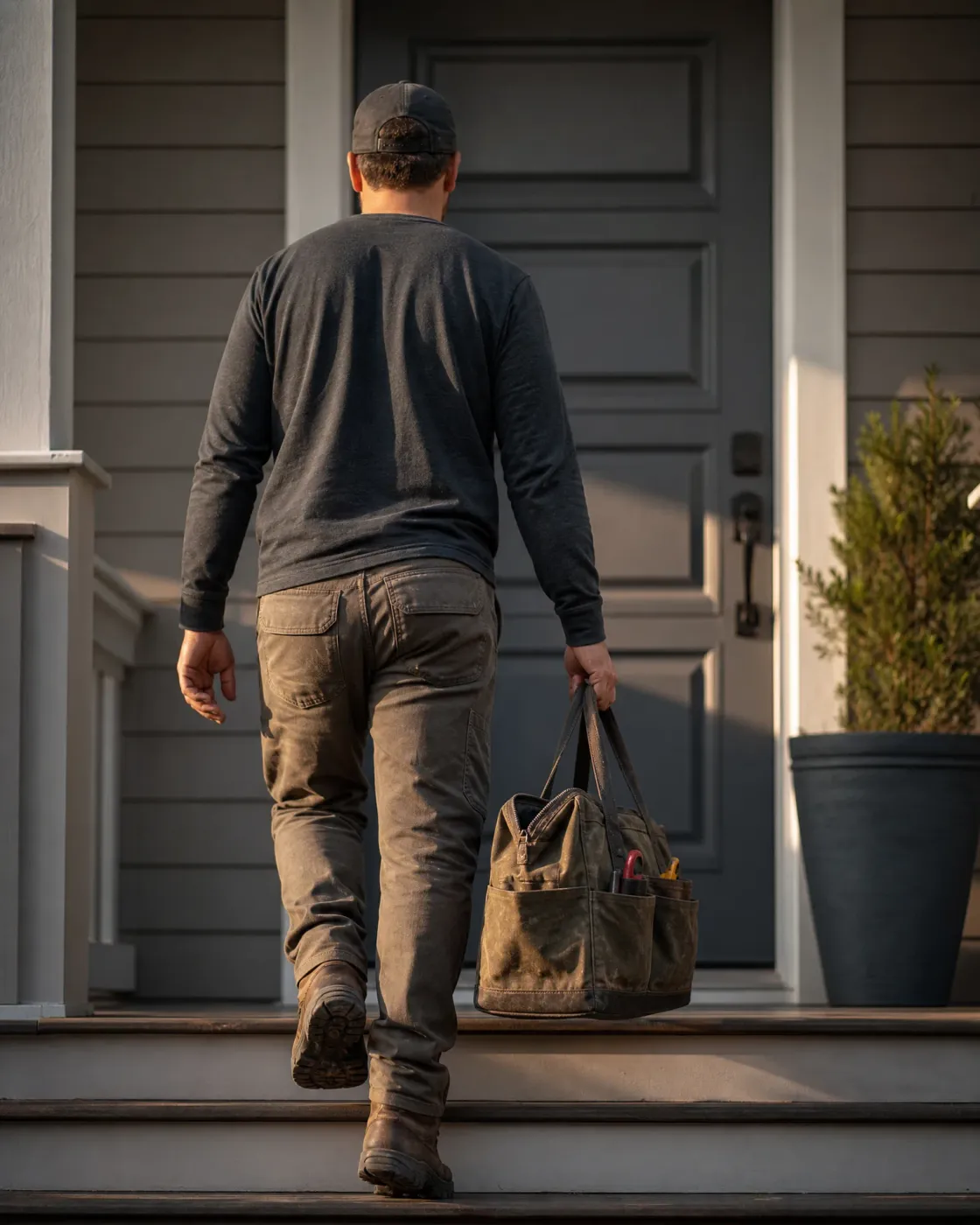
A man in a cap, long-sleeved shirt and work pants walks up porch steps toward a dark gray paneled front door, carrying a canvas tool bag, with a potted shrub to the right.
A gray gas furnace with attached ductwork and piping installed in an unfinished concrete basement.

What to check before you call

Before you pick up the phone, a few things are worth checking yourself. Look at the thermostat first. Make sure it's set to heat, not just fan, and that the temperature you want is actually above room temperature. Check the breaker or fuse for the furnace, and if you have a gas furnace, make sure the switch that looks like a light switch near the unit hasn't been bumped off. That switch gets mistaken for a basement light switch more often than you'd think. Next, pull the air filter and hold it up to a light. If you can't see light through it, it's choking the system, and a new filter is the cheapest fix you'll ever make. Walk around the house and check that vents and returns aren't blocked by furniture or boxes. If the furnace is running but blowing cool air, give it time, some systems take a few minutes to warm up after kicking on. If you hear it trying to start and failing, clicking a few times without lighting, that's not something to keep testing on your own. Shut it down and get it looked at.

Most failures start small

A furnace rarely quits outright without warning. A cracked igniter, a flame sensor coated in residue, a blower motor with worn bearings, these show up as a hesitation or a noise before they show up as no heat at all. The parts that fail first are the ones doing something every single cycle, lighting the flame, sensing it, moving the air.

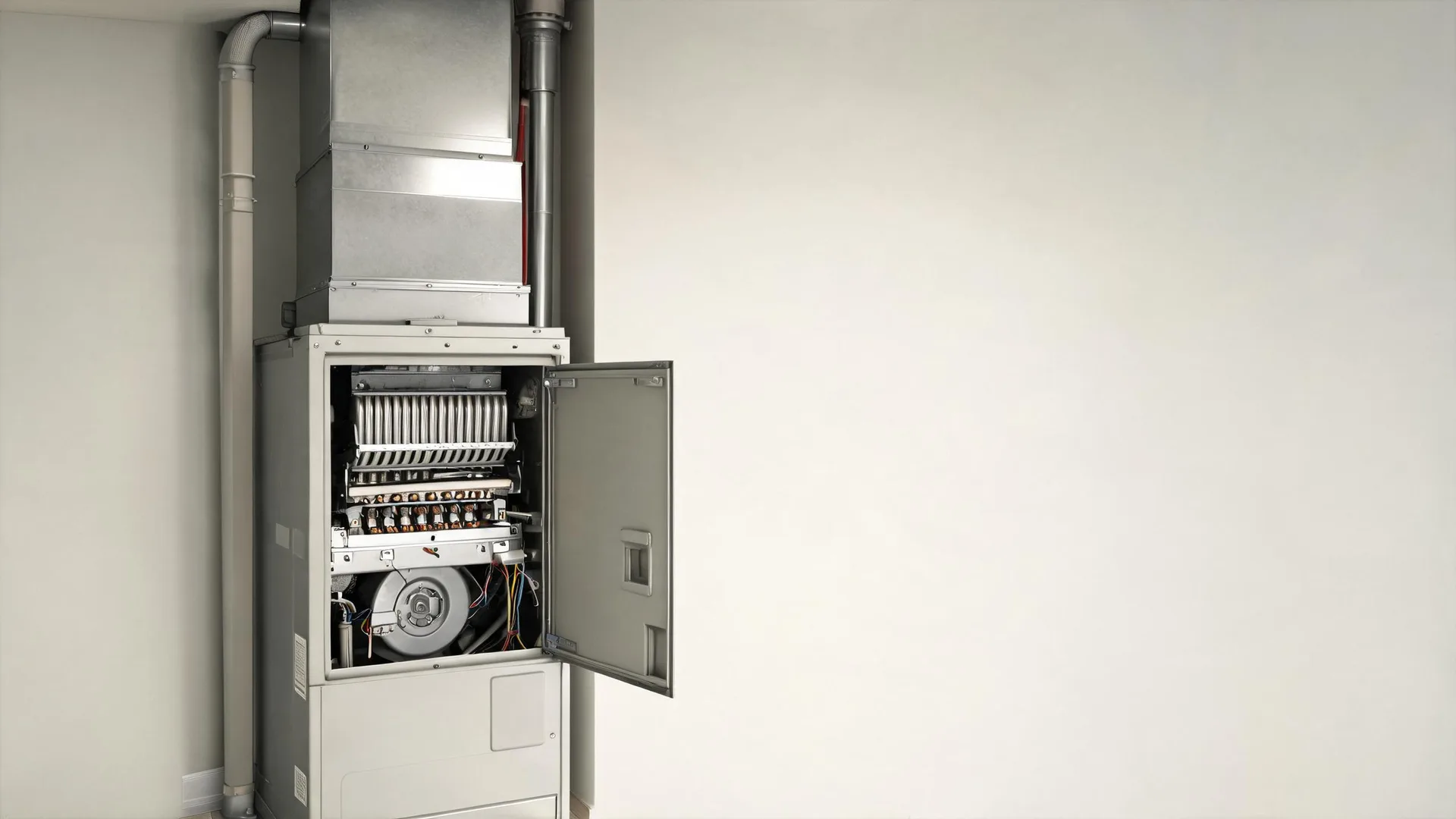
The heat exchanger is the one that matters most

Everything else on a furnace can usually be replaced on its own. The heat exchanger is different. It's what separates the flame from the air blowing through your house, and once it cracks or corrodes, the furnace isn't safe to run regardless of what else still works. That's the failure a technician checks for first, not last.

An unfinished basement featuring concrete block walls, exposed floor joists, and a metal forced-air furnace with ductwork near a central pillar.

A new furnace would cut about $110 a year off heating for a typical Poweshiek County home.

  • A new high-efficiency furnace$440 a year
  • An older furnace$550 a year

Estimates for a typical Poweshiek County home, compared with an older unit built to the previous federal minimum, from EIA household energy data, Iowa fuel prices and NOAA climate normals. Your home will differ.

Repair makes sense when one part has failed and the heat exchanger is sound.

Replacement makes sense when the heat exchanger is cracked or the furnace keeps needing parts.

A repair is worth doing when the part that failed is one part and everything around it still looks sound. A new igniter or a new blower motor on a furnace that's otherwise clean and running right is money that buys you years, not months. Replacement starts to make sense when the technician finds the same kind of wear in more than one place, a motor on its way out and a cracked heat exchanger on the same visit, because that's not one failure, that's a furnace reaching the end of its working life at the same time from every direction. Age alone isn't the test. A furnace that's been running clean for a long time can still be worth repairing. What matters is whether the next repair is likely to be the last one, or just the first of several.