A quiet residential street at dusk lined with illuminated two-story brick houses and mature trees.

Furnace Repair in Fort Madison, IA

Tell us about the job

Takes about a minute. No obligation.

RepairFurnace or heatingLee County, IA
Step 1 of 2

What ZIP code is the job in?

What the repair history tells you

A furnace that's needed a few service calls over the years isn't necessarily on its way out. Igniters, flame sensors and pressure switches wear out on their own schedule, and swapping one doesn't say anything bad about the unit as a whole. What matters more is the heat exchanger. If a tech finds a crack there, that's the part that doesn't get patched, and it changes the conversation.
What keeps a furnace worth fixing

A furnace that still heats evenly and cycles on and off the way it should is usually worth keeping going. The blower motor and control board are the expensive parts to replace, so ask specifically about those before deciding anything. If those are sound, most other repairs are routine upkeep, not a sign to start shopping.

8 months
October through May, your furnace is on duty
20°F
the average winter night it heats against
56%
of homes here heat with gas, so most furnaces here burn gas
13 winter storms
in ten years, the nights a failure hurts most
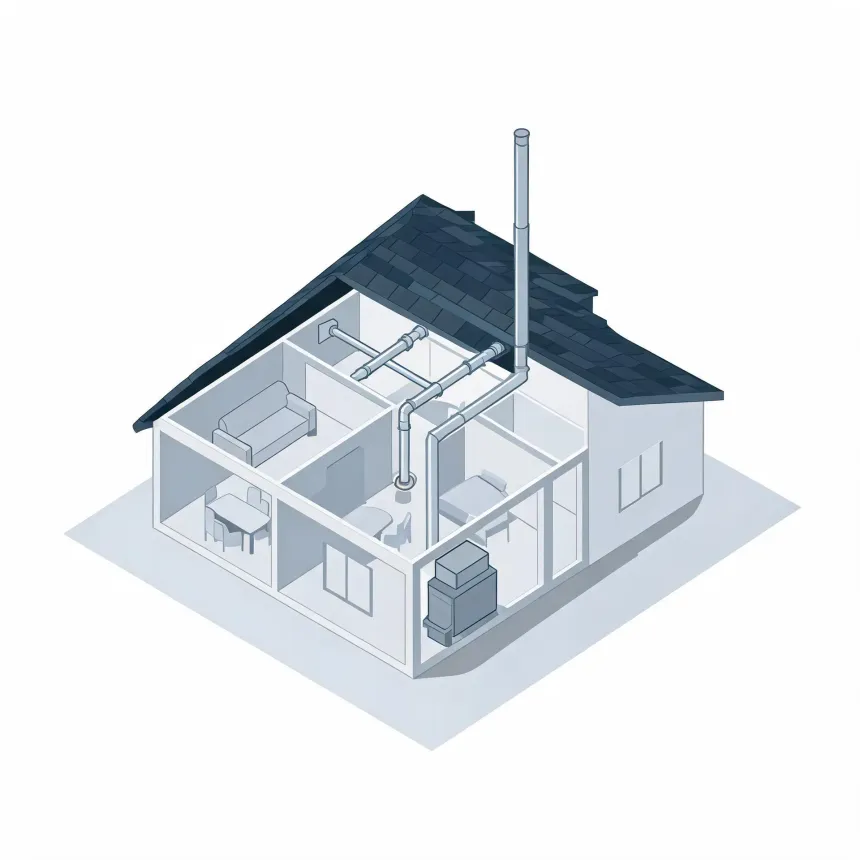
Isometric cutaway illustration of a single-story house showing interior rooms with furniture, ductwork and piping running to a tall vertical flue through the dark shingled roof, and a furnace-like appliance unit on the floor.
Your furnace works hardest from November through March.

NOAA nClimDiv, 1991–2020 normals

Furnaces in Fort Madison start running in October.

A part that was already weak often gives out in the first cold weeks of the season.

Half the furnaces in Fort Madison are working in houses built in 1960 or earlier

Half the homes here were built by 1960
Heat runs October through May
Winter nights average 20°F
Fort Madison weather is nothing special for a furnace13 winter storms hit Lee County between 2015 and 2024, about one a year

A furnace in a house built in 1960 or earlier isn't doomed. But it's worth asking a straight question before paying for a big repair. How much life is actually left in this unit. A cracked heat exchanger or a failed control board on a furnace that old is a different decision than the same repair on one installed five years ago. Ask the tech for the furnace's age if you don't already know it, and ask what the repair actually buys you. Sometimes the honest answer is years. Sometimes it's one more winter.

Get it looked at early

Problems tend to show up in the first weeks of the season, when the load hits a part that was already weak.

Find a contractor
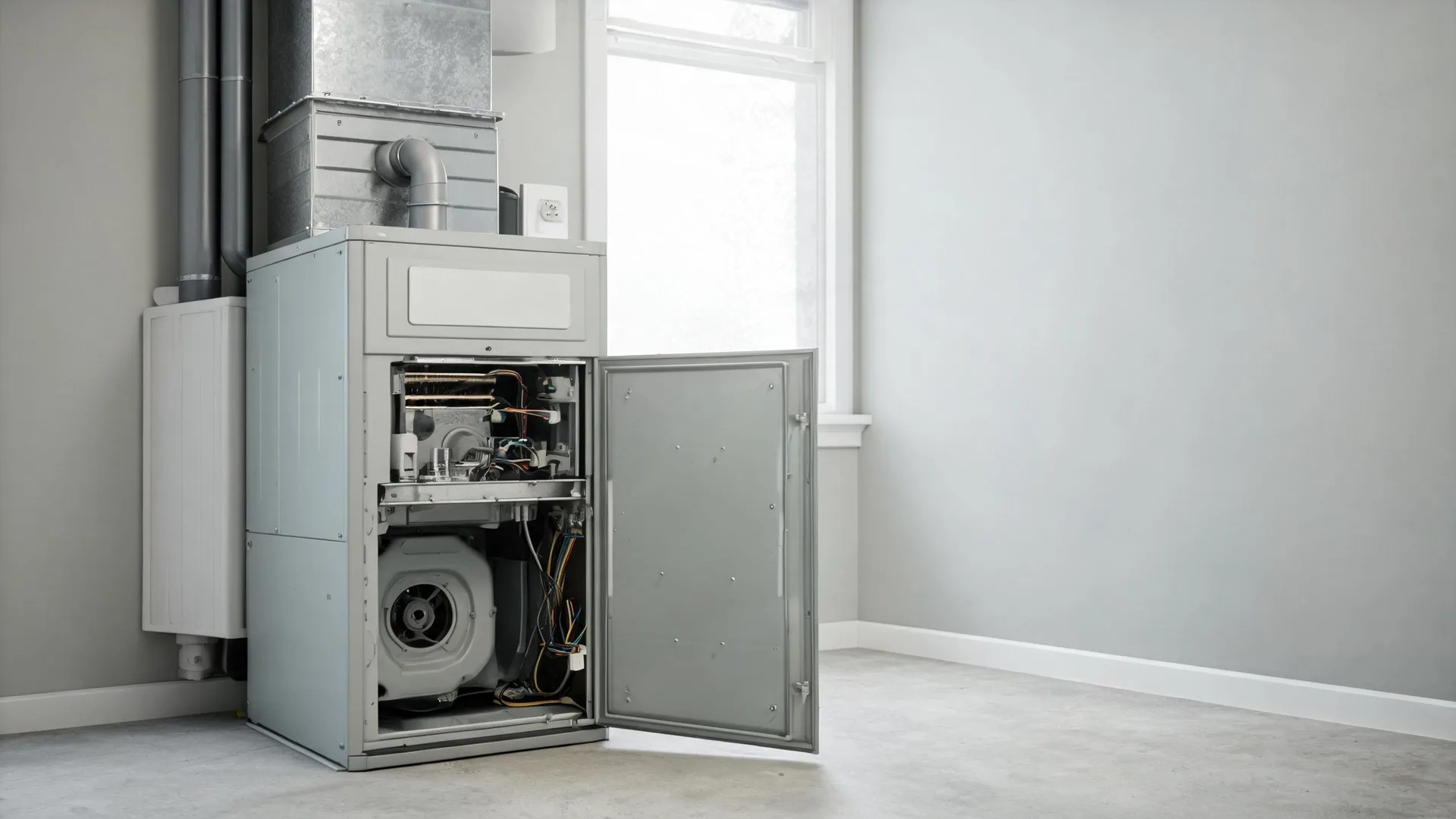
A gray residential gas furnace installed in an unfinished basement, surrounded by ductwork, a metal flue pipe, and a gas supply line.

What you'll notice before it quits

A furnace usually tells you before it quits outright. Heat that used to come fast now takes longer, or the air out of the vents feels lukewarm instead of hot. It short cycles, running for a stretch and shutting off before the house warms up. You hear it try to start and fail, catching then dying, or it doesn't catch at all and just clicks. Some of this is ordinary wear announcing itself. A flame sensor coated with residue will make the burners shut off right after they light, and that's a quick clean, not a big deal. A cracked heat exchanger shows up differently, sometimes as a burning smell, sometimes as soot around the access panel. That one you don't wait on. If the blower runs constantly or won't shut off, or the furnace is short cycling on a cold night, get it looked at before the same weak part gives out again on the next one.

Check the simple stuff first

Make sure the thermostat is set to heat and the setting is above room temperature. Check that the switch on the furnace itself, the one that looks like a light switch near or on the unit, is flipped on. Check the breaker. None of this feels like real troubleshooting, but a tripped breaker or a thermostat bumped into cool mode accounts for more no-heat calls than people expect.

Check the filter and the vents

Pull the filter and hold it up to a light. If you can't see light through it, it's choking the airflow and the furnace may be shutting itself off to protect against overheating. Walk the house and make sure no vents are closed or blocked by furniture or rugs. A furnace needs the air it pushes out to come back to it somewhere, and blocked returns cause the same short cycling as a dirty filter.

A gray forced-air furnace with ductwork stands in an unfinished concrete basement surrounded by storage items and clutter.

A new furnace would cut about $100 a year off heating for a typical Lee County home.

  • A new high-efficiency furnace$380 a year
  • An older furnace$480 a year

Estimates for a typical Lee County home, compared with an older unit built to the previous federal minimum, from EIA household energy data, Iowa fuel prices and NOAA climate normals. Your home will differ.

Repair makes sense when one part has failed and the heat exchanger is sound.

Replacement makes sense when the heat exchanger is cracked or the furnace keeps needing parts.

A diagnostic call starts with the complaint, not the furnace. The tech asks what it's doing, when it started, and whether it happens every time or just sometimes before ever pulling the panel off. Then comes a visual check of the burners, the flame color, and the heat exchanger where it can be seen, looking for soot or rust that shouldn't be there. After that comes the electrical side. The igniter gets tested for resistance, the flame sensor gets checked for a clean signal, and the pressure switch gets tested to make sure it's doing its job. A gauge usually comes out to check the gas pressure at the manifold, since too much or too little changes how the burners fire. By the end the tech should be able to point to the one part that's failing and explain what it does, not just that something's wrong somewhere.