

A nighttime street view of several illuminated two-story red brick homes with front porches, flanked by a large tree.

Furnace Repair in Carroll, IA

Tell us about the job

Takes about a minute. No obligation.

RepairFurnace or heatingCarroll County, IA
Step 1 of 2

What ZIP code is the job in?

Furnaces in Carroll County run from October through May. That's eight months of the year the burner is cycling on and off, and overnight lows average 14°F through December, January and February. A furnace built for occasional use doesn't see that kind of schedule. Here it's working most of the year, often against real cold, and the igniter, the blower motor and the heat exchanger all feel that. When something acts up after a stretch like that, it's usually not bad luck. It's wear that caught up with a part, and the only way to know which one is to have it looked at properly.

8 months
October through May, your furnace is on duty
14°F
the average winter night it heats against
58%
of homes here heat with gas, so most furnaces here burn gas
23 winter storms
in ten years, the nights a failure hurts most
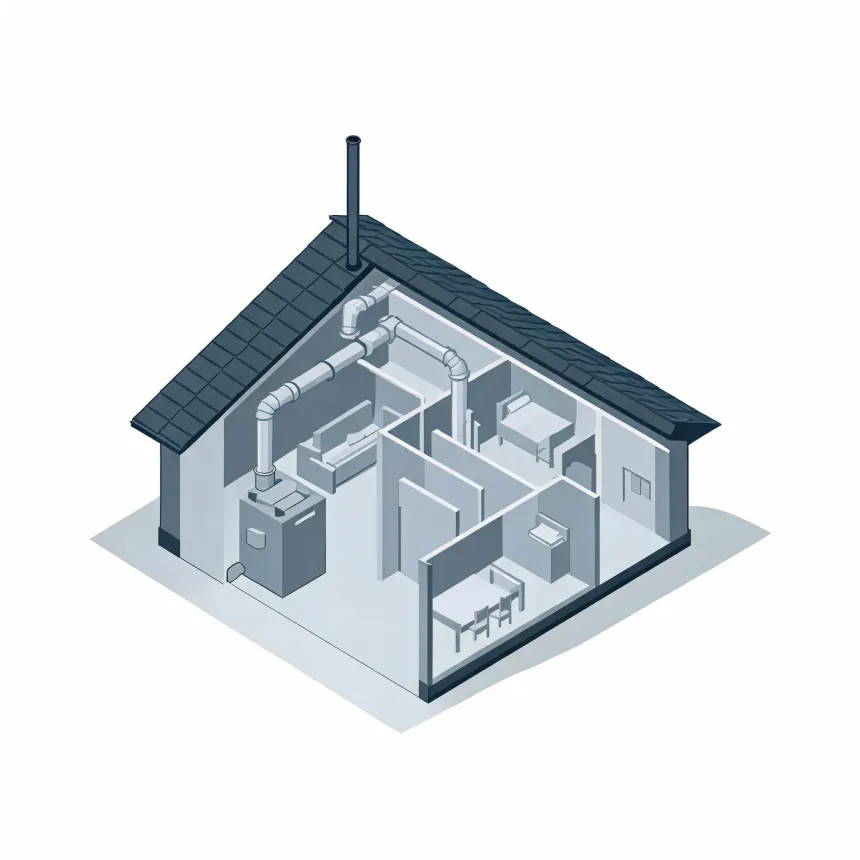
Isometric cutaway illustration of a small single-story house showing interior rooms with furniture, a furnace unit with attached ductwork running to a roof flue, and a dark shingled roof.
Your furnace works hardest from November through March.

NOAA nClimDiv, 1991–2020 normals

Half the homes in Carroll County were built in 1964 or earlier.

A furnace that came with a house that old has likely put in more years than it has left.

September is worth a look before heat goes back on in October. Furnaces that sat quiet all summer tend to show their weak spot in the first cold stretch, not months in. A cracked igniter or a failing blower motor can make it through a mild day and then quit the first time the system has to run for hours straight. If yours struggled at the end of last season, that trouble doesn't fix itself over the summer. It's usually still there waiting for the first real cold night.

Have it looked at before you decide what to do

Get the furnace checked instead of guessing. A technician can tell you whether it's the igniter, the blower motor or something else, and whether it's worth fixing on a furnace that's already put in this many years of hard winters.

Find a contractor
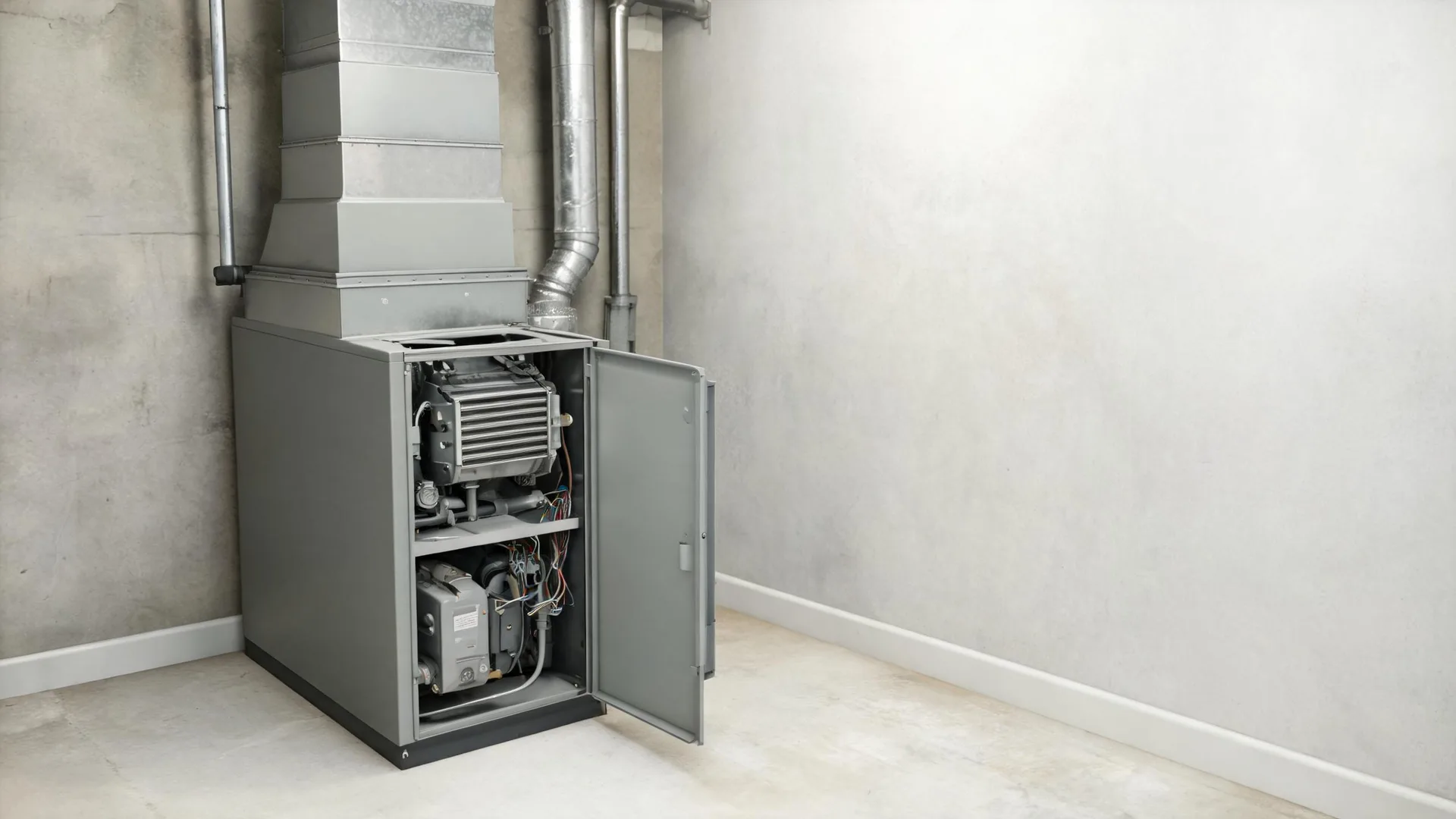
A gray residential gas furnace installed in an unfinished basement, surrounded by ductwork, a metal flue pipe, and a gas supply line.

Check the furnace's age before you spend

If your furnace came with the house, check its age before putting money into a repair. The data plate inside the panel has the install date or the manufacture date. A furnace that's already outlasted most of its years ahead can still run fine for a while, but the next big repair is a harder call than it would be on a newer unit. That's worth knowing before you spend on this one.

What you can check first

Make sure the thermostat is set to heat and the setting is above room temperature. Check the breaker or furnace switch, the one that looks like a light switch near the unit. If yours runs on a standing pilot, check whether it's lit. Swap the air filter if it's gray or clogged. A blocked filter can starve the system enough to trip a safety switch and shut the whole thing down.

What to leave alone

Don't open the burner compartment or touch the gas valve. Don't pull the blower motor or reach near the heat exchanger. If the furnace is trying to start and failing, shutting off and clicking over and over, turn it off at the switch and leave it off until someone looks at it. Running it through repeated failed starts can crack an igniter or flood the burner.

An empty unfinished basement containing a forced-air furnace with overhead ductwork, exposed ceiling joists, and a single hanging light bulb.

A new furnace would cut about $110 a year off heating for a typical Carroll County home.

  • A new high-efficiency furnace$460 a year
  • An older furnace$570 a year

Estimates for a typical Carroll County home, compared with an older unit built to the previous federal minimum, from EIA household energy data, Iowa fuel prices and NOAA climate normals. Your home will differ.

Repair makes sense when one part has failed and the heat exchanger is sound.

Replacement makes sense when the heat exchanger is cracked or the furnace keeps needing parts.

A repair is worth doing when the part that failed is one part and the rest of the furnace owes nothing. An igniter, a flame sensor, a pressure switch, these fail on their own and taking care of one doesn't say anything bad about the rest of the unit. Replacement starts to make sense when the heat exchanger is the problem, because that part isn't sold on its own and isn't meant to be swapped out. It also makes sense when a furnace is already calling for a second or third repair in a short stretch, since that's usually not a run of bad luck, it's a unit getting harder to keep running. A tech who's opened it up can tell you which situation you're in. Guessing from the symptom alone usually can't.