Half these homes date to 1965 or earlier
Cedar County's housing stock skews old. A furnace original to a house that age has been running for decades, even if it was swapped out once since then.
Takes about a minute. No obligation.
Cedar County's housing stock skews old. A furnace original to a house that age has been running for decades, even if it was swapped out once since then.
An old furnace can usually be fixed. The question is whether it has enough years left to make that repair worth doing. Ask the tech straight out how much life is left in the unit.

NOAA nClimDiv, 1991–2020 normals
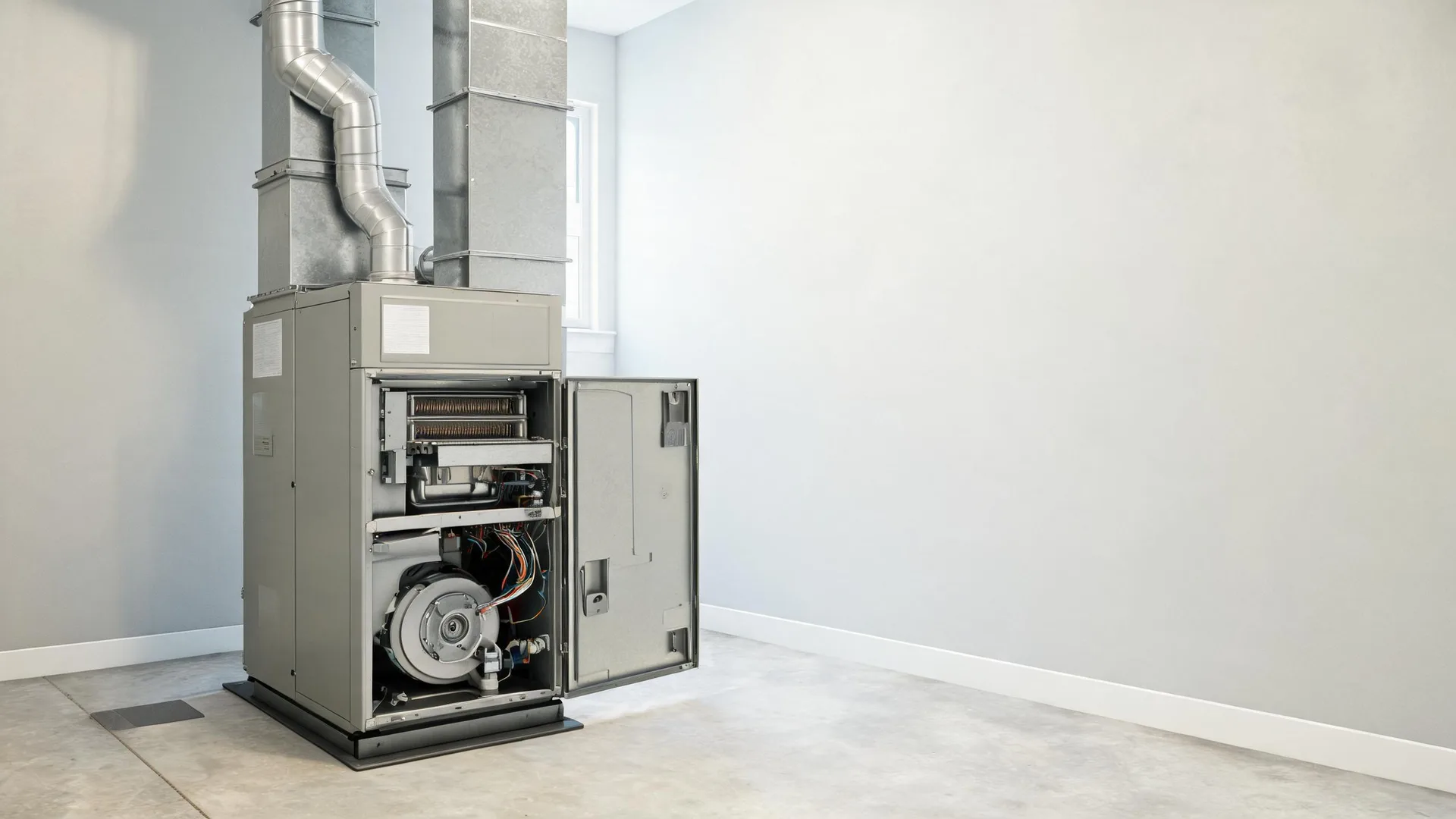
A diagnostic visit starts with a check of the flame sensor, the igniter, the pressure switch and the limit switch before anyone touches the furnace.
Checking parts in that order shows a tech which one failed first instead of which one failed because of it.



A furnace that's short cycling or tripping its limit switch will keep doing it, and keep running, until something tells it to stop. That something is usually the part that failed. A cracked heat exchanger gets worse under repeated heating and cooling stress, not better. A blower motor straining on worn bearings will keep drawing more current until it seizes. Flame that burns yellow instead of blue means incomplete combustion, and running a furnace in that state longer doesn't fix the air mixture, it just keeps producing carbon monoxide. The furnace isn't resting between cycles. It's wearing on the same weak point every time it fires.
Eight months of heat a year, with overnight lows averaging 16°F through December, January and February, asks a lot of a furnace. Add the winter storms Cedar County sees most years, and you've got a machine that rarely gets a break. That kind of load is usually what's behind whatever's acting up right now. Get it diagnosed properly so you know what actually failed, and whether the fix will hold.
Find a contractorA furnace doesn't fail the same way in its second year as it does in its fifteenth. Early on, trouble usually traces to one part. A flame sensor goes, or an igniter, or a pressure switch. Replace it and the furnace runs like it did before. Later, the failures stack up. The blower motor that was rebuilt once needs it again. The heat exchanger that was fine last winter has rust starting on a seam. Hours add up on every part at once, and they don't wear evenly. Something is always closest to the end of its life. The furnace doesn't know that and doesn't slow down for it. It fires the same way on the coldest night of its last winter as it did on its first.
The igniter cracks from being heated and cooled every single cycle, year after year, until it breaks. The flame sensor coats over with a thin layer of oxidation that builds slowly and eventually stops reading the flame at all. Neither one fails because something went wrong. They fail because that is what the part does eventually, and the fix is to replace it.
A dirty filter or a blocked return doesn't just mean weak airflow. It makes the heat exchanger run hotter than it should, and that's what trips the limit switch or shortens the life of the blower motor. When a furnace is failing somewhere past the filter, it's worth asking whether the real problem started further back in the system.
Estimates for a typical Cedar County home, compared with an older unit built to the previous federal minimum, from EIA household energy data, Iowa fuel prices and NOAA climate normals. Your home will differ.
Repair makes sense when one part has failed and the heat exchanger is sound.
Replacement makes sense when the heat exchanger is cracked or the furnace keeps needing parts.
A repair decision usually comes down to what failed and where. A part that fails on its own, like an igniter or a flame sensor, is a normal repair on a furnace that's otherwise sound. The cabinet, the heat exchanger and the blower motor are harder to replace and cost more to replace, so trouble in one of those changes the math. Rust on the heat exchanger says the furnace is further along than the single broken part suggests. So does a blower motor that's already been rebuilt once. A tech who opens the cabinet can tell you which kind of failure this is before you commit to fixing it.