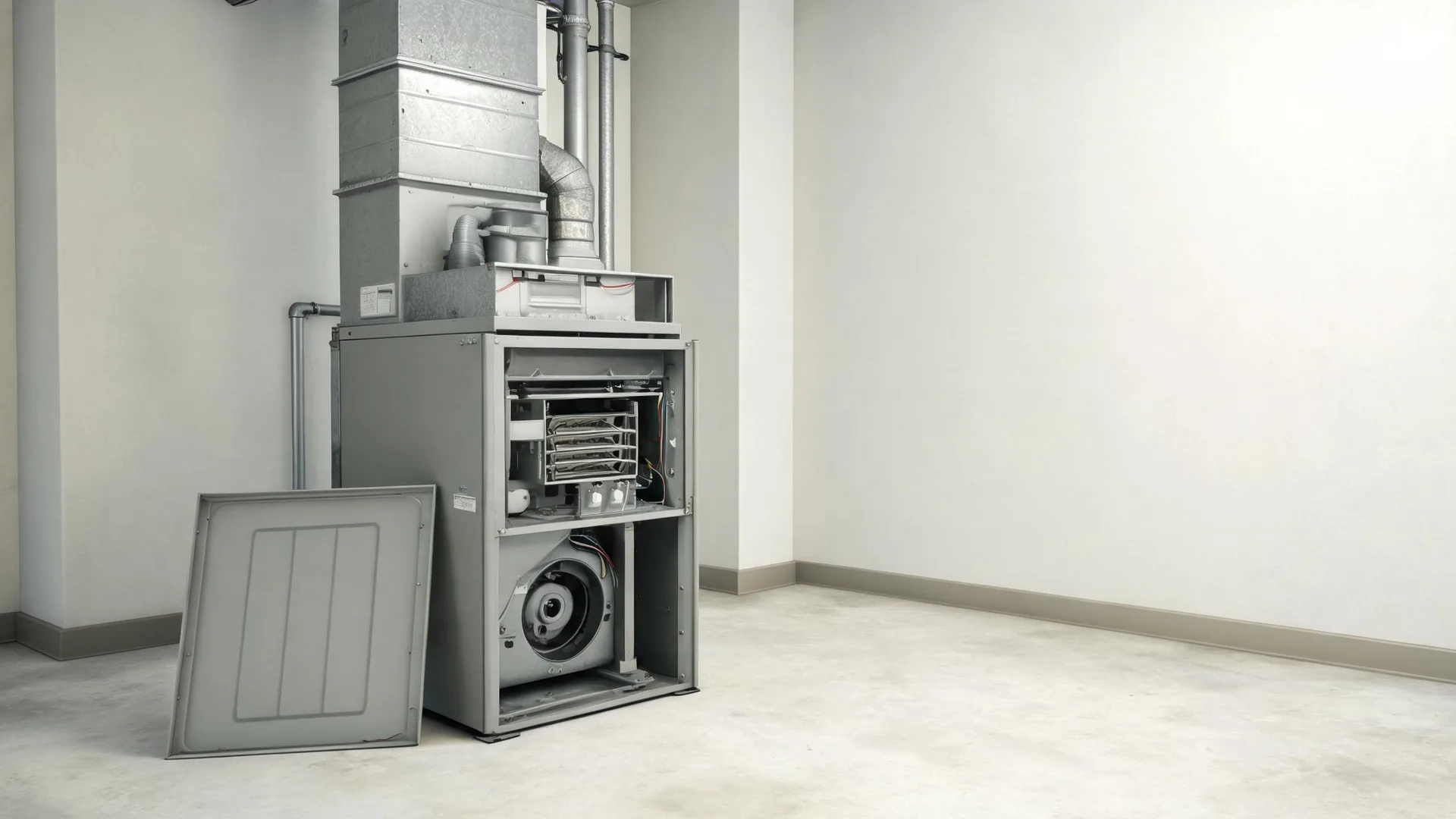
Ottumwa homes are older
Half the homes in Wapello County were built in 1958 or earlier. A furnace in one of these houses is often not the original. It may already be a replacement.
Takes about a minute. No obligation.
Half the homes in Wapello County were built in 1958 or earlier. A furnace in one of these houses is often not the original. It may already be a replacement.
A cracked heat exchanger or a dead control board on an old furnace is a different decision than the same problem on a newer one. Worth knowing before you spend on the repair.
NOAA nClimDiv, 1991–2020 normals
Furnaces in Wapello County run from October through May, about eight months of the year.
Eight months of work a year, with nights averaging 18°F, is why furnaces here break down.
If your system came with an older house, it may be near the end of its life. Ask how much life it has left before paying for a big repair.
Find a contractorA furnace that runs this many months a year doesn't fail out of nowhere. It gives notice first. It might short cycle, kicking on and off every few minutes instead of running a full heat cycle. It might blow air that's gone lukewarm instead of hot. The burner flame might show yellow instead of steady blue, which points to a combustion problem worth checking right away. A furnace that groans or squeals on startup is usually telling you about a motor bearing or a belt, if yours still has one. Banging or popping from the ductwork when the system kicks on often means the burners are delayed in lighting. None of these are things to wait out. A furnace that's struggling to start or struggling to stay running is working harder than it should, and the part causing that trouble doesn't fix itself with time.
A furnace that's short cycling or losing its flame isn't failing evenly. The blower motor, the igniter, the control board all have to work harder to make up for the one part that's struggling. That strain lands on parts that were otherwise fine, and it shortens what's left of their life too.
A cracked heat exchanger or a flame burning yellow instead of blue means combustion gases aren't going where they should. That doesn't get safer the longer the furnace runs. Shutting it off and getting it looked at is the right call, not an overreaction.
Estimates for a typical Wapello County home, compared with an older unit built to the previous federal minimum, from EIA household energy data, Iowa fuel prices and NOAA climate normals. Your home will differ.
Repair makes sense when one part has failed and the heat exchanger is sound.
Replacement makes sense when the heat exchanger is cracked or the furnace keeps needing parts.
A tech starts by asking what you've noticed. When it happens, how often, whether it's gotten worse. Then comes a look at the burner flame, a check of the igniter or pilot, and a test of the control board's readings against what they should be. Static pressure in the ductwork gets measured too, since too much resistance on the blower can cause symptoms that look like something else entirely. The heat exchanger gets inspected for cracks. That's not something you can see from the thermostat, and not something to guess about. By the end, you should know which part is actually failing, not just that something is wrong.