




An unfinished concrete basement containing a metal HVAC air handler, exposed wooden ceiling joists with sheet-metal ducts, a hanging bare bulb, copper pipes, and stacked cardboard boxes.

Furnace Repair in Guttenberg, IA

Tell us about the job

Takes about a minute. No obligation.

RepairFurnace or heatingClayton County, IA
Step 1 of 2

What ZIP code is the job in?

Eight months of heat, October through May, is a long stretch for any furnace to carry. Most places get a break. Yours doesn't get much of one. That kind of run time puts real hours on the igniter, the blower motor, the parts that cycle on and off all day and night. When something starts acting up partway through a winter like that, it's usually not bad luck. It's the system telling you it's been working.

8 months
October through May, your furnace is on duty
13°F
the average winter night it heats against
28 winter storms
in ten years, the nights a failure hurts most
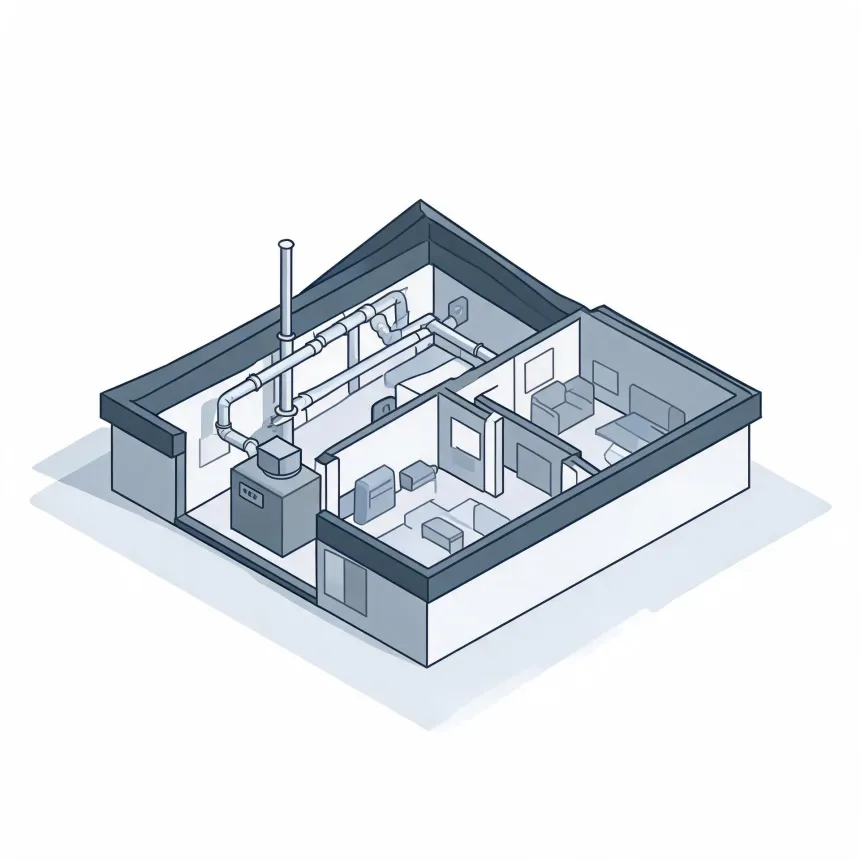
Isometric line illustration of a cutaway building interior showing a furnace unit with a flue pipe and ductwork running along the ceiling, plus adjacent rooms with simplified furniture.
Your furnace works hardest from November through March.

NOAA nClimDiv, 1991–2020 normals

A cracked heat exchanger doesn't fix itself by running less, and it doesn't wait for a good time to fail.

Keep firing a furnace with a bad exchanger and you're pushing combustion fumes closer to the living space with every cycle.

Half the furnaces in Guttenberg are older than the one you grew up with

Half the homes here were built by 1960
Heat runs October through May
Winter nights average 13°F

A diagnostic visit starts with the thermostat and works back from there. A tech checks that the call for heat is actually reaching the furnace before opening anything up, because a bad thermostat or a tripped breaker can look exactly like a dead furnace. From there it's the sequence of a normal heat cycle, watched step by step. Does the inducer motor start. Does the igniter glow and light the burners. Does the flame stay lit and the blower kick on behind it. Wherever that sequence breaks is where the problem lives, and most of the time the furnace itself points right at it. The rest of the visit is confirming what kind of failure it is; a part that reads outside its normal range on a meter, a flame sensor too corroded to hold a signal, a crack found with a mirror and a light. That's what tells you whether you're looking at a part or a pattern.

Get it diagnosed properly, so the fix holds

A furnace that's acting up after eight months of winter work a year has earned a real look, not just a quick fix. Get the actual problem diagnosed so whatever you pay for solves it.

Find a contractor
A man in a cap, dark long-sleeved shirt and brown work pants walks up porch steps toward a gray front door, carrying a worn canvas tool bag filled with hand tools.
A gas furnace with attached ductwork, gas piping, and condensate lines installed in a concrete-block basement.

An old furnace in an old house has already done a lot of work

Half the homes in this county were built in 1960 or earlier. If yours is one of them, the furnace carrying you through winter might not be the original, but whatever's in there has likely been replaced at least once already. When a repair call comes in on a furnace that age, the question worth asking isn't just what's broken. It's how many more of these calls you want to make before the next one costs a lot more than this one. A tech can look at the unit and tell you whether this is a fix worth paying for or a sign to start planning the swap.

What shows up first

A furnace in trouble usually tells you before it quits outright. It short cycles, running for a few minutes and shutting off before the house warms up. The air coming out of the vents feels lukewarm instead of hot. You hear a bang or rattle at startup, or a clicking that doesn't catch into a steady flame. The blower runs but no heat follows it. Any one of these on its own is worth a call. A few of them together means something is actively failing, not just aging.

What's worth paying attention to

Soot around the cabinet, a yellow flame instead of blue, or a burning smell that doesn't fade after the first few minutes of a cycle point at combustion problems, and those aren't ones to wait out. A smell like rotten eggs means a gas leak, and that furnace needs to be shut down and looked at right away. Rising utility bills with no change in how the house is heated usually mean the furnace is working harder to do the same job. None of these fix themselves by waiting for a warmer stretch.

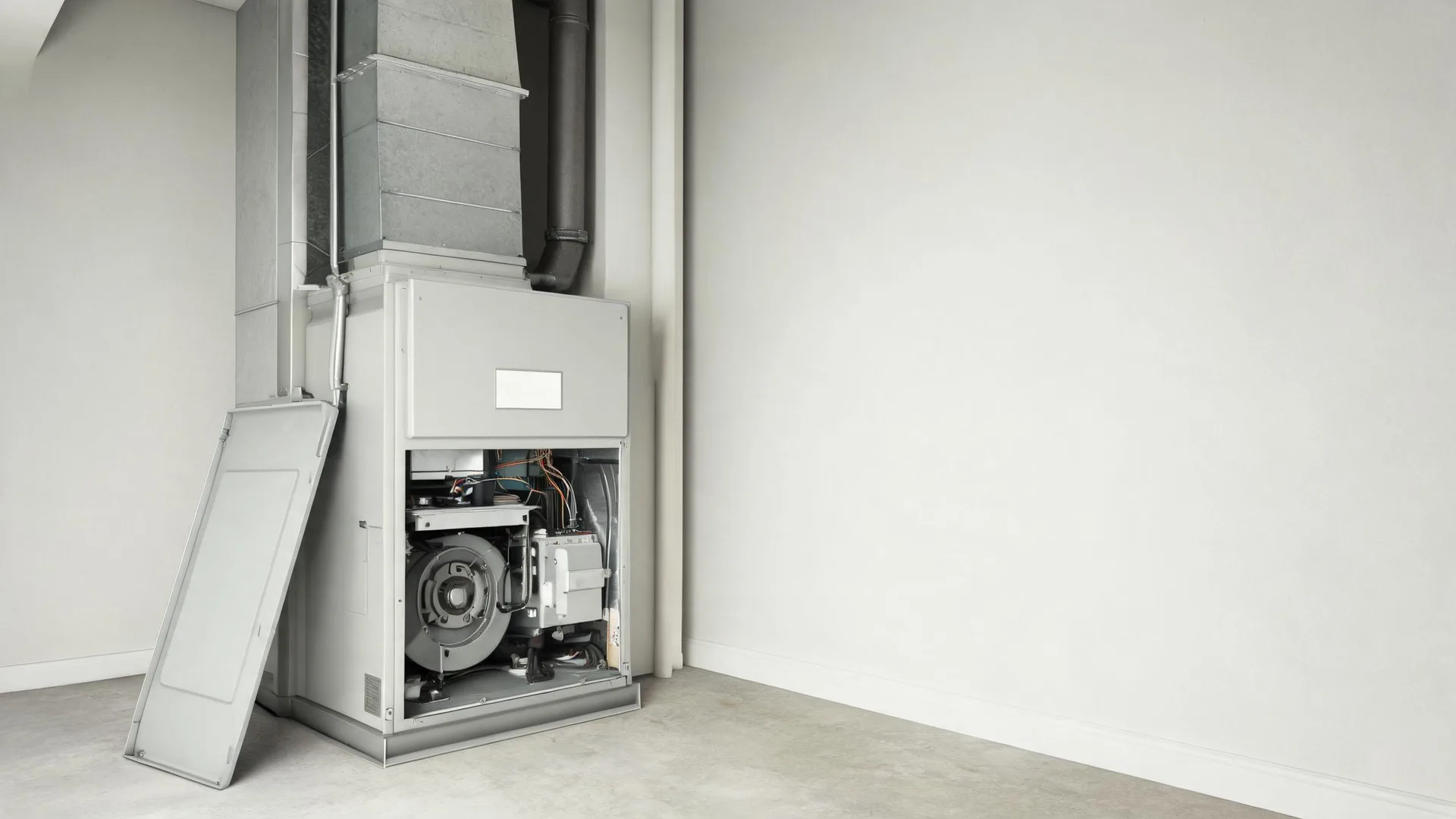
A gas furnace with sheet-metal ductwork and PVC pipes installed in an unfinished basement.

A new furnace would cut about $120 a year off heating for a typical Clayton County home.

  • A new high-efficiency furnace$480 a year
  • An older furnace$600 a year

Estimates for a typical Clayton County home, compared with an older unit built to the previous federal minimum, from EIA household energy data, Iowa fuel prices and NOAA climate normals. Your home will differ.

Repair makes sense when one part has failed and the heat exchanger is sound.

Replacement makes sense when the heat exchanger is cracked or the furnace keeps needing parts.

A repair makes sense when the problem is one part and the rest of the furnace has been keeping up its end. A new igniter, a new flame sensor, a new capacitor, these are small jobs on a machine that's otherwise sound, and there's no reason to replace a furnace over one worn part. Replacement starts to make more sense when the repairs stop being isolated. A heat exchanger cracks because the metal has fatigued from years of heating and cooling, and that's not a sign of one bad part, it's a sign the whole unit is nearing the end of what it can do. The same goes for a blower motor or a control board failing on a furnace that's already needed other work recently. A tech who's inside the cabinet can tell you whether what's failing now is a one-off or the next in a line, and that's worth more than guessing from the symptom alone.