



A dark horizontal-sided building corner in the left foreground beside a mowed lawn, with a light-colored single-story house and large deciduous trees under a pale sky in the background.

Furnace Repair in Mount Pleasant, IA

Tell us about the job

Takes about a minute. No obligation.

RepairFurnace or heatingHenry County, IA
Step 1 of 2

What ZIP code is the job in?

Your furnace in Mount Pleasant runs about eight months a year, October through May. That's most of the calendar spent cycling on and off, heating the house through nights that average 18°F in December, January and February. A furnace running that many hours, against that kind of cold, wears parts faster than one that only kicks on a few months a year. The igniter, the blower motor, the pressure switch, all of them are working more than their counterparts in a milder state. So when something starts acting up, it's usually not bad luck. It's a sign the system has been earning its keep and something finally gave. Worth having it looked at properly rather than guessed at, so whatever's fixed actually holds.

8 months
October through May, your furnace is on duty
18°F
the average winter night it heats against
53%
of homes here heat with gas, so most furnaces here burn gas
18 winter storms
in ten years, the nights a failure hurts most
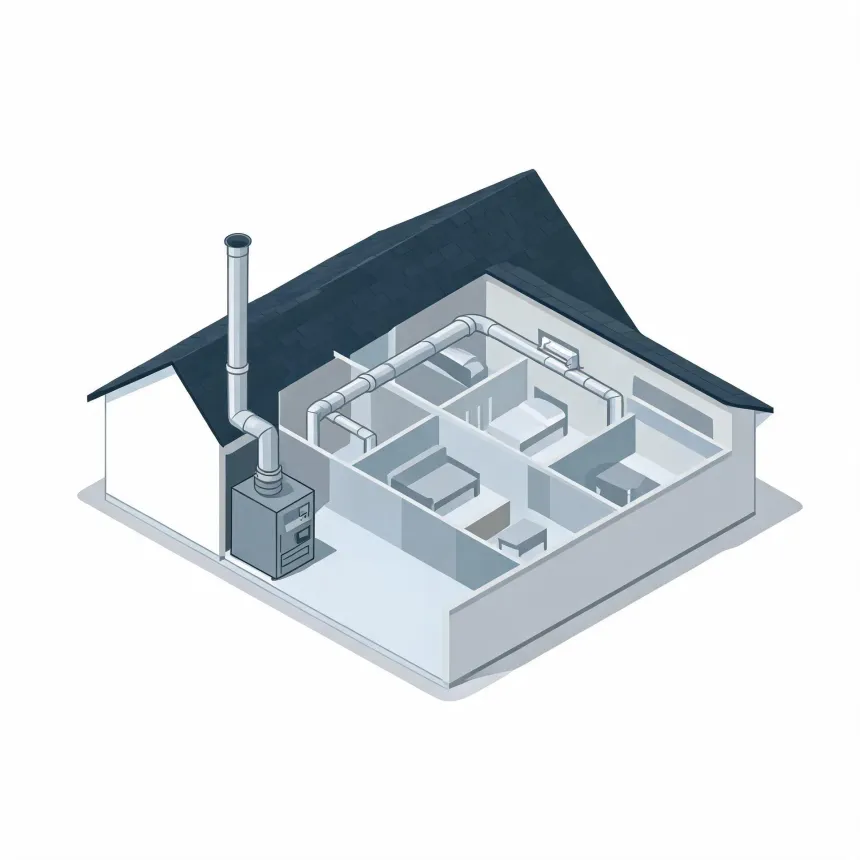
Isometric cutaway illustration of a single-story house with a dark shingled roof, showing interior rooms with beds and furniture, overhead ductwork, and a gray furnace with a tall flue pipe at the exterior wall.
Your furnace works hardest from November through March.

NOAA nClimDiv, 1991–2020 normals

Half the homes in Henry County were built in 1968 or earlier.

A furnace that came with a house that old is worth asking about before you pay for a big repair.

September is the month to check your furnace, before October asks it to prove itself

Heat runs October through May
Winter nights average 18°F
Climate zone 5A

If the furnace in your house hasn't been swapped out since the place was built, ask the contractor straight out how many years it's got left before you sign off on a repair. A cracked heat exchanger or a failing blower motor is a big job either way. No sense putting real work into a furnace that's on its last year or two regardless. Ask for a read on remaining life in the same visit as the repair estimate, not as an afterthought. That's the only way to know if you're fixing something or just putting off the same decision.

A furnace working this hard deserves a real diagnosis

Whatever's acting up, it didn't happen for no reason. Get it looked at properly, so you know whether it's a quick fix or a sign the furnace is done earning its keep.

Find a contractor
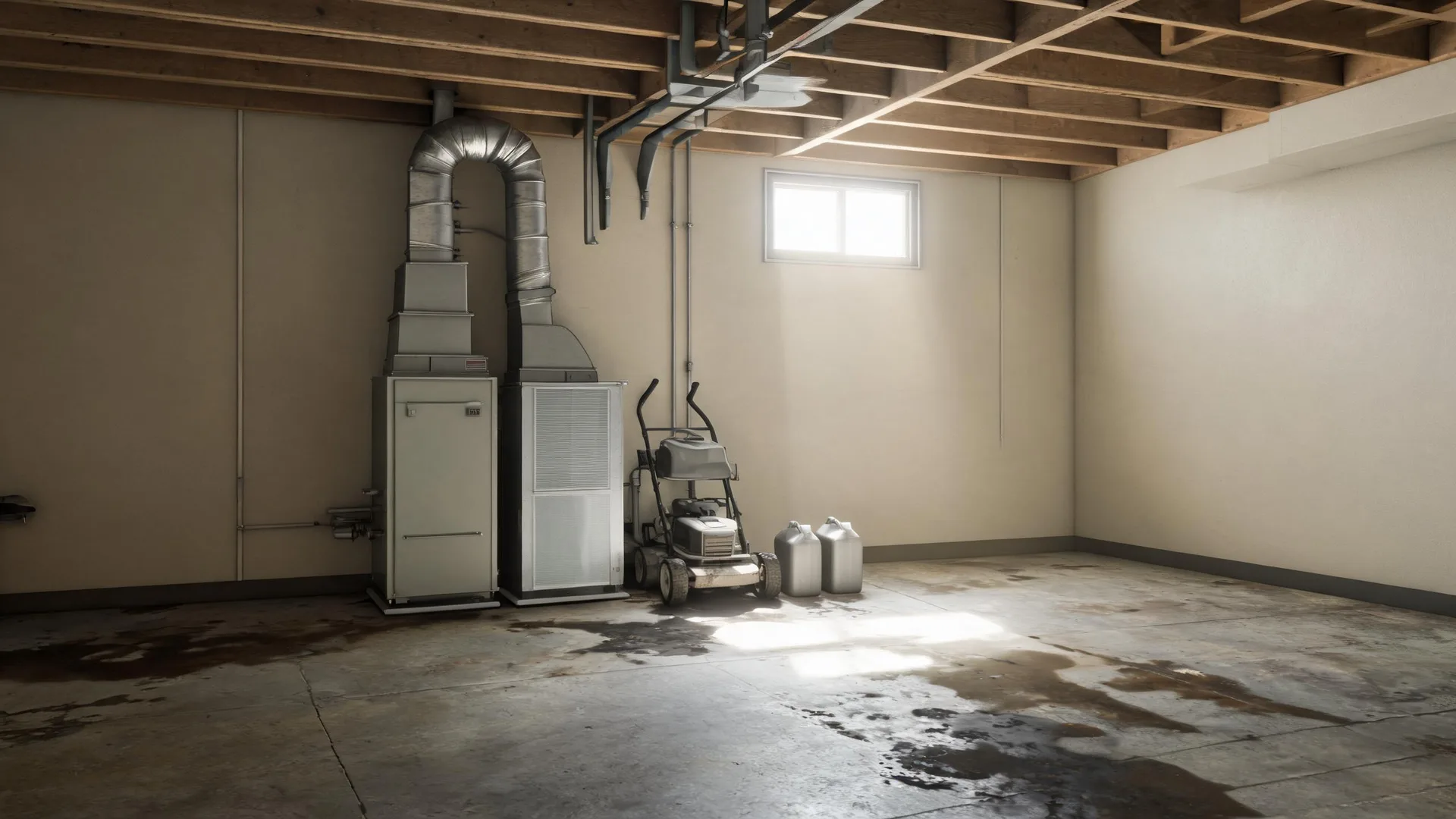
A gray residential gas furnace installed in an unfinished basement, connected to sheet-metal ductwork and PVC pipes.

What actually wears out, and in what order

Most furnace failures trace back to a handful of parts. The igniter is the one that goes most often. It's a thin strip that heats up to light the burners, and it's brittle. It takes the on-off cycling for years and eventually just cracks. The flame sensor is another regular. It gets coated with a film from the burner flame over time, and once that coating builds up, it can't tell the furnace a flame is lit, so the system shuts itself down as a safety measure. The blower motor wears from straight hours of runtime, the bearings go, and you'll hear it before you see it, a grinding or squealing on startup. The pressure switch can fail or just get stuck from dust and lint. And a cracked heat exchanger is the one that matters most, because that's not a part you replace on its own. If a furnace is old enough and a tech finds a crack, replacing the whole unit is usually the honest answer, not patching that piece.

The sounds tell you where to look

A furnace that bangs when it starts is likely has dirty burners or a duct that's expanding too fast. A screech on startup points to the blower bearings. Clicking that doesn't end in a flame lighting means the igniter is trying and failing. Each sound points somewhere specific, so tell the tech exactly what you heard and when.

Short cycling is the furnace protecting itself

If the furnace fires up and shuts off again within a few minutes, over and over, it's tripping a safety switch on purpose. A dirty flame sensor, a clogged filter restricting airflow, or an overheating limit switch all cause this. It's not a part to ignore, since the furnace is telling you it caught a problem before it became a dangerous one.

A bare concrete basement containing a gray gas furnace with metal ductwork and a vertical flue pipe, lit by a single hanging bulb.

A new furnace would cut about $100 a year off heating for a typical Henry County home.

  • A new high-efficiency furnace$400 a year
  • An older furnace$500 a year

Estimates for a typical Henry County home, compared with an older unit built to the previous federal minimum, from EIA household energy data, Iowa fuel prices and NOAA climate normals. Your home will differ.

Repair makes sense when one part has failed and the heat exchanger is sound.

Replacement makes sense when the heat exchanger is cracked or the furnace keeps needing parts.

A diagnostic visit starts with questions. What you heard, what you smelled, and when it happened. That matters more than people expect. A clicking sound with no ignition points somewhere different than a bang on startup. From there the tech opens the cabinet and checks things in order. Power to the board. The sequence of operation. Whether the igniter glows and the flame sensor picks up a flame once it's lit. A meter comes out for the parts that can't be judged by eye, testing the igniter's resistance or the flame sensor's microamp signal. Those readings either fall in range or they don't, so there's not much guesswork once the tech is in there. If the furnace is short cycling, the filter and airflow get checked before any part gets blamed, since a restricted filter can trip a limit switch that's otherwise fine. The last thing, and the one worth asking about directly, is the heat exchanger. A tech checks it for cracks because that part changes the whole conversation about whether a repair makes sense at all.