A lit brick residential street at dusk showing a row of two-story homes with covered porches and mature trees.

Furnace Repair in Council Bluffs, IA

Tell us about the job

Takes about a minute. No obligation.

RepairFurnace or heatingPottawattamie County, IA
Step 1 of 2

What ZIP code is the job in?

Half these homes were built in 1967 or earlier

That's the midpoint for Pottawattamie County, not the extreme. A furnace in a house that old may be the original, or it may already be a replacement for the original. Either way, age is worth checking before you decide this repair is worth paying for.

An old furnace rarely fails alone

When one part on an older unit gives out, the rest of it has the same years behind it. A repair fixes what broke today. It doesn't tell you how much the system has left before the next part goes.

8 months
October through May, your furnace is on duty
16°F
the average winter night it heats against
71%
of homes here heat with gas, so most furnaces here burn gas
16 winter storms
in ten years, the nights a failure hurts most
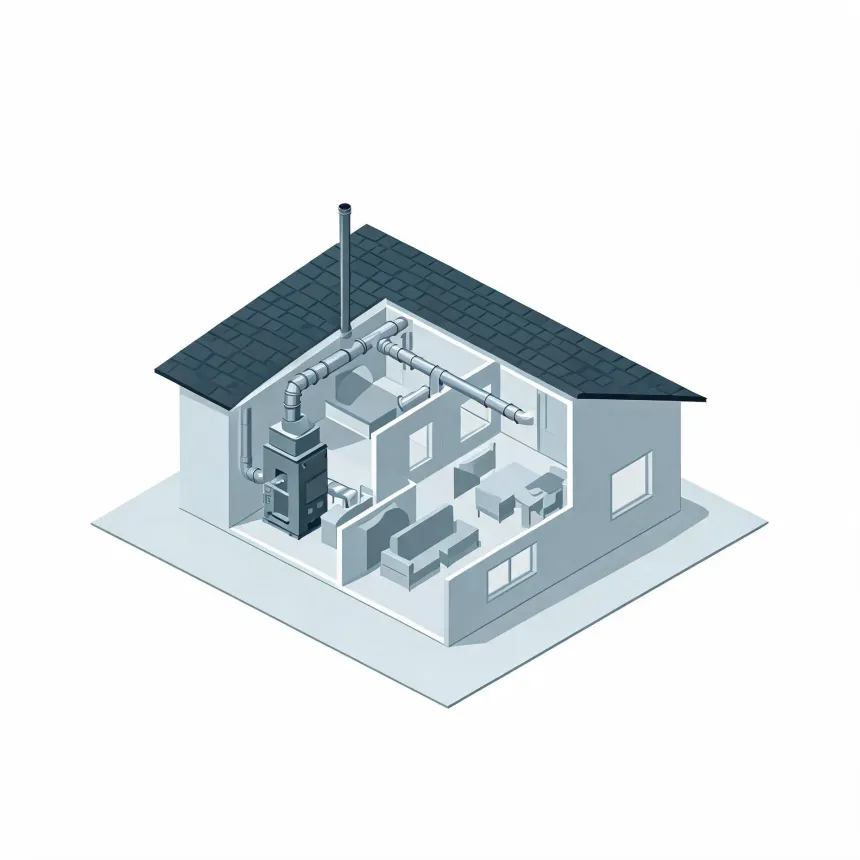
Isometric cutaway illustration of a single-story house with a dark shingled roof, showing a furnace with a flue pipe and branching ductwork running through interior rooms furnished with a sofa, table and chairs.
Your furnace works hardest from November through March.

NOAA nClimDiv, 1991–2020 normals

A cracked heat exchanger or a failed control board ends a furnace's life, and both show up more as the unit ages.

If the part that failed is wearing out alongside everything else in the cabinet, the repair bill is only the first one.

Eight months of heat a year wears a furnace down faster than a mild climate ever would

Heat runs October through May
Winter nights average 16°F
Climate zone 5A
October starts the season hereFurnaces run October through May, about eight months a year, and most problems surface in that first cold snap.

A technician starts by asking what the furnace is doing, or not doing, before any panel comes off. Short cycling, no heat, a burner that won't light, a blower that won't stop. That answer narrows things fast. Next comes the cabinet open and a look at the burners, the flame sensor, the igniter, and the inducer motor, checking each against what it should look like when it's working right. Many furnaces store fault codes as a series of blinks on a control board, and reading that code points straight at the failed part instead of a guess. Pressure and temperature readings come next, since a furnace running outside its normal range is usually telling you something failed upstream of the symptom you noticed. By the end, the tech should be able to name the part that failed and explain why it failed, not just that it did.

Know what you're repairing before you pay for it

If your furnace came with the house, ask the technician for its age before you approve the repair. That one answer tells you whether you're fixing a five-year-old furnace or patching one that was already old when you bought the place.

Find a contractor
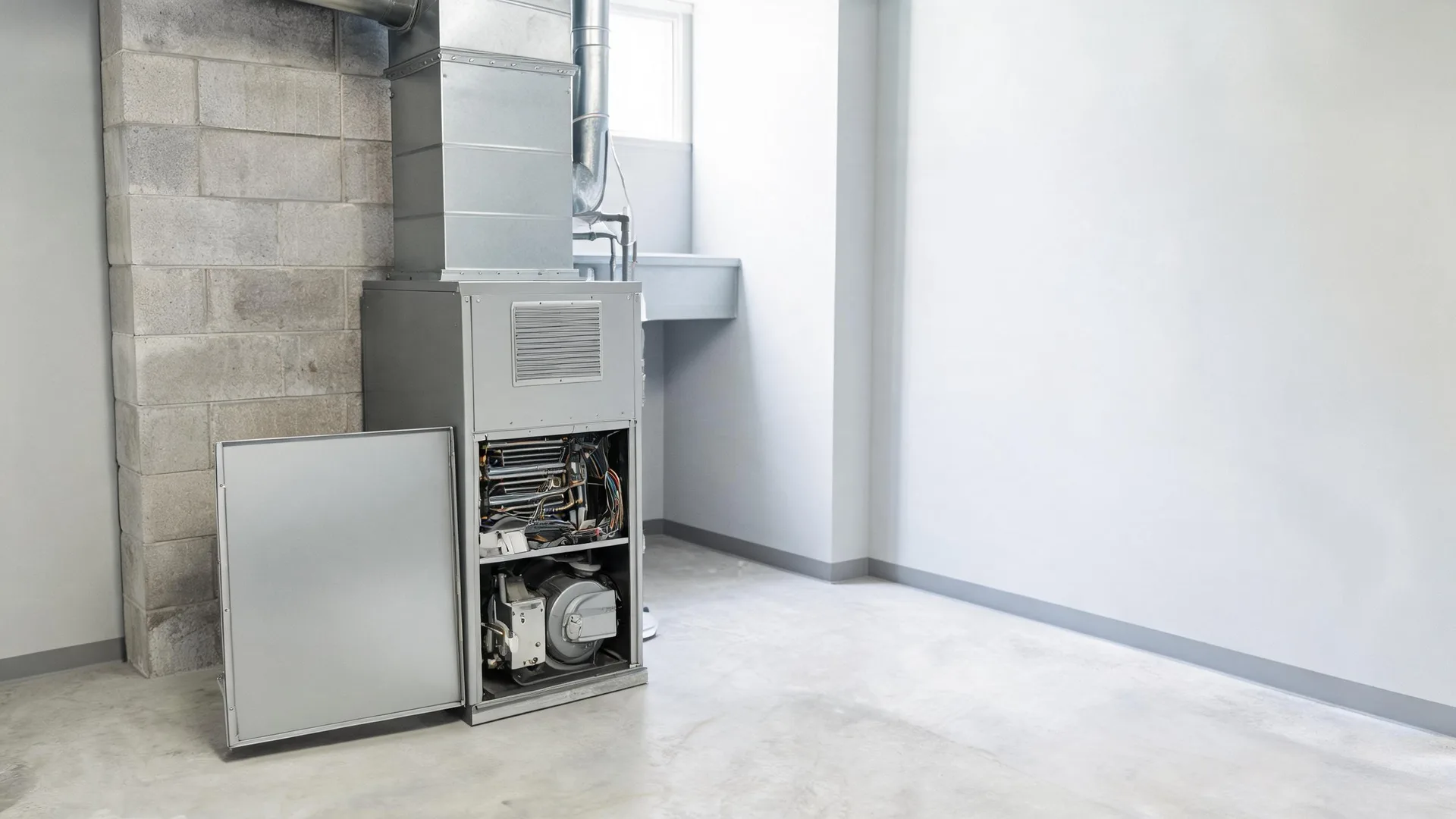
A gray residential gas furnace installed in an unfinished basement, surrounded by ductwork, a metal flue pipe, and a gas supply line.

Running long hours, season after season

Eight months of heat a year already caught up with this system once, or it wouldn't be acting up now. Before a part gets replaced, it's worth knowing why that part failed and whether the rest of the furnace is close behind it. A tech who checks the furnace's age and runs it through its full cycle can tell you if this repair holds for years or just gets you to the next breakdown.

A cracked heat exchanger gets worse with every cycle

A small crack lets the metal flex more each time the burners fire, and the flex widens the crack. Left alone, a furnace with this problem can start pulling exhaust into the air it's heating instead of venting it outside.

A failing limit switch can take the blower motor with it

The limit switch shuts the burners off if the furnace overheats. If it's stuck or going bad, the furnace keeps firing past the point it should stop, and the heat has nowhere to go but back onto the blower motor and the circuit board next to it.

An unfinished basement featuring a forced-air furnace, exposed wooden ceiling joists, bare concrete walls, and miscellaneous items including cardboard boxes and coiled cables on the floor.

A new furnace would cut about $100 a year off heating for a typical Pottawattamie County home.

  • A new high-efficiency furnace$420 a year
  • An older furnace$520 a year

Estimates for a typical Pottawattamie County home, compared with an older unit built to the previous federal minimum, from EIA household energy data, Iowa fuel prices and NOAA climate normals. Your home will differ.

Repair makes sense when one part has failed and the heat exchanger is sound.

Replacement makes sense when the heat exchanger is cracked or the furnace keeps needing parts.

A repair is worth it when the part that failed is the only thing wrong with the furnace. A new igniter or a new flame sensor on a unit that's otherwise sound will do its job for years. The question gets harder when the part that failed is the kind that takes others down with it, or when it failed because the furnace has simply run its course. A heat exchanger doesn't crack because of bad luck. It cracks from years of heating and cooling with every cycle, and a furnace old enough for that tends to have other parts just as tired. At some point the honest answer isn't which part to replace. It's whether the furnace behind that part is worth putting more into.