
Heat pump vs furnace in Pottawattamie County, Iowa

Quote Both Systems

For homes in Pottawattamie County

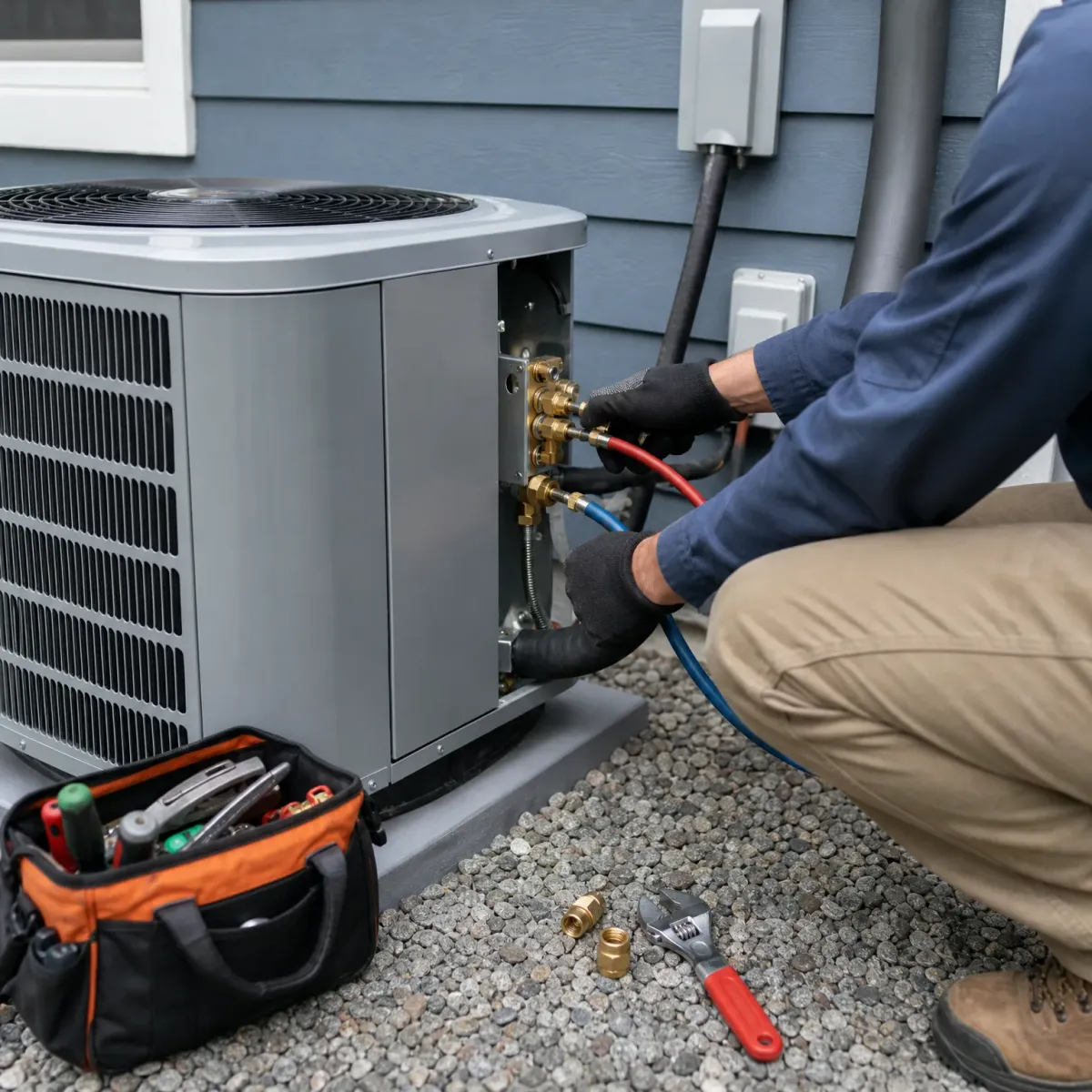
A person in a dark blue shirt and tan pants kneels on gravel beside a gray outdoor air conditioning condenser, attaching red and blue gauge hoses to brass service valves, with an open tool bag, an adjustable wrench, and brass fittings on the ground nearby.

Tell us about the job

Takes about a minute. No obligation.

New system or replacementPottawattamie County, IA
Step 1 of 3

What kind of equipment?

Which costs less to run in Pottawattamie County?

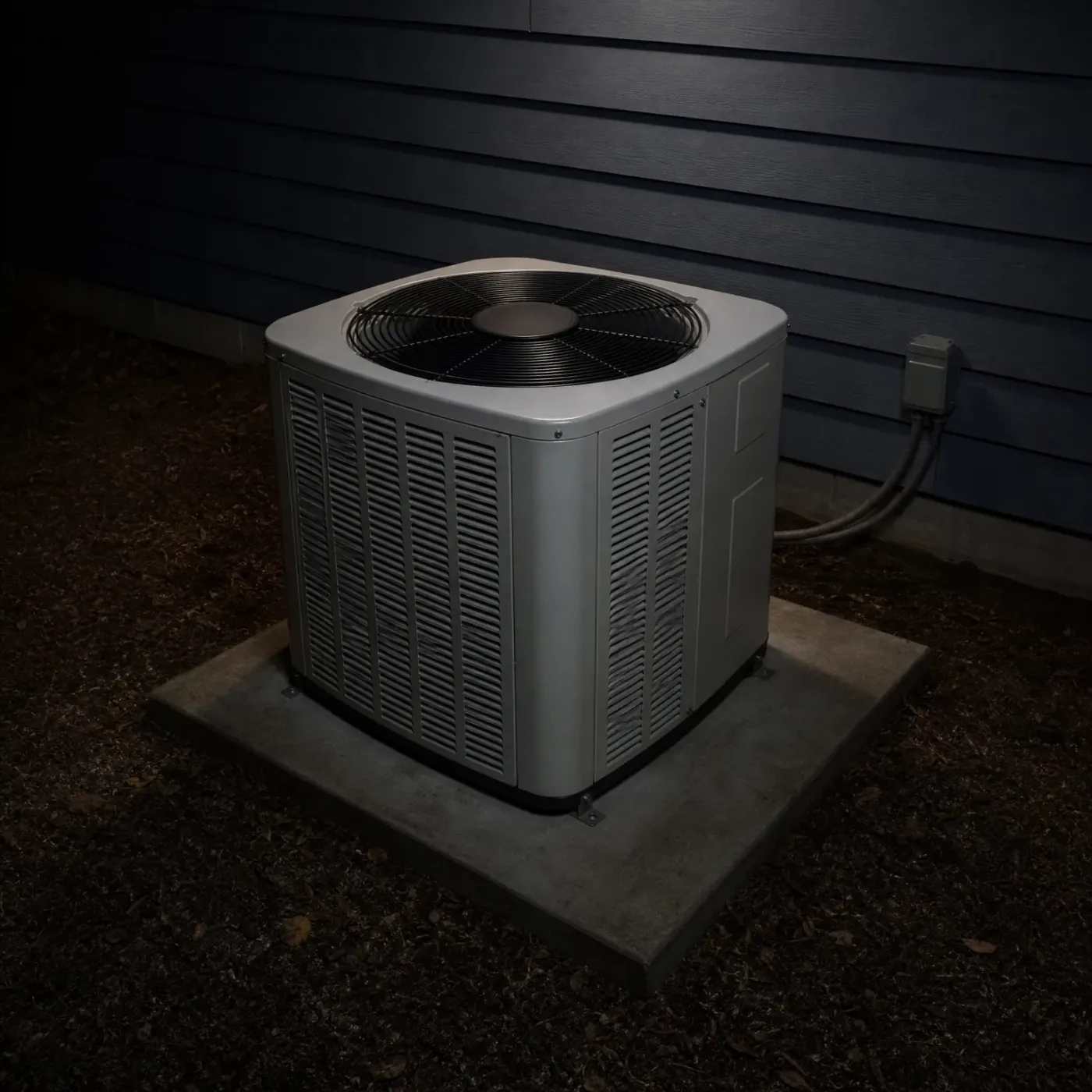
A gray outdoor condenser unit with a top fan grille sits on a concrete pad beside a dark horizontal-lap sided wall, with refrigerant lines running to a small wall-mounted box.

Heat pump

To heat your home here$1.79per 100,000 Btu

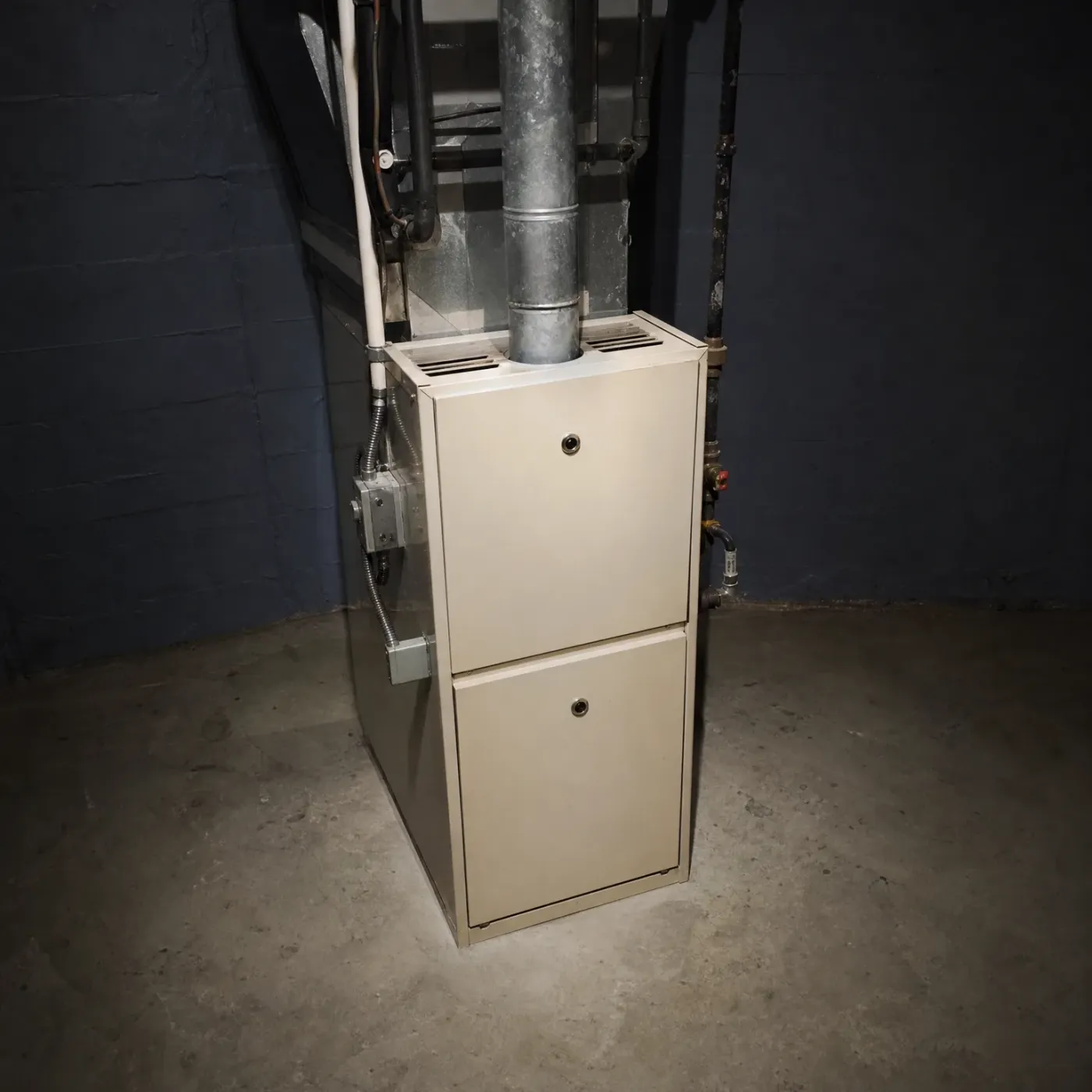
A beige residential furnace with two access panels stands on a concrete basement floor against a dark painted block wall, with a metal flue pipe and other pipes running up behind it.

Furnace

To heat your home here$1.21per 100,000 Btu

At Iowa's gas and electricity prices, a gas furnace makes the same heat as a heat pump for at least 32% less.

Btu stands for British thermal unit, the standard measure of heat energy.

Where does a heat pump shine?

  • Heats and cools in one system

    Winter and summer are covered by the same outdoor unit. That's one machine to service instead of two.

    A living room with a beige sofa holding blue and navy cushions and a grey fringed throw, set before a dark-framed window overlooking green trees and flowering shrubs, with cream curtains, a dark blue built-in shelf unit, a table lamp, and white hydrangeas in a glass vase in the foreground.
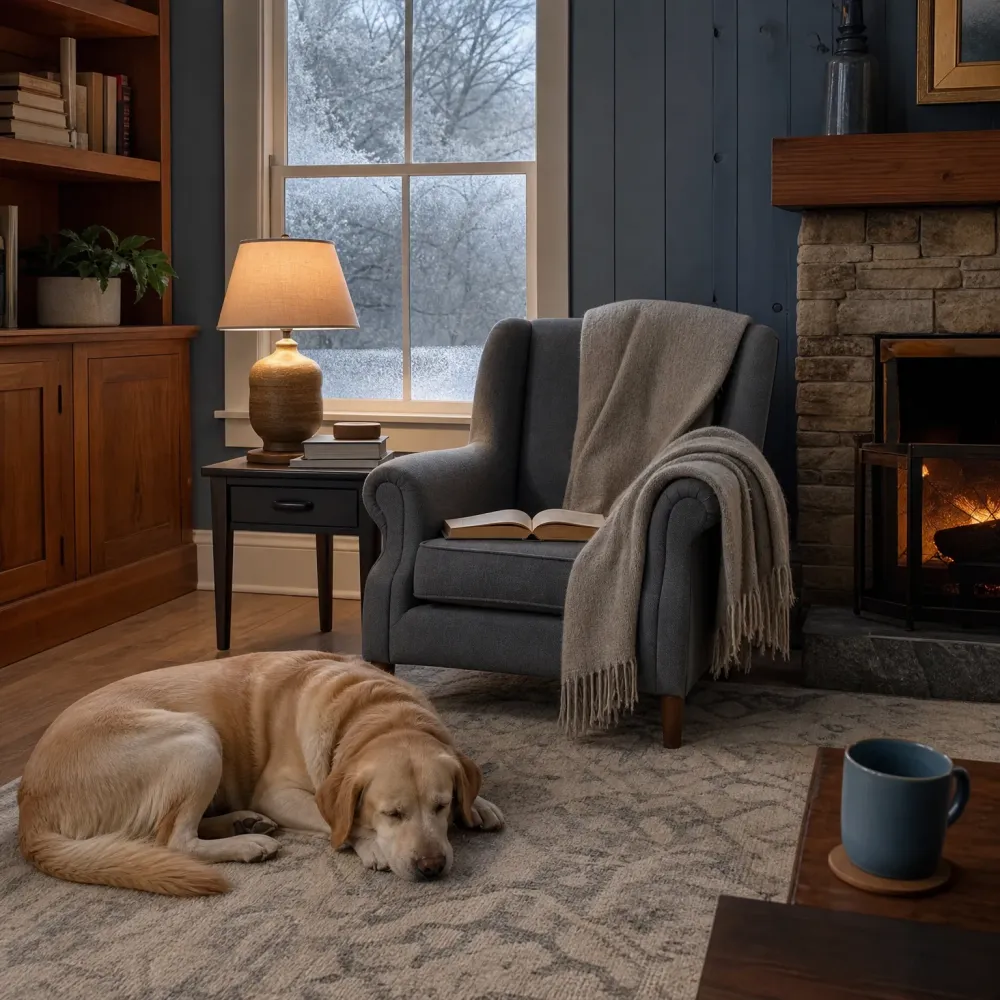
  • Steady, even comfort

    Instead of short bursts of heat, it keeps a gentle, steady output going. The house stays at one comfortable temperature.

    A yellow dog sleeps on a patterned rug in a living room with a gray wingback armchair holding an open book and a draped throw, a lit table lamp beside a window showing snowy trees, and a stone fireplace with a burning fire at right.
  • No gas line, nothing burning in the house

    A heat pump runs on electricity alone. Nothing burns inside the house.

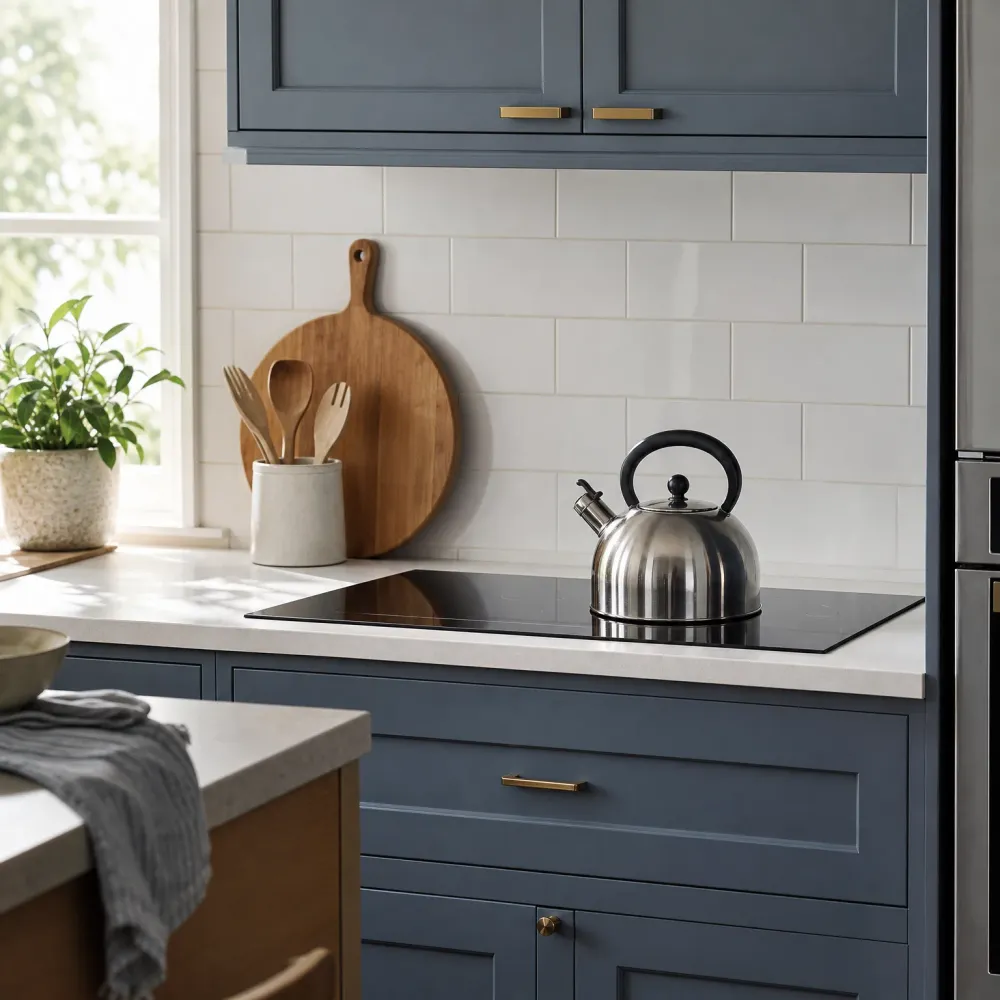
    A kitchen with navy blue shaker cabinets, brass handles, white subway tile backsplash, a light countertop with a black induction cooktop holding a stainless steel whistling kettle, wooden utensils and a round cutting board beside a potted plant on the windowsill.

Where does a furnace shine?

  • Strong, steady heat in hard cold

    Nights here average 16°F in December, January and February. A furnace burns gas to make heat, so it keeps blowing warm air no matter how cold it gets outside.

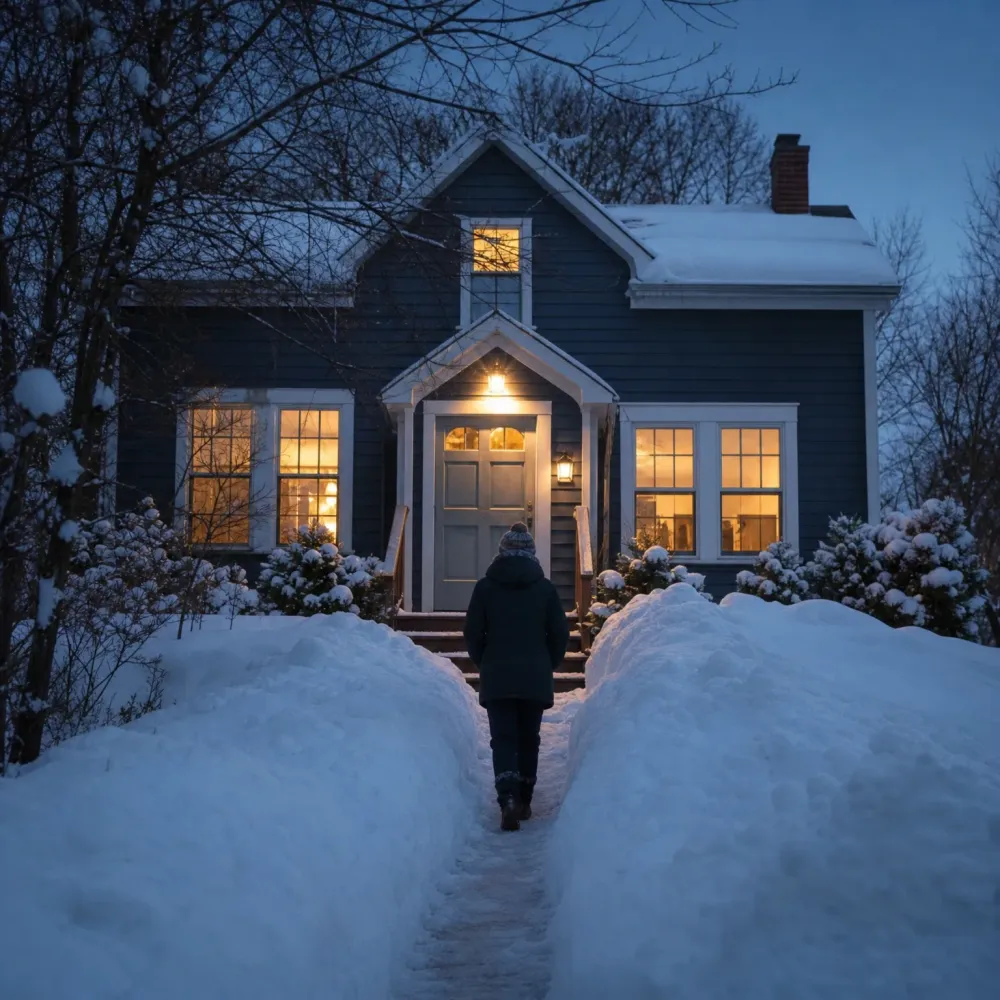
    A person in a dark winter coat and knit hat walks up a narrow shoveled path between deep snowbanks toward a dark blue clapboard house with lit windows and a porch light at dusk.
  • Runs on the gas most homes here already use

    Most homes in Pottawattamie County already have a gas line in, so a furnace just hooks into what's there. No new fuel source to add, no separate setup to plan around.

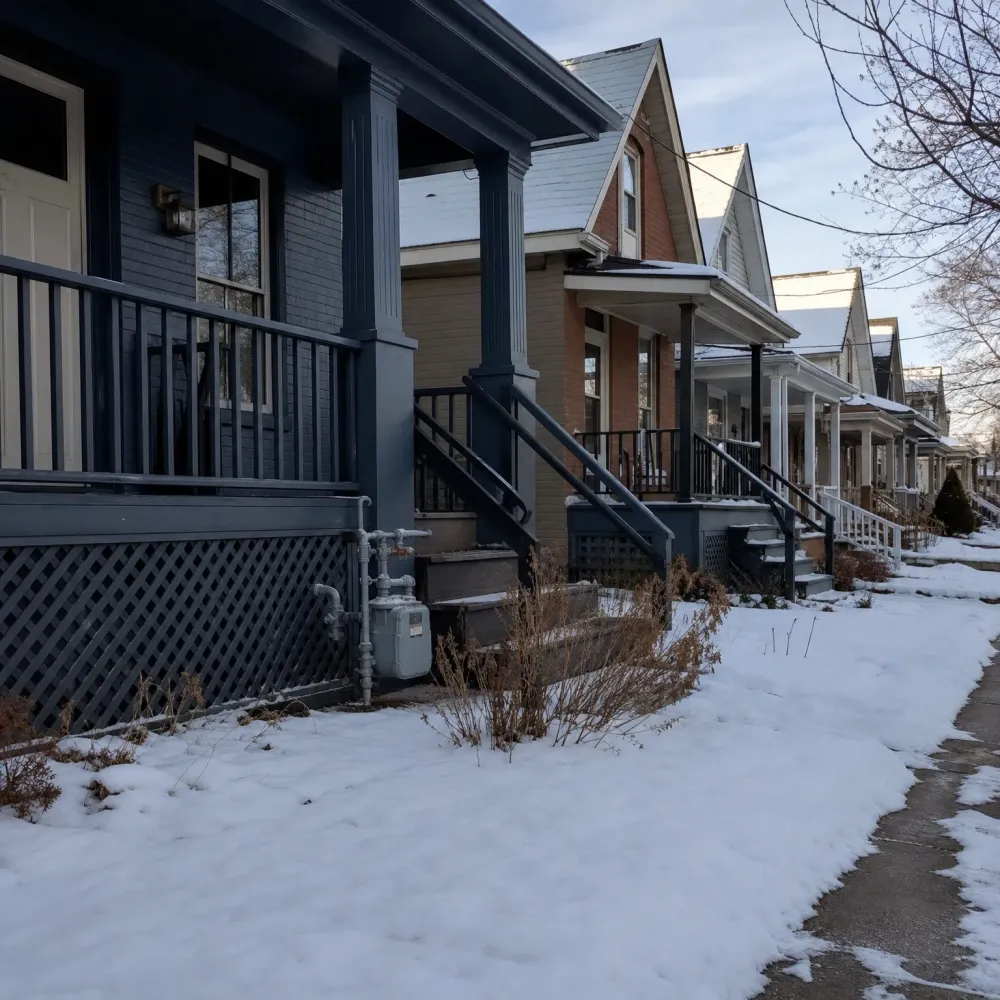
    A row of porch-fronted houses along a snow-covered front yard and sidewalk, with a dark blue-gray painted porch, railings, lattice skirting and a gas meter in the foreground.
  • Pairs with any central AC

    Most central air systems are built around a furnace. The two share the blower, the ducts and the thermostat.

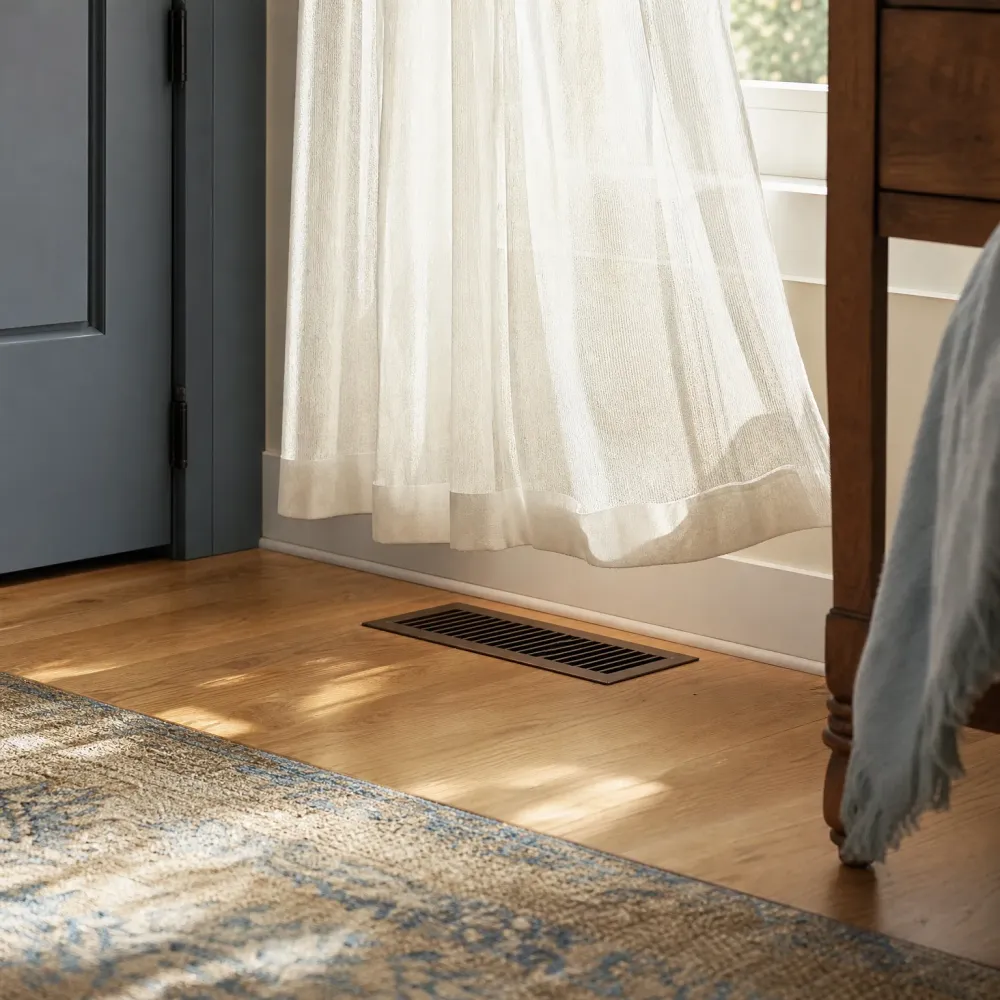
    A dark metal floor register vent set into a hardwood floor near a white baseboard, with sheer curtains, a gray door, a patterned rug, and a wooden bed post with draped blanket.

Can a heat pump handle winter here

Your winter nights average 16°F, and that's the problem for a heat pump in this county. A standard heat pump starts losing heat output once it's below 40°F outside, and by the time it's below about 35°F it often needs backup heat to keep up. Here, every single night that drops to freezing or below, and that's about 140 of them a year, falls below both marks.

That doesn't mean the heat pump quits. It means it's working harder and leaning on backup heat for a big part of the season. The cost comparison on this page already assumes the federal minimum heat pump and adds nothing for that backup heat, so on the coldest nights the real cost to keep your house warm runs higher than the $1.79 figure shown above.

The cold nights that really test a heat pump, the ones at 0°F or below, are rarer here: about 11 a year. A cold-climate heat pump, the kind certified to hold 70 percent of its capacity and make real heat down to 5°F, is built for nights like that. Field tests of these units found that even between 0°F and 35°F, backup heat only covered a small share of the load, and running on backup alone was rare above 0°F. If you're set on a heat pump here, that's the version built for your winters, not the standard one.
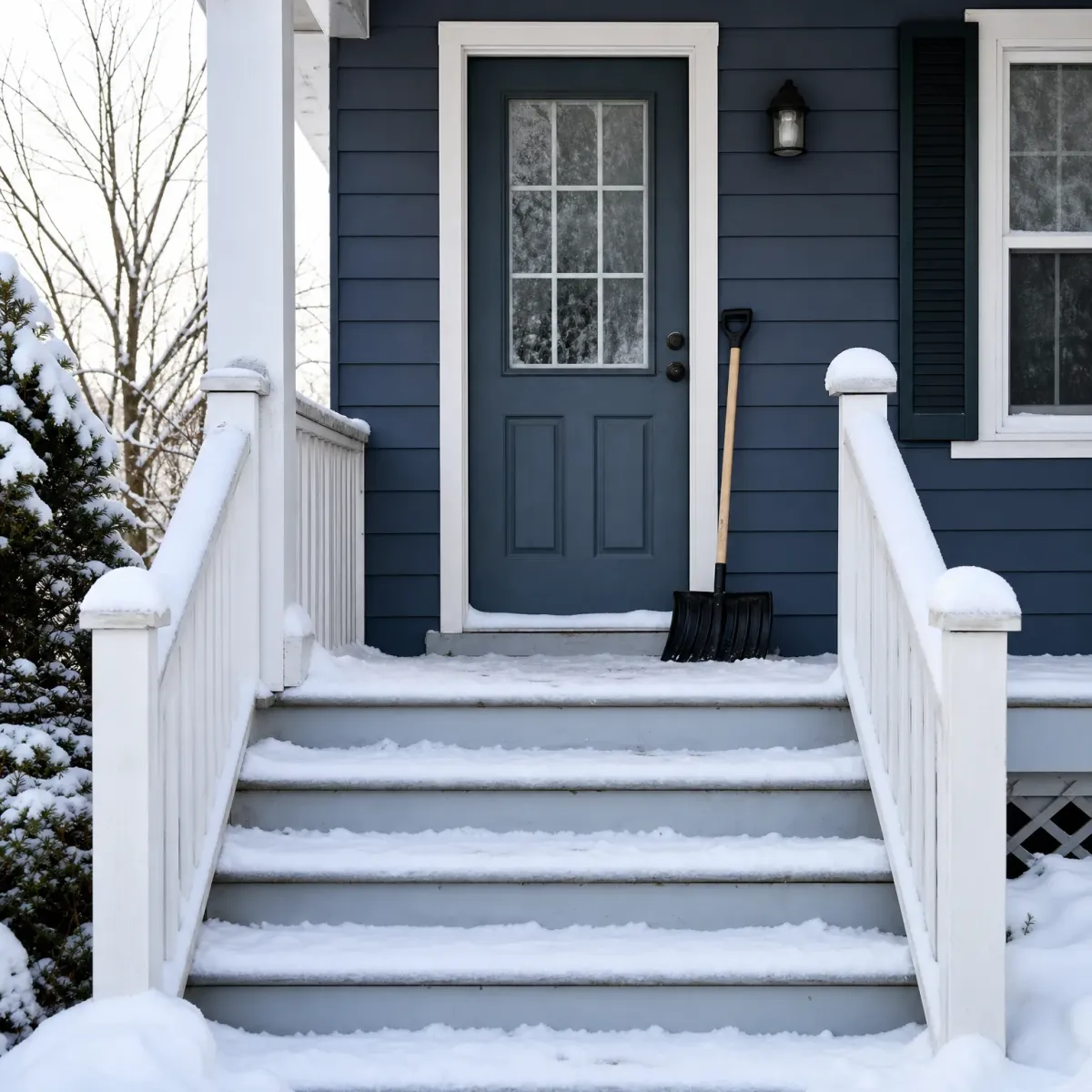
Snow-covered front steps with white railings leading to a blue house with a paneled door, a snow shovel leaning beside the entry, and a snowy evergreen shrub at left.

What this means for your choice

Run the numbers and gas wins on cost. A gas furnace makes the same heat here for $1.21 per 100,000 Btu against $1.79 for a heat pump, so it costs at least 32 percent less to run through a winter that lasts eight months, October through May. That's also the main reason seven in ten homes here already heat with utility gas.

A furnace only does one job. It heats your house for those eight months and then sits unused the other four, June through September, when your cooling runs. A heat pump handles both jobs with one system, which matters if your AC is due for replacement anyway or you'd rather not maintain two separate systems.

So the choice here comes down to what you're optimizing for. If it's the lowest cost to keep this house warm, a furnace does that, and pairs with any central AC you already have or plan to install. If you want one system that heats and cools and you're ready to pay more to run it, a cold-climate heat pump is built to handle winters like yours. A standard heat pump, the kind priced at federal minimum, is the one choice that doesn't fit this county well.

Sources: NOAA nClimDiv · NOAA 1991–2020 seasonal normals · PNNL Building America guide · PNNL-37127 field study · ENERGY STAR product criteria · EIA SEDS 2024 · 10 CFR 430.32 · Census ACS 2020–2024

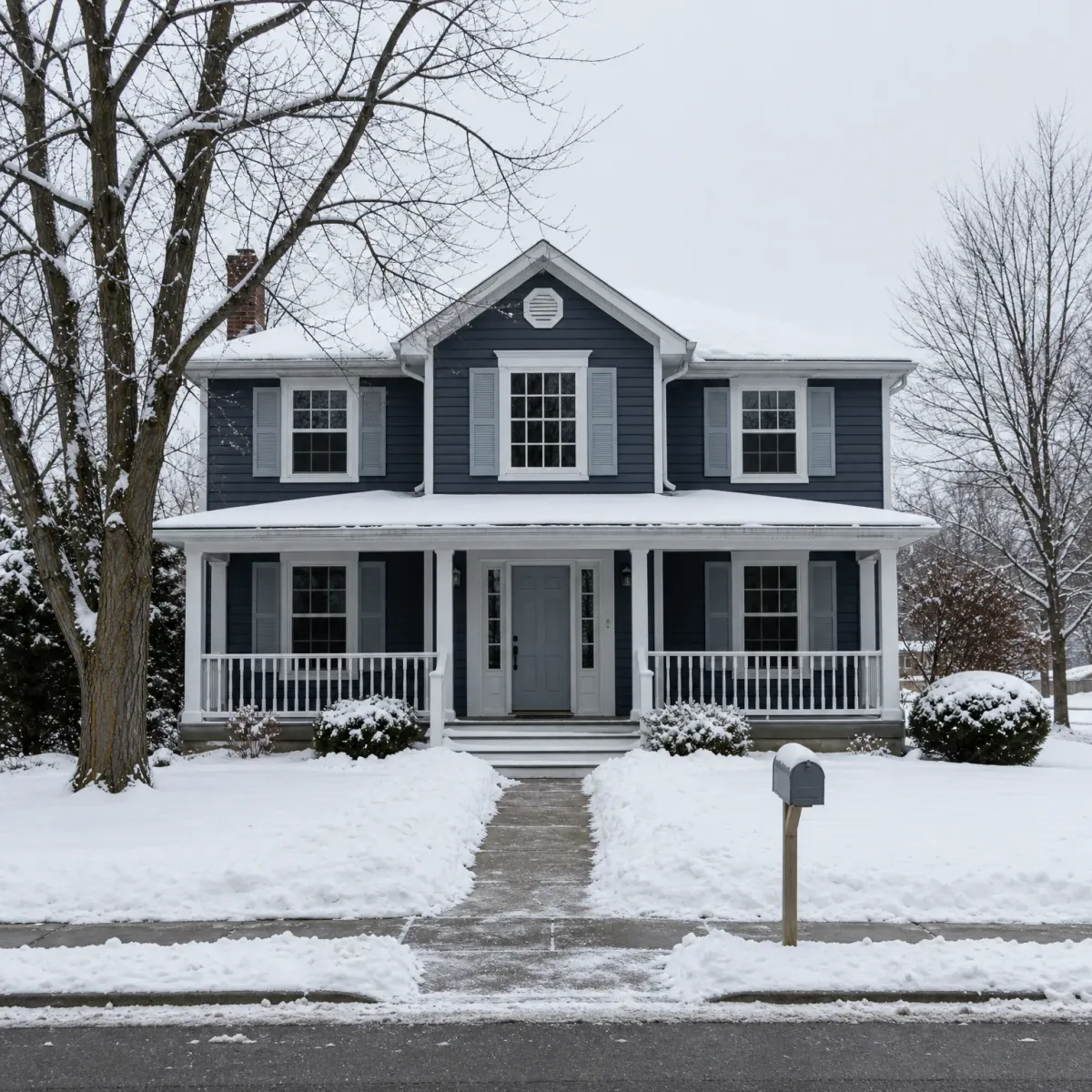
A two-story dark blue house with white trim, covered front porch, and light gray door, surrounded by snow-covered lawn, bare trees, and a cleared walkway leading to the street, with a gray mailbox at the curb.

Common questions about heat pumps and furnaces

  • Can a heat pump heat a house through an Iowa winter?

    It can, but not at full strength on the coldest nights. A standard heat pump's output falls short of its rating once it's below 40°F outside, and the average overnight low here is 16°F across December, January and February. On the roughly 140 nights a year that drop to freezing or below, it needs backup heat to keep the house warm.

  • Do I need backup heat with a heat pump here?

    Most homeowners here add it. A standard heat pump often needs backup once it's below about 35°F outside, and that covers over half the nights in the eight months heat runs here. Only about 11 nights a year reach 0°F or below, so backup heat carries a small part of the season even though it's needed most nights.

  • Can I keep my furnace and add a heat pump?

    Yes, and in Pottawattamie County that is how most heat pump installs work. The furnace stays in as backup for the nights a standard heat pump can't keep up on its own, and heat runs here about eight months a year, so that backup gets used.

  • Is a heat pump cheaper to run than a furnace in Pottawattamie County?

    No, a furnace costs less to run here. A furnace makes the same heat for $1.21 per 100,000 Btu against $1.79 for a heat pump, at Iowa's average gas and electricity prices. That gap holds before adding anything for the backup heat a heat pump needs on the coldest nights.