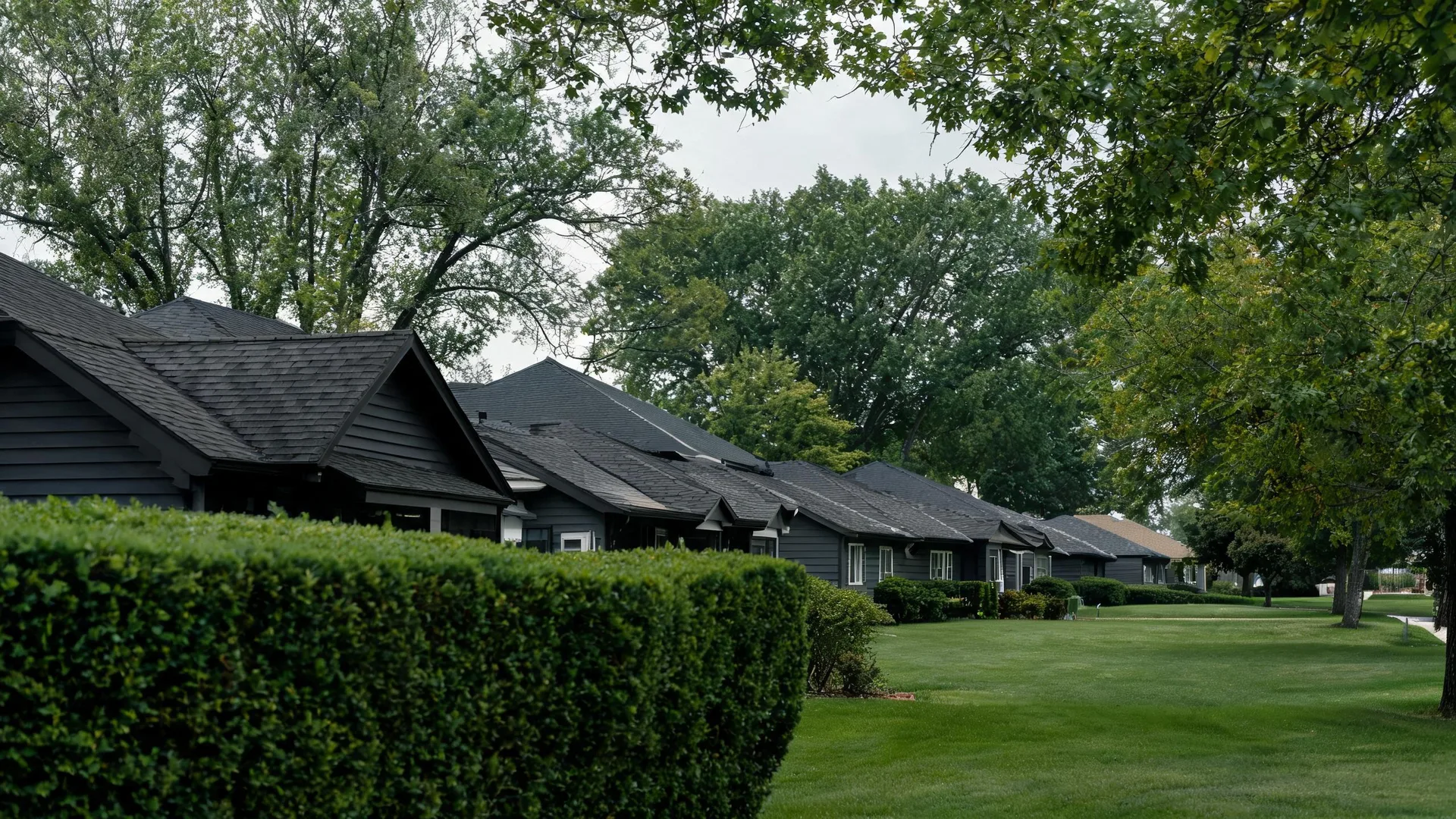




A row of dark-sided single-story houses with gray shingled roofs behind a trimmed hedge, with mown lawn and large deciduous trees under an overcast sky.

Furnace Installation in Council Bluffs, IA

Tell us about the job

Takes about a minute. No obligation.

New system or replacementFurnace or heatingPottawattamie County, IA
Step 1 of 2

What ZIP code is the job in?

Half the homes in Pottawattamie County were built in 1967 or earlier. A furnace going into a house that age usually isn't the first one it's had. Ductwork gets sized for the equipment on hand at the time, and a furnace installed decades later doesn't always move the air the way the house was planned around. The gas line, the vent, the return runs, all of that was built to match whatever sat in that spot before. A new furnace has to work with what's already there, not the other way around.

8 months
October through May, your furnace is on duty
16°F
the average winter night it heats against
71%
of homes here heat with gas, so most furnaces here burn gas
80% AFUE
the federal minimum any new unit must meet
Isometric cutaway illustration of a single-story house showing interior rooms, furniture, a dark furnace unit with a tall vertical flue pipe, and ductwork running under the pitched shingle roof.
Your furnace works hardest from November through March.

NOAA nClimDiv, 1991–2020 normals

Furnaces in Pottawattamie County run from October through May.

Eight months of work a year means a new furnace here earns its keep. Size it for this house, not for the lowest bid.

Gas runs cheap here, so fit matters more than the efficiency rating

Heat runs October through May
Winter nights average 16°F
Climate zone 5A
Built around a gas furnaceGas heats 70.5% of homes in Pottawattamie County, electricity 20.2%, propane 8.5%.

Pottawattamie County sits in climate zone 5A, a cool zone where winter heat matters more than summer cooling. Any gas furnace installed here has to clear a federal floor of 80 percent efficiency, the rule for units built since November 2015. That floor isn't a selling point, it's just the minimum every option on the table already meets. The real difference between furnaces shows up in size and how they move air through this house, not in clearing a bar they all clear. The floor does rise later, in December 2028, when new furnaces will have to hit 95 percent, so a furnace bought today is matched to today's rule. A federal tax credit exists for furnaces that go beyond the minimum, worth checking against whatever model ends up fitting this house.

Size it to the house you have

A furnace has to match the ductwork, the gas line and the return runs already in place. That means sizing the new unit to the house, not the other way around. Get the ducts and venting checked as part of the quote, before the installation date gets set.

Find a contractor
A gas furnace with attached ductwork, gas piping, and condensate lines installed in a concrete-block basement.

September is the month to do this, not December

Furnace season here runs eight months, October through May. September is the only real window to get a new unit in before it has to work. Wait until the first cold snap and the job happens on an emergency schedule, with whatever crew and whatever unit can get there fastest. Done in September, the furnace gets sized right, the ducts and venting get checked without anyone standing around in a cold house, and it's running clean before the first morning that hits 16 degrees.

Ask for a load calculation, not a guess

A contractor should measure the house room by room before naming a size. That means checking window area, insulation, ceiling height, and how the ducts are laid out, not just matching the old furnace's number. Two houses the same square footage can need different sized units. If a quote comes back before anyone's walked the attic or basement, it's a guess, not a calculation.

Ask what happens to the ductwork

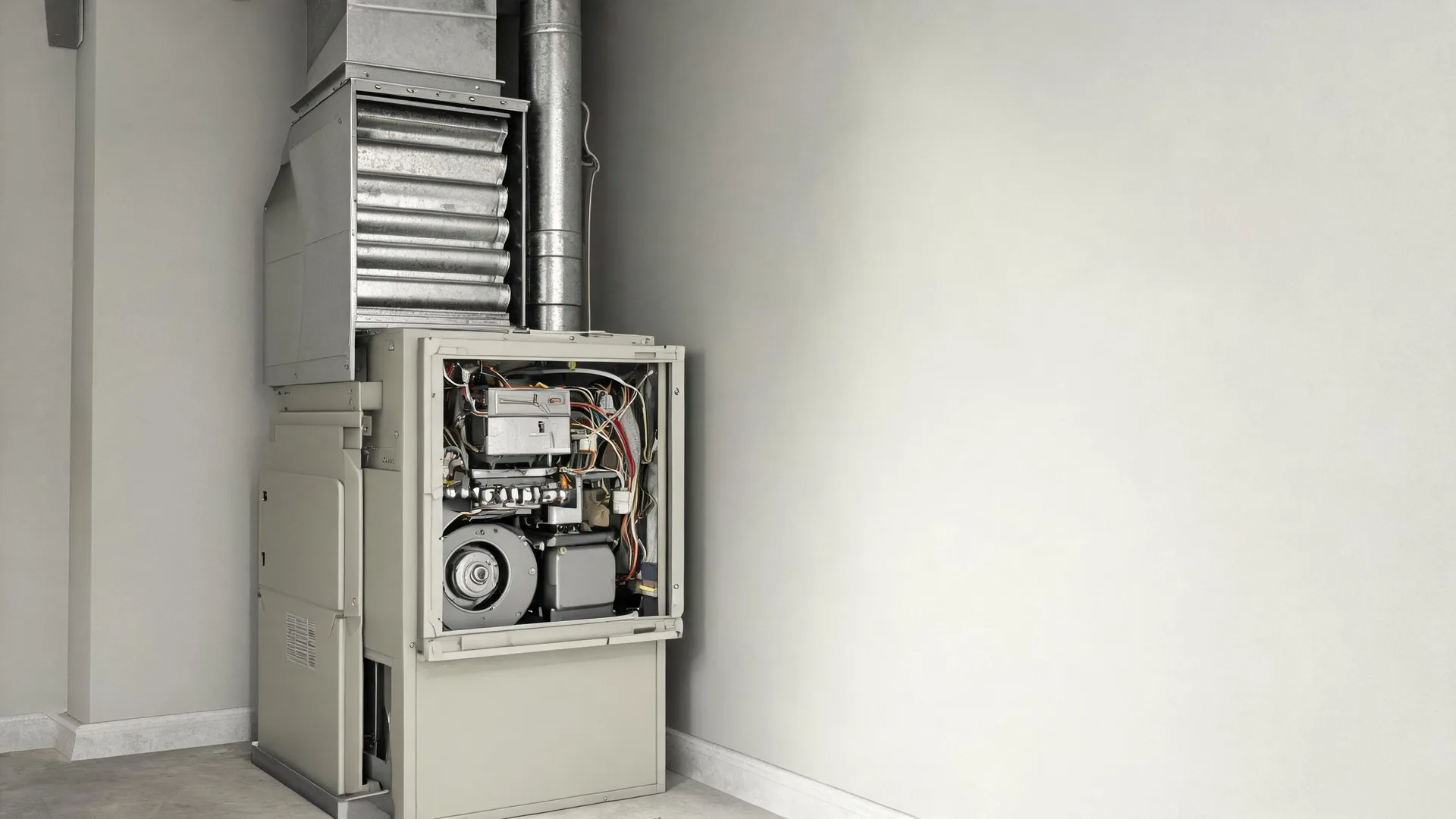
A furnace moves air at a certain rate, and the ducts have to be able to carry it. Undersized returns or a duct run that was fine for an older, smaller unit can leave a new furnace short of air, which shows up as noise, uneven heat, or a system that cycles more than it should. Get the answer on whether the existing ducts were checked, not just the furnace itself, before deciding between bids.

An unfinished basement containing a gray HVAC furnace with ductwork, exposed wooden joists, a concrete floor, and miscellaneous clutter in one corner.

A high-efficiency gas furnace would save about $90 a year to run in Pottawattamie County compared with a gas furnace.

  • A high-efficiency gas furnace$420 a year
  • A gas furnace$510 a year

Estimates for a typical Pottawattamie County home, from EIA household energy data, Iowa fuel prices and NOAA climate normals. Your home will differ.

Installation day starts with the old furnace coming out, not the new one going in. The gas line gets shut and disconnected, the flue or vent pipe comes apart, and the ductwork gets separated from the plenum. Whatever's left behind gets checked before anything new goes in its place. A new furnace gets set and leveled, then the gas line, the vent, and the return and supply plenums all get connected to it fresh. After it's hooked up, a tech runs it through a full cycle, checking gas pressure, checking the flue draft, checking temperature rise across the heat exchanger against what the nameplate calls for. None of that happens with the furnace sitting off to the side guessing. It happens with the unit running, connected, doing the job it was sized for.