Eight months of heat
Furnaces here run from October through May. That's most of the year, not just a cold snap in January.
Takes about a minute. No obligation.
Furnaces here run from October through May. That's most of the year, not just a cold snap in January.
Winter overnight lows in Pottawattamie County average 16°F across December, January and February. A furnace holding a house against that kind of cold leans hard on its igniter and blower motor, and worn parts tend to show themselves early.
Half the homes in Pottawattamie County were built in 1967 or earlier.
A furnace that old has likely been swapped out at least once, so a yearly check matters as much as the house's age does.


If your furnace came with the house, there's no telling whether it's the original unit or a replacement from ten winters ago. A yearly check doesn't depend on knowing that history. The tech can open the cabinet, check the heat exchanger, test the igniter, and tell you what shape things are in regardless of what year it was installed. Ask them to note the furnace's age and condition on the service record. That way next year's visit has something to compare against, even if this year's doesn't.
Furnaces here start running in October and keep going through May. September is the last quiet month before that stretch begins, and it's the right time to have a furnace checked before it's carrying the house through winter.
Find a contractor
Get a checkup in before October, while the furnace is still sitting idle. A tech can catch a cracked igniter or a blower motor on its way out while it's an easy fix, instead of finding out in January when the house is cold and the part has already failed.
A flame sensor reads the burner and tells the control board the gas is actually lit. A season of dust on that rod makes it misread, and the furnace shuts itself down as a safety measure. Skip the yearly cleaning and that's the failure you get, usually on the coldest night of the stretch.
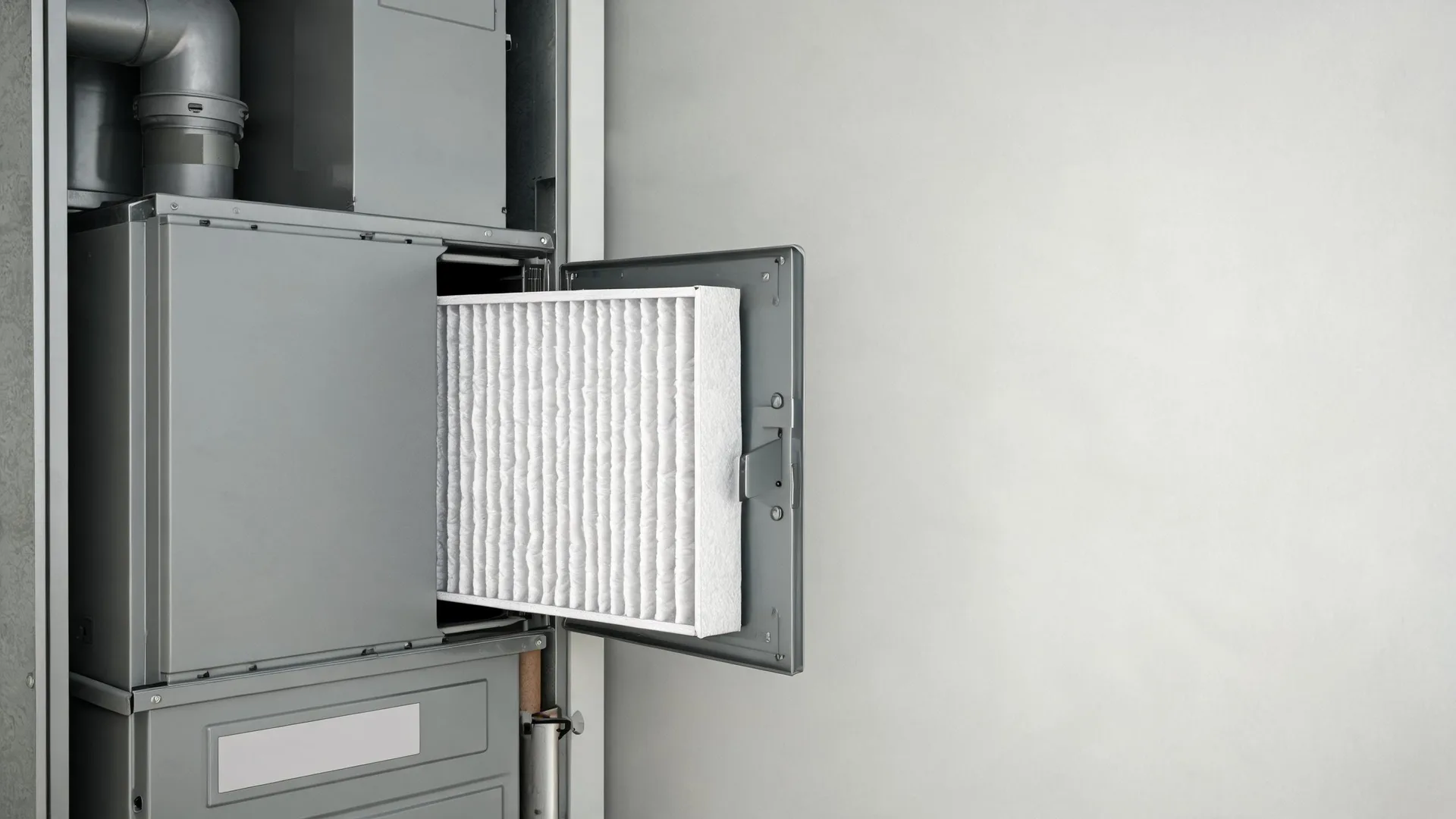
A clogged filter chokes airflow, and the blower motor pushes harder to move the same air through a tighter path. That strain wears the motor down faster and can crack a heat exchanger that's otherwise sound. A yearly check catches the filter before the strain reaches either one.
Between visits, the filter is the one thing worth checking yourself. Pull it out, hold it up to a light, and if you can't see through it, swap it. A furnace run on a clogged filter works its blower harder than it should, and that strain doesn't undo itself. Keep the area around the furnace clear too. Boxes or stored items too close to the cabinet can block the airflow it needs, and anything stacked against a vent or return starves it the same way a dirty filter does. If you ever smell gas, that's not a wait-and-see. Leave the house and call the gas company from outside. Past that, leave the cabinet closed. The igniter, the flame sensor and the heat exchanger are a tech's job, not a homeowner's, and opening things up without the training to read what you're looking at does more harm than good.
A proper tune-up starts with the burners. The tech pulls them, cleans off any rust or scale, and makes sure the flame burns steady and blue, not yellow or flickering. Yellow flame means the gas isn't burning clean, and that's worth tracking down before it's a bigger problem. From there it's the heat exchanger, checked for cracks since that's the part keeping combustion gases out of the air your house breathes. The igniter gets tested, not just looked at, because an igniter can glow and still fail to light the burners reliably. The blower gets checked for wear and for the amount of air it's actually moving. Vent pipes and the flue get looked over too, since a blocked vent keeps exhaust from leaving the house the way it's supposed to. None of this takes long when the furnace is in good shape. It takes longer, and matters more, when something's been wearing down quietly all year.