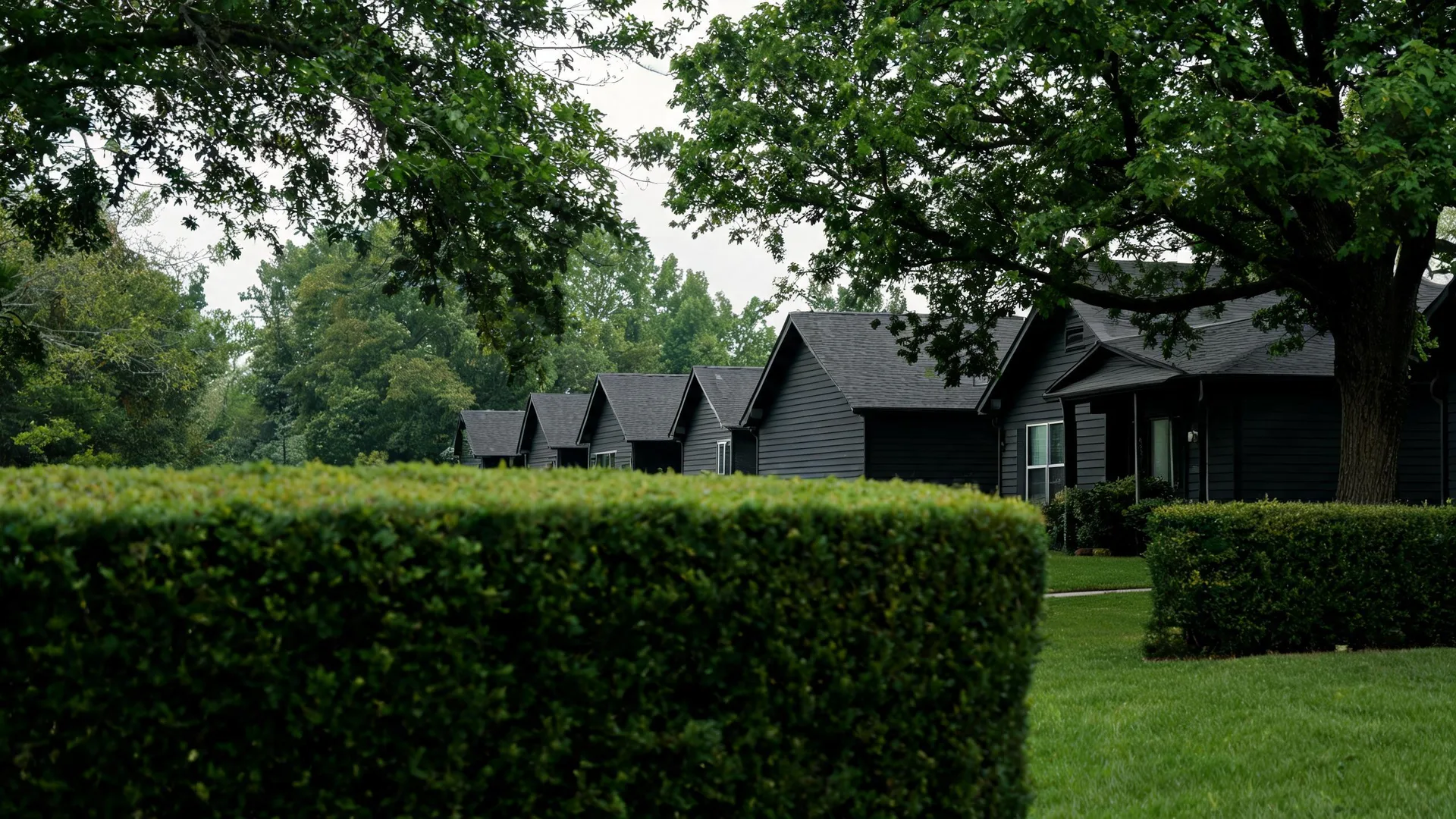
A row of dark gray gabled houses behind a trimmed hedge and mowed lawn, framed by large leafy trees under an overcast sky.

Furnace Repair in Maquoketa, IA

Tell us about the job

Takes about a minute. No obligation.

RepairFurnace or heatingJackson County, IA
Step 1 of 2

What ZIP code is the job in?

A small problem can become a big one

A cracked heat exchanger starts out just making noise as it expands and contracts. Keep running the furnace and that crack grows, and now you're looking at a part that has to be replaced instead of patched. A clogged burner that's just making the flame look a little off can soot up to the point where the whole burner assembly needs cleaning or replacing.
What this means for your furnace

If your furnace is short cycling, making a new noise, or the flame looks yellow instead of blue, that's the time to shut it down and get it looked at, not wait out the week. Running it in that state asks the igniter, the blower motor, or the heat exchanger to keep working under stress they weren't built for, and those parts don't go back to normal once they're damaged.

8 months
October through May, your furnace is on duty
16°F
the average winter night it heats against
54%
of homes here heat with gas, so most furnaces here burn gas
26 winter storms
in ten years, the nights a failure hurts most
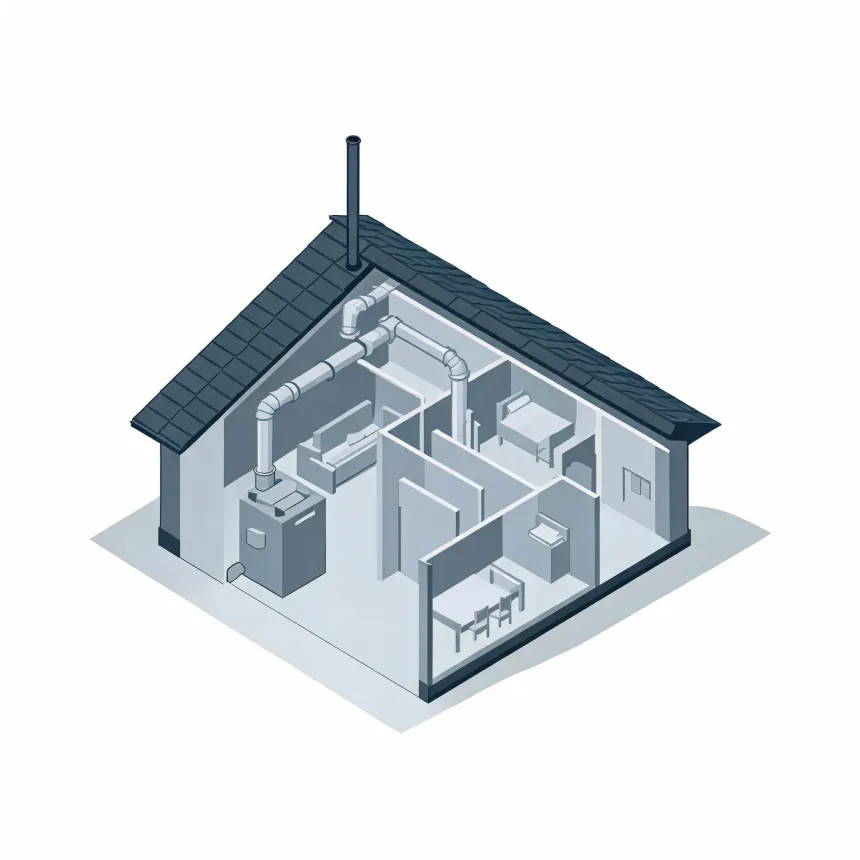
Isometric cutaway illustration of a small single-story house showing interior rooms with furniture, a furnace unit with attached ductwork running to a roof flue, and a dark shingled roof.
Your furnace works hardest from November through March.

NOAA nClimDiv, 1991–2020 normals

Half the homes in Jackson County were built in 1970 or earlier.

A furnace that came with a house that old is probably old itself, and worth asking about before you pay for a repair.

Furnace repair calls here peak in October, the first cold month

Heat runs October through May
Climate zone 5A
Winter nights average 16°F

Furnace here runs about eight months a year, October through May, with overnight lows averaging 16°F through December, January and February. That's a long stretch of hard, cold-weather work for one machine. Jackson County has also seen its share of winter storms over the past decade, heavy snow and ice that push a furnace to run longer just to keep the house warm. A furnace carrying that load wears sooner than one in a milder climate, and a small issue, a dirty flame sensor or a weak igniter, matters more when the furnace is running most of the day. Getting the actual cause diagnosed, rather than just resetting it, is what makes a repair hold up for the rest of the season.

Ask about the furnace's age before you pay for the repair

A repair on a furnace that old should come with an answer about how much life it has left. Get that from whoever comes out, before you decide what to spend.

Find a contractor
A gray high-efficiency gas furnace installed in an unfinished basement, surrounded by gas lines, a condensate drain, and sheet-metal ductwork.

What actually wears out, and in what order

Furnaces usually fail for one of a few plain reasons. The igniter wears out from repeated heating and cooling cycles and eventually stops glowing hot enough to light the gas. The flame sensor gets a film of residue on it over time and starts telling the control board there's no flame even when there is, so the furnace shuts itself down as a safety measure. The blower motor's bearings wear from constant use and start making noise before they seize. Dirty or clogged filters make every one of these problems worse, since they force the blower to work harder and can cause the furnace to overheat and shut off on a limit switch. The one failure that matters most is a cracked heat exchanger, because by the time it's cracked the metal has already fatigued from years of heating and cooling, and that part gets replaced, not repaired. Most of this comes down to normal wear from the furnace doing its job, season after season, and catching it early is what keeps a worn part from taking out the one next to it.

What you can check yourself

Look at the filter and change it if it's gray or caked. Check that the thermostat is set to heat and the temperature is actually above room temperature. Go to the furnace and see if the switch on the side, the one that looks like a light switch, is on. Check the breaker it runs on. If it's a gas furnace, make sure the gas valve is open and the shutoff isn't switched off.

What to leave alone

Don't open the burner compartment or try to relight a pilot you don't recognize. If you smell gas, don't flip switches or search for the leak yourself, leave the house and call the gas company from outside. A furnace that trips its switch or breaker more than once after you reset it has a reason for doing that, and finding it isn't a homeowner job.

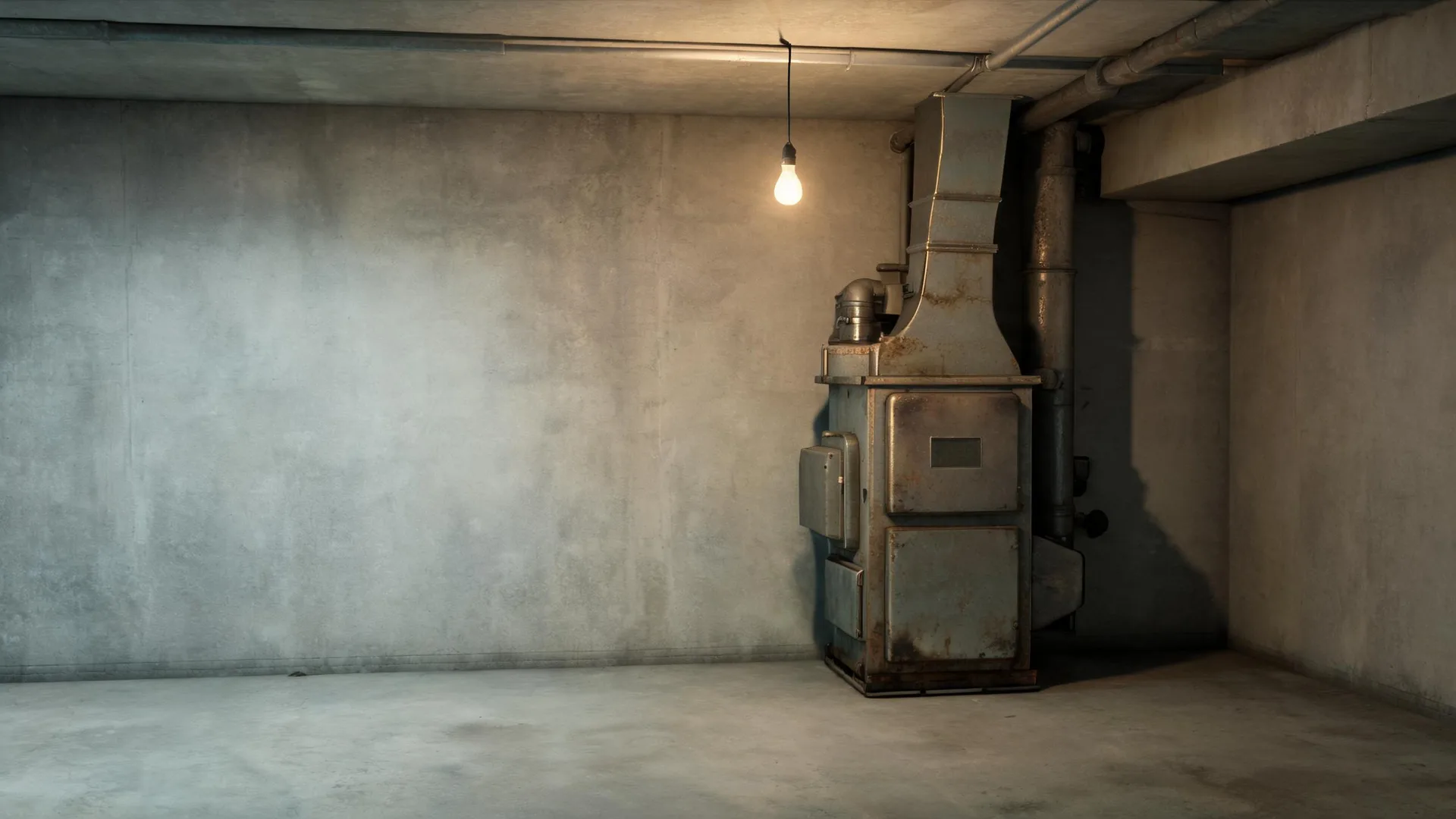
An empty unfinished basement containing a forced-air furnace with overhead ductwork, exposed ceiling joists, and a single hanging light bulb.

A new furnace would cut about $110 a year off heating for a typical Jackson County home.

  • A new high-efficiency furnace$440 a year
  • An older furnace$550 a year

Estimates for a typical Jackson County home, compared with an older unit built to the previous federal minimum, from EIA household energy data, Iowa fuel prices and NOAA climate normals. Your home will differ.

Repair makes sense when one part has failed and the heat exchanger is sound.

Replacement makes sense when the heat exchanger is cracked or the furnace keeps needing parts.

Age matters here, but so does what's actually wrong. A furnace that won't light because of a bad flame sensor or a worn igniter is almost always worth fixing. Those are small parts, and swapping one doesn't cost much against a working furnace. A cracked heat exchanger is a different question, because that's not a part you patch, it's a part you replace, and on an older furnace the labor to replace it can run close to what a new furnace costs. The other thing to weigh is how the furnace has been acting before this. One failure out of nowhere on a furnace that's otherwise run fine is a repair. A furnace that's needed a service call every year for a few years running is telling you something about what's coming next, and that pattern is worth more than any single part failing.