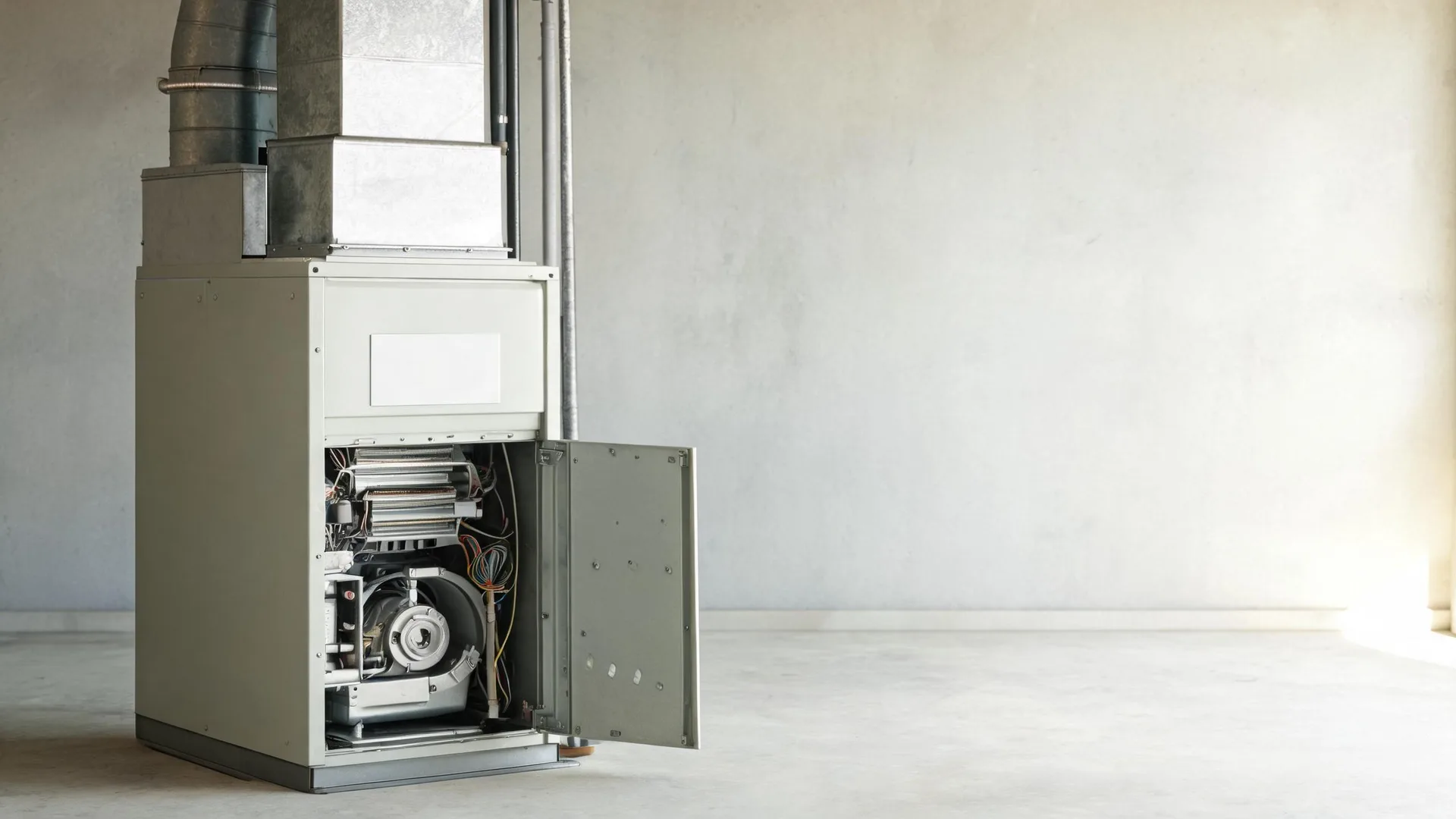
An unfinished basement containing a gray HVAC furnace with ductwork, exposed wooden joists, a concrete floor, and miscellaneous clutter in one corner.

Furnace Repair in Anamosa, IA

Tell us about the job

Takes about a minute. No obligation.

RepairFurnace or heatingJones County, IA
Step 1 of 2

What ZIP code is the job in?

Eight months of work a year

A furnace in Jones County runs from October through May. That's most of the year asking the igniter, the blower motor and the heat exchanger to do their job, over and over, with barely a break before the next cold stretch starts.
What that means for a repair call

A furnace that runs this much wears parts down sooner than one that only kicks on a few months a year. When something acts up, it's worth having a contractor find the actual cause instead of patching the symptom, because a fix that doesn't hold will just fail again partway through winter.

8 months
October through May, your furnace is on duty
15°F
the average winter night it heats against
25 winter storms
in ten years, the nights a failure hurts most
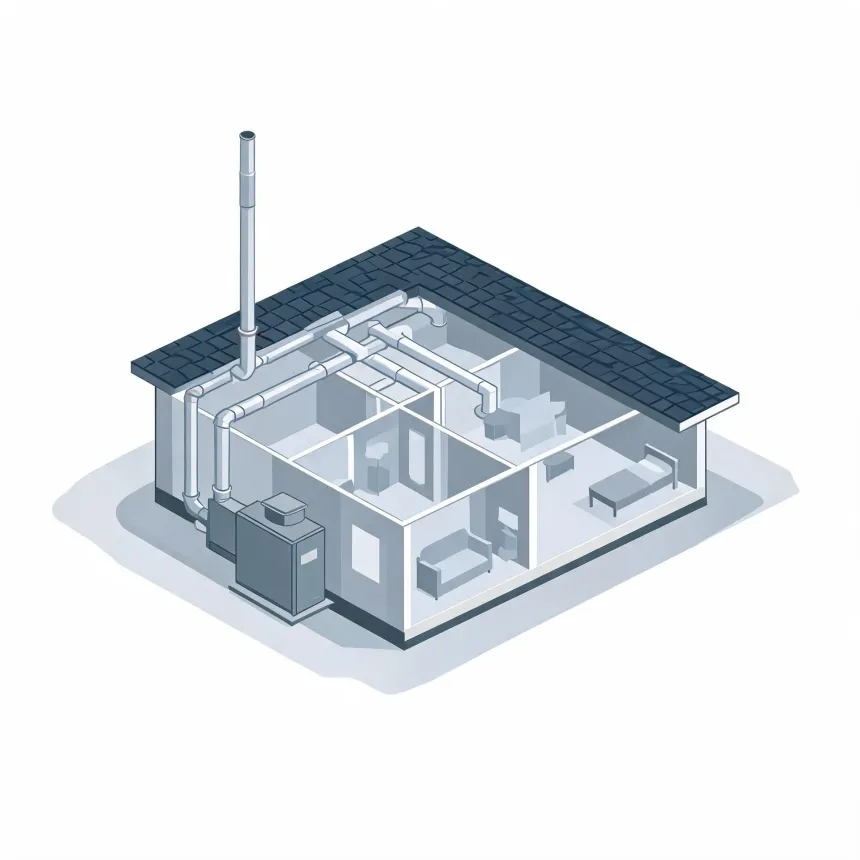
Isometric cutaway illustration of a single-story house with a dark shingled roof, showing interior rooms with furniture, a ducted air distribution system, a tall vertical flue pipe, and a gray furnace unit outside the wall.
Your furnace works hardest from November through March.

NOAA nClimDiv, 1991–2020 normals

A furnace that short cycles is telling you something specific.

Turning on and off every few minutes points to a clogged filter, a cracked heat exchanger or a thermostat that's lost its calibration, and running it that way stresses the blower motor further.

Half the furnaces here are working inside a house built in 1970 or earlier

Half the homes here were built by 1970
Heat runs October through May
Winter nights average 15°F
Furnace trouble shows up when October turns the heat on for the first timeHomes here start running heat in October, and that's when a weak part gets found out.

A repair is worth making when the furnace is sound otherwise and the failure is one part acting up, not the whole system giving out. A cracked heat exchanger is different from a bad igniter. The igniter is a cheap part that fails on its own; the heat exchanger cracking usually means years of heating and cooling have worn the metal thin, and once it's cracked the unit needs replacing, not patching. Age matters less than the pattern. A furnace that's needed a repair every year for the last few winters is telling you it's done absorbing wear, even if each individual fix was small. One that's run clean for a decade and then trips on a blown capacitor is a different case entirely. A contractor who's looked at the whole unit, not just the part that failed, can tell you which one you're dealing with.

If this furnace came with the house, find out what's left in it before paying for a repair

A lot of furnaces in Jones County are running in houses built in 1970 or earlier. If this one came with the house, a contractor can tell you how much life is left in it before you pay for the repair. That number should decide whether this is worth fixing or worth replacing.

Find a contractor
A man in a gray shirt and tan pants carries a worn canvas tool bag up porch steps toward a dark blue paneled front door, with a potted shrub beside the entry.
A gray residential gas furnace installed in an unfinished basement, connected to sheet-metal ductwork and PVC pipes.

Little downtime to catch problems early

Eight months of heat a year, October through May, doesn't leave much of a stretch where the furnace sits idle. That's when a worn part would show itself, if it had the chance. Instead it keeps running, and whatever is wearing thin keeps wearing. A repair done without checking what's behind the failed part can hold for a few weeks and then let go again, and that's a service call in the middle of a cold stretch instead of one you saw coming.

A small problem doesn't stay small

A cracked heat exchanger starts as a hairline split. Running the furnace keeps flexing that metal with every heat cycle, and the crack spreads. A blower motor running on a worn bearing keeps grinding until the bearing seizes. Parts that are failing slowly fail faster under load, and a furnace left running doesn't give a failing part a chance to just hold steady.

Running it while it strains costs the next part too

A dirty flame sensor makes the burner shut off early, so the system fires over and over trying to satisfy the thermostat. Each extra cycle puts more wear on the igniter and the blower motor, parts that were fine to start with. Left alone, one weak part drags down the ones around it, and a repair that could have been one part turns into two or three.

A gray forced-air furnace with sheet-metal ductwork stands in an unfinished basement with exposed wooden joists, concrete walls, and a hanging incandescent bulb.

A new furnace would cut about $110 a year off heating for a typical Jones County home.

  • A new high-efficiency furnace$450 a year
  • An older furnace$560 a year

Estimates for a typical Jones County home, compared with an older unit built to the previous federal minimum, from EIA household energy data, Iowa fuel prices and NOAA climate normals. Your home will differ.

Repair makes sense when one part has failed and the heat exchanger is sound.

Replacement makes sense when the heat exchanger is cracked or the furnace keeps needing parts.

A diagnostic call starts with the thermostat and works back from there. A contractor checks that the system is getting a call for heat, then moves to the furnace itself: does it ignite, does the burner stay lit, does the blower kick on and move air. Each step either clears or points to the next thing to check. Error codes on the control board help narrow it down, but they tell you where to look, not what's actually wrong. Finding that means testing the part directly, not just reading a light that's blinking. A gas pressure check, a look at the flame sensor, an amp draw reading on the blower motor, these are the things that separate a guess from an answer. The visit ends with the actual cause named, not just the symptom that brought the furnace down.