



Cold is the whole question here
Winter decides this one, not summer. The heat runs about eight months a year here, October through May, and the overnight low averages 15°F across December, January and February. A standard heat pump starts falling short of its rating once it's below 40°F outside, and below about 35°F it often needs backup heat to make up the rest. Here, every night that drops to freezing or below is already past both marks. That's about 150 nights a year, over half the nights the heat is running at all.
Nineteen nights a year here reach 0°F or below. That's under a quarter of the freezing nights, but it's the stretch where a standard heat pump is putting out only a fraction of its rated heat and leaning hardest on backup. Put a standard heat pump in a Jones County house and the backup heat isn't a rare emergency measure. It's doing real work most winters.
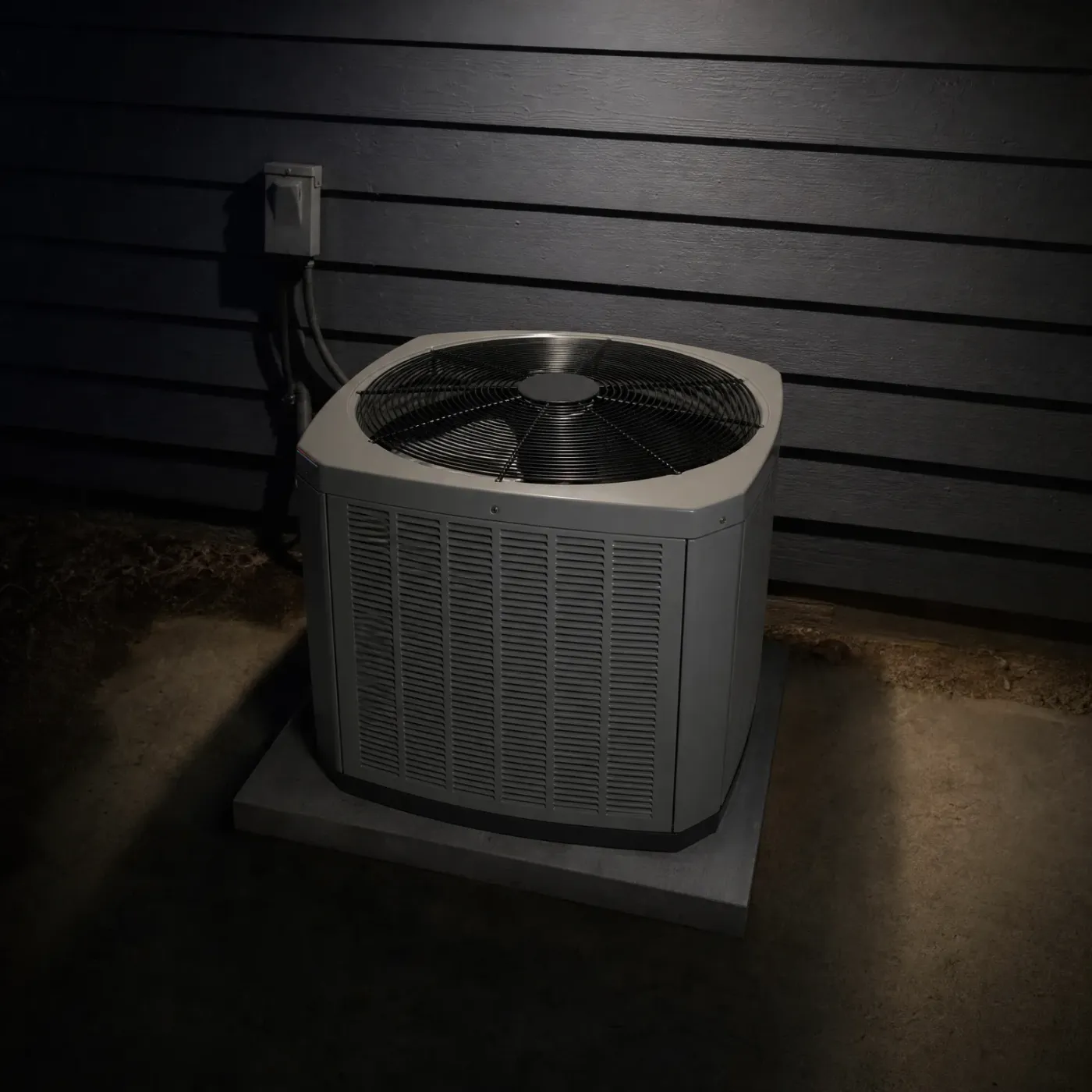
There's a version built for this. A heat pump with the ENERGY STAR Cold Climate mark has to prove, under third-party testing, that it still makes at least 1.75 units of heat per unit of electricity at 5°F and holds onto at least 70 percent of its 47°F capacity at that temperature. Field tests of prototype cold-climate models back that up: over two winters in occupied homes, backup heat covered only a small share of what was needed between 0°F and 35°F, and running on backup alone was rare even above 0°F. A standard heat pump and a cold-climate one are not the same machine on a night like this county sees 150 times a year.