A lit residential street at dusk featuring large two-story brick houses with glowing windows, mature trees, and a street lamp.

Heat Pump Repair in Anamosa, IA

Tell us about the job

Takes about a minute. No obligation.

RepairHeat PumpJones County, IA
Step 1 of 2

What ZIP code is the job in?

Winters here ask a lot of a heat pump

Anamosa sits in a zone where heating carries most of the load. Overnight lows average 15°F through December, January and February. A heat pump working that hard shows its weak points. A failing defrost board, a low charge, a contactor worn from cycling on so often.

The fix is usually a known one

Nothing about Jones County puts unusual strain on a heat pump beyond the cold itself. When one stops heating right, a licensed contractor is most often looking at a common failure point, not something this area caused. Diagnosing it correctly is what gets it fixed right the first time.

8 months
October through May, your system heats
3 months
June through August, it cools
15°F
the average winter night it heats against
81°F
the average summer afternoon it cools against
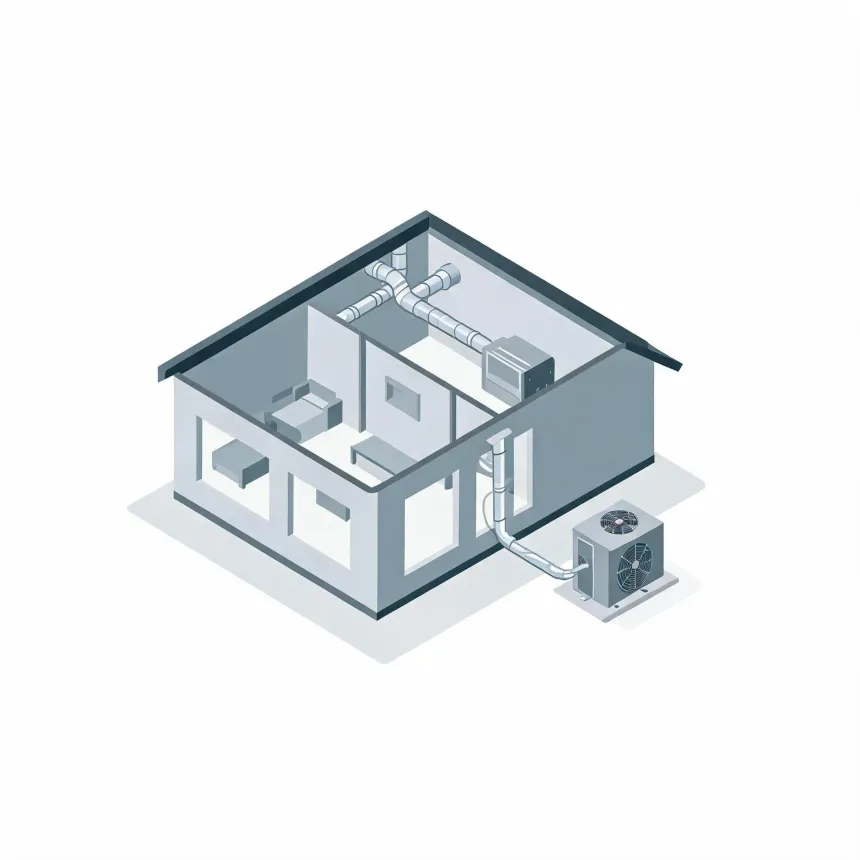
Isometric illustration of a cutaway house showing interior rooms, ceiling ductwork and an air handler, connected by lines to an outdoor condenser unit on a pad beside the building.
Your system heats October through May and cools June through August.

NOAA nClimDiv, 1991–2020 normals

Heat here starts in October, and September is when a weak heat pump is still keeping up.

Once the cold hits in October, that same weak spot is what fails.

Half the homes here were built by 1970, and the heat pump may be newer than the house

Half the homes here were built by 1970
67 damaging wind events from 2015 to 2024
24 hail events from 2015 to 2024
Jones County weather isn't why your heat pump quit133 severe weather events hit Jones County between 2015 and 2024, and this still isn't about that.

Electricity in Iowa ran 13.40 cents per kilowatt-hour in 2024, and a heat pump leaning on backup strips to get through a cold night pulls a lot more of it than one running clean. That difference shows up on the bill every month the problem sits there. A failing defrost board or a low charge does not get cheaper to ignore. It just keeps costing you while it waits to be found.

A heat pump that's struggling costs you every month it runs that way

A low charge or a failing defrost board doesn't fix itself, and at 13.40 cents a kilowatt-hour it doesn't sit cheap either. The longer it runs wrong, the more it shows up on the bill. Get it looked at and know what's actually going on.

Find a contractor
A gray air-source heat pump mounted on a concrete pad next to a house with gray vinyl siding, surrounded by gravel and flanked by green shrubs and white hydrangea flowers.

Ask what this repair is really buying you

If your heat pump came with the house, ask the contractor straight out how much life is left in it before you pay for a big repair. A system in a home built in 1970 or earlier has had decades to wear through contactors and boards. One going into a newer home is a different case. Either way, that's worth knowing before you decide what to spend on it now.

Check these before you call

Look at the outdoor unit first. If ice is covering the coil instead of the thin frost that clears on its own, something's wrong. Check that nothing is blocking airflow around it. No leaves, no snow drift, nothing stacked against the cabinet. Inside, check your thermostat is set to heat and not stuck on a schedule you didn't mean. Check your air filter. A filter clogged with dust chokes airflow across the indoor coil, and that alone can make a heat pump act like it's failing when it isn't. Check every supply vent in the house is open and not blocked by furniture or rugs.

What these checks rule out

A dirty filter and blocked vents cause real symptoms. Weak heat, a unit that runs constantly, ice that keeps building back. Clear those and the problem's still there, you've saved the contractor a trip for something you could fix yourself. You've also narrowed it down. A unit that won't run at all, ice that doesn't clear, a breaker that trips when it starts, that points at the kind of failure that needs a gauge set and a meter to find. That's not a judgment call to make standing in the yard.

A heat pump in trouble usually tells you before it quits outright. Warm air that doesn't feel warm is the first sign, the system runs but the air out of the vents feels closer to room temperature than heat. Short cycling is another, the unit kicking on and off instead of running a steady stretch. Listen for it too. A new rattle, a hard clunk when it starts, a hiss that wasn't there before, all point at something specific wearing out. Ice building on the outdoor coil that doesn't clear on its own means the defrost cycle isn't doing its job. Any one of these is worth a look. Several at once usually means something is already failing, not about to.

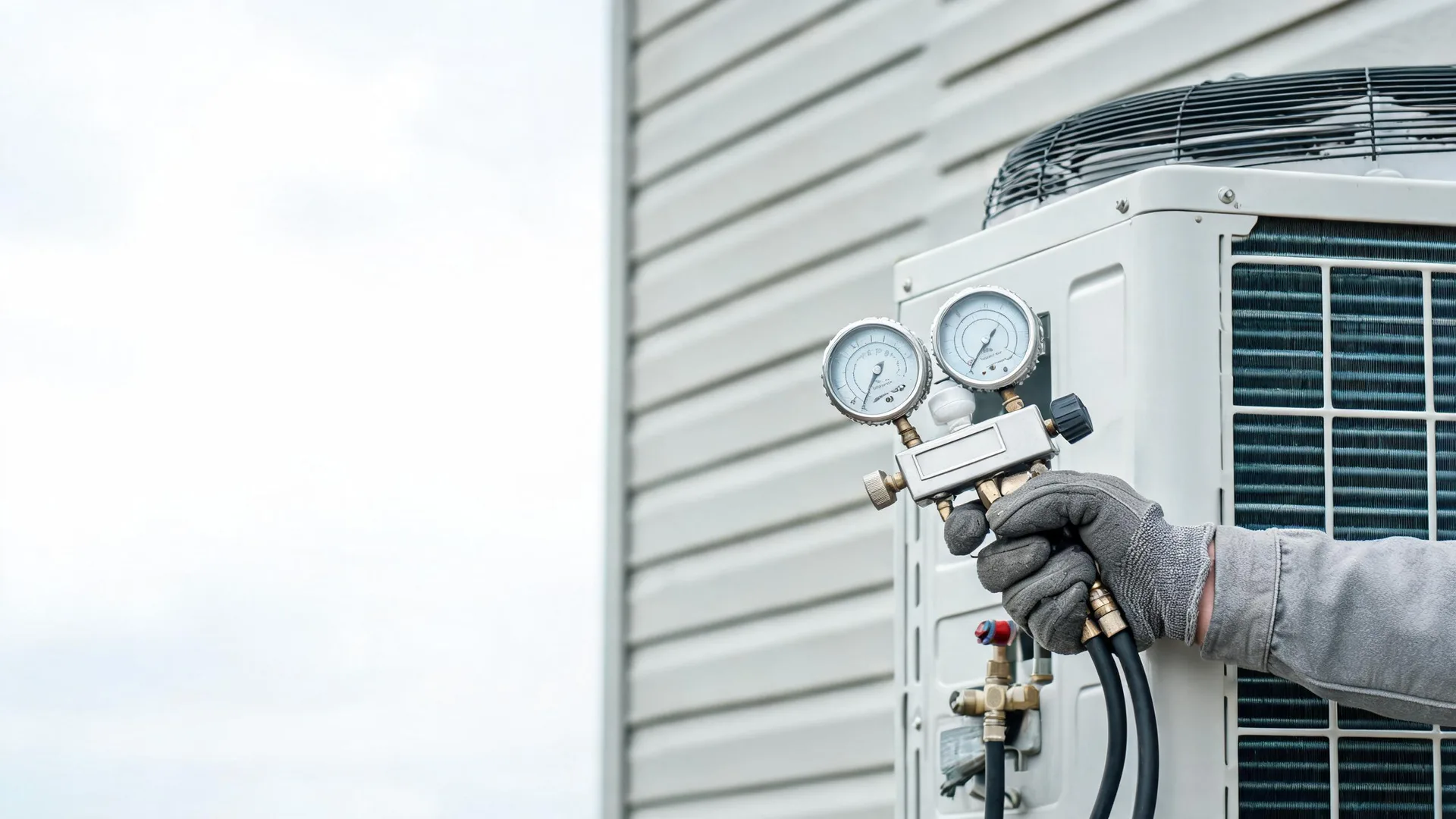
A diagnostic visit starts outside at the unit itself, gauges on the lines to check refrigerant pressure and amps on the compressor and fan motor. From there it's the reversing valve, the one part that decides whether you get heat or air conditioning, checked to see it's actually shifting when it's told to. The defrost board gets tested too, since a board that won't trigger the cycle is one of the more common reasons a heat pump ices up and stays iced. Inside, airflow across the indoor coil gets checked against what the system expects, because low airflow can mimic a refrigerant problem and send someone chasing the wrong fix. A contactor gets pulled and looked at for pitting, since that's a part that wears from the simple act of cycling on and off thousands of times. None of this is guesswork. Each reading either matches what a healthy system should show or it doesn't, and that's what points to the actual failure instead of a guess at one.