



A gray forced-air furnace with metal ductwork stands in an unfinished basement with exposed wooden joists, concrete walls, and a single hanging light bulb.

Furnace Repair in Waverly, IA

Tell us about the job

Takes about a minute. No obligation.

RepairFurnace or heatingBremer County, IA
Step 1 of 2

What ZIP code is the job in?

Half the houses in Bremer County were built in 1970 or earlier. If your furnace came with a house that old, it's worth finding out whether it was replaced at some point or whether it's original equipment. A furnace that has been heating a house since the 1970s or earlier is well past the point where repair makes sense for most problems. Even one replaced more recently has had years of hard winters behind it. Before paying for a repair, it's worth knowing which situation you're actually in.

8 months
October through May, your furnace is on duty
12°F
the average winter night it heats against
58%
of homes here heat with gas, so most furnaces here burn gas
26 winter storms
in ten years, the nights a failure hurts most
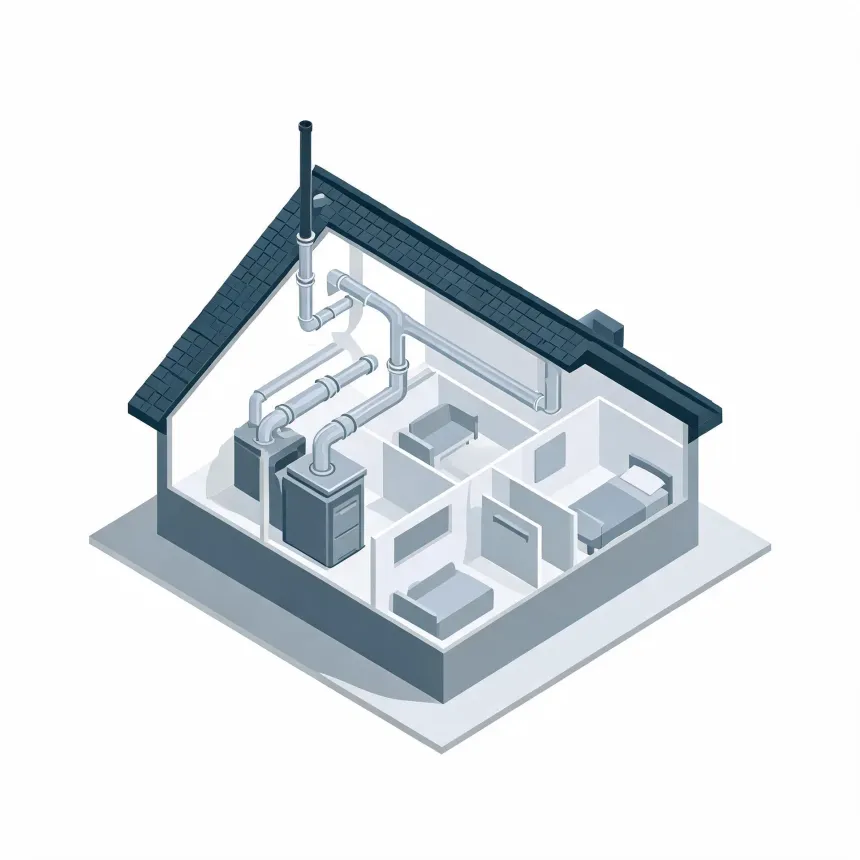
Isometric illustration of a cutaway house showing a furnace unit with ductwork and a flue pipe running through the interior rooms, which contain simple furniture.
Your furnace works hardest from November through March.

NOAA nClimDiv, 1991–2020 normals

A furnace won't light if the flame sensor is coated with residue.

Check the filter and the thermostat batteries before you call anyone, that alone fixes a fair number of no-heat calls.

Eight months of heat a year wears a furnace down faster

Heat runs October through May
Winter nights average 12°F
Climate zone 5A
October is when a bad part finally gives outHeat starts in October here, and a furnace with a weak part is most likely to fail in those first weeks.

A furnace that's struggling doesn't fix itself by staying on. A cracked heat exchanger gets worse under the stress of each heating cycle, not better. A blower motor straining on a worn bearing will keep straining until it seizes. A pressure switch that cycles the burners on and off is putting the ignition system through more starts than it was built for, and each start wears the igniter a little more. Some problems do sit still if you leave them alone, a dirty flame sensor mostly just needs cleaning. But anything involving heat, pressure or a motor under load tends to move in one direction. Catching it while it's still a repair, and not a cracked part or a dead motor, is the reason not to wait.

Know what you're repairing before you repair it

Before you pay for the repair, find out whether this furnace is original to the house or one that replaced it. That tells you which question you're actually answering: whether it's worth fixing, or whether it's worth keeping.

Find a contractor
A gray high-efficiency gas furnace installed in an unfinished basement, surrounded by gas lines, a condensate drain, and sheet-metal ductwork.

The clock is already running against it

Eight months of heat a year puts a lot of cycles on a furnace, and when something's already going wrong, those cycles are what push it from a minor issue to a bigger one. That's the case for having it looked at now instead of waiting to see if it gets better on its own. A technician can tell you whether this is a quick fix or the start of something that's going to keep coming back.

What the burners and flame tell you

A burner flame should look steady and mostly blue. Yellow or flickering flame means it isn't burning clean, and that can point to a cracked heat exchanger or a burner that needs cleaning. Delayed ignition, where you hear a soft boom instead of a clean light, usually means dirty burners or a gas pressure problem. Either one is worth having checked before the furnace is asked to run again.

What the air and the sounds tell you

Air coming out lukewarm instead of hot often traces back to a dirty filter restricting airflow, a failing blower motor, or a cracked heat exchanger that's being shut down early by a safety switch. Banging or rattling when the burners light usually means dirty burners or a gas buildup igniting unevenly. A furnace that short cycles, turning on and off in quick bursts, is usually reacting to a clogged filter, a blocked vent, or a flame sensor that isn't reading the flame right. None of these get better by running the furnace through another cycle.

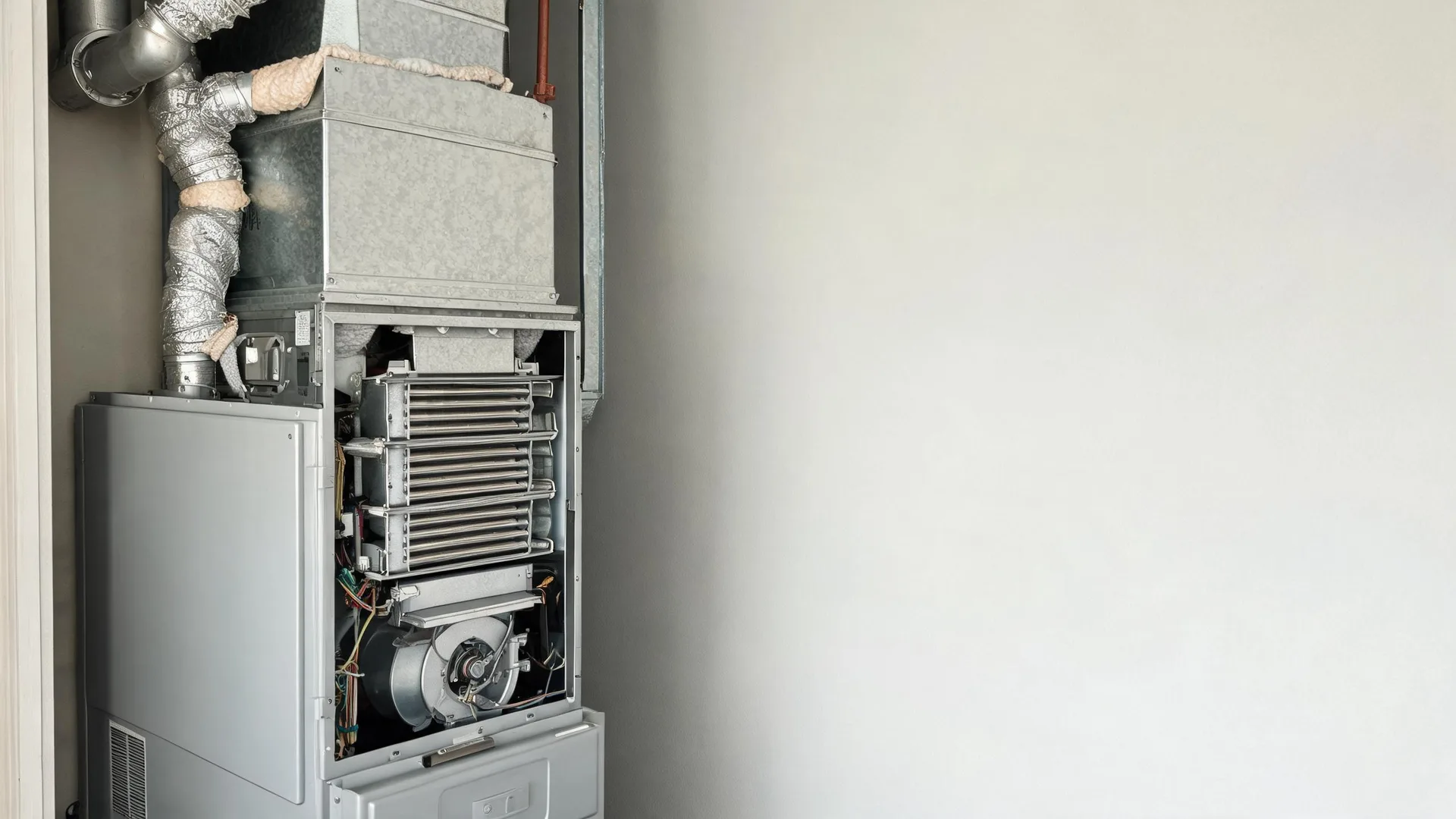
An unfinished basement featuring concrete block walls, exposed floor joists, a bare concrete floor, and a forced-air furnace with a large metal exhaust duct in the corner.

A new furnace would cut about $120 a year off heating for a typical Bremer County home.

  • A new high-efficiency furnace$480 a year
  • An older furnace$600 a year

Estimates for a typical Bremer County home, compared with an older unit built to the previous federal minimum, from EIA household energy data, Iowa fuel prices and NOAA climate normals. Your home will differ.

Repair makes sense when one part has failed and the heat exchanger is sound.

Replacement makes sense when the heat exchanger is cracked or the furnace keeps needing parts.

A diagnostic visit starts before any panel comes off. A technician asks what you've noticed: when it happens, whether it's every cycle or just some, what sounds or smells came with it. Then the furnace gets watched through a full cycle, start to shutdown, because some faults only show up at ignition or only show up once the blower kicks on. Readings come next. Gas pressure, temperature rise across the heat exchanger, amp draw on the blower motor, all checked against what the furnace is supposed to be doing, not just whether it runs. A cracked heat exchanger gets checked directly, since that's a safety issue and not just a comfort one. By the end you should know which part is failing and why, not just that something is wrong.