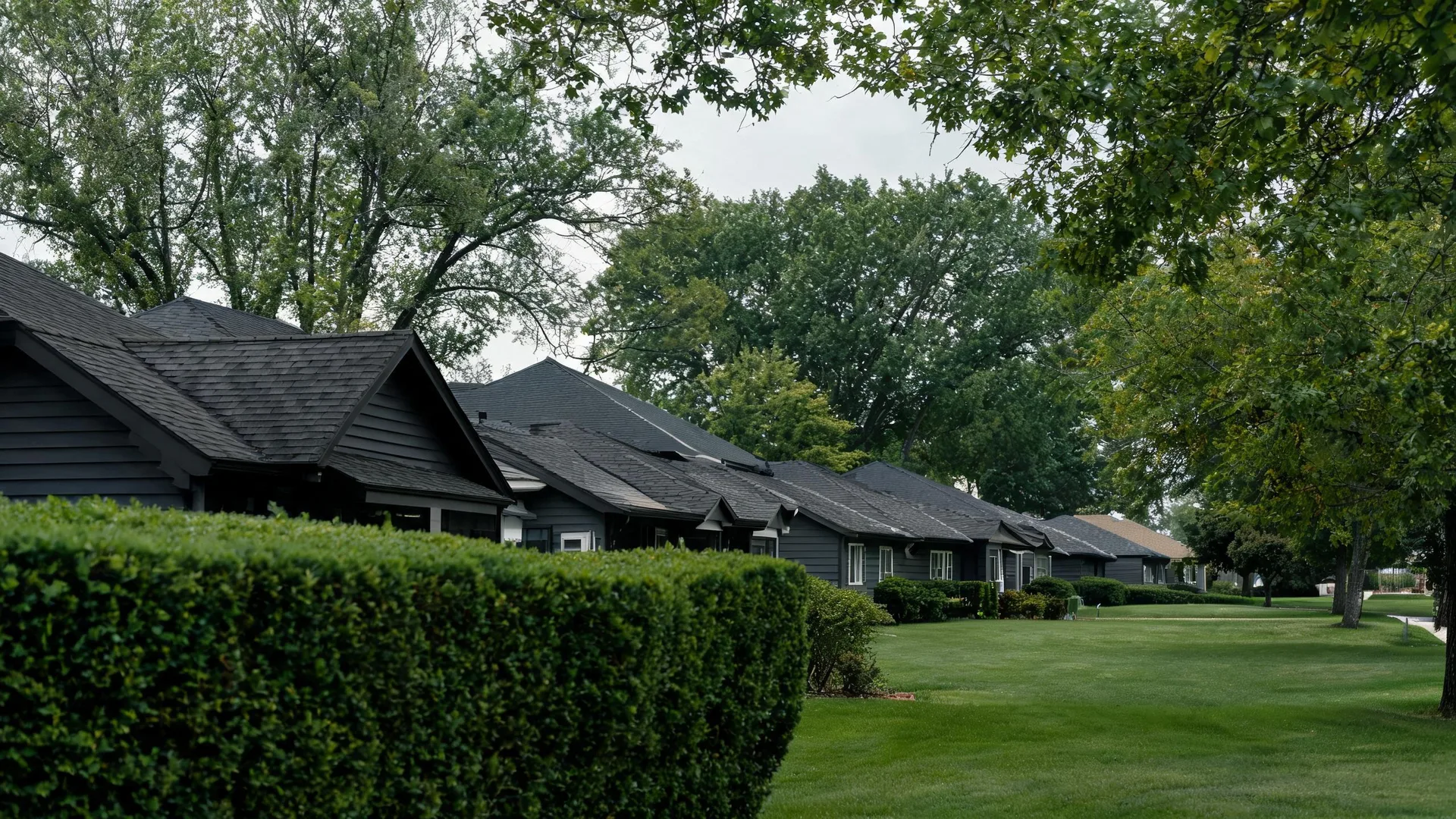





A row of dark-sided single-story houses with gray shingled roofs behind a trimmed hedge, with mown lawn and large deciduous trees under an overcast sky.

Furnace Repair in Pella, IA

Tell us about the job

Takes about a minute. No obligation.

RepairFurnace or heatingMarion County, IA
Step 1 of 2

What ZIP code is the job in?

A furnace that's struggling usually tells you before it quits outright. It might short cycle, turning on and off in short bursts instead of running a full heating cycle. It might blow air that's barely warm, which often points to a failing igniter or a flame sensor that's coated in residue and can't tell the burners are lit. A burning or metallic smell when it first kicks on is normal for a few minutes, but if it lingers, something's overheating. Listen for banging or screeching at startup, since that can mean a cracked heat exchanger or a blower motor on its way out. If the thermostat calls for heat and nothing happens, or the pilot light won't stay lit, those are both worth a call rather than a second attempt to relight it yourself.

8 months
October through May, your furnace is on duty
17°F
the average winter night it heats against
60%
of homes here heat with gas, so most furnaces here burn gas
20 winter storms
in ten years, the nights a failure hurts most
Isometric cutaway illustration of a small house showing a furnace unit connected to ductwork and a vertical flue pipe extending through the dark shingled roof, with sparse furniture in the rooms.
Your furnace works hardest from November through March.

NOAA nClimDiv, 1991–2020 normals

A cracked heat exchanger gets worse every time the burners fire.

Shutting the furnace off and calling for repair stops the damage from spreading.

Eight months of heat a year wears a furnace down faster

Heat runs October through May
Winter nights average 17°F
Climate zone 5A
October is when the weak ones failFurnaces here sit idle since spring, then homes in Marion County start running heat again in October.

A repair is worth it if the furnace is sound otherwise and the failed part is one piece, like an igniter, a flame sensor, or a draft inducer motor. Those are common failures on an otherwise healthy system, and replacing one doesn't tell you anything bad about the rest of the furnace. Age changes that math some, since a furnace nearing the end of its expected life tends to send the next part and the one after that. A cracked heat exchanger is different from a worn part. It means the whole unit is done, not just one piece of it, because that's the part that can't be swapped on its own without replacing the furnace it's built into. The question worth asking isn't just what this repair costs, but whether another part is likely to fail soon after.

Eight months of heat a year means this is worth diagnosing properly

Running heat from October through May puts real hours on a furnace, and that's what tends to catch up with one part at a time. Have the actual cause found before anything gets replaced, so the fix holds for the rest of the winter.

Find a contractor
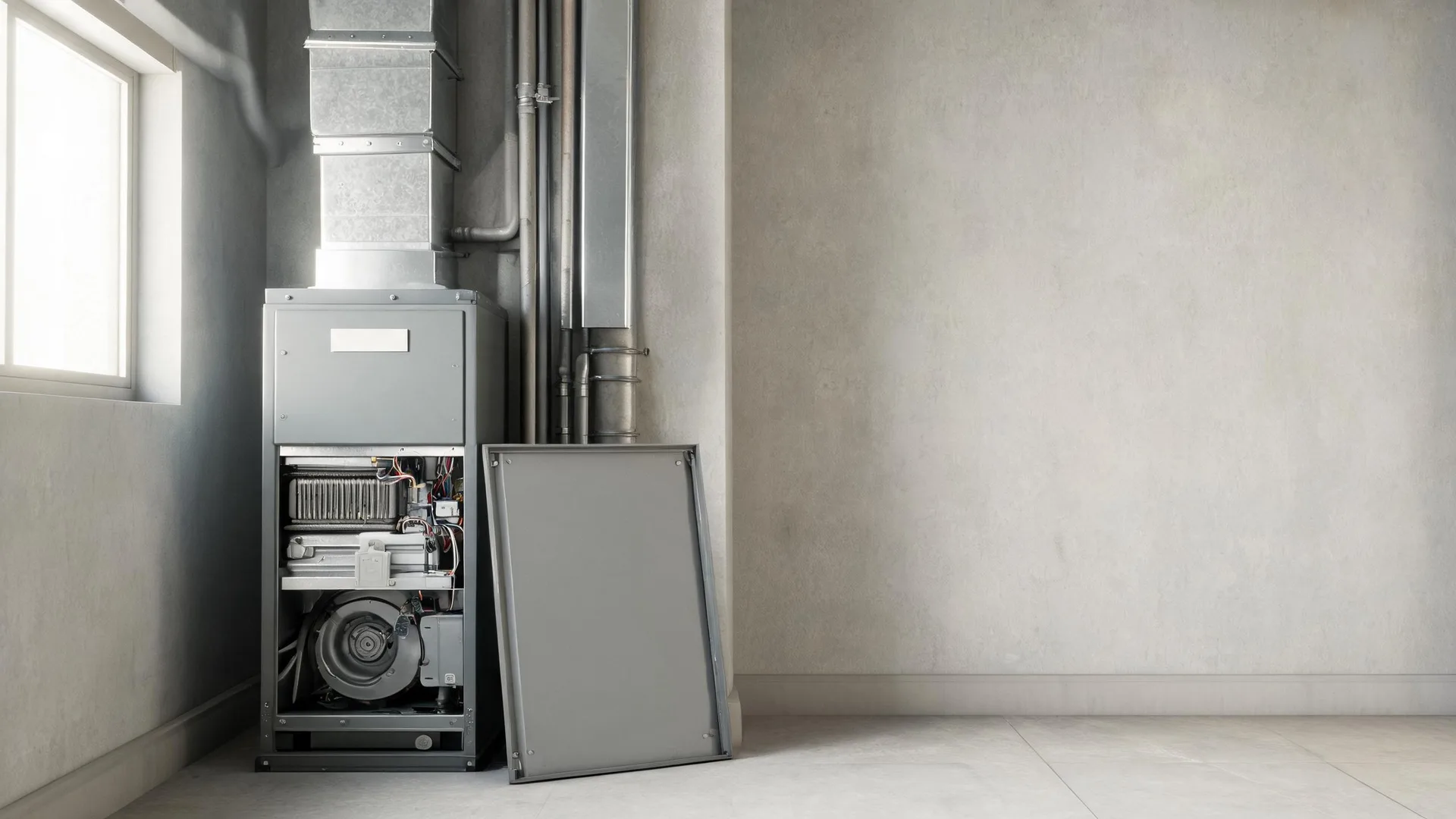
A gray high-efficiency gas furnace installed in an unfinished basement, surrounded by gas lines, a condensate drain, and sheet-metal ductwork.

Parts wear out from running, not from age on a shelf

Furnaces usually fail one part at a time, not all at once. The igniter sits right in the path of the flame every time the burners light, and that heat cycling is what wears it out eventually, whether it's the hot surface kind that glows or the spark kind that clicks. The flame sensor has an easier job but a dirtier one. It sits in the burner flame too, and over years it picks up a film that keeps it from reading the flame at all, so the furnace shuts itself down as a safety measure. The draft inducer motor runs every single cycle to clear the exhaust before the burners even light, and a motor that runs that often eventually wears out its bearings. Blower motors fail the same way, from accumulated run time rather than any one bad cycle. The part that doesn't fail on its own timeline is the heat exchanger. It cracks from repeated expansion and contraction as it heats up and cools down cycle after cycle, year after year, and once it cracks it's done. None of these are failures of a bad furnace. They're what happens to any furnace that runs long enough.

What you can check yourself

Start with the thermostat. Make sure it's set to heat and the set temperature is actually above room temperature. Check the furnace switch, the one that looks like a light switch near the unit or on it, and make sure it's on. Check the breaker it runs on. Look at the air filter, since one that's packed with dust can choke airflow enough to trip the furnace's own safety limit and shut it down. If the furnace has a standing pilot, check whether it's lit. If it uses an electronic igniter, you won't be able to see or fix that part yourself, and that's fine.

Where to stop

Don't take the burner compartment apart or try to clean or realign anything inside it. Don't hold down a gas valve or keep re-lighting a pilot that won't stay lit, since that usually means a safety device is doing its job and shutting the gas off on purpose. If you smell gas, don't flip switches or look for the leak yourself. Leave the house and call the gas company from outside. Everything past the filter and the switches is a job for someone who works on these for a living.

An unfinished basement containing a metal furnace with ductwork, exposed wooden joists on the ceiling, cardboard boxes, a coiled cable, and a single hanging incandescent bulb.

A new furnace would cut about $100 a year off heating for a typical Marion County home.

  • A new high-efficiency furnace$410 a year
  • An older furnace$510 a year

Estimates for a typical Marion County home, compared with an older unit built to the previous federal minimum, from EIA household energy data, Iowa fuel prices and NOAA climate normals. Your home will differ.

Repair makes sense when one part has failed and the heat exchanger is sound.

Replacement makes sense when the heat exchanger is cracked or the furnace keeps needing parts.

A diagnostic visit starts with the thermostat and the basics, the same things worth checking before anyone's called, but a tech carries it further once the cover comes off. They'll test the flame sensor's signal with a meter instead of just looking at it, since a sensor can look clean and still read weak. They'll watch a full cycle start to finish, from the inducer motor spinning up to the igniter glowing or sparking to the burners catching, because a furnace can pass part of that sequence and fail the next part every time. Gas pressure gets checked at the valve. Amp draw gets checked on the motors, since a motor pulling too many amps is wearing out even if it still runs today. If the burners look scorched or the flame pattern is uneven, that gets noted too. The point of all of it is finding which single part failed, not replacing parts until something works.