Dark-sided single-story buildings with gray shingled roofs behind trimmed hedges, a mown lawn, and large leafy trees overhead.

Furnace Repair in Sioux City, IA

Tell us about the job

Takes about a minute. No obligation.

RepairFurnace or heatingWoodbury County, IA
Step 1 of 2

What ZIP code is the job in?

Half these homes were built in 1959 or earlier

Woodbury County's housing stock is old. Half the homes here went up in 1959 or before. A furnace doesn't last as long as the house does, so a home from that era is likely on a furnace that's already had one or two replacements, if not more.

An older furnace changes the math on a repair

A failing part on a furnace that's been running a long time often means others are close behind. Before paying for the repair in front of you, it's worth finding out how much life the furnace has left in it.

8 months
October through May, your furnace is on duty
14°F
the average winter night it heats against
60%
of homes here heat with gas, so most furnaces here burn gas
23 winter storms
in ten years, the nights a failure hurts most
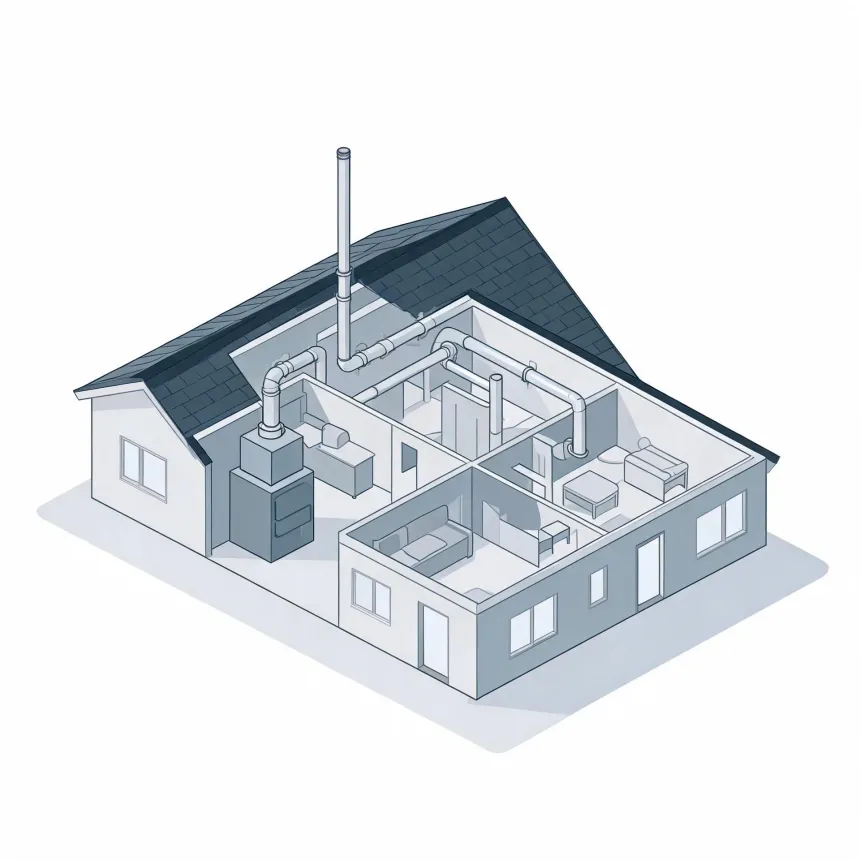
Isometric cutaway illustration of a single-story house showing interior rooms with furniture, a furnace unit connected to ductwork and a tall flue pipe extending through the roof.
Your furnace works hardest from November through March.

NOAA nClimDiv, 1991–2020 normals

A thermostat set to heat but a furnace that won't respond is often just a dead battery or a breaker that tripped.

Check the thermostat display and the breaker panel before paying anyone to come look at the furnace itself.

Eight months of heat a year wears a furnace down early

Heat runs October through May
Winter nights average 14°F
Climate zone 5A
October starts the season hereFurnaces in Woodbury County switch on in October and run through May, and trouble usually shows up in the first cold snap.

A cracked heat exchanger stays a small problem for exactly as long as it takes someone to notice it. Keep running the furnace and the crack flexes with every heat cycle, opening a little more each time, until it's letting exhaust into the air the blower pushes through the house. A limit switch that trips once and gets ignored is another one. It's shutting the burner off because the furnace is overheating, and if the real cause is a clogged filter or a failing blower motor, running it anyway just means it trips again, sooner. Even something as plain as a worn igniter tends to go from slow to light to not lighting at all, and each failed attempt is gas that didn't burn clean. None of these get better with more runtime. They get worse, and some of them aren't safe to wait out.

Eight months of heat a year is why this is worth fixing right, not just fixing

A furnace here runs from October through May. That's most of the year spent working, and whatever's going wrong right now had that much time to get worse before you noticed it. Have it looked at properly before deciding whether to repair it or put that money toward something newer.

Find a contractor
A man in a dark long-sleeve shirt and tan work pants carries a waxed canvas tool bag up concrete steps toward a blue front door of a gray-sided house, with potted shrubs nearby.
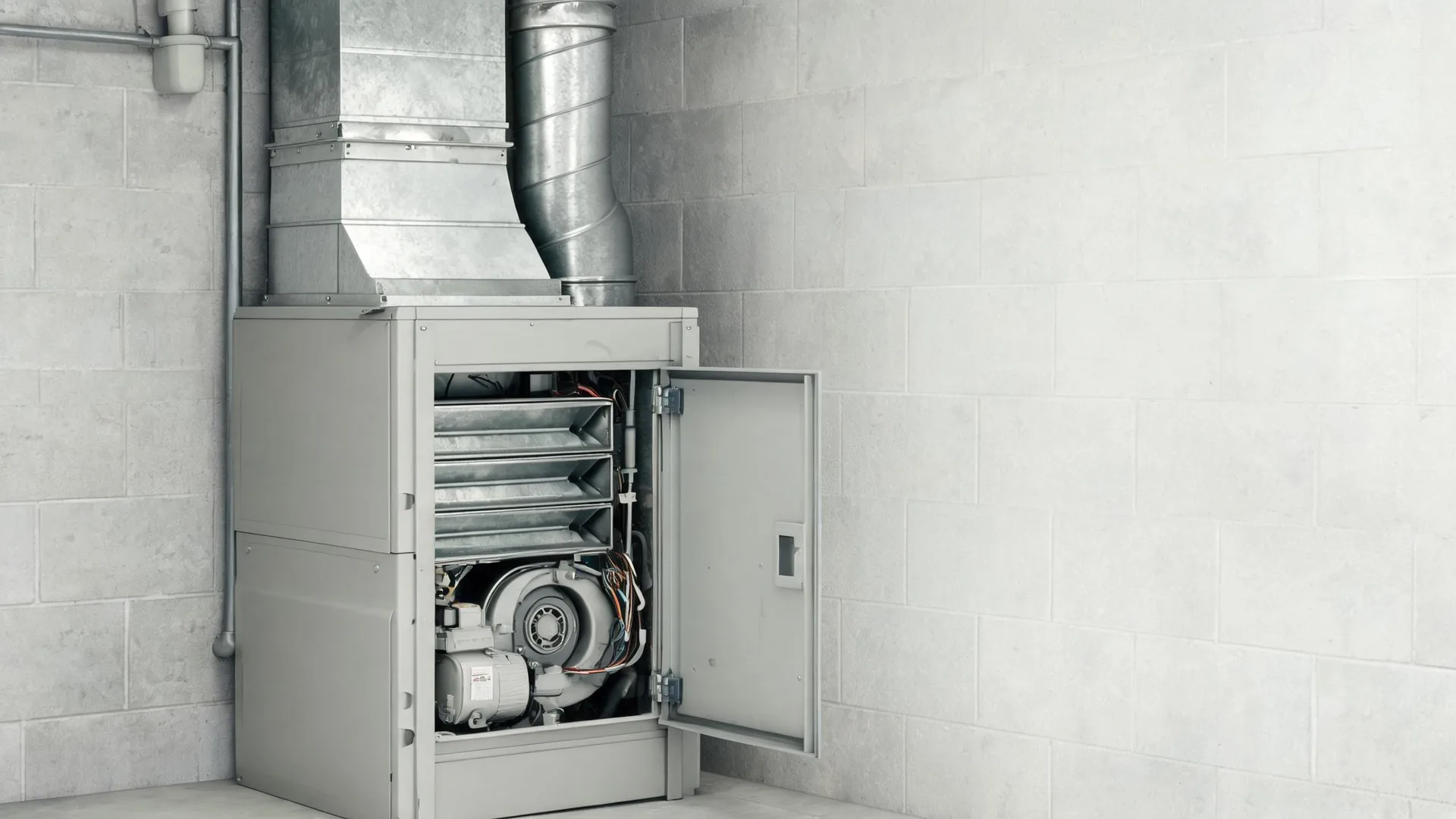
A gray residential gas furnace installed in an unfinished basement, surrounded by ductwork, a metal flue pipe, and a gas supply line.

This one has likely already replaced the one before it

A house built in 1959 or earlier has had that furnace swapped out at least once already, maybe more than once. Whatever's in there now is running on borrowed time just by being that age. Watching the day run into night like this, hour after hour, is what a furnace does. The question worth asking is how many more of these seasons it has left in it before the next part that fails is the one that ends it.

A furnace rarely fails without telling you first

A burner that cycles on and off fast, a flame that looks yellow instead of blue, a blower that runs but puts out cool air, these are all a furnace telling you something's wrong before it quits for good. Banging or scraping when it starts up usually means a part has worked loose or worn down. A burning smell that doesn't fade after the first few minutes of a run isn't dust burning off, it's something making contact with the heat exchanger that shouldn't be.

Waiting turns a repair into a bigger one

A furnace that short cycles is working harder to heat the same air, and that strain lands on the blower motor and the heat exchanger next. A pilot or igniter that struggles to light is forcing extra gas through before combustion happens, which carries its own risk. The part acting up today is rarely the only one under stress. Getting it looked at while it's still one bad part is what keeps it from becoming three.

An unfinished basement featuring a grey forced-air furnace with metal ductwork, concrete block walls, exposed wooden joists, and a single hanging bare bulb.

A new furnace would cut about $110 a year off heating for a typical Woodbury County home.

  • A new high-efficiency furnace$450 a year
  • An older furnace$560 a year

Estimates for a typical Woodbury County home, compared with an older unit built to the previous federal minimum, from EIA household energy data, Iowa fuel prices and NOAA climate normals. Your home will differ.

Repair makes sense when one part has failed and the heat exchanger is sound.

Replacement makes sense when the heat exchanger is cracked or the furnace keeps needing parts.

A diagnostic visit starts before any panel comes off. A tech will ask what the furnace was doing right before it quit, since a burner that wouldn't light and a blower that won't shut off point to completely different parts. From there it's a set sequence: check the thermostat call is reaching the control board, check the gas valve is getting power and opening, check the igniter or pilot is actually producing flame, check the flame sensor is reading that flame and telling the board to keep the gas on. Each step rules something out. A reading that's off tells the tech exactly which part failed instead of guessing. The furnace usually gets opened up too, since soot on the burners or a cracked heat exchanger won't show up on an electrical test but matters just as much to whether it's safe to keep running. By the end you should know what failed, why, and whether it's a part worth replacing on its own or a sign the furnace is done.