




A quiet residential street at dusk lined with illuminated two-story brick houses and mature trees.

Furnace Repair in Newton, IA

Tell us about the job

Takes about a minute. No obligation.

RepairFurnace or heatingJasper County, IA
Step 1 of 2

What ZIP code is the job in?

Furnaces in Jasper County run from October through May. That's eight months of the year, and overnight lows average 16°F through December, January and February. A furnace built to heat a house through a mild winter somewhere else is not what's sitting in your basement. Yours is running longer hours and working against colder air, month after month, and that catches up with the igniter, the blower motor, whatever part is closest to giving out. When something starts acting up, it's usually not bad luck. It's a part that's been working this hard for this long finally showing it.

8 months
October through May, your furnace is on duty
16°F
the average winter night it heats against
56%
of homes here heat with gas, so most furnaces here burn gas
20 winter storms
in ten years, the nights a failure hurts most
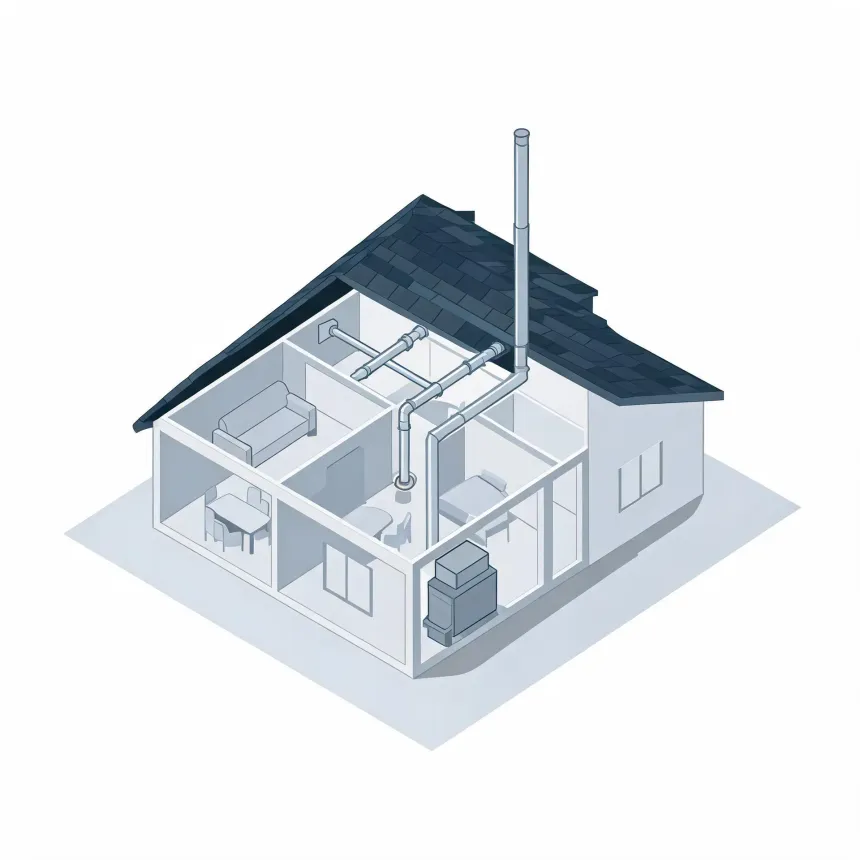
Isometric cutaway illustration of a single-story house showing interior rooms with furniture, ductwork and piping running to a tall vertical flue through the dark shingled roof, and a furnace-like appliance unit on the floor.
Your furnace works hardest from November through March.

NOAA nClimDiv, 1991–2020 normals

Half the homes in Jasper County were built in 1965 or earlier.

A furnace that came with a house that old is worth asking about before you pay for a big repair.

Eight months of heat, starting in October. Most calls come in the first cold weeks.

Heat runs October through May
Winter nights average 16°F
Climate zone 5A

If your furnace is acting up, don't just patch the symptom. Whoever comes out should check the part that's actually failing, not just reset it and move on. A blower motor that's been straining all winter can throw a breaker and look like an electrical problem when the real issue is the motor itself. An igniter that's cracked will keep failing no matter how many times it's replaced, if the real cause is a draft problem or a control board that's not reading it right. Ask what they found and why it failed, not just what they're swapping out. A repair that addresses the actual cause holds up through the rest of the winter instead of calling them back out in January.

Ask how much life the furnace has left before you fix it

If your furnace came with a house built in 1965 or earlier, ask the tech how much life it has left before you pay for a big repair. That answer should decide the repair, not just the part that failed.

Find a contractor
A man in a dark shirt and brown pants carries a worn canvas tool bag up concrete steps toward a gray-blue front door of a house with horizontal siding and a potted shrub.
A gray high-efficiency gas furnace installed in an unfinished basement, surrounded by gas lines, a condensate drain, and sheet-metal ductwork.

Nothing fails for no reason

Most furnace failures come down to a handful of parts, and they tend to go the same way every time. The igniter cracks after enough heat cycles and stops glowing hot enough to light the gas. The flame sensor coats with residue until it can't tell the control board a flame is there, so the system shuts itself down as a safety step. The blower motor wears out from running so many hours, and bearings that are starting to go will make the first noise months before they fail outright. A pressure switch sticks, a capacitor weakens, a limit switch trips because airflow is restricted somewhere downstream. None of these are random. Every one of them is a part doing its job over and over until it can't anymore.

Short cycling wears out the parts faster

A furnace that kicks on, runs a few minutes, then shuts off before the house warms up is short cycling. It might be a clogged filter choking airflow, a flame sensor losing its signal, or a limit switch tripping from heat buildup. Every cycle it does this is another cycle of stress on the parts that start it up, and that shortens what's left of their life.

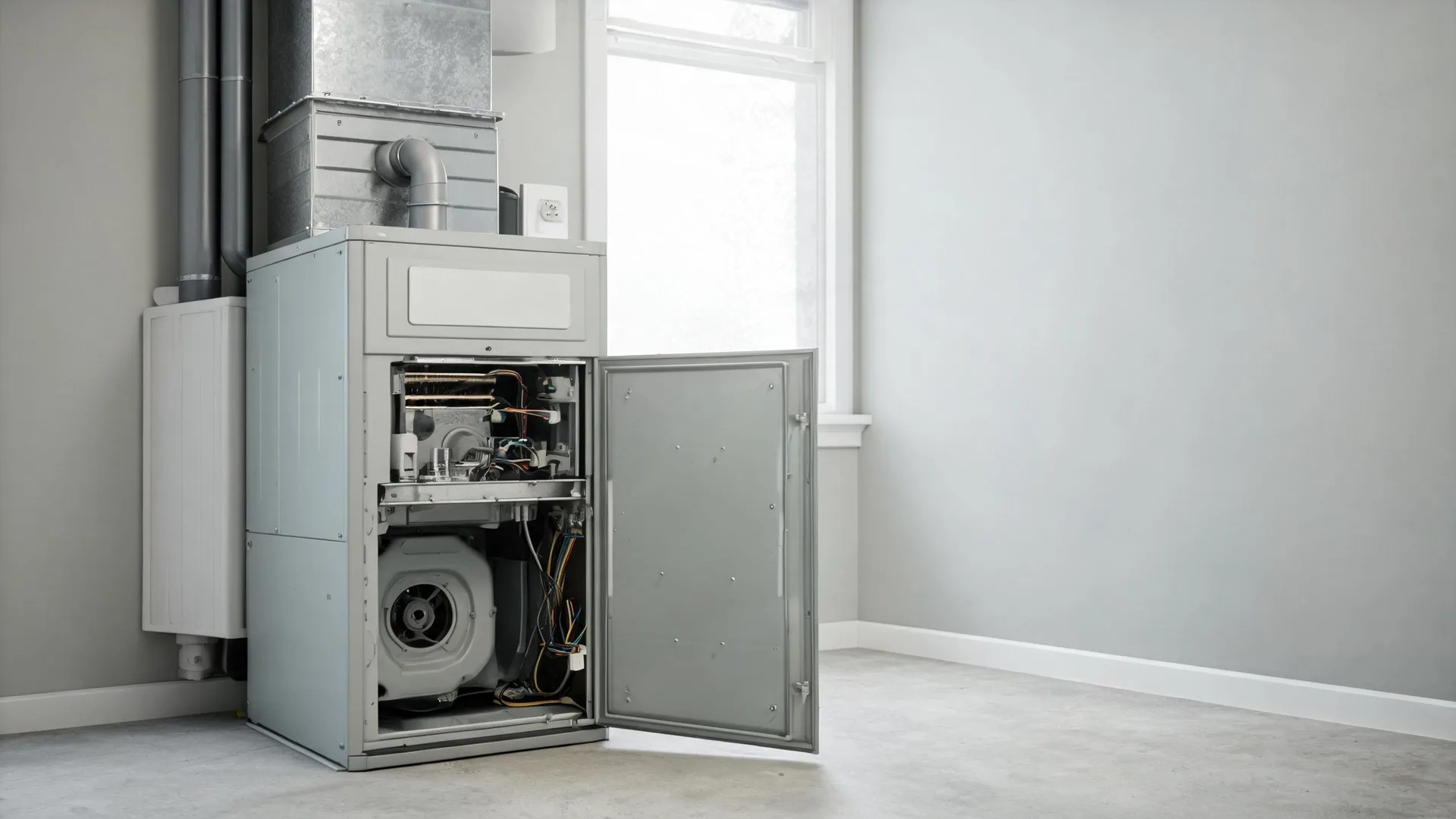
A cold room is a duct or a blower problem, not a thermostat problem

If one room stays cold while the rest of the house is fine, the thermostat isn't the issue since it only reads one spot. Look at the blower motor's strength and whether ductwork is actually getting air to that room. A tech can check static pressure and airflow at the vent to find where it's actually getting lost.

A gray forced-air furnace with ductwork stands in an unfinished concrete basement surrounded by storage items and clutter.

A new furnace would cut about $110 a year off heating for a typical Jasper County home.

  • A new high-efficiency furnace$430 a year
  • An older furnace$540 a year

Estimates for a typical Jasper County home, compared with an older unit built to the previous federal minimum, from EIA household energy data, Iowa fuel prices and NOAA climate normals. Your home will differ.

Repair makes sense when one part has failed and the heat exchanger is sound.

Replacement makes sense when the heat exchanger is cracked or the furnace keeps needing parts.

A furnace is worth fixing when the failure is a single part and the rest of the system is sound. An igniter, a flame sensor, a pressure switch, these are cheap compared to the box they sit in, and swapping one back in gets you a furnace that works like it did before. It's a different question when the heat exchanger has cracked, or when the same part keeps failing because something upstream is stressing it. A furnace that's limped through a few winters on patched repairs is telling you something. Age by itself isn't the deciding factor. What matters is whether the parts failing now are isolated problems or the first of many, because a furnace at the end of its life rarely fails once.