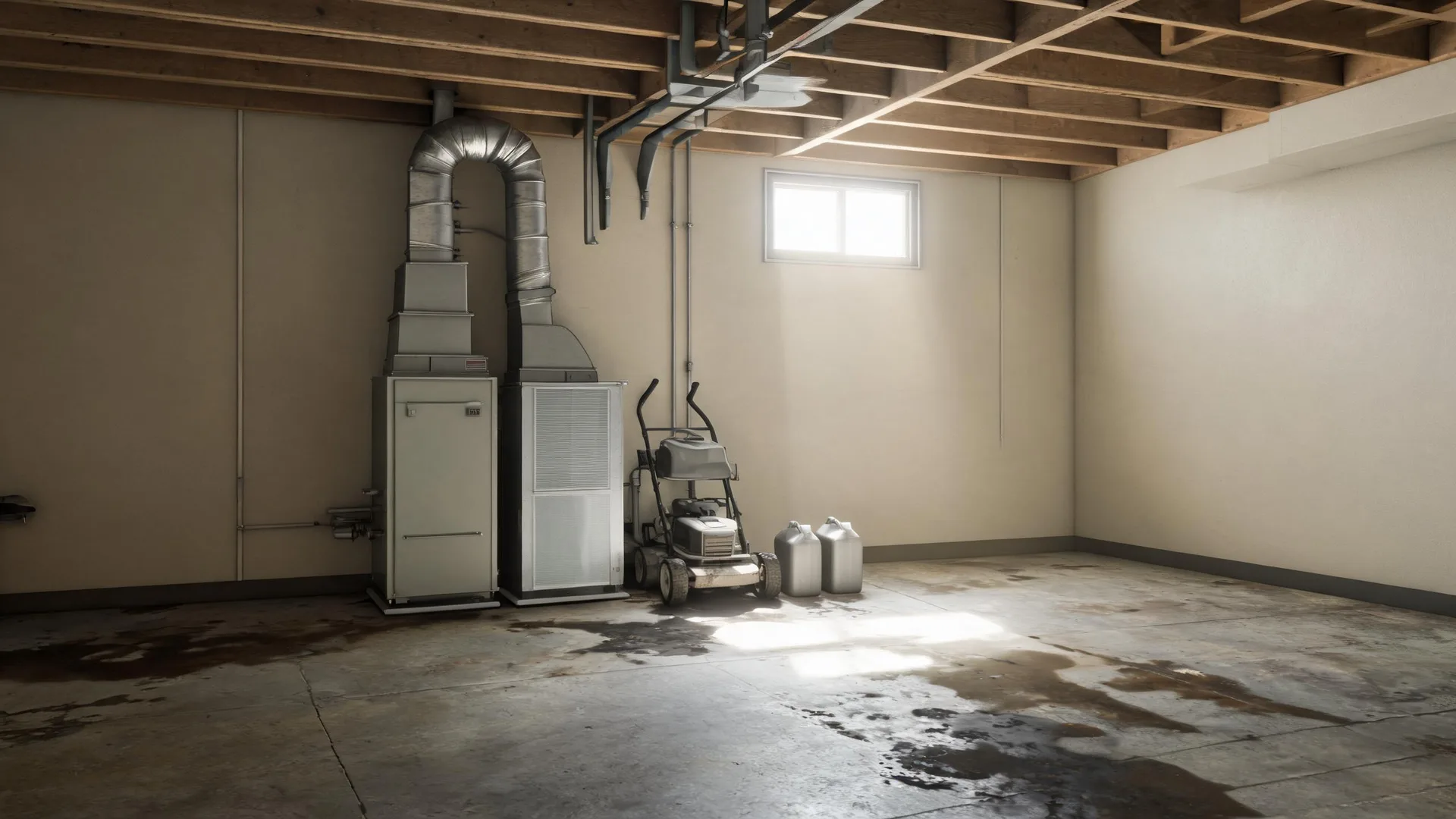
Eight months of heat a year
Furnaces in Scott County run from October through May, with overnight lows averaging 17°F in December, January and February. That's a long stretch asking the igniter and the blower motor to cycle on night after night.
Takes about a minute. No obligation.
Furnaces in Scott County run from October through May, with overnight lows averaging 17°F in December, January and February. That's a long stretch asking the igniter and the blower motor to cycle on night after night.
A furnace that runs eight months a year wears down faster than one that only kicks on now and then. If yours is acting up, the cause is usually something that's been working overtime. Worth having it checked properly rather than guessed at.

NOAA nClimDiv, 1991–2020 normals
September is the month before heat season starts in Scott County.
Furnaces that sat idle since spring often show their first problem in the first cold snap of October.
A tech starts by asking what it's doing, or not doing, before touching anything. Short cycling, no heat at all, a smell on startup, a noise that wasn't there before. That tells them where to look first. From there it's a sequence. Check the thermostat call. Check for power at the board. Check the igniter glows and draws current. Check the flame sensor reads a signal once the burners light. Each step rules something out. A furnace that tries to start and shuts down is usually stopping itself on purpose. Some safety switch caught a pressure or temperature reading it didn't like, and that switch gets tested along with everything else. The goal is to find the one part actually at fault, not to start swapping parts and hoping.
If your furnace's outdoor venting or power connection took a hit from wind or hail and nobody's looked at it since, that's worth a check even if the heat still comes on.
Find a contractorIf your furnace came with a house built in 1972 or earlier, it's probably not the original, and it may not be the one after that either. Before paying for a repair, ask whoever comes out how much life is left in the furnace you've got. A unit that's near the end is worth knowing about before you put more into it.
Check the thermostat is set to heat and the set point is above room temperature. Check the power switch next to the furnace, it looks like a light switch and gets bumped off easily. Check the breaker too. If you smell gas anywhere in the house, skip all of this, get outside, and call the gas company from there. Check the filter while you're at it. One packed with dust chokes off airflow enough that the furnace overheats and shuts itself down to protect itself.
Leave the cover panel on. There's usually a safety switch behind it, and if that panel isn't seated right when it goes back, the furnace won't start at all. If a reset switch trips once, resetting it is fine. If it trips again, stop, it's shutting itself off for a reason and running it past that isn't safe. Same with any noise or smell that wasn't there before. Switch it off and let someone who can see inside the cabinet find out what's wrong.
Estimates for a typical Scott County home, compared with an older unit built to the previous federal minimum, from EIA household energy data, Iowa fuel prices and NOAA climate normals. Your home will differ.
Repair makes sense when one part has failed and the heat exchanger is sound.
Replacement makes sense when the heat exchanger is cracked or the furnace keeps needing parts.
A repair makes sense when the part that failed is one part, and the rest of the furnace is doing fine around it. A cracked igniter, a bad flame sensor, a failed control board, those get replaced and the furnace goes back to work like nothing happened. Replacement starts to make more sense when the cabinet itself is rusting through, or the heat exchanger is cracked, since that one isn't something anyone patches. It also matters whether this is the first thing to go wrong or the third one this year. A furnace that keeps finding new ways to fail is telling you something the next repair won't fix. Ask the tech what they're seeing before you decide, not after.