


Heat pump vs furnace in Scott County, Iowa

Get a Quote

Match with a pro in Scott County

A person's arm in a blue shirt reaches up to adjust a round wall-mounted thermostat on a gray interior wall, with an open tool bag on a wood floor and a living room with a sofa and houseplant in the background.

Tell us about the job

Takes about a minute. No obligation.

New system or replacementScott County, IA
Step 1 of 3

What kind of equipment?

Which costs less to run in Scott County?

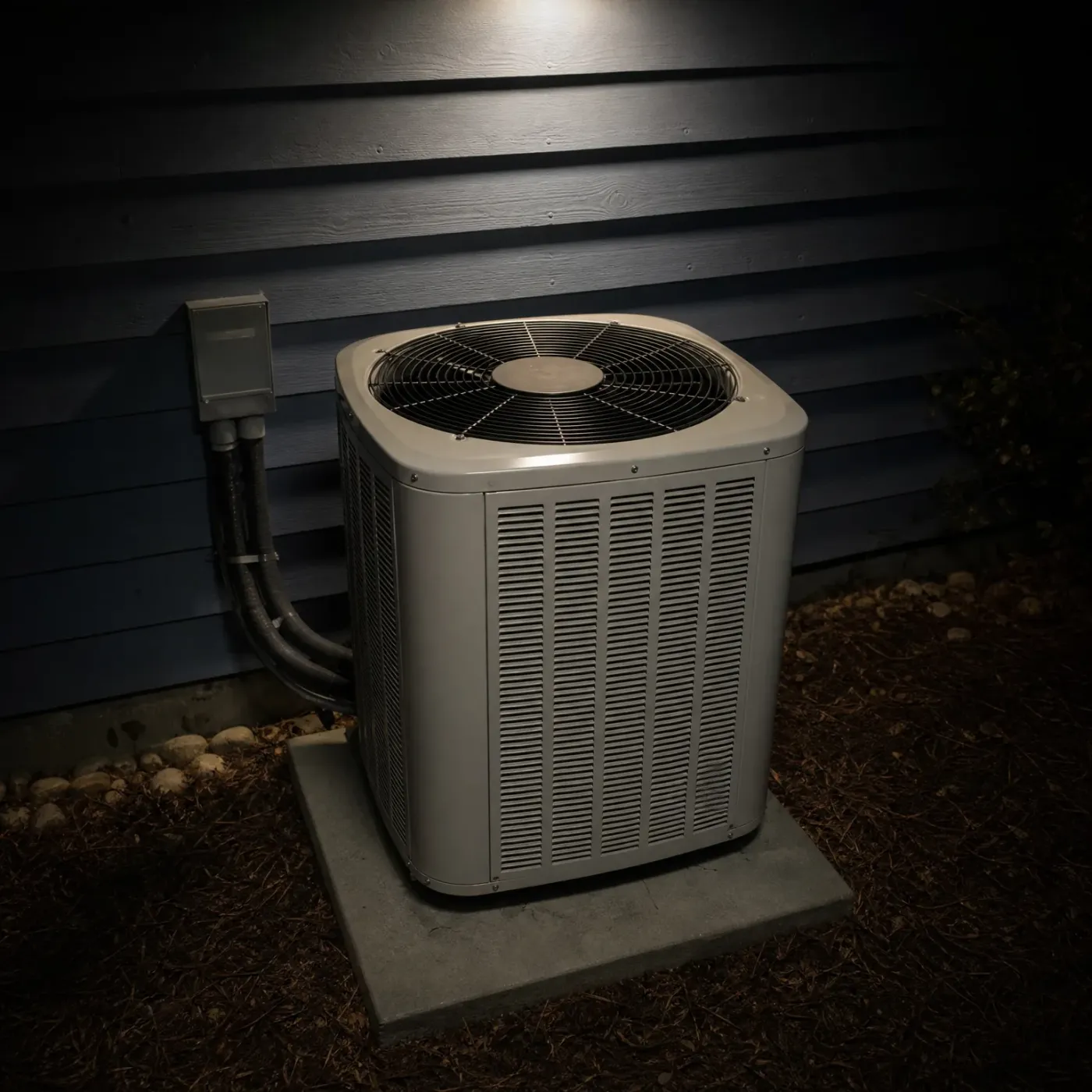
An outdoor air conditioner condenser unit on a concrete pad beside a dark horizontal-lap sided wall at night, with insulated refrigerant lines running to a wall-mounted disconnect box and mulch and stones on the ground.

Heat pump

To heat your home here$1.79per 100,000 Btu

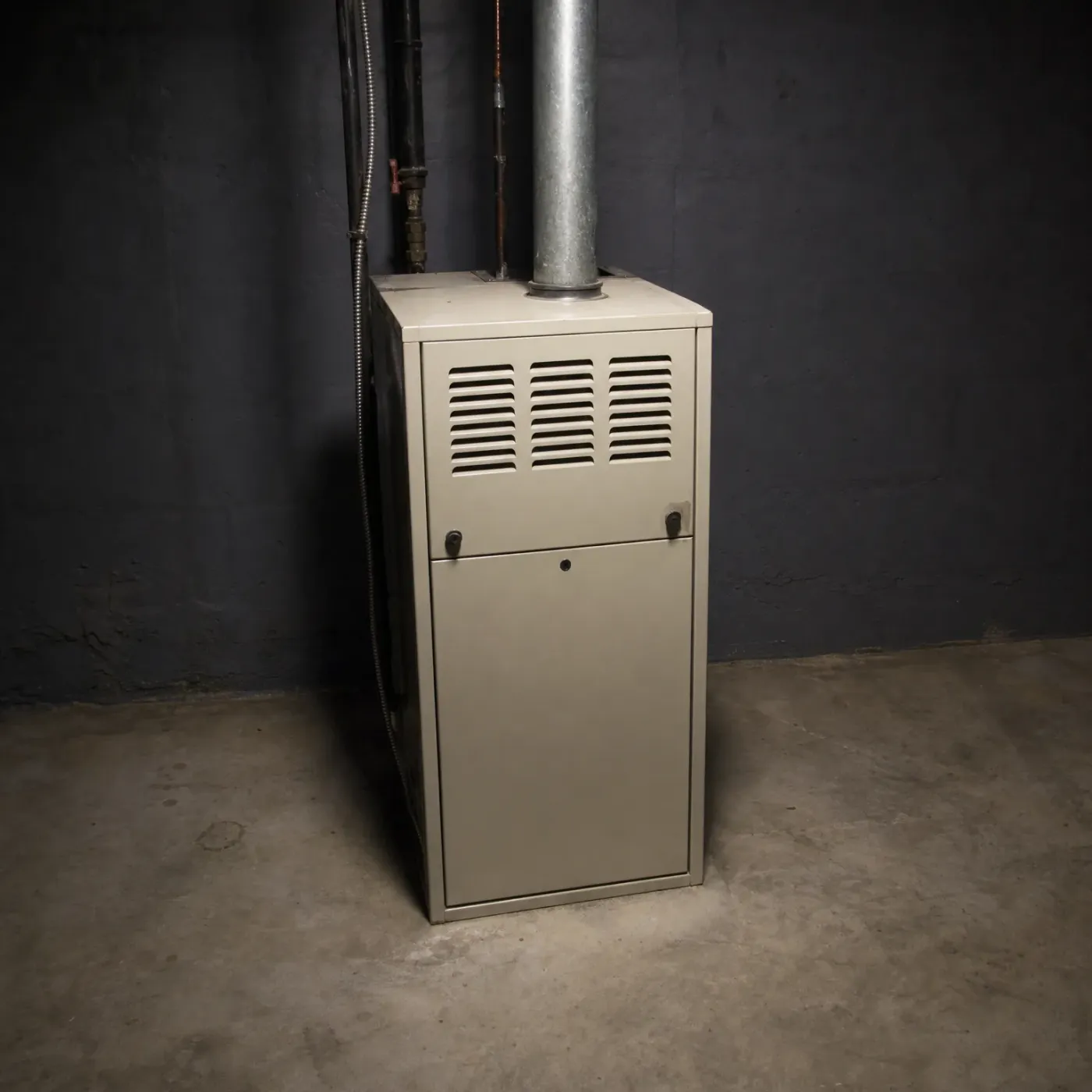
A beige sheet-metal furnace with a louvered upper panel and metal flue pipe stands against a dark painted wall on a concrete basement floor.

Furnace

To heat your home here$1.21per 100,000 Btu

At Iowa's gas and electricity prices, a gas furnace makes the same heat as a heat pump for at least 32% less.

Btu stands for British thermal unit, the standard measure of heat energy.

Where does a heat pump shine?

  • Steady, even comfort

    A heat pump runs long and low instead of blasting on and off. Rooms hold an even temperature all day.

    A dimly lit living room with a dark gray armchair, knit blanket and open book, a wooden coffee table with a candle and plant, a stone fireplace with a lit fire, a frosted window, and a golden-colored dog sleeping on a light rug.
  • Heats and cools in one system

    One machine handles the heat in winter and the cooling in summer. There's no second system to buy or keep up.

    A living room with a cream sofa holding grey and navy cushions and a grey fringed throw, a rustic wooden coffee table with a mug and wooden bowl, a dark grey panelled door, built-in shelves with books, a large window looking onto a green garden, and a table lamp beside a wooden chair.
  • No gas line, nothing burning in the house

    There's no gas line to the unit and no flame anywhere in it. Carbon monoxide isn't part of the picture.

    A kitchen with navy cabinets, white countertops, gray herringbone tile backsplash, stainless range hood over a cooktop with a kettle, open wood shelves with dishes, two glass pendant lights, a window, and a bowl of green apples on the foreground island.

Where does a furnace shine?

  • Pairs with any central AC

    A furnace's blower and ducts carry cooled air too. Adding central AC uses the same system.

    A metal floor vent register set into hardwood flooring near a window with a sheer curtain, with a dark blue door, white baseboards, and a gray woven rug nearby in sunlight.
  • Runs on the gas most homes here already use

    Most homes in Scott County already have gas service, since utility gas heats 74% of them. If yours is one, a gas furnace just ties into the line that's already there.

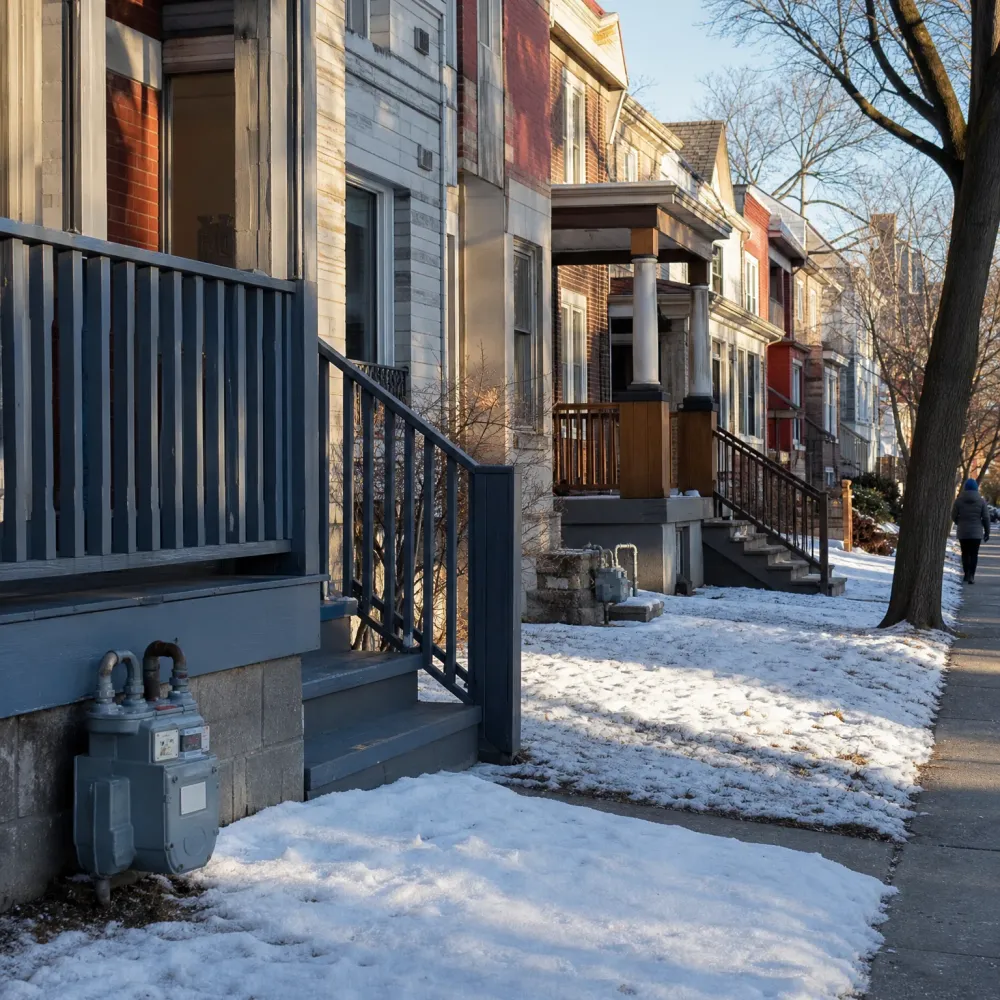
    A row of attached two-story houses with porches, railings and front steps along a snow-patched sidewalk, with a bare tree and a distant person walking in a dark coat.
  • Fast, strong heat on demand

    The air coming from the vents feels genuinely hot. That's welcome on a freezing morning.

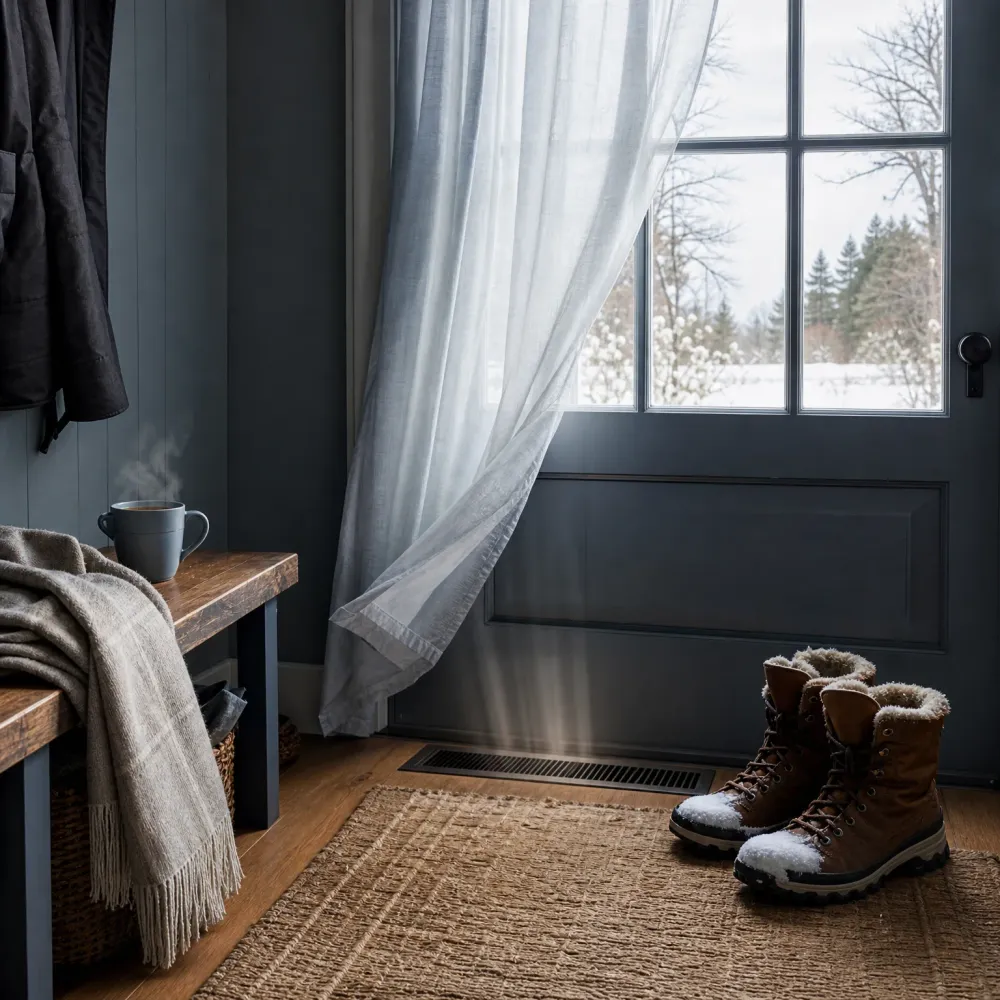
    Entryway with dark walls, a sheer curtain beside a windowed door looking onto a snowy yard with conifers, a wooden bench with a fringed throw and steaming mug, a floor vent, a woven jute rug, and a pair of snow-dusted brown boots.

Can a heat pump handle winter here

Winter here is long and it gets cold. The heat runs about eight months a year, October through May, and the average overnight low across December, January and February is 17 degrees. About 125 nights a year drop to freezing or below, roughly half the nights in that stretch. About 10 nights a year hit 0 degrees or colder.

A standard heat pump starts losing heat output once it drops below 40°F outside, and by the time it's below about 35°F it usually needs backup heat to keep up. At 17 degrees, the average winter night here, a standard heat pump is well past both marks. Every single night at or below freezing is past both marks too. That is not a few rough nights a year. That is most of the season.

There is a real answer to this, which is a cold climate heat pump. To earn that label a unit has to prove it still makes 1.75 units of heat for every unit of electricity at 5°F, and hold on to at least 70 percent of its rated capacity at that temperature, checked by outside testing. In field tests of prototype cold climate units in occupied homes over two winters, backup heat covered only a small share of the heat needed between 0°F and 35°F, and the units running on backup heat alone was rare even above 0°F. That is the version of a heat pump built for a place like Scott County. A standard heat pump is not.

So the honest answer is that a heat pump can keep a house here warm all winter, but only if it is the cold climate kind. A builder grade heat pump, the kind priced to meet the federal minimum, will lean on backup heat for a large part of the season because this county spends half its winter nights at or below the temperature where that unit starts to struggle.
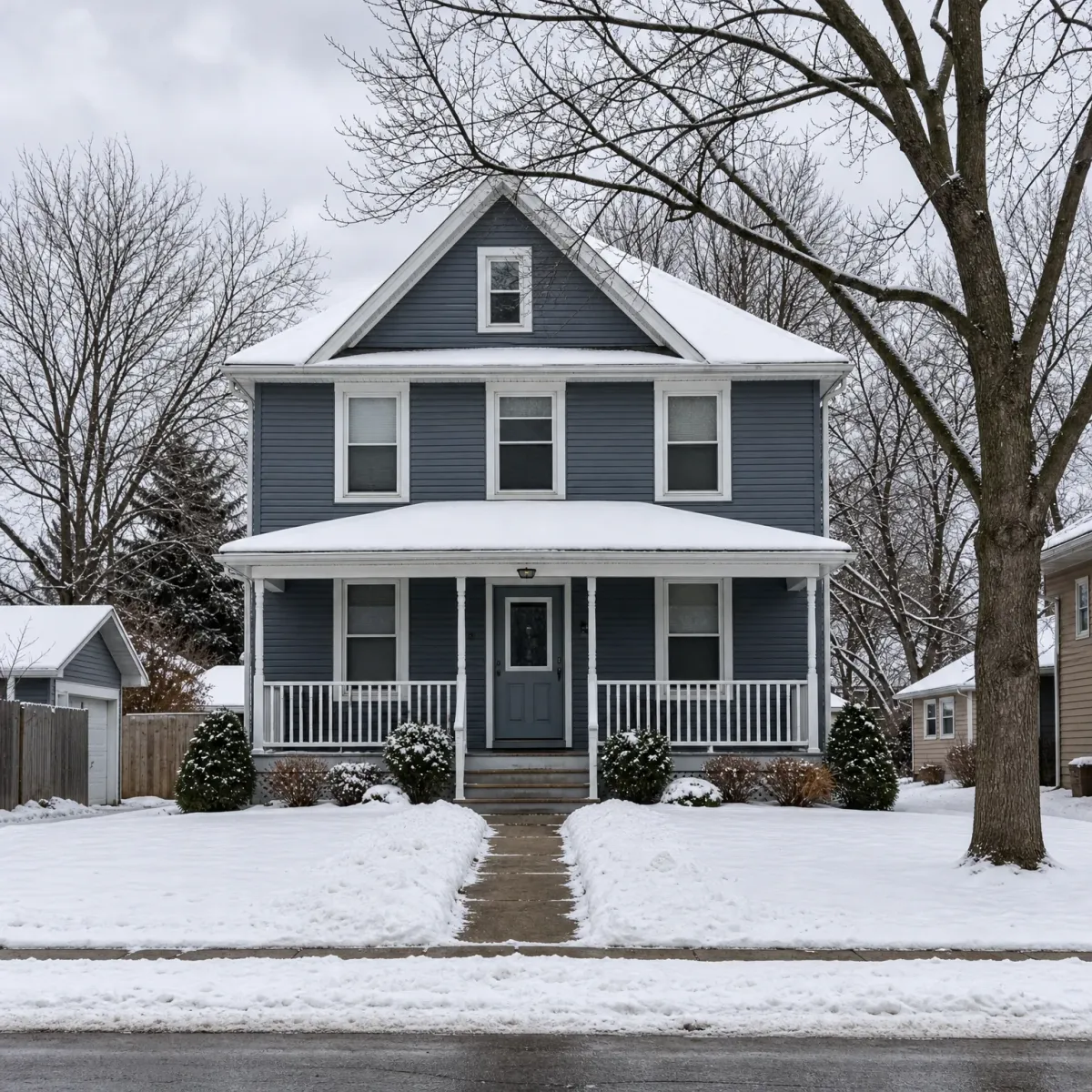
A two-story dark gray house with white trim, a covered front porch and gabled dormer, fronted by a snow-covered lawn with a cleared walkway and bare trees.

What it costs to run, and what that means for cooling

A gas furnace is cheaper to run here. At Iowa's 2024 fuel prices, a furnace built to the federal minimum makes the same heat for $1.21 per 100,000 Btu against $1.79 for a heat pump built to its federal minimum, with nothing added for backup heat on the coldest nights. That gap is why three out of four homes in Scott County heat with gas and only about one in five heat with electricity. Gas is the fuel most houses here are already set up to use, and it is the cheaper one to burn for heat.

A furnace only does one thing. It heats the house for the eight months a year this county needs heat, and for the other four months, June through August, it has no role at all. Cooling the house falls to a separate central air conditioner the rest of the year.

A heat pump heats and cools from the same system. Summer here runs about three months, June through August, shorter than the heating season, but it still means a second system to buy and maintain if the house is heated by a furnace. A heat pump replaces both with one machine, which is worth weighing against its higher running cost for heat.

So the choice comes down to what the house is built around. A home already piped for gas, in a county where three in four homes heat that way, gets cheaper heat from a furnace and will still need a separate air conditioner for summer. A home without gas, or an owner who wants one system for the whole year, should be looking at a cold climate heat pump specifically, not a standard one, given how much of this county's winter falls below the point where a standard unit falls behind.

Sources: NOAA nClimDiv · NOAA 1991–2020 seasonal normals · PNNL Building America guide · PNNL-37127 field study · ENERGY STAR product criteria · EIA SEDS 2024 · 10 CFR 430.32 · Census ACS 2020–2024

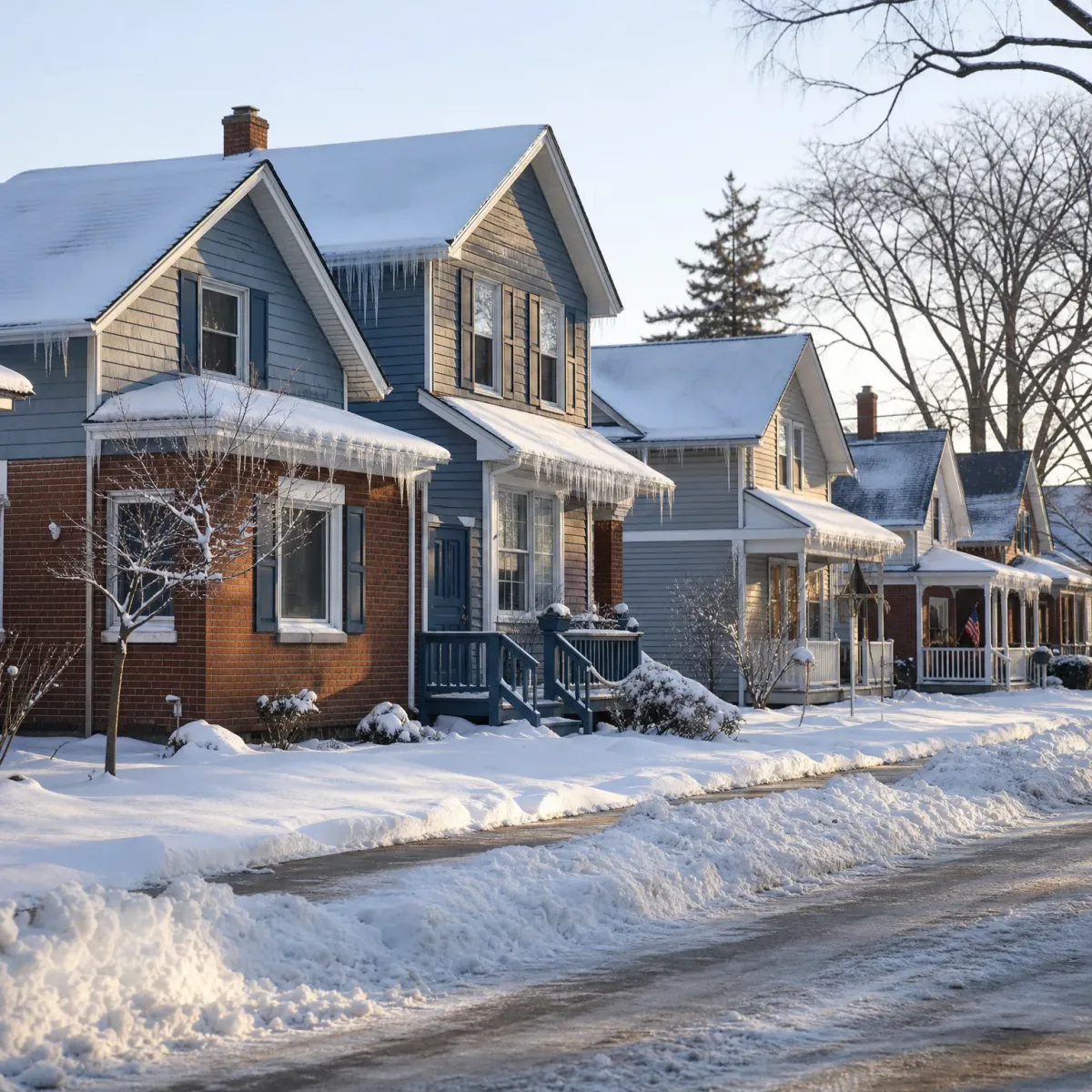
A row of two-story houses with gray siding and brick lower walls along a snow-covered residential street, with icicles hanging from the eaves and bare trees and a conifer in the background under a clear sky.

Common questions about heat pumps and furnaces

  • Can a heat pump heat a house through an Iowa winter?

    Yes, but what kind of heat pump matters. A standard heat pump's heat output drops below 40°F and falls further into the teens, and the overnight low here averages 17°F in December, January and February with about 10 nights a year at 0°F or below. A cold-climate heat pump is built and tested to keep most of its heating capacity down to 5°F, and in field testing across two winters, backup heat covered only a small share of the heat needed between 0°F and 35°F, and running on backup alone was rare even above 0°F.

  • Do I need backup heat with a heat pump here?

    Most likely, yes. A standard heat pump's output falls below its rating once it's under 40°F outside, and it often needs backup heat below about 35°F. The average overnight low here is 17°F across December, January and February, and nearly half the nights in the 8 months heat runs are at or below freezing, so a standard heat pump will lean on backup heat for a good part of the season. An ENERGY STAR Cold Climate model is tested to hold onto more of its capacity at 5°F, which narrows how much backup heat it needs, but it does not remove the question.

  • Can I keep my furnace and add a heat pump?

    Yes, and in Scott County it is a common setup. The furnace covers the cold nights, and the heat pump handles the rest, so each one runs where it works best. You keep the gas line you already have, and the furnace stops being your only option for the coldest stretch of winter.

  • Is a heat pump cheaper to run than a furnace in Scott County?

    No, a gas furnace costs less to run here. Heating with a furnace runs $1.21 per 100,000 Btu against $1.79 for a heat pump, both priced at Iowa's average fuel costs. That gap comes from how much cheaper natural gas is per Btu here than electricity, not from either machine being inefficient.