






A row of dark gray gabled houses behind a trimmed hedge and mowed lawn, framed by large leafy trees under an overcast sky.

Heat Pump Repair in Davenport, IA

Tell us about the job

Takes about a minute. No obligation.

RepairHeat PumpScott County, IA
Step 1 of 2

What ZIP code is the job in?

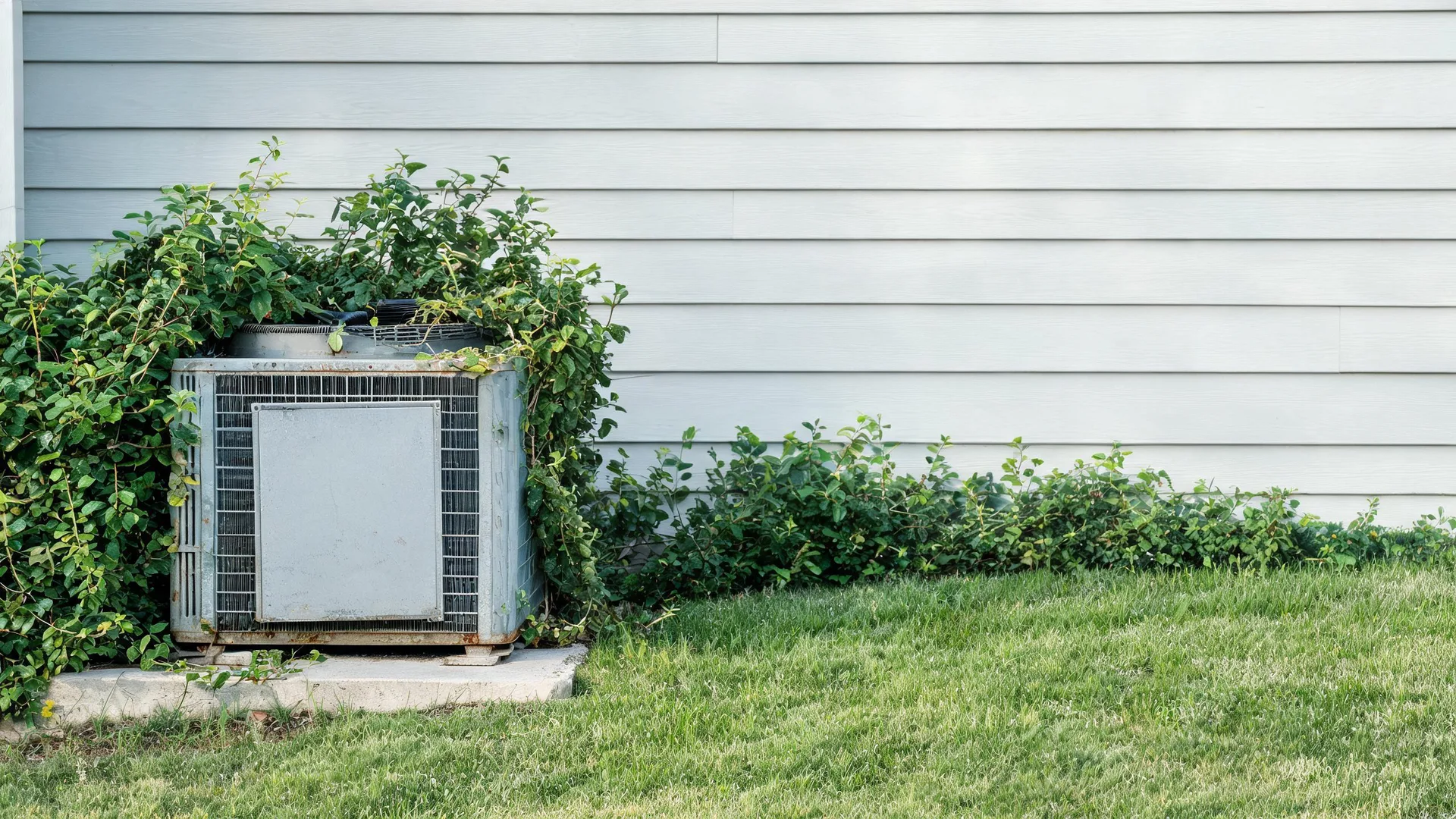
Scott County saw 338 severe weather events between 2015 and 2024. That includes 170 damaging wind events, 118 hail events, and 21 tornadoes touching down. A heat pump's outdoor unit sits outside through all of it, with the coil fins and fan exposed to whatever blows through. Hail can bend fins and dent the cabinet without stopping the unit right away, so it keeps running while it's damaged underneath. Wind-blown branches and debris do the same thing to the fan blade and coil. If a storm has come through and hit your unit, it's worth having it looked at even if it still turns on.

8 months
October through May, your system heats
3 months
June through August, it cools
17°F
the average winter night it heats against
83°F
the average summer afternoon it cools against
Isometric illustration of a cutaway single-story house showing interior ductwork and vents connected to an outdoor condenser unit beside the building, on a white background.
Your system heats October through May and cools June through August.

NOAA nClimDiv, 1991–2020 normals

Heat starts running in October here.

A weak part usually waits until that first cold stretch in October to fail.

A lot of Scott County's heat pumps are older than they look

Half the homes here were built by 1972
170 damaging wind events from 2015 to 2024
118 hail events from 2015 to 2024

A heat pump here does double duty, pulling heat out of the air all summer and pulling it back in all winter, and this county doesn't let up on either end. June through August the dew point runs 63 degrees on average, which is heavy, sticky air that keeps the compressor cycling for hours at a stretch. Then winter hits and the same unit has to pull heat out of air that barely has any. That's a wider range of hard work than most parts of the country ask of one machine. A compressor or a reversing valve under that kind of strain tends to wear unevenly, and a system that's been doing this for years can have a problem that built up slowly rather than one that started yesterday. Worth having someone check it properly instead of guessing at the fix.

Storm hit your unit? Have it checked before it fails on you.

If your outdoor unit took hail or a branch in the last storm, get it looked at even if it's still running. Bent fins and a damaged fan blade don't always stop a heat pump right away, but they don't fix themselves either.

Find a contractor
A man in a dark long-sleeve shirt and tan work pants, seen from behind, carries a worn canvas tool bag up concrete steps toward a dark blue front door.
A dark gray heat pump unit mounted on a concrete pad next to a house with gray siding and a stone veneer wall.

Years running, plus what the weather added to it

Between 2015 and 2024, Scott County had 170 damaging wind events, 118 hail events, and 28 winter storms. None of that is counted in the hours a heat pump runs. It's wear on top of it. A unit already cycling hard through muggy summers and cold winters doesn't need a bent fin or a knocked-loose part added to the pile, but that's what years outside in this county tend to bring. When a system has been running that long through that much, the cause of a problem isn't always what it looks like on the surface. Have it diagnosed before anything gets replaced.

What you can check yourself

Look at the thermostat first and make sure it's set to heat or cool and not just fan. Check the breaker box for a tripped switch on either the indoor air handler or the outdoor unit. Pull the air filter and hold it up to light. If you can't see through it, that alone can starve the system enough to cause problems that look worse than they are. Walk outside and look at the unit itself. Leaves, grass clippings or ice built up around the coil block airflow the same way a dirty filter does, and clearing it is safe to do by hand.
What to leave alone

Don't take the outdoor cabinet apart or touch anything inside it. The refrigerant lines and electrical components in there need a gauge set and training to work on safely. If the outdoor unit is caked in ice beyond a light frost, don't chip at it. Some ice is normal and the system clears it on its own during a defrost cycle. A reversing valve that won't switch between heat and cool, or a compressor that hums but doesn't start, are both jobs for someone with the right tools. Trying to force either one usually turns a repair into a replacement.

A heat pump that's struggling will still try to do its job, and that's the problem. A compressor low on refrigerant keeps cycling anyway, running hotter than it should with every pass. A failing capacitor makes the motor labor to start instead of kicking on clean, and that extra draw heats the windings a little more each time. None of this shuts the system down right away. It just adds damage on top of damage until something finally gives, usually the compressor itself, which is the one part that turns a repair into a full replacement. A system making a new noise or struggling to switch between heat and cool is already telling you something's wrong. Let it keep running on that and you're not saving the call, you're spending down the part that costs the most to replace.

Half the homes in Scott County were built in 1972 or earlier. If yours is one of them, the heat pump running now probably isn't the original one, but it's likely not the first replacement either, and the line set and ductwork it ties into are probably original to the house. A repair on a setup that old isn't always just the part that failed. Ask the contractor straight out how much life is left in the system before paying to fix the piece that broke. Sometimes the honest answer is that the repair is worth it. Sometimes it's money into a system that's already most of the way to done.