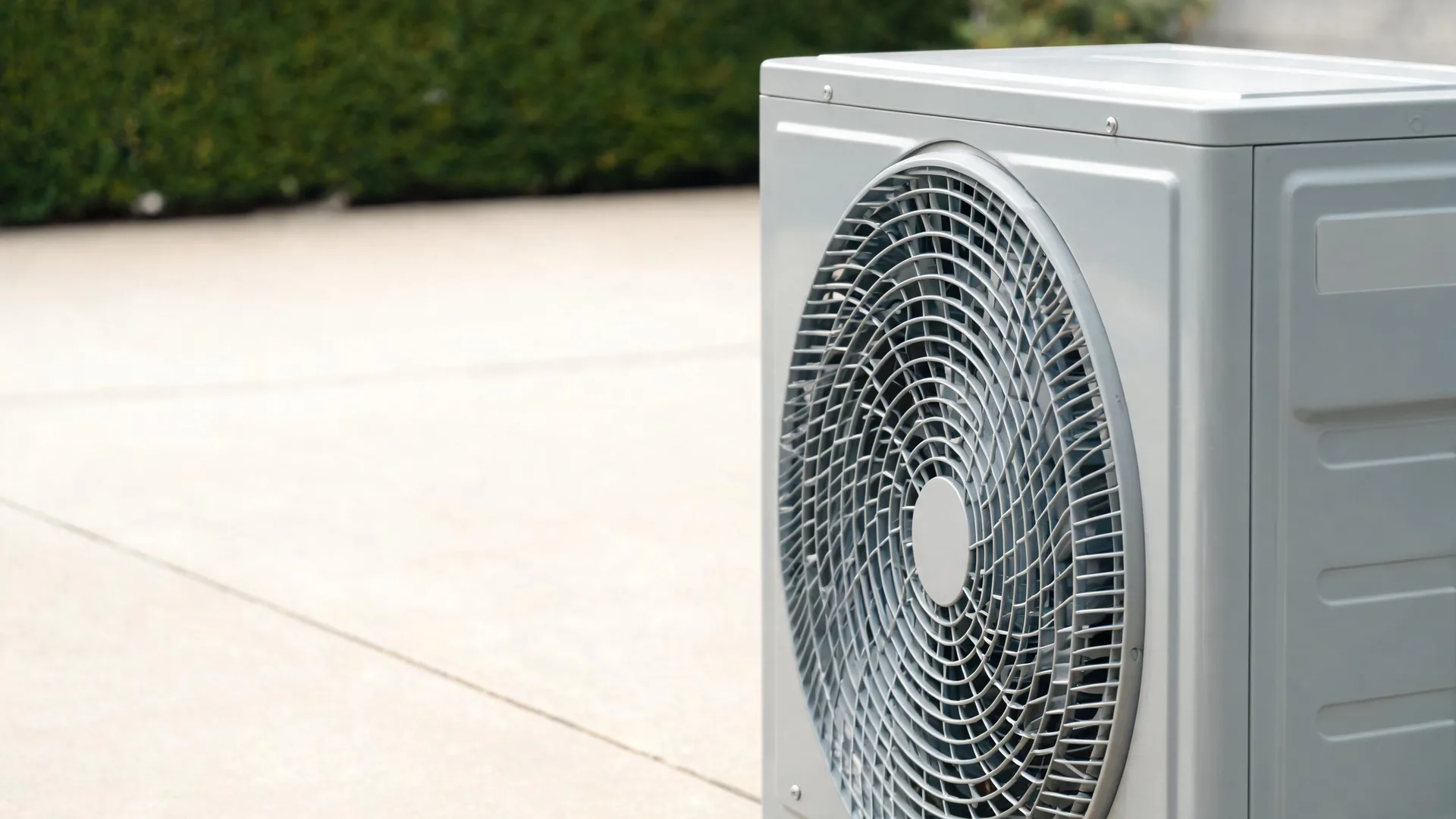
An outdoor air conditioning condenser unit mounted on a concrete pad next to a residential house at sunset.

Heat Pump Installation in Davenport, IA

Tell us about the job

Takes about a minute. No obligation.

New system or replacementHeat PumpScott County, IA
Step 1 of 2

What ZIP code is the job in?

Scott County sees its share of storms

Between 2015 and 2024, Scott County recorded 338 severe weather events, including 170 cases of damaging wind, 118 hail events, 21 tornadoes and 28 winter storms. That's a lot of chances for an outdoor unit to take a hit or for the power to go out.


Outages are common enough to plan for

In 2024, 15% of Iowa households lost power for 24 hours or more. A heat pump needs electricity to run, and so does most gas furnace backup. When the grid goes down here, it tends to stay down longer than a few minutes.

8 months
October through May, your system heats
3 months
June through August, it cools
17°F
the average winter night it heats against
83°F
the average summer afternoon it cools against
Isometric cutaway illustration of a single-story house showing interior ductwork, an air handler and rooms, with an outdoor condenser unit connected by refrigerant lines on a plain white background.
Your system heats October through May and cools June through August.

NOAA nClimDiv, 1991–2020 normals

Gas heats 74% of homes in Scott County.

Most of these installs pair a heat pump with the gas furnace already in the house.

Wind, hail and ice all find the outdoor unit

170 damaging wind events from 2015 to 2024
118 hail events from 2015 to 2024
28 winter storms from 2015 to 2024
Get it installed before the cold needs itHeat here runs October through May, so September is the month to have it in and tested.

Half the homes in Scott County were built in 1972 or earlier. A heat pump going into a house that age is going into ductwork and electrical work sized for whatever heated and cooled it decades ago, not for this system. That matters because a heat pump moves a different volume of air than an old gas furnace was built around, and it draws power in a way an older panel might not have been planned for. None of this means an old house can't take a heat pump well. It means the install has to account for the house as it actually is, not as a generic box on a spec sheet.

Plan for the outage before you need to

Pick the outdoor unit's spot with wind and hail in mind, and talk through backup for heat and hot water before the next outage, not during it. That's part of a proper install, not an extra step after.

Find a contractor
A man in a dark long-sleeve shirt and tan work pants, seen from behind, carries a worn canvas tool bag up concrete steps toward a dark blue front door.
A gray outdoor HVAC unit mounted on a concrete pad beside a house with gray lap siding and a stone foundation.

Years of running mean the install has to fit what's already there

If the house is on the older side, have the contractor check the ductwork and the electrical panel before anything gets sized. A heat pump that's right for the square footage can still be wrong for the ducts or the panel it's connecting to. This is also when to ask about the thermostat and any zoning the old system used, since a heat pump controls differently than a gas furnace running on its own.

Ask what happens when the power cuts out

A heat pump stops cold without electricity, same as the blower on a gas furnace. Ask what backup the system has and how it switches over, whether that's automatic or something a person has to do by hand. If backup power is part of the plan, ask whether it's sized to run the heat pump itself, not just lights and outlets.

Ask how the system is rated for cold

Every heat pump has a point where it can't pull enough heat from outside air on its own, and below that point something else has to carry the load. Ask what that balance point is for the unit being quoted and what kicks in below it. A system sized only for the mild months will leave the house short when it's needed most.

The efficiency rating on a heat pump's label tells you how much heat it moves for the power it uses, not how big a house it can handle. A unit can carry a high rating and still be the wrong size for the job, or the right size and a middling rating. The two numbers answer different questions, and a contractor sizing the system has to answer both. A higher rating usually costs more up front, and it earns that back through lower power use over the years the unit runs. But the rating is measured under set conditions in a lab, not in your ductwork or your attic, so the unit has to be installed right to get anywhere near that number in daily use. A heat pump with a strong rating and a bad install will run worse than a modest one put in correctly.

Scott County falls in climate zone 5A, a cool zone where heating carries more of the year's load than cooling does. Any split-system heat pump installed here has to meet the federal minimum for that: at least 14.3 Btu of heat moved per watt-hour of electricity over summer, and at least 7.5 Btu per watt-hour over winter. That's not a target a contractor aims for. It's the floor every new unit sold has to clear before it ever gets sized for a house. A federal tax credit is available for qualifying installations, worth checking into alongside the quote.