A lit brick residential street at dusk showing a row of two-story homes with covered porches and mature trees.

Furnace Maintenance in Davenport, IA

Tell us about the job

Takes about a minute. No obligation.

Tune-up, service, or cleaningFurnace or heatingScott County, IA
Step 1 of 2

What ZIP code is the job in?

The flame tells the story

A quick visit checks that the furnace fires up and blows warm air, then calls it done. A thorough one pulls the burner assembly and looks at the flame itself, whether it burns steady and blue or flutters and leans yellow. That flame color says more about how the gas is burning than anything else on the furnace.


What a short visit skips

Cleaning the flame sensor and checking the igniter takes real time, and so does testing the pressure switch and checking amp draw on the blower motor. Skip those and the furnace can still run fine that day while a weak igniter or a dirty sensor quietly sets up the no-heat call that comes on the coldest night of the year.

Half the homes in Scott County were built in 1972 or earlier.

A furnace in a house that old has earned a yearly look before the cold sets in.

Most Scott County homes burn gas for heat, which means a furnace maintenance visit is about the burner and venting, not just a filter

74% of homes heat with gas
Heat runs October through May
Winter nights average 17°F
October is when your furnace goes to workHeat runs October through May here. Have it looked at in September.

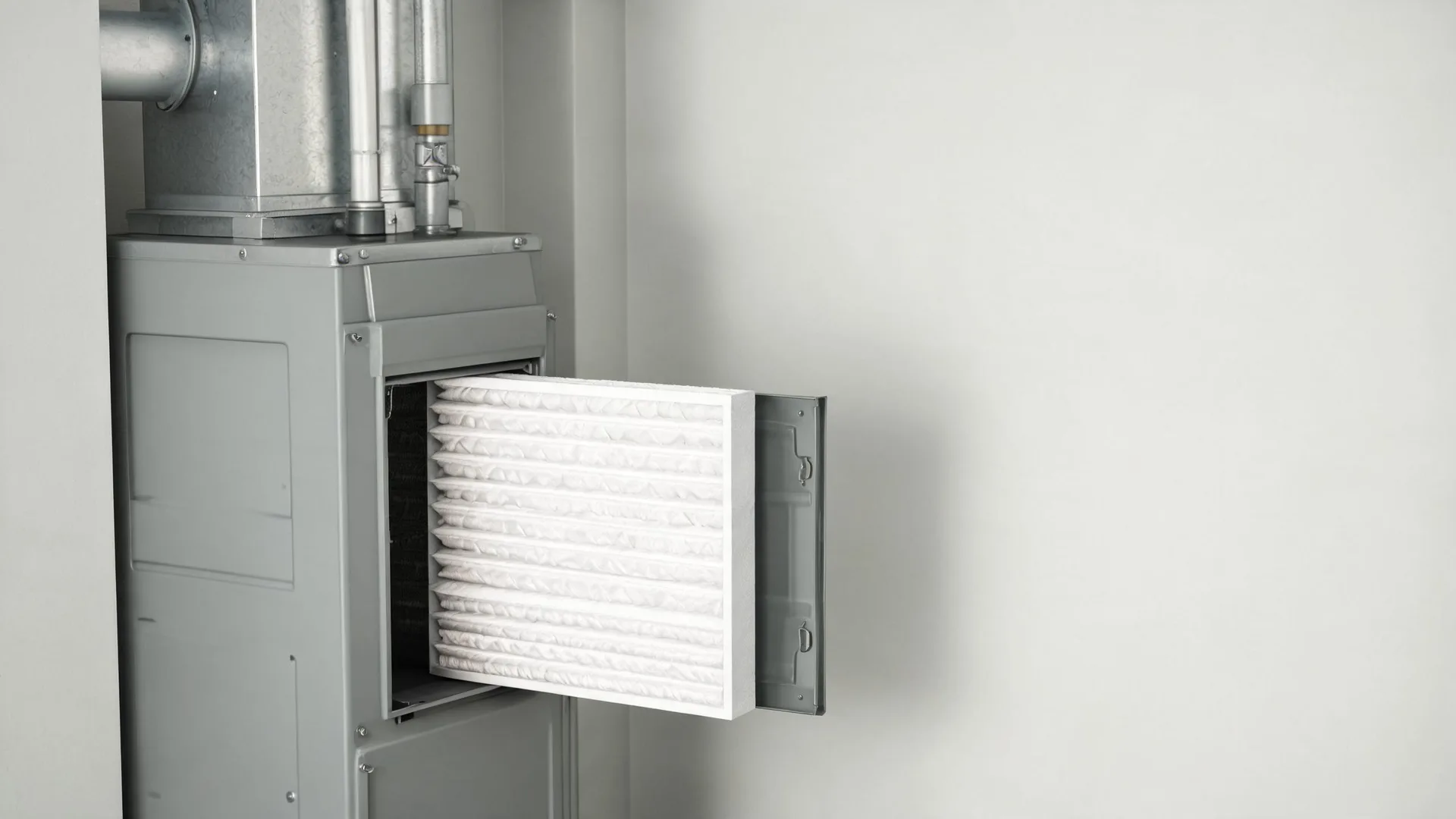
A dirty filter is the most common thing that drags a furnace down. Airflow drops, the heat exchanger runs hotter than it should, and the blower has to work harder to push air through. Some furnaces will even shut themselves off on a high limit switch if the filter gets bad enough and the air can't move past it. The condensate drain matters too, but only on a high efficiency furnace that condenses flue gas into water. That line can clog with the same sludge that builds up in any drain, and when it backs up the furnace locks out rather than let water go where it shouldn't. Coils come into play on the cooling side more than the heating side, but a furnace that shares a blower with the air conditioner still depends on a clean coil so that blower isn't fighting restricted airflow in both directions.

Eight months of heat a year leaves no room for a weak part

Eight months of heat a year is a long season to run on worn parts, and a 17 degree average night means the furnace rarely gets to idle. Add in how often winter storms have hit this county, and a cold snap is never far off once one starts. Get it looked at before the season leans on it.

Find a contractor
A man in a cap, dark long-sleeved shirt and brown work pants walks up porch steps toward a gray front door, carrying a worn canvas tool bag filled with hand tools.
A gas furnace with attached ductwork, gas piping, and condensate lines installed in a concrete-block basement.

An old furnace doesn't announce what's wrong

Half the furnaces in Scott County are sitting in houses built in 1972 or earlier. That much time lets small things drift, a connection that loosens, a flame that starts to lean yellow instead of blue. None of it shows up as a breakdown right away. An annual visit puts eyes on the burner and the flame before the house is depending on that furnace every night through the winter.

The heat exchanger cracks from the inside

A cracked heat exchanger can let combustion gas mix into the air moving through the house, and there's no way to see it from outside the cabinet. A tech checks for it with a camera run through the exchanger or by watching flame behavior when the blower kicks on, since a crack will make the flame waver as air pressure shifts around it.

Wiring and connections loosen on their own

A furnace heats up and cools down every cycle, all season, and that expansion and contraction works screw terminals loose over time. A loose wire at the control board or the gas valve can cause a furnace to shut down mid cycle without tripping any obvious fault, and tightening those connections is routine work during a tune-up that never shows up as a symptom until it fails.

Between visits, the filter is the one thing worth checking yourself. Pull it and hold it up to a light. If you can't see light through it, it's choking off airflow and it's time for a new one. Keep the area around the furnace clear too, nothing stacked against the cabinet or blocking the return grille, since the blower needs open air on both sides to move heat the way it's supposed to. If you have a high efficiency furnace, take a look at the condensate line where it drains out, and if you ever see water pooling near the unit, that's worth a call rather than a wait. Beyond that, leave the burner, the flame sensor and the wiring to a tech. Opening the cabinet without knowing what you're looking at does more harm than good.

A full tune-up starts before the burner even lights. A tech checks gas pressure at the manifold, because too high or too low changes how clean the flame burns no matter how good the igniter is. The blower gets pulled apart enough to check the wheel for dust buildup, since a caked wheel moves less air even when the motor itself is fine. Safety switches get tested too, the ones that shut the furnace down if the blower fails or the flue isn't drafting right, because those only matter on the one day something actually goes wrong. None of this shows up when the furnace just turns on and runs for a minute during a walkthrough. It shows up as a furnace that starts every time, all season, instead of one that mostly does.