





A illuminated two-story red brick house on a quiet residential street at dusk, flanked by mature trees under a deep blue evening sky.

Furnace Repair in Cedar Rapids, IA

Tell us about the job

Takes about a minute. No obligation.

RepairFurnace or heatingLinn County, IA
Step 1 of 2

What ZIP code is the job in?

Linn County saw 344 severe weather events between 2015 and 2024. That includes 156 damaging wind events, 139 hail events, and 17 tornadoes. Hail dents an outdoor unit's cabinet and can bend the fins that let it shed heat. Wind throws branches and debris into it. A furnace tied to a heat pump or hooked up to central air has that outdoor unit sitting through all of it, season after season. The damage doesn't always stop the system from running, at least not right away.

8 months
October through May, your furnace is on duty
15°F
the average winter night it heats against
74%
of homes here heat with gas, so most furnaces here burn gas
30 winter storms
in ten years, the nights a failure hurts most
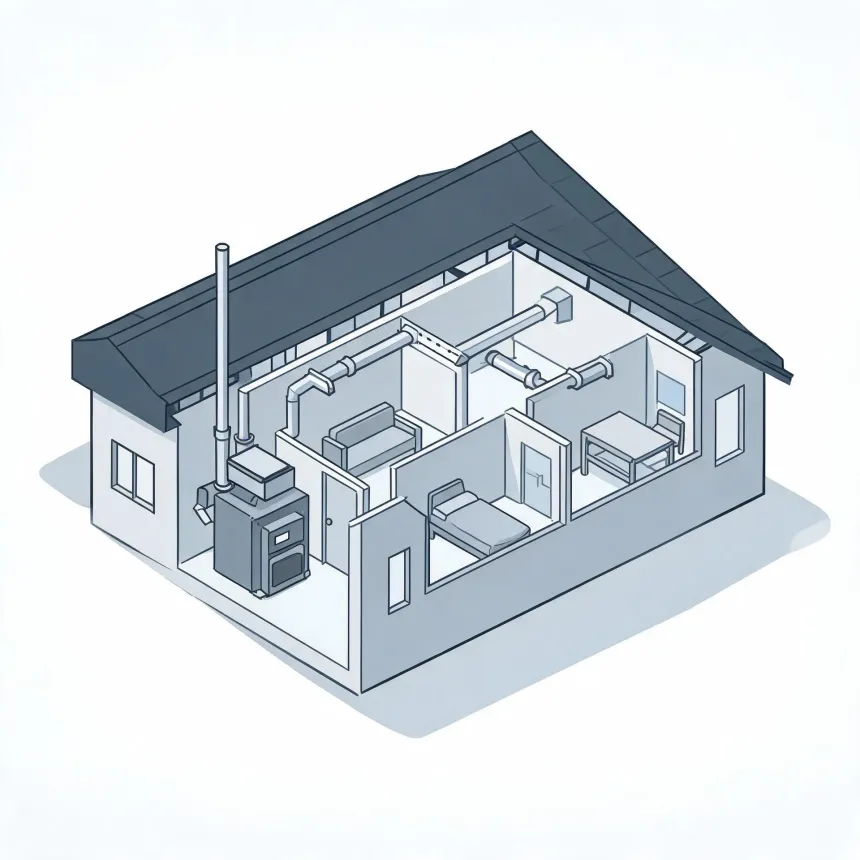
Isometric cutaway illustration of a single-story house showing interior rooms with furniture, overhead ducting, a flue pipe, and a furnace unit against an interior wall.
Your furnace works hardest from November through March.

NOAA nClimDiv, 1991–2020 normals

A cracked heat exchanger or a failed igniter ends a furnace's run long before the cabinet looks worn.

The parts that fail first are the ones that cycle every time the furnace fires, so a furnace that's run hard for years is due for exactly that kind of failure.

Eight months of heat a year wears a furnace down faster than the calendar suggests

Heat runs October through May
Winter nights average 15°F
30 winter storms from 2015 to 2024
October Is When a Weak Furnace Gives OutFurnaces in Linn County start running in October, and whatever was already failing shows up fast.

Get a furnace repair diagnosed properly instead of patched, because a system running eight months a year doesn't have much slack left in it. Linn County gets hit with heavy snow, ice or a blizzard most years, 30 times over the last decade, and that's exactly when a furnace that's been quietly struggling will quit. A tech who checks the heat exchanger and the igniter now, not just whatever part is making noise today, is the one who keeps you from finding out the hard way during the next storm. A furnace that's run this many months a year deserves more than a quick fix aimed at today's symptom.

If the Outdoor Unit Took a Hit, Get the Furnace Checked Now

Have a tech look at the outdoor unit before the next storm finds the damage for you. If a heat pump or AC unit sits outside, hail and wind have had years to work on it, and a dented cabinet or bent fins don't always show up as a problem until the system is asked to work hard. Get it checked now, while the weather is calm enough to do something about it.

Find a contractor
A man in a dark long-sleeve shirt and tan work pants, seen from behind, climbs wooden porch steps toward a navy front door while carrying a canvas tool tote, with a potted flowering plant beside the entry.
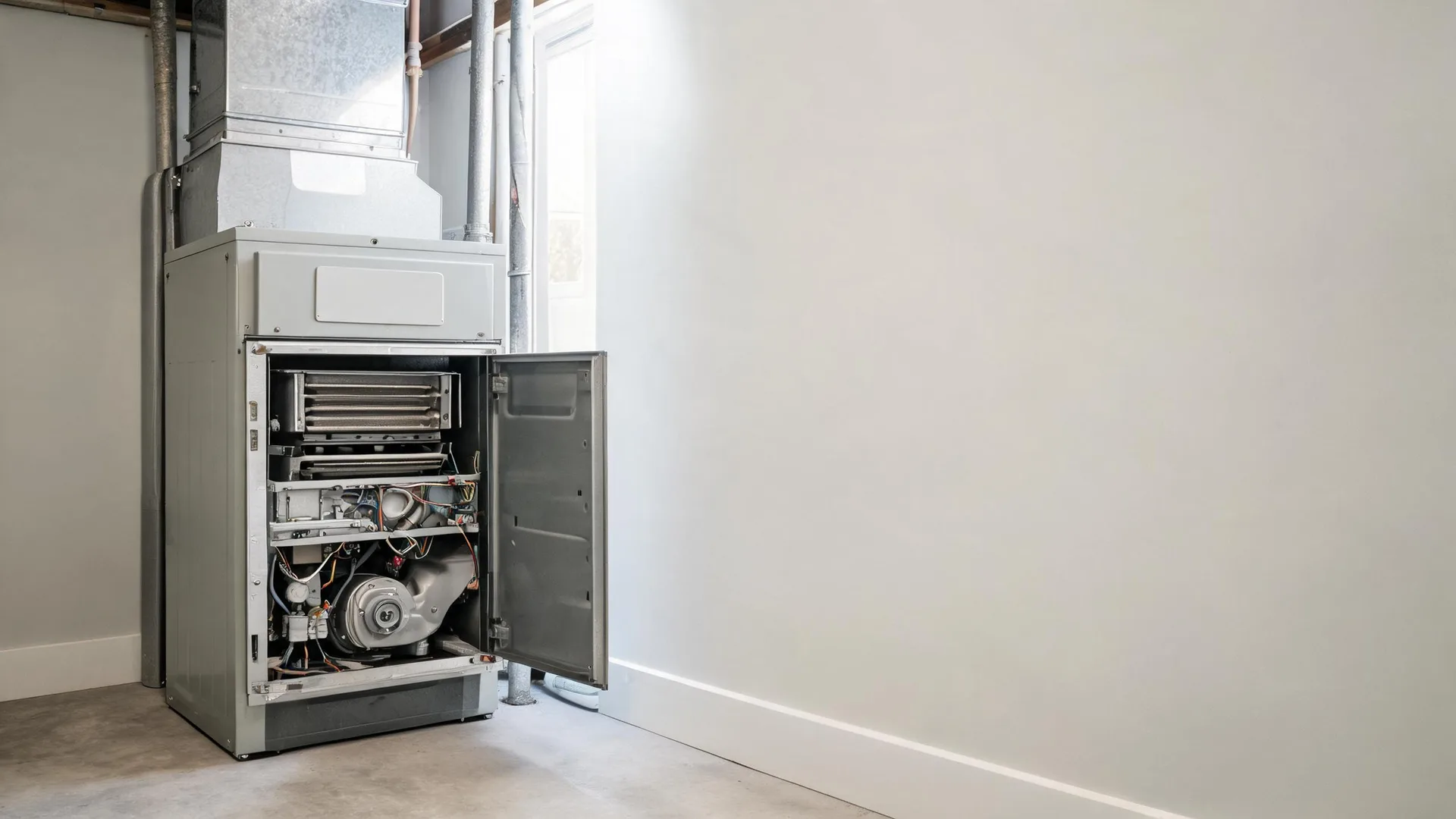
A gray residential gas furnace installed in an unfinished basement, connected to sheet-metal ductwork and PVC pipes.

What a Failing Furnace Sounds and Smells Like Before It Quits

A furnace usually tells you something's wrong before it quits outright. Short cycling is one of the first signs, where it fires up, runs for a couple minutes, and shuts off before the house actually warms. That's often a dirty flame sensor or a clogged filter choking airflow, and either one makes the furnace work harder than it should. A burner that's yellow instead of blue means it isn't burning clean, and that's not something to wait on. Rattling or a metallic scrape when the blower starts usually points to a bearing going out in the blower motor. If the furnace clicks and clicks trying to light but won't catch, the igniter is likely on its way out, or there's a problem further down the gas line. Short pulses of warm air followed by cold air blowing through the vents can mean the heat exchanger has cracked, and that one isn't optional to fix. Soot around the access panel, a burning smell that doesn't fade after the first run of the season, or the carbon monoxide alarm going off are not things to live with until it's convenient. A furnace running constantly without ever satisfying the thermostat is losing the fight somewhere, whether that's the blower, the exchanger, or the controls that tell it when to stop.

What's Safe to Check Yourself

Check the thermostat first. Make sure it's set to heat and the set temperature is actually above room temperature, and swap the batteries if it uses them. Go look at the air filter next and hold it up to a light. If you can't see light through it, it's choking the airflow the furnace needs and that alone can cause short cycling or weak heat. Walk down to the furnace and check that the switch on or near the unit, the one that looks like a light switch, is flipped on. If the furnace is in a closet or utility room, make sure nothing is blocking the vents on the front panel. Check your breaker panel for a tripped breaker too.

What to Leave for a Tech

Don't open the burner compartment or go near the gas valve. If you smell gas, leave the house and call the gas company before anyone calls a repair tech. A furnace that clicks repeatedly without lighting, trips its breaker more than once, or sets off a carbon monoxide alarm needs a tech with a combustion analyzer and the training to work inside the cabinet safely. Flame color, cracked heat exchangers, and gas pressure aren't things to diagnose or touch yourself, and taking the cabinet apart on a furnace still under warranty can void it.

A bare concrete basement containing a gray gas furnace with metal ductwork and a vertical flue pipe, lit by a single hanging bulb.

A new furnace would cut about $110 a year off heating for a typical Linn County home.

  • A new high-efficiency furnace$450 a year
  • An older furnace$560 a year

Estimates for a typical Linn County home, compared with an older unit built to the previous federal minimum, from EIA household energy data, Iowa fuel prices and NOAA climate normals. Your home will differ.

Repair makes sense when one part has failed and the heat exchanger is sound.

Replacement makes sense when the heat exchanger is cracked or the furnace keeps needing parts.

Age is the first thing to weigh. A furnace nearing the end of its expected life that now needs a new blower motor is a different call than one that's still fairly new with the same problem. Parts on an old unit tend to fail in a cluster, not one at a time, so fixing today's failure often just buys a little time before the next part goes. A cracked heat exchanger changes the math by itself. That part isn't sold separately from a full furnace replacement in most cases, since the labor and cost of swapping it rivals a new unit anyway, and a tech won't patch a crack in it regardless. If the repair in front of you is a control board, an igniter, or a capacitor, that's usually worth fixing no matter the furnace's age, since those are normal wear parts on any unit. The harder case is a furnace that keeps coming back for different repairs within a short span. At that point the question isn't whether this repair is worth it, it's whether the furnace itself still is.