


A low-angle view across a mown lawn and trimmed hedge toward a dark two-story house with a covered porch, framed by large leafy trees under an overcast sky.

Furnace Repair in Dubuque, IA

Tell us about the job

Takes about a minute. No obligation.

RepairFurnace or heatingDubuque County, IA
Step 1 of 2

What ZIP code is the job in?

Half the homes in Dubuque County were built in 1970 or earlier. If yours is one of them, the furnace inside probably isn't original, but it's worth finding out what's actually down there and how old it is. An older furnace has already worked through a lot of hard winters in this county. Once a unit that age starts needing repairs, those repairs tend to show up more often, not less. Before paying for the next one, it's worth asking a contractor how much life is left in it.

8 months
October through May, your furnace is on duty
15°F
the average winter night it heats against
71%
of homes here heat with gas, so most furnaces here burn gas
24 winter storms
in ten years, the nights a failure hurts most
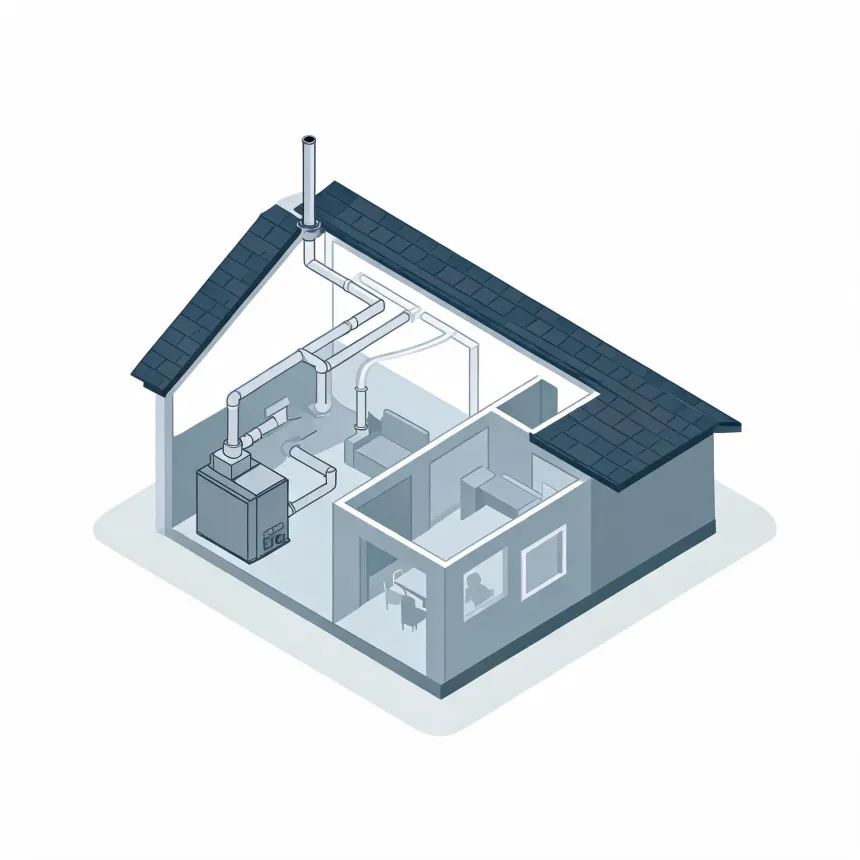
Isometric cutaway illustration of a single-story house showing interior rooms, a furnace unit with connected ductwork, and a flue pipe extending through the dark shingled roof.
Your furnace works hardest from November through March.

NOAA nClimDiv, 1991–2020 normals

A cracked heat exchanger can leak exhaust into the air a furnace is heating.

Shutting it down until a tech looks at it is the only safe call.

Eight months of heat a year wears a furnace down faster here

Heat runs October through May
Winter nights average 15°F
Climate zone 5A

September is the month before heat gets turned back on in Dubuque County. Whatever was already weak last May, a cracked heat exchanger, a failing igniter, a draft problem, doesn't fix itself over a summer of sitting idle. It just waits for the first cold night to show up again. Furnaces here run about eight months a year, October through May, so that first start in October is the real test. A check in September catches a weak part before it fails on a night when the low is sitting near 15 degrees.

Get the repair, but ask about the age first

Before paying for this repair, ask the contractor doing it how old the furnace actually is and how much life is left in it. If it's original to the house, that answer matters more than the repair quote.

Find a contractor
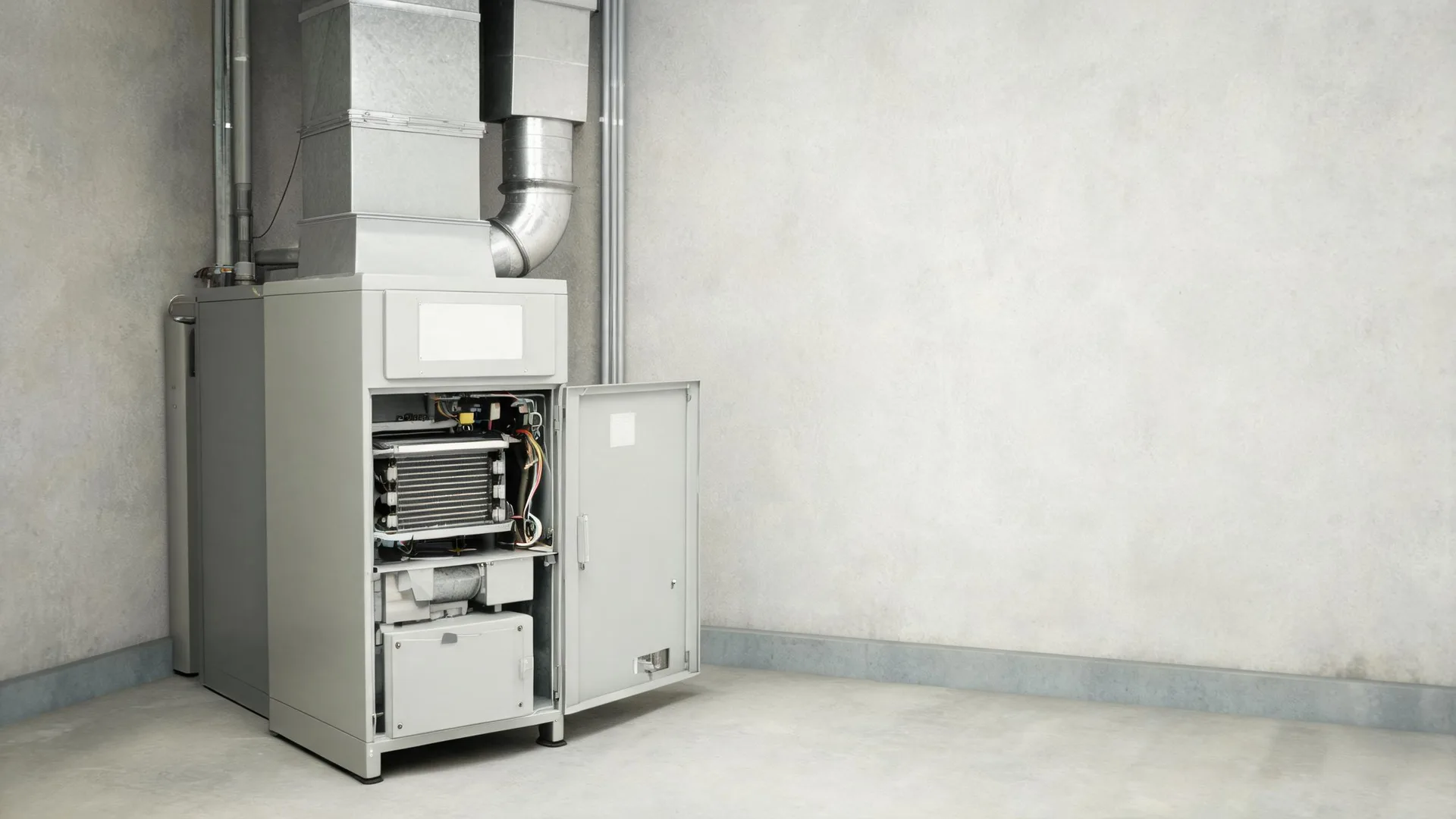
A gray high-efficiency gas furnace installed in an unfinished basement, surrounded by gas lines, a condensate drain, and sheet-metal ductwork.

Eight months a year, year after year

Eight months of heat a year is a long season for a furnace to carry. October through May, it's either running or about to kick on, and that doesn't leave much time to sit idle and rest between cycles. When a part fails on a furnace that's logged that many winters, it's worth finding out if it's a one-time thing or the first of more calls to come. A contractor who checks the rest of the system while they're already in there can tell you which one you're dealing with, not just patch the part that quit.

What actually wears out

The igniter is usually the first thing to go. It's a thin strip that heats up to light the gas, and it weakens a little every time it cycles until one day it doesn't glow hot enough to catch. The flame sensor fouls with a film of residue and stops telling the control board a flame is there, so the furnace shuts itself off as a safety measure. Blower motor bearings wear out from spinning for months at a stretch. None of these fail because of one bad night. They fail because they've been doing their job over and over.

What a failure is actually telling you

A furnace that won't start could be a blown fuse or a bad igniter, simple parts to replace. A furnace that starts and then shuts itself off partway through a cycle is usually a safety switch doing exactly what it's supposed to do, which means something downstream, a blocked flue or a cracked heat exchanger, needs a look before that switch gets ignored. Short cycling, where it fires and stops and fires again, often points to a dirty flame sensor or an airflow problem rather than the burner itself. Knowing which pattern you've got is most of the diagnosis before a tech even opens the cabinet.

A gas furnace with sheet-metal ductwork and PVC pipes installed in an unfinished basement.

A new furnace would cut about $120 a year off heating for a typical Dubuque County home.

  • A new high-efficiency furnace$460 a year
  • An older furnace$580 a year

Estimates for a typical Dubuque County home, compared with an older unit built to the previous federal minimum, from EIA household energy data, Iowa fuel prices and NOAA climate normals. Your home will differ.

Repair makes sense when one part has failed and the heat exchanger is sound.

Replacement makes sense when the heat exchanger is cracked or the furnace keeps needing parts.

A diagnostic visit starts before the panel comes off. The tech asks what the furnace was doing right before it quit, whether it was a sound, a smell, a short cycle, or nothing at all. Then the cabinet opens and they check the obvious things first: power to the unit, gas supply, the condition of the filter, since a clogged filter can choke airflow enough to trip a safety switch that has nothing wrong with it. From there they test the parts in sequence, the igniter or pilot, the flame sensor, the pressure switch, watching the sequence of operation instead of guessing at a single part. A furnace throws error codes through a blinking light on the control board, and reading that code narrows the search fast. The last step is explaining what they found in plain terms, what's failing, what it will take to fix, and whether it's a part replacement or something that points to a bigger problem underneath.