



Why winter decides this
Your furnace here runs about eight months a year, October through May, and the overnight low averages 15°F across December, January and February. That's the number that matters. A standard heat pump starts falling short of its rated heat output once it's below 40°F outside, and below about 35°F it usually needs backup heat to keep up. Fifteen degrees is under both marks, and so is every night here that drops to freezing or below, about 145 of them a year. This isn't a county where a standard heat pump is working at full strength on a typical winter night. It's working at full strength on a minority of them.
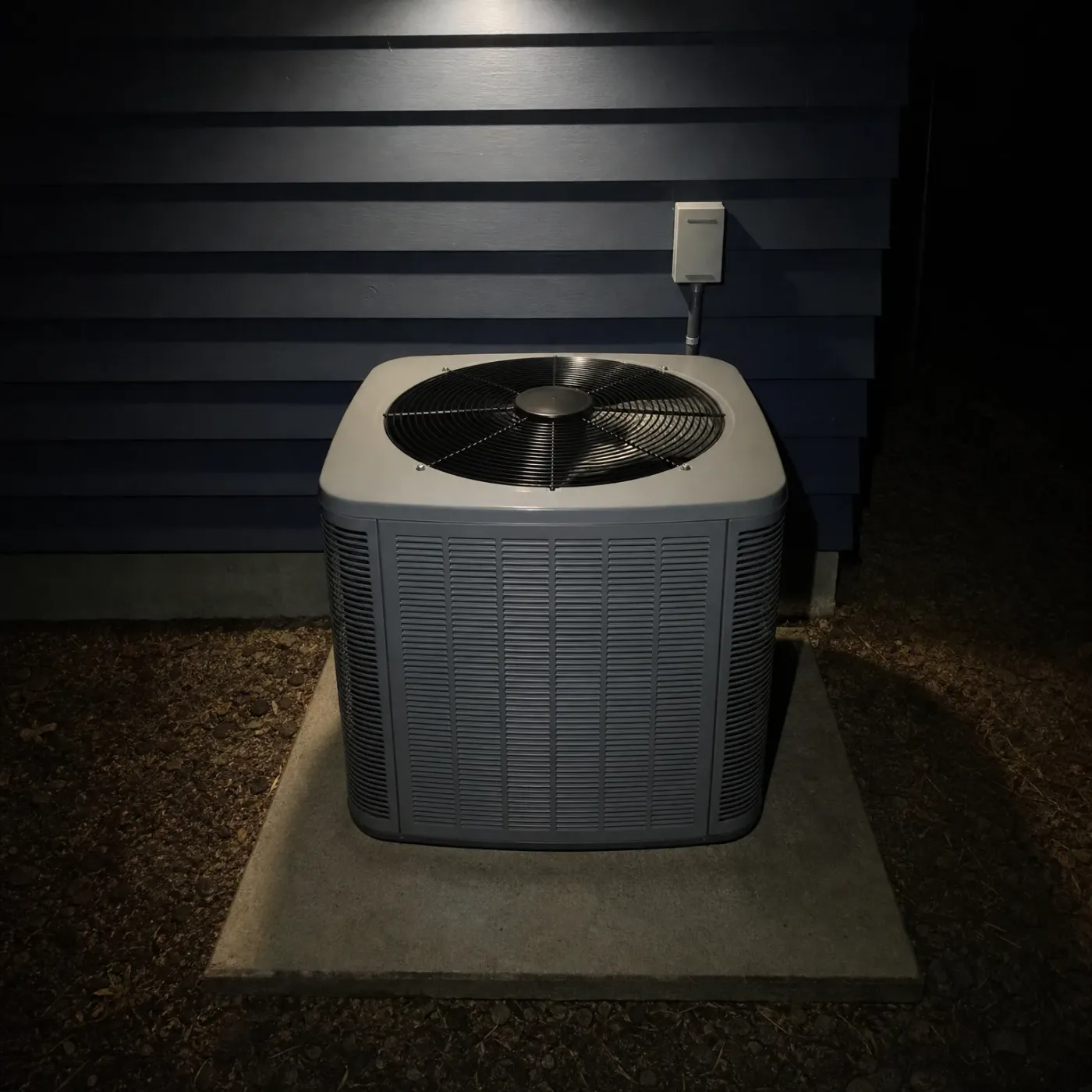
That doesn't rule out a heat pump. It rules out a weak one. A heat pump built to carry the ENERGY STAR Cold Climate label has to prove it can still make 1.75 units of heat for every unit of electricity it uses at 5°F, and hold onto at least 70 percent of its warm-weather capacity at that temperature, tested by someone other than the company selling it. A standard heat pump has no such requirement and no such guarantee. If you're putting a heat pump into a house here, the label on the unit is the difference between a system that struggles seventeen nights a year at 0°F and one that doesn't.
Even a good cold-climate heat pump will lean on backup heat sometimes. Field testing of prototype cold-climate units in occupied homes found that backup heat covered only a small share of the total heat needed between 0°F and 35°F, and that running on backup alone was rare even above 0°F. That's the modern version of this machine. It's built to handle the cold here as the main source of heat, not as a system waiting to hand off to something else.