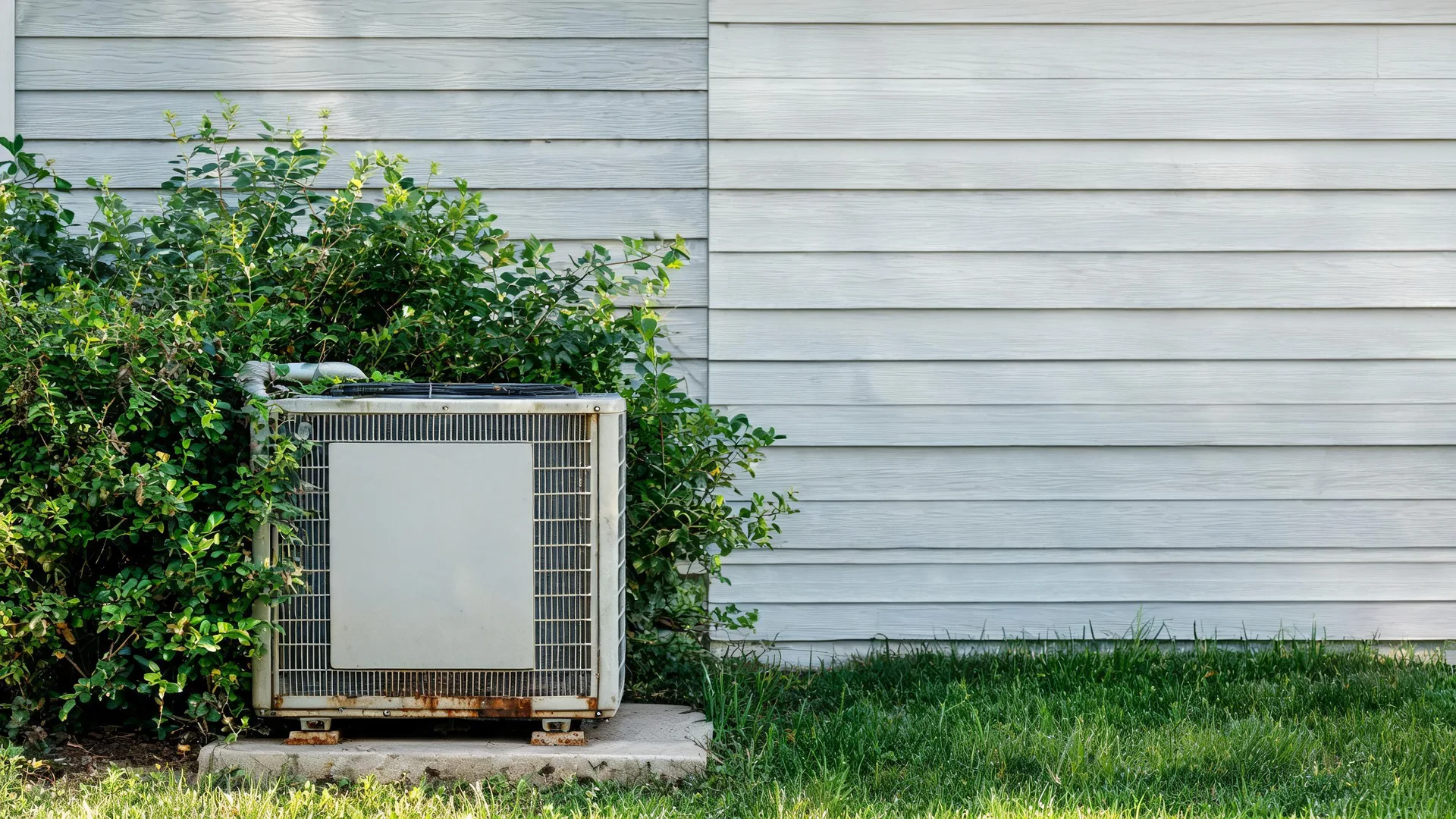
A grey air-source heat pump outdoor unit mounted on a concrete pad next to a modern white-rendered residential house.

Heat Pump Repair in Dubuque, IA

Tell us about the job

Takes about a minute. No obligation.

RepairHeat PumpDubuque County, IA
Step 1 of 2

What ZIP code is the job in?

September is when a weak heat pump gets found out

Heat in Dubuque County runs October through May. When the switchover hits in October, a heat pump that was already struggling gets asked to do real work for the first time in months, and whatever was marginal stops hiding.


A September call beats an October one

Getting a heat pump looked at before the heat comes on means a problem gets caught and fixed before the house actually needs it. Waiting until the first cold week means diagnosing and repairing it while you're also relying on it.

8 months
October through May, your system heats
3 months
June through August, it cools
15°F
the average winter night it heats against
81°F
the average summer afternoon it cools against
Isometric cutaway illustration of a house showing interior ductwork, an indoor air handler unit, and an outdoor condenser unit beside the building.
Your system heats October through May and cools June through August.

NOAA nClimDiv, 1991–2020 normals

Dubuque County gets wind, hail and winter storms most years, same as a lot of Iowa.

None of that is why your heat pump is acting up. Look at the unit itself first, not the weather.

Dubuque sees its share of weather, but that's not what's wrong with your heat pump

189 severe weather events from 2015 to 2024
15% of homes statewide lost power a day or more in 2024
118 damaging wind events from 2015 to 2024

Electricity in Iowa ran 13.40 cents per kilowatthour in 2024. A heat pump that's short on charge or struggling to defrost runs longer to put out the same heat, and every one of those hours gets billed at that rate. The cost of ignoring it doesn't show up as one big number. It shows up every month on the same bill, a little higher than it should be, for as long as the problem sits there. Getting it looked at stops that bleed before winter asks the system to run most of the day.

Half the homes in Dubuque County were built in 1970 or earlier

If your heat pump came with the house, it may be close to the end of what it can do. A repair might still be the right call. It helps to know first how much life is actually left in it.

Find a contractor
A residential heat pump outdoor unit mounted on a concrete pad next to a house with gray vinyl siding.

The reversing valve and the defrost control fail more than anything else

A heat pump works harder than a straight air conditioner because it has to reverse itself and defrost itself, and both of those add parts that a cooling-only system doesn't have. The reversing valve is the one to watch. It's what switches the system between heat and cooling, and when it sticks, the unit can get stuck blowing cold air when it should be heating, or it won't switch back at all. The defrost control is the other weak spot. It reads the outdoor coil and decides when to run a defrost cycle. When that sensor drifts or reads wrong, the coil either ices over because defrost never kicks in, or the system runs defrost it doesn't need and wastes a cycle doing it. Capacitors and contactors wear out too, just from switching the compressor and fan on and off over and over, and that happens whether the system was installed well or not. None of these show up overnight. A valve that's starting to stick or a capacitor going weak usually gives some warning first, a cycle that runs a little rough or takes a little longer, before it fails outright.

Check the thermostat before anything else

Make sure it's set to heat, not cool, and that the set temperature is actually above room temperature. Replace the batteries if it uses them. A thermostat that lost its schedule or its settings after a power blink can make a perfectly good heat pump look broken.

Look at the outdoor unit

Clear away leaves, snow or anything piled against it, and give it space to breathe on all sides. Check whether the outdoor coil is caked in ice. Some frost in cold weather is normal and clears on its own during a defrost cycle, but a coil that's solid white or clear ice and staying that way points to a problem worth calling in.

A heat pump that's low on refrigerant or struggling to defrost doesn't just run less efficiently, it runs longer, and that extra runtime wears on the same parts that are already failing. A compressor working against a low charge builds heat it shouldn't, and that shortens its life every time it happens. A coil that can't defrost properly ices over more each cycle, which blocks airflow further and makes the next cycle worse than the last. Left alone, a weak system drives itself deeper into the fault instead of staying put. What would have been a sensor or a valve turns into a compressor, and a compressor is the hardest part to replace. The machine doesn't rest and heal between cycles. It just keeps asking the failing part to work.

A diagnostic visit starts outside at the unit itself, not with guesswork. A tech checks refrigerant charge, because a system running low on charge is behind a lot of heat pumps that run constantly and still can't keep up. They'll run the system in both directions, heat and defrost, and watch how it responds, since a heat pump that won't reverse properly is often stuck on a single valve. Electrical connections and the capacitor get checked too, since a weak capacitor makes the compressor strain every time it starts. None of this is exploratory surgery. It's a known sequence, and most of what's wrong shows up early on.