


A quiet suburban street at twilight featuring two-story brick homes with illuminated windows and large trees lining the sidewalk.

Furnace Repair in Washington, IA

Tell us about the job

Takes about a minute. No obligation.

RepairFurnace or heatingWashington County, IA
Step 1 of 2

What ZIP code is the job in?

Furnaces in Washington County run from October through May. That's eight months of the year, with the overnight low averaging 17°F through December, January and February. A furnace working that many months against cold like that puts more hours on its igniter and blower motor than one in a milder county ever sees. That's usually what's behind a furnace acting up here. It's not bad luck, it's wear, and wear shows up as a specific problem with a specific cause. Worth having someone look at what's actually failing before deciding what to do about it.

8 months
October through May, your furnace is on duty
17°F
the average winter night it heats against
22 winter storms
in ten years, the nights a failure hurts most
Isometric cutaway illustration of a single-story house showing interior rooms, a furnace unit with flue pipe, and branching ductwork running through the ceiling space under a dark shingled roof.
Your furnace works hardest from November through March.

NOAA nClimDiv, 1991–2020 normals

A cracked heat exchanger gets worse every hour the furnace keeps running on it.

Shutting it down now is what keeps a repair from turning into a full replacement.

October is when the weak ones show up

Heat runs October through May
Winter nights average 17°F
Climate zone 5A

A technician checking a furnace here knows what eight winters a year does to an igniter or a blower motor before they even pull the panel. That's the value of having someone qualified look at it instead of guessing from a symptom list online. A short cycle, a weak flame, a blower that won't shut off, each of those points to a different worn part, and the only way to know which one is to have it diagnosed. Fixing the wrong thing doesn't fix the furnace. It just delays the call you're going to make anyway.

Worth asking what you're really paying for

If your furnace came with the house, ask the technician how much life it has left before you pay for a repair. A straight answer on that is worth more right now than a fix that only holds until the next cold snap.

Find a contractor
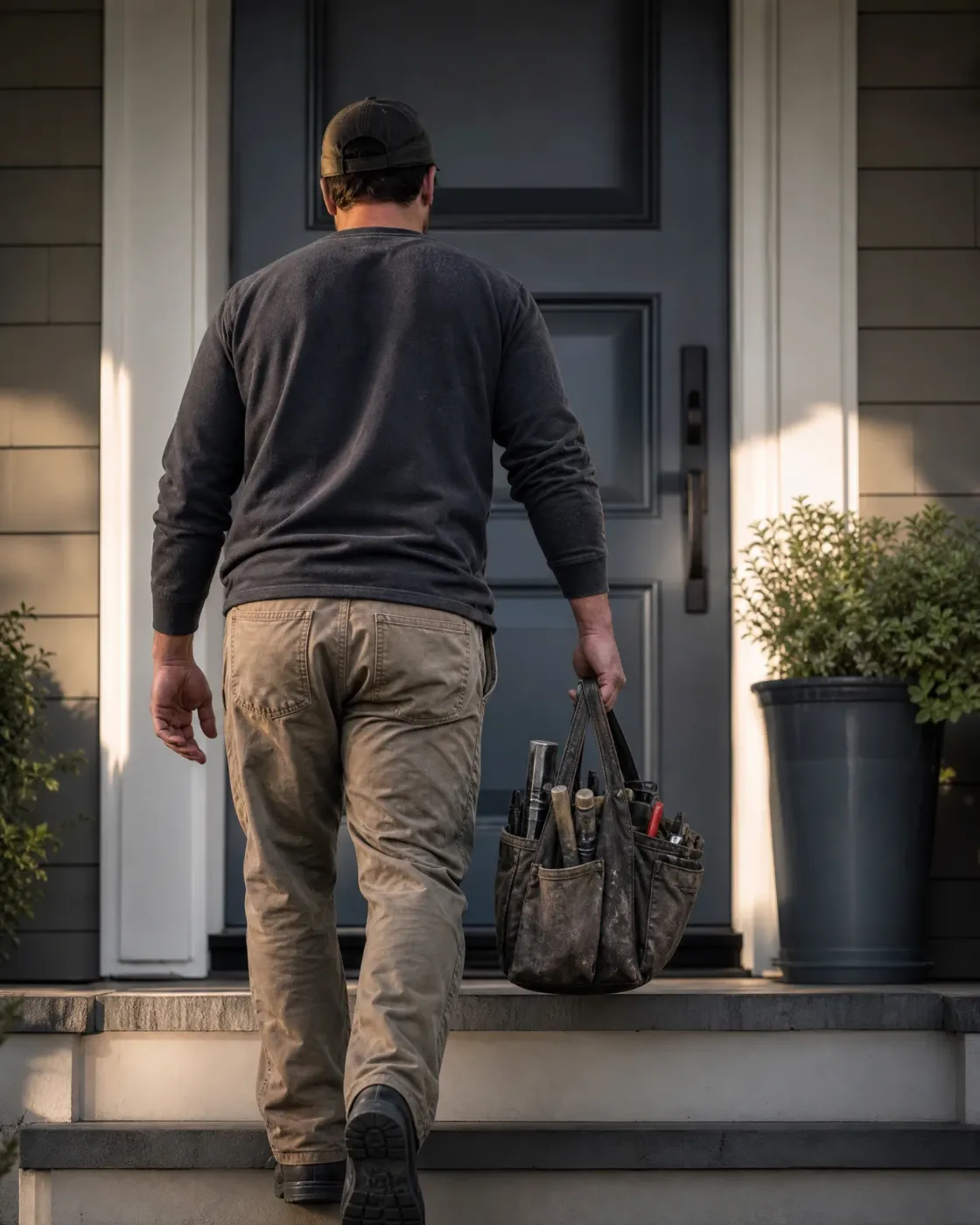
A man in a cap, dark long-sleeved shirt and tan work pants, seen from behind, carries a canvas tool bag up concrete steps toward a dark blue front door flanked by white columns and a potted shrub.
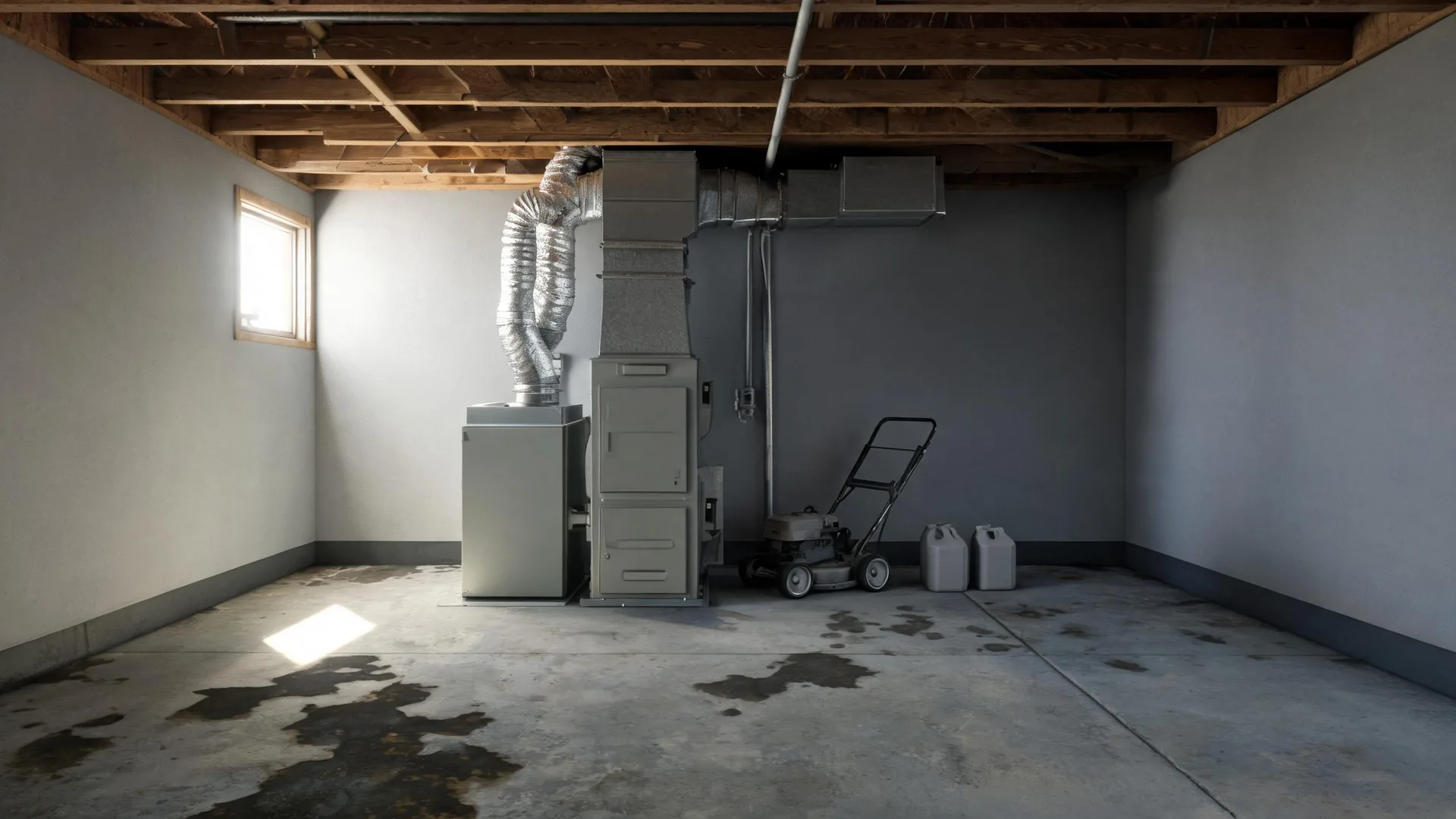
A gray residential gas furnace installed in an unfinished basement, surrounded by ductwork, a metal flue pipe, and a gas supply line.

What to check before you pick up the phone

Before anyone comes out, check the thermostat first. Make sure it's set to heat and set higher than the room temperature, and change the batteries if it uses them. Go to the furnace and look at the air filter. If it's gray and clogged, swap it, because a blocked filter starves the burner of air and can shut the whole thing down on its own safety switch. Check that the switch on the furnace itself, the one that looks like a light switch on the side of the unit, is flipped on. If the furnace has a standing pilot, look through the little window and see if the flame is lit. If it's out, there's usually a relight instructions label right on the panel. Last thing, check the breaker box. A furnace that trips its breaker once might just be a fluke, but one that trips it again after you reset it has a real electrical fault and needs a tech, not another reset.

The igniter doesn't fail gently

A hot surface igniter wears down every time it fires, and it goes from working fine to cracked straight through with no warning in between. One day it glows and lights the burners, the next day it doesn't glow at all. Once it's cracked, the furnace won't light, period.

A blower motor gives warning before it quits

The blower motor doesn't usually quit outright. The bearings wear first, so it runs louder, runs hotter, and pulls harder to move the same air. That strain is what finally takes out the motor. A furnace that's suddenly noisier than it used to be is already partway through that process, not at the start of it.

A gray forced-air furnace with sheet-metal ductwork stands in an unfinished basement with exposed wooden joists, concrete walls, and a hanging incandescent bulb.

A new furnace would cut about $100 a year off heating for a typical Washington County home.

  • A new high-efficiency furnace$420 a year
  • An older furnace$520 a year

Estimates for a typical Washington County home, compared with an older unit built to the previous federal minimum, from EIA household energy data, Iowa fuel prices and NOAA climate normals. Your home will differ.

Repair makes sense when one part has failed and the heat exchanger is sound.

Replacement makes sense when the heat exchanger is cracked or the furnace keeps needing parts.

A diagnostic visit starts before the panel comes off. A technician asks what the furnace was doing right before it quit. A short cycle, a burner that won't light and a blower that won't shut off all point in different directions. Then comes the sequence check. Thermostat call, igniter or pilot, gas valve, flame, blower, each one has to hand off to the next. Whatever step breaks that chain is where the problem lives. Pulling the panel comes next, checking the flame sensor for corrosion, the igniter for a hairline crack, the wiring for a loose connection at the control board. Each test rules something out until one thing is left standing, and that's what gets fixed.