

An unfinished basement featuring a forced-air furnace, exposed wooden ceiling joists, bare concrete walls, and miscellaneous items including cardboard boxes and coiled cables on the floor.

Furnace Repair in Waterloo, IA

Tell us about the job

Takes about a minute. No obligation.

RepairFurnace or heatingBlack Hawk County, IA
Step 1 of 2

What ZIP code is the job in?

Furnaces in Black Hawk County earn their keep. Heat runs about eight months a year here, October through May, and overnight lows average 13°F through December, January and February. That's a long season of hard running, not a few cold snaps. A furnace built to cycle on and off a handful of times a day somewhere milder is instead running most nights for the better part of a year. That kind of load wears on an igniter or a blower motor sooner than you'd expect. If yours is acting up, it's worth having someone actually find out what's failing and why, rather than guessing at a patch that won't hold through the next cold stretch.

8 months
October through May, your furnace is on duty
13°F
the average winter night it heats against
63%
of homes here heat with gas, so most furnaces here burn gas
23 winter storms
in ten years, the nights a failure hurts most
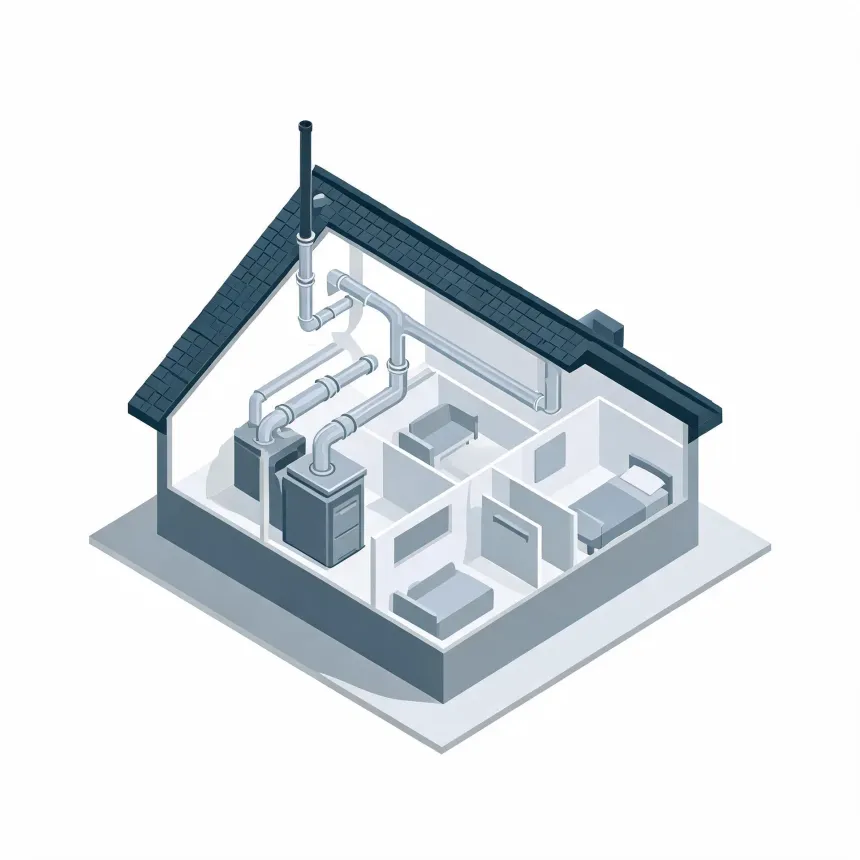
Isometric illustration of a cutaway house showing a furnace unit with ductwork and a flue pipe running through the interior rooms, which contain simple furniture.
Your furnace works hardest from November through March.

NOAA nClimDiv, 1991–2020 normals

Half the homes in Black Hawk County were built in 1966 or earlier.

An older home's furnace may already be on its second or third replacement, worth knowing before you sink money into this repair.

Eight months of heat means September is when a weak furnace shows it

Heat runs October through May
Winter nights average 13°F
Climate zone 6A

A cracked heat exchanger does not start out dangerous. It starts as a hairline split that only shows itself when the metal heats up and expands, which is exactly when the furnace is running. Keep running it and that crack opens wider each cycle, and now combustion gases that should go up the flue can get pulled into the air your blower pushes through the house. A blower motor losing its bearings does the same kind of slow damage. It runs hotter and pulls harder than it should, and that strain finds its way to the control board next. The part that failed first is rarely the only part that pays for it if the furnace stays in service while it's struggling. Shutting it down and getting it looked at stops that chain before it reaches the next part in line.

Get it diagnosed properly

Your furnace works hard here, and that's usually what's behind the problem. Have it diagnosed properly so the fix lasts.

Find a contractor
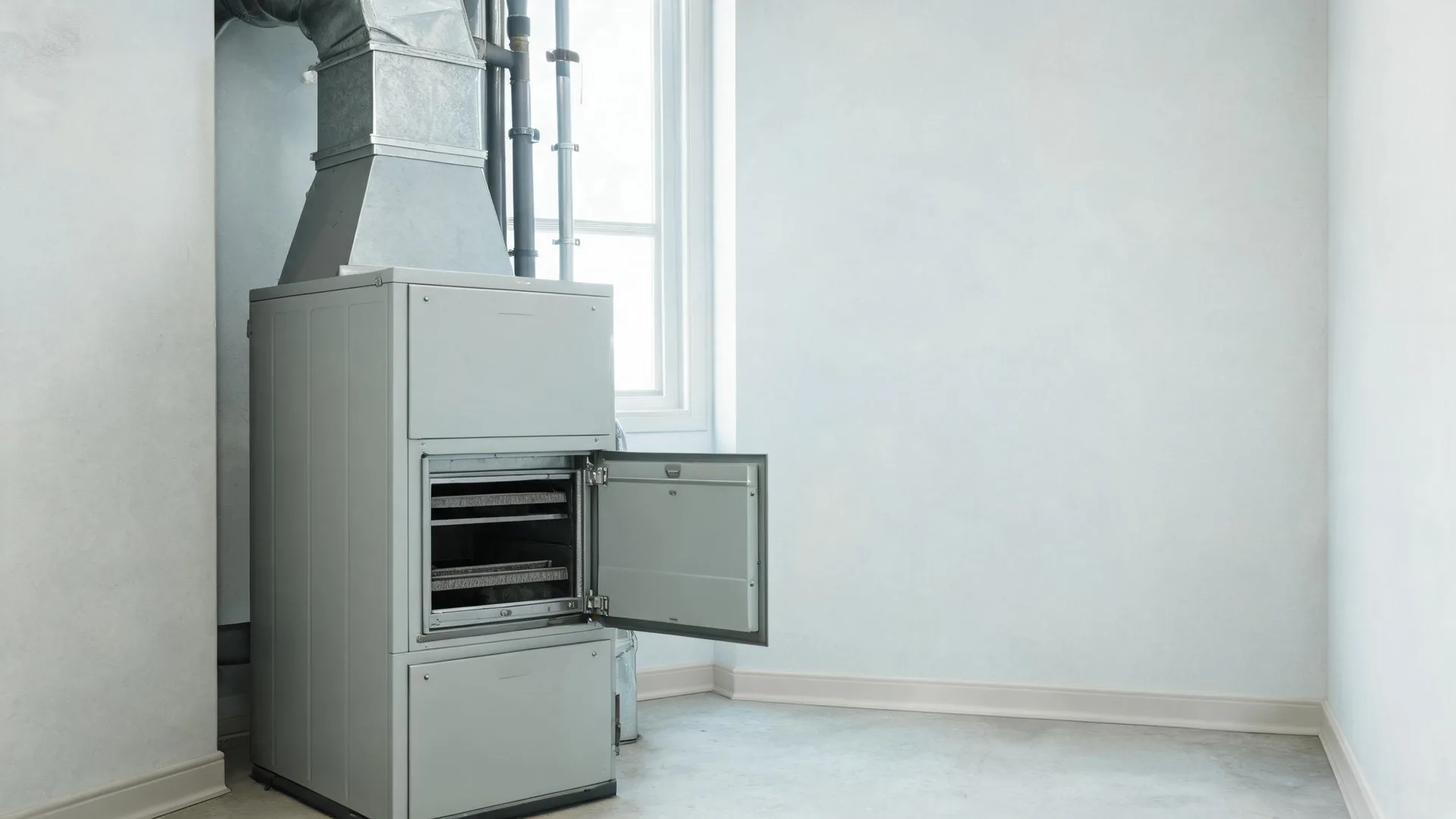
A gray high-efficiency gas furnace installed in an unfinished basement, surrounded by gas lines, a condensate drain, and sheet-metal ductwork.

Eight months of running time means more than one part is tired

Get the actual diagnosis before you authorize a repair. A worn igniter and a failing blower motor can look the same from the thermostat, a furnace that won't start or won't push heat, but they're different repairs. Someone who checks which part failed and why can tell you if that's the real problem or just the first thing to give out under the load.

What you notice first

Short cycling is usually the earliest sign, the furnace kicks on, runs a short while, shuts off, then starts again before the house feels warm. Cold air out of the vents when it should be hot points at the igniter or the gas valve. A burner that won't light at all, or lights and then drops out, is worth a call before you keep trying to restart it.

What it means for the repair

A furnace that's short cycling or won't stay lit isn't fixed by resetting the thermostat or flipping the breaker, whatever tripped it once will trip it again. The longer a furnace runs rough, cycling hard or straining to light, the more it stresses the parts around whatever failed first. Getting it looked at while it's one bad part is better than waiting until it's more than one.

A gray forced-air furnace with metal ductwork stands in an unfinished basement with exposed wooden joists, concrete walls, and a single hanging light bulb.

A new furnace would cut about $110 a year off heating for a typical Black Hawk County home.

  • A new high-efficiency furnace$470 a year
  • An older furnace$580 a year

Estimates for a typical Black Hawk County home, compared with an older unit built to the previous federal minimum, from EIA household energy data, Iowa fuel prices and NOAA climate normals. Your home will differ.

Repair makes sense when one part has failed and the heat exchanger is sound.

Replacement makes sense when the heat exchanger is cracked or the furnace keeps needing parts.

A diagnostic visit starts before any panel comes off. A tech will ask when the trouble started and what the furnace does different now, short cycling, cold air, a burner that won't catch. Then the cover comes off and they watch it try to run. Flame sensor and igniter get checked first since they fail often and show themselves fast, a weak flicker or a glow that fades tells its own story. From there it's the gas valve, the pressure switch, the blower wheel and motor, checking each against what a healthy one looks like. A furnace can fail for one clear reason or because several parts are worn down together, and the point of this visit is finding out which. Anyone can guess at a part and swap it. Diagnosing means they open it up, test it, and tell you what's actually wrong before anything gets replaced.