Running the way it should
Air comes out warm from every vent. The burners light, stay lit, and the blower only pushes air once there's heat behind it. The flue pipes draw properly and the gas valve stays untouched since the last service.
A furnace running but blowing cold air is not a small thing to live with in a Waterloo winter. You don't need to spend your evening calling around Black Hawk County, waiting on hold, or explaining the same problem three different times to three different shops before anyone can get out to look at it. Send the form and that search stops being your job. You stop sorting through names you don't recognize, stop trying to tell who actually answers their phone, stop waiting on a callback that never comes. A licensed contractor gets the details you give here and takes it from there, so you're not stuck comparing quotes or chasing down someone who can fit you in. It's one step instead of a dozen, and once it's sent, the rest of the legwork is off your plate.
Cold air from your vents usually means the furnace is running its blower but the burners never lit, or they lit and shut off early. A clogged filter can choke airflow and trip the limit switch, which kills the burners but leaves the fan running, so you feel room-temperature air instead of heat. A bad igniter or a dirty flame sensor will do the same thing: the system tries to start, fails, and falls back to just blowing air. Thermostats set to "fan on" instead of "auto" will also push cold air between heating cycles, which is worth a quick check before anything else. In a Waterloo winter, a furnace stuck in this state can't keep up once temperatures drop, and the longer the burners stay out, the colder the house gets. It's a furnace problem, not a weather problem, and it needs a look from someone who can test the igniter, the flame sensor, and the limit switch to find which one failed.

Air comes out warm from every vent. The burners light, stay lit, and the blower only pushes air once there's heat behind it. The flue pipes draw properly and the gas valve stays untouched since the last service.

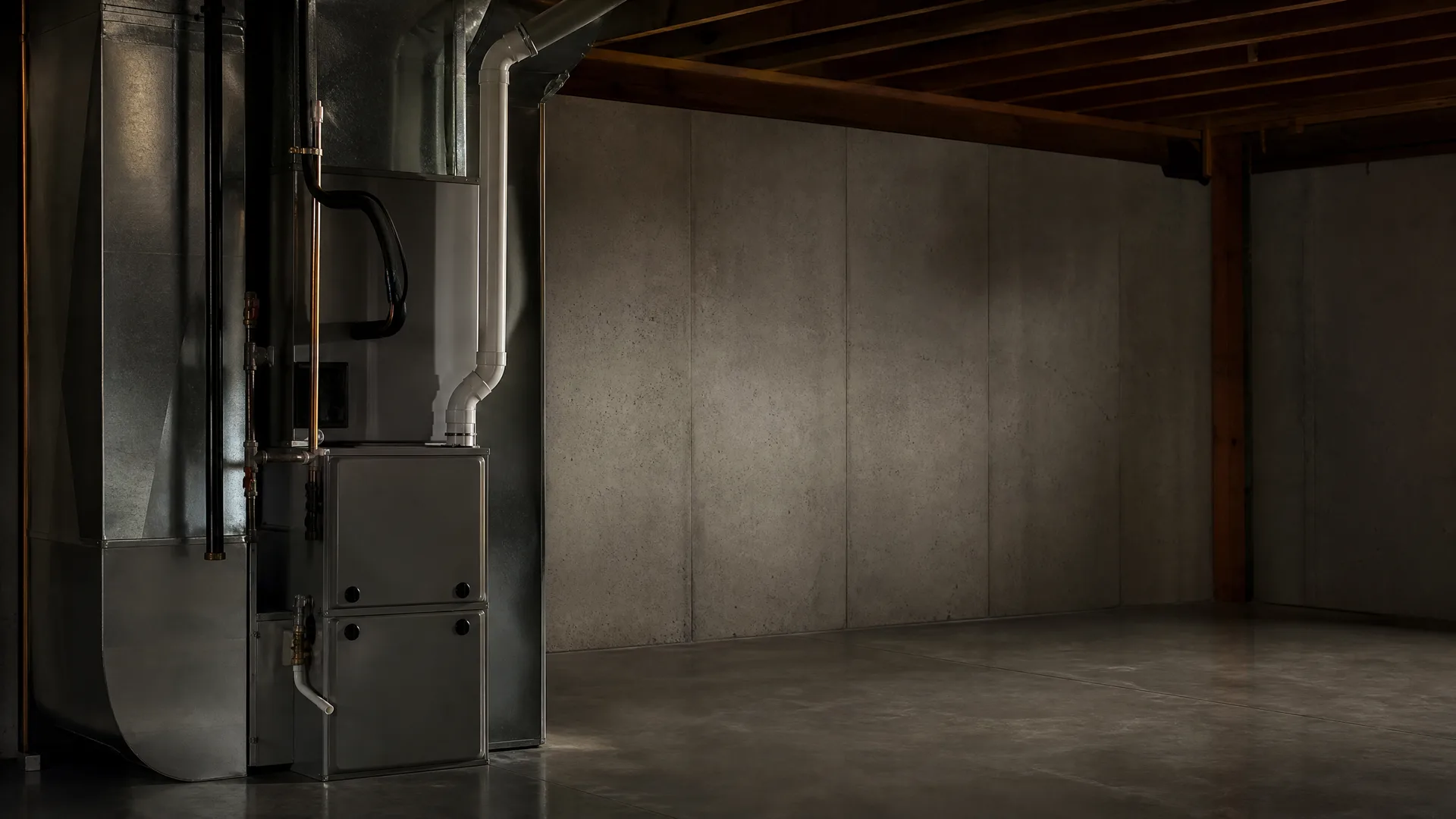
The fan runs but the burners won't stay lit, or never light at all. Dust on the cabinet and a furnace this old are both reasons a technician will want to check the igniter and the flame sensor first.
Stand by a vent and feel the air stay cold while the blower keeps running. Check the thermostat and it still says it's calling for heat. Listen for the burners clicking and trying to light, maybe catching for a second then cutting out. Some furnaces will try three or four times before giving up and locking out, so you might hear that cycle repeat before the house goes quiet except for the fan. If the filter hasn't been changed in a while, that same cold air can mean the furnace shut its burners down on its own to keep from overheating, which is the furnace protecting itself but leaves your house getting colder the longer it sits.




A furnace that only blows cold air doesn't fix itself by waiting it out, and in a Waterloo winter you don't have room to wait anyway. Maybe it's the igniter, maybe the limit switch tripped and never reset, maybe the gas valve isn't opening. You won't know until someone who works on furnaces for a living gets eyes on it. Finding that person is the part that eats your evening: searching Black Hawk County listings, calling two or three shops, sitting on hold, then explaining the same symptoms all over again to whoever finally picks up. Send the request instead and that whole search is off your plate. You're not left comparing quotes or wondering who's reliable. One contractor gets your information and the job of finding help is no longer yours to carry while your house sits cold.
The blower motor and the burners are controlled separately. When the limit switch trips or the igniter fails to light the gas, the control board can still tell the fan to run on its normal cycle. That's why you get a steady stream of air with no heat in it, instead of the system shutting off completely. The fan doing its job is actually a sign the control board is still getting power and still running the sequence. It's the step before the fan, lighting the burners, that isn't finishing.
A furnace pulls return air through the filter before it reaches the heat exchanger. When that filter is packed with dust, less air gets through, and the heat exchanger can overheat even while the house stays cold. The limit switch senses that heat buildup and cuts power to the burners to protect the furnace, but it leaves the blower running to clear the warm air out. So the furnace keeps cycling air through the house, none of it warm, until the burners are allowed to fire again or someone resets what tripped.


You can keep checking the filter, the thermostat settings, the breaker, and hope one of those is the whole problem. If it's the igniter or the gas valve, you're still stuck.
Send the form once and skip calling around Black Hawk County or repeating the problem to three different shops. Someone who knows furnaces takes it from here.
At 13 below freezing most winter nights, a furnace stuck blowing cold air doesn't just make a room chilly, it lets the whole house slide toward that outdoor number fast. A couple hours without real heat on a night like that is enough to notice in every room, not just near the vents.
NOAA nClimDiv 1991-2020
Thermostat calls for heat and signals the control board.
Inducer motor starts and purges the heat exchanger.
Igniter heats up or the pilot lights the burners.
Flame sensor confirms the burners are lit.

The blower running without heat behind it comes down to a few parts: the igniter, the flame sensor, the limit switch, the gas valve. Which one it is isn't something you settle by ear from the living room. A licensed contractor checks each in order and finds the one that quit.
You don't have to be the one who finds that contractor. No scrolling through listings for Black Hawk County, no calling three shops and getting voicemail, no explaining the same cold vents and the same clicking burners over again to whoever finally picks up. Send the form once and that search is off your plate, even while the furnace problem itself still waits on the repair.

Explain the job once and skip repeating it on every call.