

Why the cold here decides this
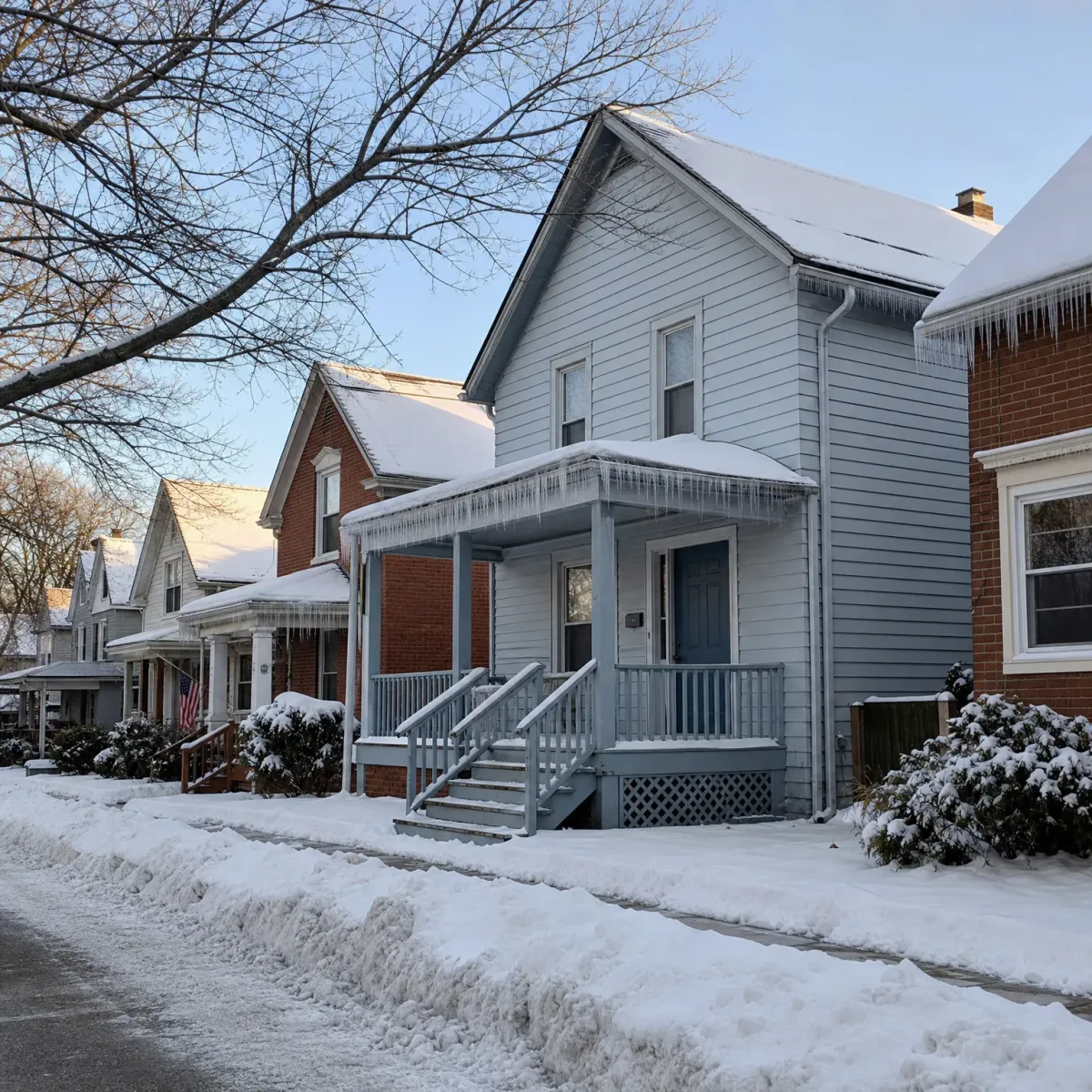
Winter here is long and it gets hard cold. Heat runs about eight months a year, October through May, and the overnight low averages 13°F across December, January and February. About 150 nights a year drop to freezing or below, and about 20 of those get down to 0°F or colder. That is the climate both machines have to answer to.
A standard heat pump loses ground as the temperature drops. Below 40°F it puts out less heat than its rating says. Below about 35°F it often needs backup heat to keep up. The average winter night here is 13°F, under both marks, and every single one of the 150 nights at or below freezing is colder than both marks too. This is not a county where a standard heat pump spends most of winter in its comfort zone. It is a county where it spends most of winter working below it.
A gas furnace does not have that problem. Its output does not fall off when it is cold outside. On the coldest night of the year it heats the same way it does on the mildest one that still calls for heat.
There is a real answer for the cold, but it is not the standard heat pump. ENERGY STAR's Cold Climate heat pumps are built and tested to hold up at 5°F, keeping most of their 47°F heating capacity and still running efficiently at that temperature. Field tests of cold-climate models in occupied homes back this up: backup heat only covered a small share of the load between 0°F and 35°F, and the units rarely ran on backup alone even above 0°F. If a heat pump is the choice here, that is the category to ask about by name. A standard model built to the federal minimum is not the same machine.