




A nighttime view of a tree-lined residential street with illuminated two-story brick houses and street lamps.

Furnace Maintenance in Waterloo, IA

Tell us about the job

Takes about a minute. No obligation.

Tune-up, service, or cleaningFurnace or heatingBlack Hawk County, IA
Step 1 of 2

What ZIP code is the job in?

Eight months of heat is a long stretch for one machine to carry. October through May, the furnace in your house is the thing standing between you and the cold, and it doesn't get much of a break in between. The igniter cycles on and off thousands of times over a season. The blower motor runs for hours at a stretch on the coldest days. All that use adds up faster here than it would somewhere that only needs heat for a few months. A worn part or a clogged filter tends to show itself early into the season, usually right when you need the furnace most.

Almost two out of three homes in Black Hawk County heat with gas.

A gas furnace needs its burner and venting checked, not just a fresh filter.

Eight months of heat starts in October. Get it looked at in September.

Heat runs October through May
Climate zone 6A
Winter nights average 13°F

Half the homes in Black Hawk County were built in 1966 or earlier. A furnace that old has likely been swapped out at least once, but the ductwork, the gas line, and the venting are often whatever came with the house. None of that gets easier to inspect once it's hidden behind a wall or run through a basement ceiling. A yearly check is when a contractor can actually get eyes on a connection or a joint before it's buried under another layer of problems. The older the house, the more that one visit a year is doing.

Have it checked before it has to run

A tune-up before October catches the worn igniter or the weak connection while it's still an easy fix, not a cold morning with no heat. With eight months of running ahead of it, your furnace does better starting the season checked than starting it worn.

Find a contractor
A man seen from behind in a dark shirt and tan work pants carries a canvas tool bag up stone steps toward a gray panelled front door of a shingled house, with a potted shrub beside the entry.
A gray residential gas furnace installed in an unfinished basement, connected to sheet-metal ductwork and PVC pipes.

What a real tune-up covers

A quick visit gets you a new filter and a glance at the thermostat. That's worth something, but it's not a tune-up. A thorough one starts with pulling the burner assembly and cleaning it, because a dirty burner burns uneven and runs hotter than it should. The tech checks flame sensor and igniter condition, not just whether the furnace lights, but how clean that flame looks. They test the heat exchanger for cracks, since a cracked exchanger can let exhaust mix into the air moving through your house. They check static pressure in the ductwork, confirm the blower wheel is clean, and make sure the venting is pitched and connected the way it should be. They test the limit switch and the safety controls that shut the furnace down if something goes wrong. A quick visit looks at the furnace. A thorough one looks at whether the furnace is actually safe to run for the next stretch of cold.

The filter is doing more than you think

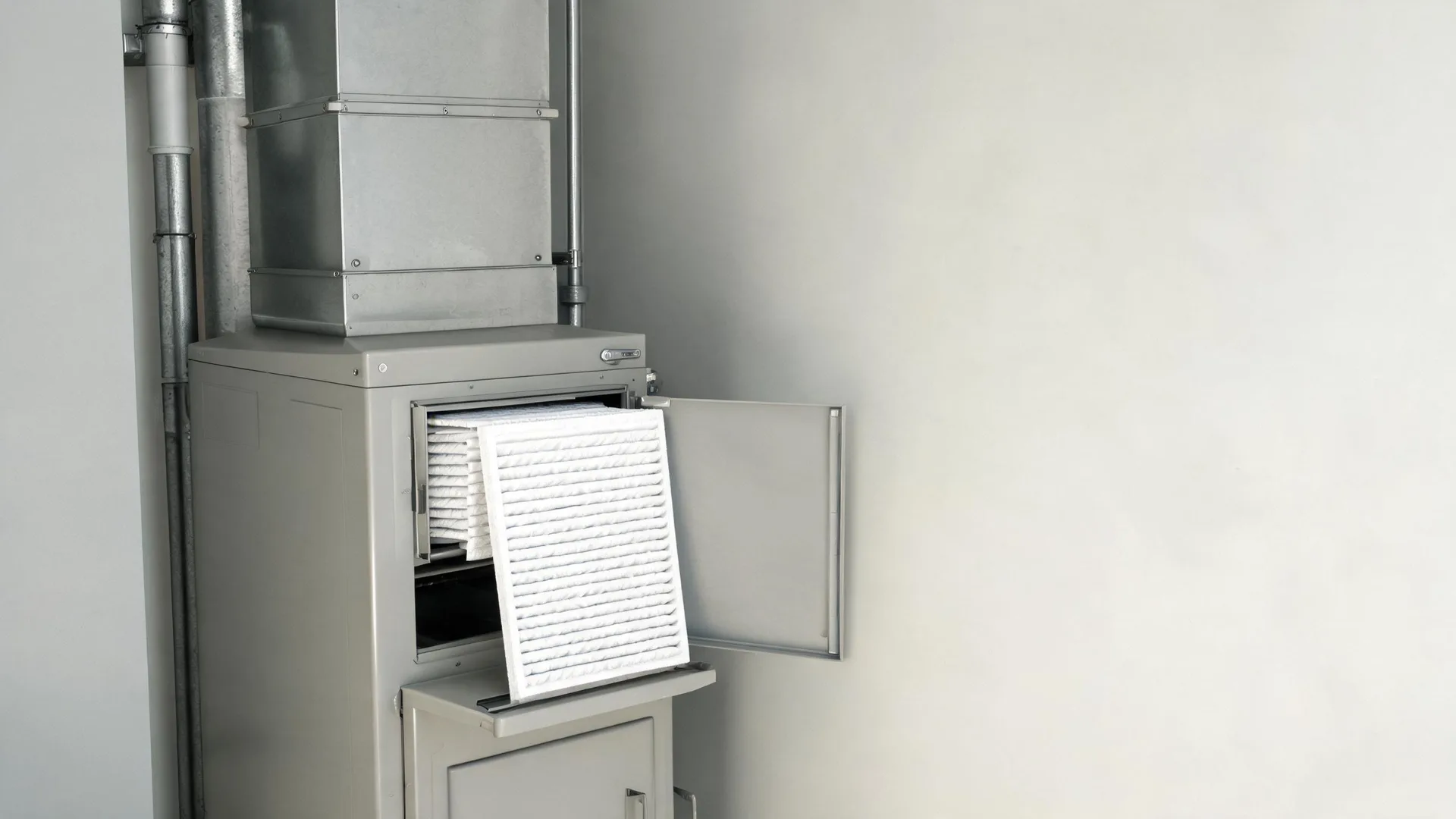
A dirty filter chokes off airflow across the heat exchanger. The blower has to push harder to move the same amount of air, and the exchanger runs hotter than it was built to. Over time that heat stresses the metal and shortens its life. A filter changed on schedule is the cheapest insurance this machine gets.
The drain and the coil matter even in winter

A high-efficiency furnace produces condensation that has to leave through a drain line, and that line can clog with sludge or freeze shut if it's not clear. A clogged drain trips the furnace's safety switch and shuts the whole system down. If your furnace shares a coil with central air, a tech checking it in the off season catches corrosion or a refrigerant leak before summer makes it someone else's emergency.

Between visits, the filter is the one thing worth checking yourself. Hold it up to the light. If you can't see through it, it's choking the airflow and it's time for a new one. Keep the area around the furnace clear, too. It needs open space to pull in air, and anything stacked against it, boxes, a laundry basket, makes that harder. If you have a carbon monoxide detector, test the battery, since a cracked heat exchanger doesn't always announce itself any other way. Listen for new sounds. A rattle, a squeal, a knock that wasn't there before is the furnace telling you something before it fails outright. Past that, leave the cabinet closed. The burner, the flame sensor, the pressure switch are not adjustments a homeowner should be making, and opening things up between visits tends to cause more problems than it catches.

A tune-up also means checking the gas pressure to the burners, since too high or too low changes how clean the furnace burns. The tech checks the wiring at the control board and the connections at the gas valve, because a loose connection causes nuisance shutdowns that look like bigger problems than they are. They lubricate the blower motor if it takes oil, and check the belt or pulley on older units for wear, since a slipping belt shows up as weak airflow long before it snaps. Inducer motor and pressure switch get tested together, since the furnace won't fire at all if the inducer can't prove it's pulling exhaust the right way. None of this takes long when nothing is wrong. It takes a lot longer, and costs you heat on a cold day, when it's caught after the furnace has already quit.