





Three lit brick homes on a tree-lined residential street photographed at dusk.

Furnace Repair in Oelwein, IA

Tell us about the job

Takes about a minute. No obligation.

RepairFurnace or heatingFayette County, IA
Step 1 of 2

What ZIP code is the job in?

Eight months of the year, that furnace is running somewhere in Fayette County. October through May, it doesn't get much of a break. That's a long stretch for a burner, a blower motor, and an igniter to carry the load without rest. A furnace that runs eight months a year wears differently than one that runs four. Parts that would last a while under light use show problems sooner here. If something's acting up now, that's usually what's behind it, not bad luck.

8 months
October through May, your furnace is on duty
12°F
the average winter night it heats against
25 winter storms
in ten years, the nights a failure hurts most
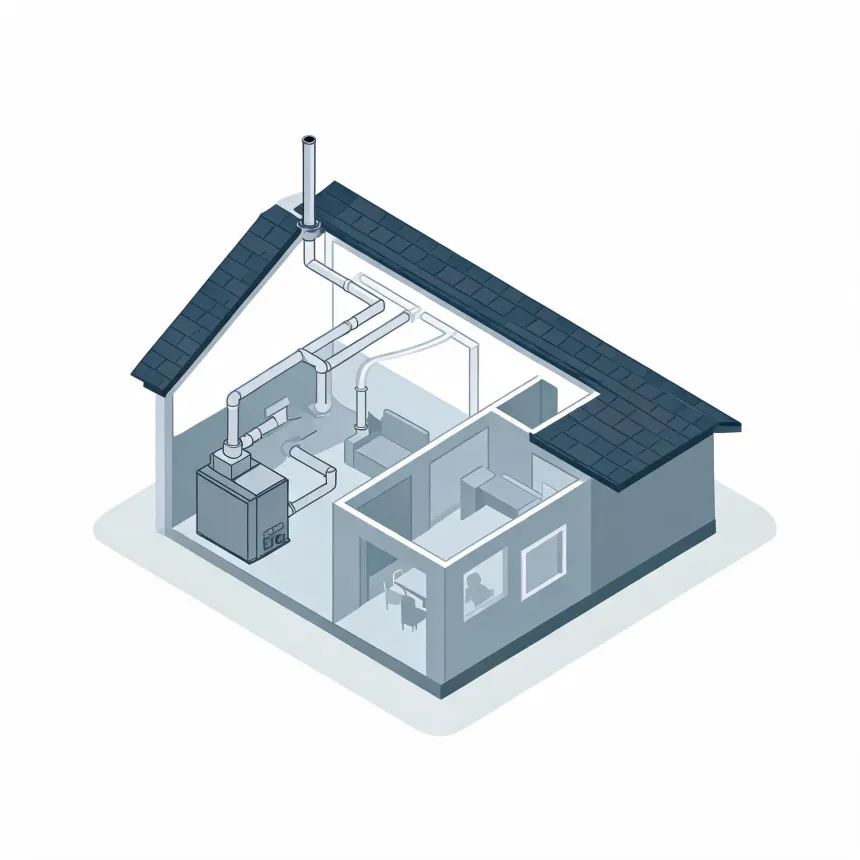
Isometric cutaway illustration of a single-story house showing interior rooms, a furnace unit with connected ductwork, and a flue pipe extending through the dark shingled roof.
Your furnace works hardest from November through March.

NOAA nClimDiv, 1991–2020 normals

A furnace that won't start is often just a closed switch or a tripped breaker, not a dead unit.

Check the thermostat, the power switch on the furnace itself, and the breaker before you call anyone out.

Half the homes here were built before your furnace had a chance to be new

Half the homes here were built by 1954
Heat runs October through May
Winter nights average 12°F
The First Cold Snap Finds the Weak SpotFurnaces here start running in October, and that first real load is when a weak part gives out.

A repair makes sense when the problem is one part acting up and the rest of the furnace is doing its job. A cracked flame sensor, a failed igniter, a blower motor that's seized: these get swapped out and the furnace runs like it did before. What changes the math is when the furnace starts asking for that kind of attention every heating season instead of once every few years. A heat exchanger with a crack in it isn't a repair, either, since that's the part that keeps combustion gas out of the air you breathe. Age matters less than how the furnace has been treated, but a unit that's needed three service calls in two years is telling you something the next repair won't fix. At some point the question isn't whether this fix is worth it. It's whether the next one will be too.

Get It Checked Before the Long Run Starts Again

Get the furnace looked at before it has to work through another October to May stretch. A technician can tell you whether this is one part giving out or a sign the whole unit is tired.

Find a contractor
A man in a cap, long-sleeve navy shirt and tan work pants walks up porch steps toward a dark front door, carrying a canvas tool bag in his right hand, with a potted shrub to the left.
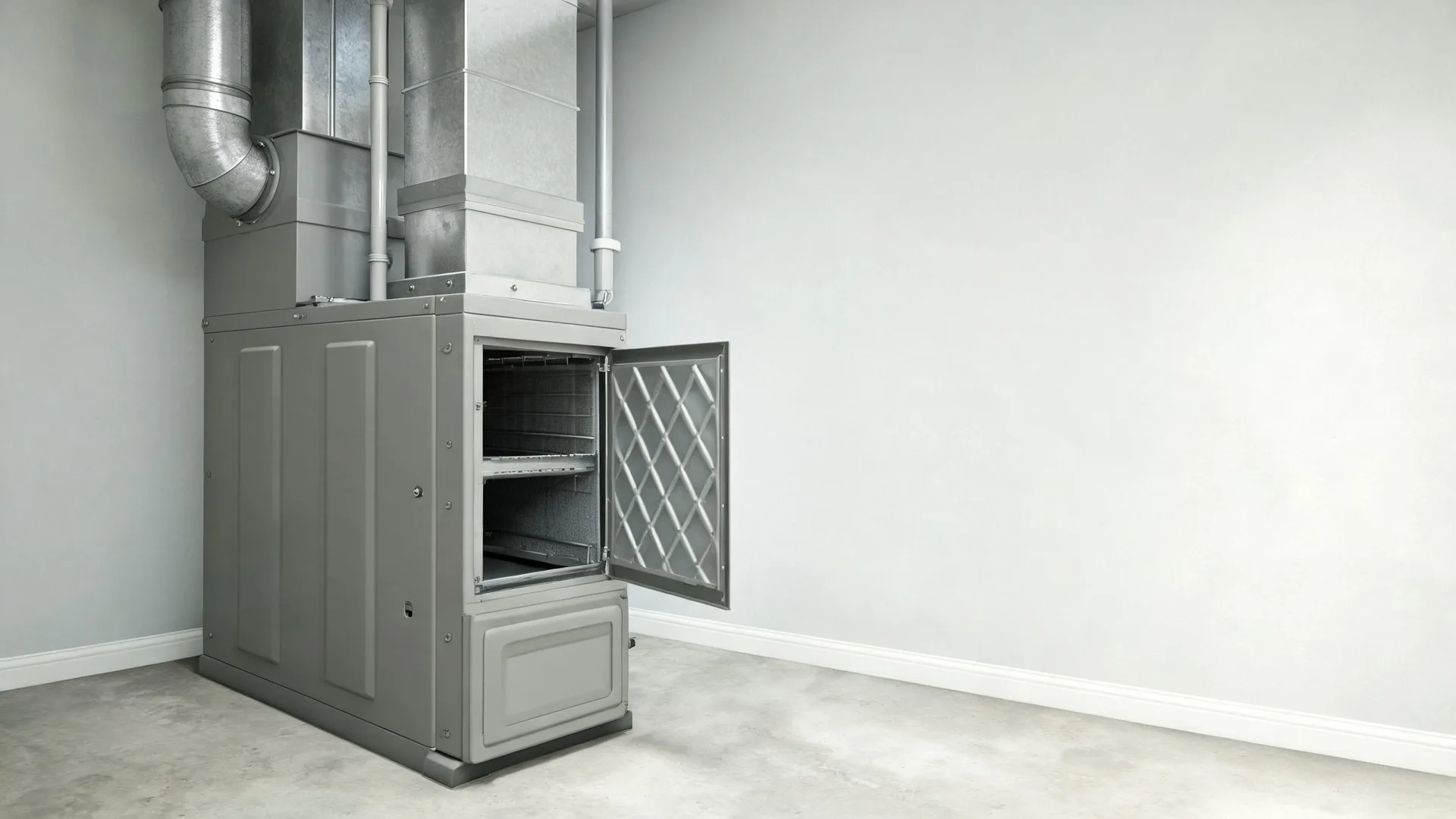
A gray residential gas furnace installed in an unfinished basement, surrounded by ductwork, a metal flue pipe, and a gas supply line.

Know What Year You're Working With

If the furnace came with the house, find out when that was. Half the houses in this county went up in 1954 or earlier, and a furnace that old has most likely already been swapped out once. A furnace installed new carries different math than one that's been carrying a home for decades. Ask the technician how old this unit actually is before paying for the part that's failing now. That answer tells you whether you're fixing a furnace with years ahead of it or patching one that's near the end regardless.

What the Furnace Is Telling You

A furnace rarely just quits. It gives warning first. Short cycling, where it fires up and shuts off before the house warms, usually points to a clogged filter, a cracked heat exchanger, or a flame sensor that's not reading right. A burner that won't light or takes several tries is often a failing igniter or a dirty flame sensor. Cold air blowing before the burner kicks in, a burner flame that looks yellow or flickery instead of steady blue, a blower that runs constantly, or a smell of gas near the unit are all signs that something specific has failed, not that the whole system is giving out.

What Waiting Costs You

None of these signs get better on their own. A dirty flame sensor that causes one failed ignition will cause more of them until it's cleaned or replaced. A blower motor that's started making noise is wearing toward a seizure, not toward quiet. Short cycling puts extra strain on the igniter and the blower motor every time it happens, so a small problem left alone turns into a bigger repair, and a cracked heat exchanger left unaddressed means combustion gas mixing with the air moving through the house.

An unfinished basement featuring a grey forced-air furnace with metal ductwork, concrete block walls, exposed wooden joists, and a single hanging bare bulb.

A new furnace would cut about $120 a year off heating for a typical Fayette County home.

  • A new high-efficiency furnace$490 a year
  • An older furnace$610 a year

Estimates for a typical Fayette County home, compared with an older unit built to the previous federal minimum, from EIA household energy data, Iowa fuel prices and NOAA climate normals. Your home will differ.

Repair makes sense when one part has failed and the heat exchanger is sound.

Replacement makes sense when the heat exchanger is cracked or the furnace keeps needing parts.

A diagnostic visit starts before any panel comes off. A technician will ask what the furnace was doing: when it quit, what sound or smell showed up first, whether it's happened before. Then the panel comes off and the burner assembly gets a look, checking the flame color, whether it lights on the first try, whether the igniter glows the way it should. They'll test the flame sensor and the pressure switch, and pull the filter to see whether it's choking the airflow. A combustion analyzer can check what's actually coming out of the flue, since that tells you things a visual check can't. If the heat exchanger is in question, that gets inspected closely, because a crack there isn't something to guess about. By the end, the technician should be able to point to the one part that's failing and explain what happens if it's left alone.