




Three illuminated two-story brick houses on a tree-lined residential street photographed at twilight, with warm window light and landscape uplighting visible against a deep blue evening sky.

Furnace Repair in Burlington, IA

Tell us about the job

Takes about a minute. No obligation.

RepairFurnace or heatingDes Moines County, IA
Step 1 of 2

What ZIP code is the job in?

October through May, your furnace is the thing standing between your house and a Burlington winter. That's eight months of the year it has to work, not a few weeks here and there. That kind of run time wears on an igniter, a blower motor, a heat exchanger, parts built to run so many hours before something gives out. When one of them starts failing, it's usually not bad luck. It's a furnace that's been asked to work harder than most ever have to. Worth having someone look at it who can tell you whether it's a quick fix or a sign of more wear underneath.

8 months
October through May, your furnace is on duty
19°F
the average winter night it heats against
68%
of homes here heat with gas, so most furnaces here burn gas
17 winter storms
in ten years, the nights a failure hurts most
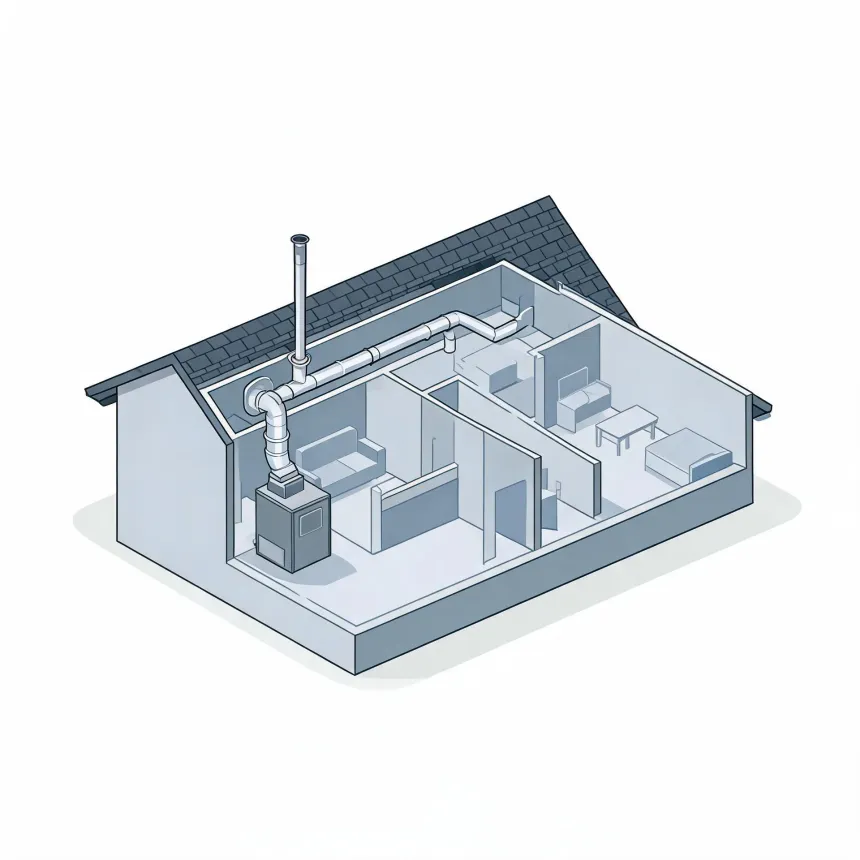
Isometric cutaway illustration of a single-story house showing interior rooms with furniture and a furnace connected to ductwork and a vertical flue pipe extending through the roof.
Your furnace works hardest from November through March.

NOAA nClimDiv, 1991–2020 normals

A furnace that short cycles, turning on and off before the house warms up, is working against a bad limit switch or a clogged filter.

Left alone, that cycling strains the blower motor until that fails too.

Half the furnaces in Burlington are running in houses built in 1959 or earlier

Half the homes here were built by 1959
Climate zone 5A
Heat runs October through May
September is the month to deal with itFurnaces here start running in October and don't stop until May.

A repair is worth making when the failure is small and the rest of the furnace has no history of trouble. A new flame sensor or a new igniter brings a unit back to normal and tells you nothing about what else is close behind. The harder call is the heat exchanger. It's the part that can't be patched, only replaced, and once it cracks the furnace needs to come out. Age matters less than pattern. A furnace that's needed a repair every year is telling you something a single breakdown doesn't. One that's run clean for years and hits one bad part is usually still worth fixing.

Eight months a year is a lot to ask of one furnace

That kind of run time is why a repair now is worth getting right, not just getting done. Someone who can look past the broken part to how the rest of the furnace is holding up will tell you whether this is a quick fix or the start of something bigger.

Find a contractor
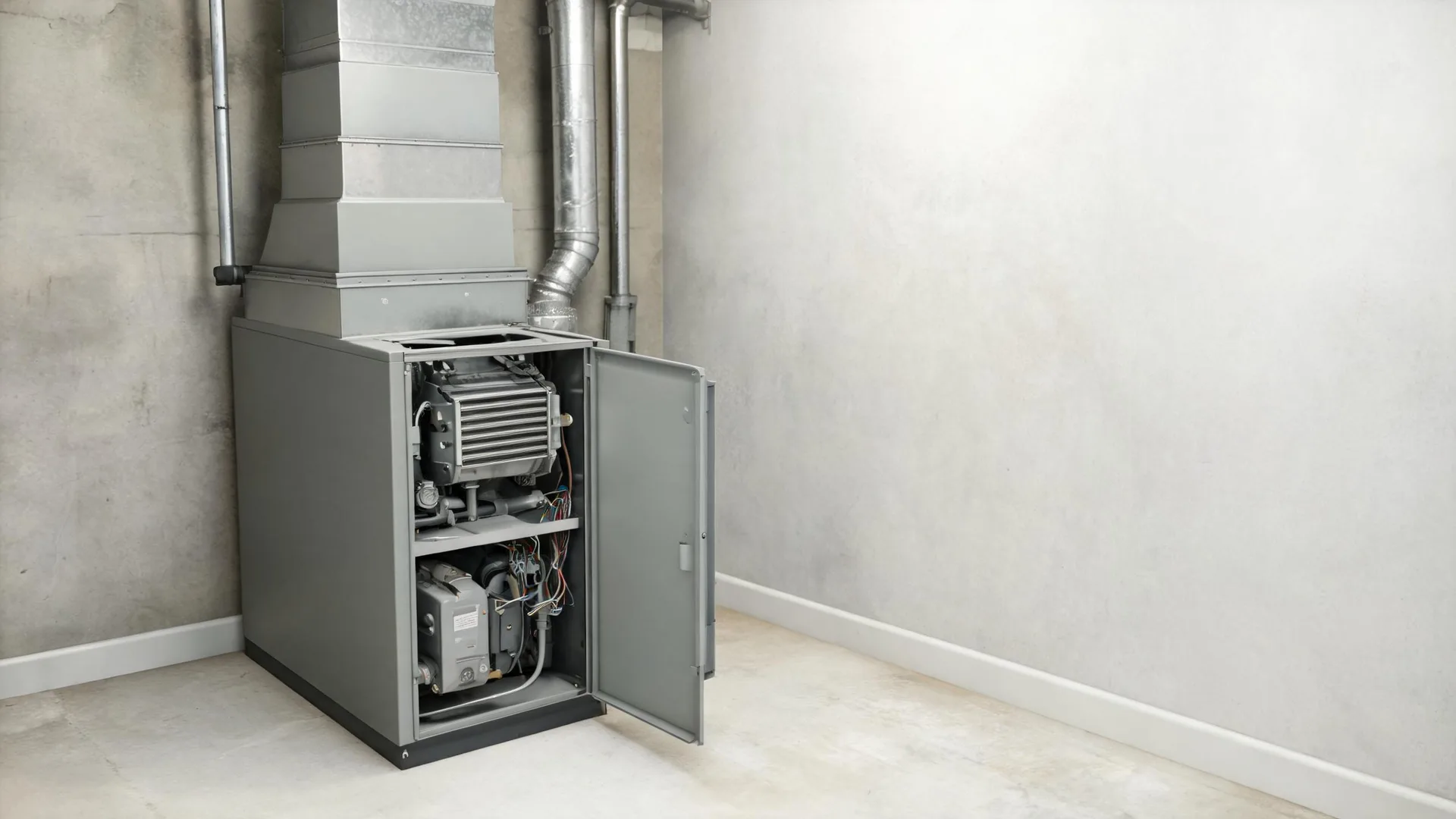
A gray residential gas furnace installed in an unfinished basement, surrounded by ductwork, a metal flue pipe, and a gas supply line.

An old furnace in an old house gets one more question before the repair

If your furnace came with the house, and the house dates back to 1959 or earlier, you're not just fixing a part. You're deciding how much more to put into a system that's already older than half the furnaces in the county. A repair makes sense when it's one part and a clean history. But it's worth asking the person who comes out to look how much life they think is left in the rest of it before you spend much more.

Heat exchangers crack from cycling, not just age

Every time the furnace fires, the heat exchanger expands, and it contracts again when the burner shuts off. Years of that cycle is what opens a crack, not any one hard winter. Once it cracks, it can't be welded or patched. The whole exchanger has to come out.

Most other failures start small and stay small if you catch them

An igniter wears out from repeated heating and cooling until it stops glowing hot enough to light the gas. A flame sensor coated in residue stops sensing the flame and shuts the burner down as a safety measure. Both are quick swaps. Neither one means the furnace is in trouble, as long as nothing else is wrong with it.

An empty unfinished basement containing a forced-air furnace with overhead ductwork, exposed ceiling joists, and a single hanging light bulb.

A new furnace would cut about $90 a year off heating for a typical Des Moines County home.

  • A new high-efficiency furnace$400 a year
  • An older furnace$490 a year

Estimates for a typical Des Moines County home, compared with an older unit built to the previous federal minimum, from EIA household energy data, Iowa fuel prices and NOAA climate normals. Your home will differ.

Repair makes sense when one part has failed and the heat exchanger is sound.

Replacement makes sense when the heat exchanger is cracked or the furnace keeps needing parts.

A diagnostic starts before any panel comes off. The tech asks what the furnace is doing: not heating at all, blowing cold air, cycling too fast, making noise it didn't used to make. That pattern narrows things down before a single part gets tested. Then it's a look at the flame, the sound of the ignition sequence, a check of the safety switches that shut the burner down when something's off. Pulling the panel comes next, checking the igniter or pilot, the flame sensor, the blower wheel, looking for scorch marks or rust that point to a slower problem. A good diagnostic ends with a straight answer: what failed, what it takes to fix it, and whether anything else nearby looks like it's next.