




A row of illuminated two-story brick houses with front porches and mature trees photographed at twilight.

Furnace Repair in Marshalltown, IA

Tell us about the job

Takes about a minute. No obligation.

RepairFurnace or heatingMarshall County, IA
Step 1 of 2

What ZIP code is the job in?

Furnaces in Marshall County run from October through May, about eight months of the year. That's most of the calendar spent cycling on and off, heating a house against overnight lows that average 14°F through December, January and February. A furnace working that many months, against that kind of cold, wears parts down faster than one that only kicks on a few weeks a year. The igniter, the blower motor, the limit switch, all of it sees more hours. If yours is acting up, that kind of use is usually why. Worth having someone look at the actual cause before you decide what to do about it.

8 months
October through May, your furnace is on duty
14°F
the average winter night it heats against
58%
of homes here heat with gas, so most furnaces here burn gas
21 winter storms
in ten years, the nights a failure hurts most
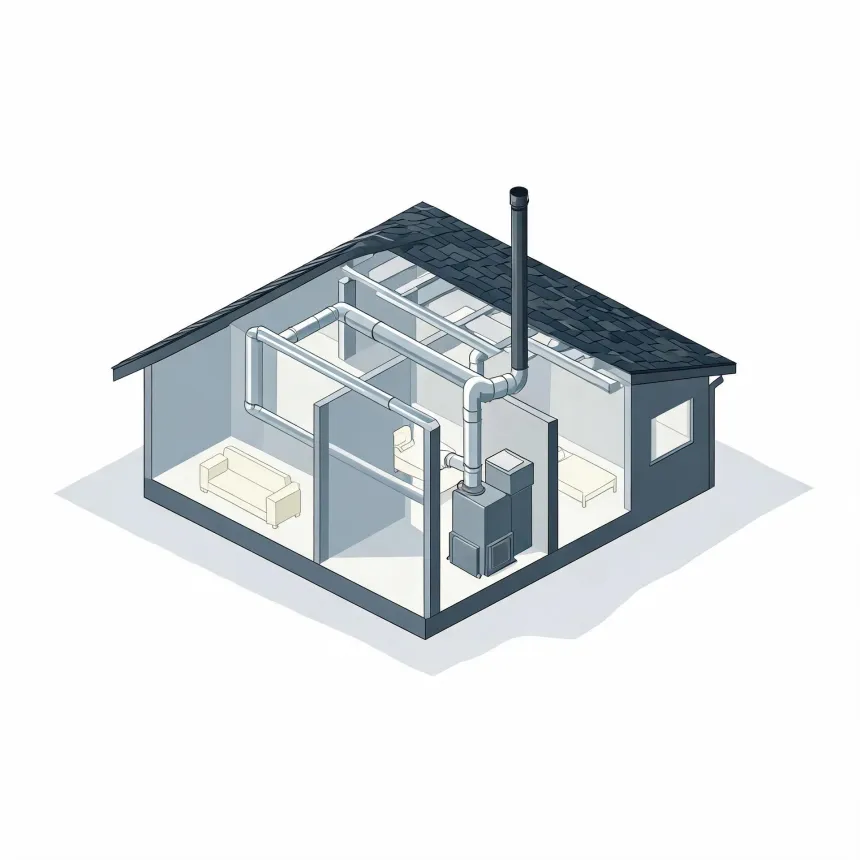
Isometric cutaway illustration of a small single-story house showing a furnace with a flue pipe through the roof and ducting running to rooms containing a sofa, chair and bed.
Your furnace works hardest from November through March.

NOAA nClimDiv, 1991–2020 normals

Half the homes in Marshall County were built in 1958 or earlier.

A furnace that came with a house that old is closer to the end of its life than the start.

Eight months of heat starts in October. Whatever's weak in your furnace shows up fast.

Heat runs October through May
Winter nights average 14°F
Climate zone 5A

A technician can trace a noise or a short cycle back to the part causing it. That matters more here than in a place where the furnace barely runs. An igniter or a limit switch that's seen eight months of work a year for several winters running is a different repair than the same part a few years in. Get the actual cause in front of you before deciding whether it's worth fixing or worth replacing.

Ask what the furnace has left before you fix it

If your furnace came with a house built in 1958 or earlier, ask the technician how much life is left in it before you pay for the repair.

Find a contractor
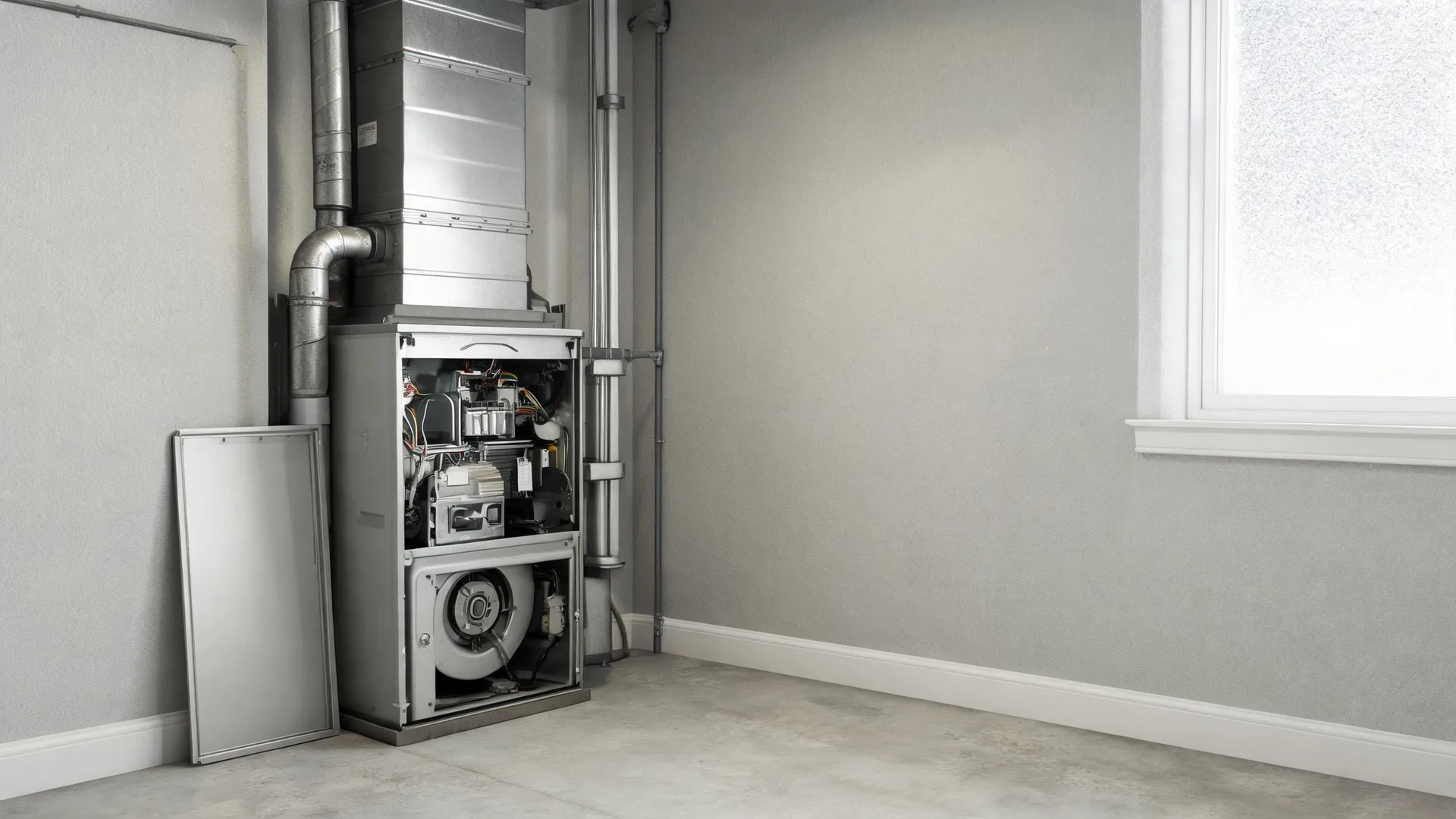
A gas furnace with attached ductwork, gas piping, and condensate lines installed in a concrete-block basement.

What a struggling furnace sounds and acts like

A furnace usually tells you something's wrong before it quits outright. Short cycling, where it fires up and shuts off again before the house warms, points to a dirty flame sensor or a cracked heat exchanger tripping a safety switch. A burner that won't light on the first try, or takes a few tries, usually means a weak igniter. Banging or popping from the ductwork when it starts up is metal expanding around a delayed ignition. A blower that runs constantly, or won't shut off, often traces back to a bad limit switch. Cold air out of the vents before the burners catch is normal for a few seconds, but if it lasts, something upstream isn't working. A yellow or flickering flame where it should burn steady blue is worth a call on its own. None of these fix themselves, and all of them get worse the longer the furnace keeps running.

Most failures start with dirt or age, not a defect

A flame sensor coated in a thin layer of residue stops signaling the control board that the burner is lit, so the gas valve shuts back off. A blower wheel caked with dust pulls less air, runs hotter, and wears its motor down faster. Almost everything that fails in a furnace either wore out from normal operation or got dirty enough to stop working right. Very little of it fails for no reason.

Some parts fail on their own schedule

An igniter is a thin strip that heats up and cools down every cycle, and that stress eventually cracks it, regardless of how clean the furnace is. A capacitor loses its charge capacity over years the same way a battery does. These wear on their own timeline. Cleaning and filter changes slow a lot of failures down, but they do not stop this kind.

An unfinished basement interior showing a gray furnace unit beneath a bare incandescent bulb, surrounded by exposed joists, concrete walls, cardboard boxes, and utility pipes.

A new furnace would cut about $110 a year off heating for a typical Marshall County home.

  • A new high-efficiency furnace$450 a year
  • An older furnace$560 a year

Estimates for a typical Marshall County home, compared with an older unit built to the previous federal minimum, from EIA household energy data, Iowa fuel prices and NOAA climate normals. Your home will differ.

Repair makes sense when one part has failed and the heat exchanger is sound.

Replacement makes sense when the heat exchanger is cracked or the furnace keeps needing parts.

A diagnostic visit starts with the complaint, not the furnace. A technician wants to know what it's doing, when it started, and whether it happens every cycle or only sometimes. That narrows things down before a panel ever comes off. From there it's a sequence. Check for power and gas reaching the unit, pull the cover, watch it run through a full cycle if it will complete one. Burner flame tells its own story, so does the sound coming out of the blower compartment. Testing a part means checking it against a known value, not just looking at it. A flame sensor can look clean and still read wrong, and a capacitor can look fine and be most of the way dead. The goal is to find the one thing causing the symptom, not to replace parts until something works.