





A row of illuminated two-story brick houses with front porches and mature trees photographed at twilight.

Furnace Repair in Clinton, IA

Tell us about the job

Takes about a minute. No obligation.

RepairFurnace or heatingClinton County, IA
Step 1 of 2

What ZIP code is the job in?

A furnace in Clinton County runs about eight months out of the year, October through May. That's most of the calendar spent cycling on and off to keep up. Add in the winter storms this county sees, 26 of them between 2015 and 2024, and the furnace is working its hardest exactly when it can least afford to quit. That kind of run time wears on an igniter, a blower motor, a heat exchanger, parts that weren't built to rest. When something starts acting up after a stretch like that, it's usually not bad luck. It's the machine telling you what eight months of work does.

8 months
October through May, your furnace is on duty
16°F
the average winter night it heats against
63%
of homes here heat with gas, so most furnaces here burn gas
26 winter storms
in ten years, the nights a failure hurts most
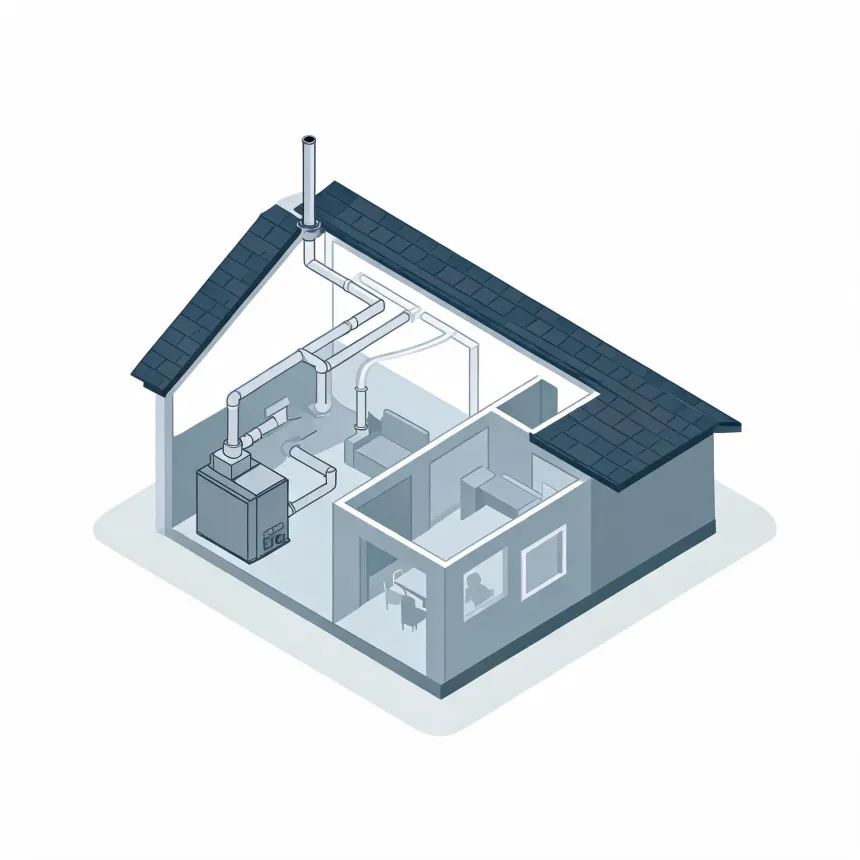
Isometric cutaway illustration of a single-story house showing interior rooms, a furnace unit with connected ductwork, and a flue pipe extending through the dark shingled roof.
Your furnace works hardest from November through March.

NOAA nClimDiv, 1991–2020 normals

An igniter cracks or a blower motor wears out from the sheer number of cycles it runs, not from one bad day.

If your furnace is acting up, it's worth finding out which part gave out before deciding what comes next.

Half the furnaces in Clinton County are running in houses built in 1957 or earlier

Half the homes here were built by 1957
Heat runs October through May
Winter nights average 16°F
October Is When Weak Parts FailFurnaces here sit idle all September, then get asked to run full tilt starting in October.

A cracked heat exchanger is the clearest case of a problem that gets worse with run time. Once it cracks, every cycle flexes that crack a little more, and the metal keeps giving until the leak is worse than it started. A dirty flame sensor works the same way in a smaller sense. It can still sense a weak flame, enough to keep the furnace limping along, but the buildup keeps growing on it, and the furnace starts shutting off more and more often until it won't stay lit at all. A blower motor losing its bearings does not fail all at once either. It runs hotter and louder each cycle until it seizes, and when it seizes, it can take the limit switch or the control board with it. None of these get better by waiting. The furnace keeps asking the weak part to do the same job it's always done, and a part that's already failing has less left to give each time.

Get the part that's failing found now, so the fix holds through winter

Your furnace still has months of work ahead of it before this season is done. Whatever's acting up now will keep getting asked to run anyway. Have someone look at it and name the part, so what gets fixed is the right thing.

Find a contractor
A gas furnace with attached ductwork, gas piping, and condensate lines installed in a concrete-block basement.

An Old Furnace Doesn't Give You Much Warning

A furnace installed when a lot of these houses were built has already put in decades of winters like the ones this county gets. Parts get replaced along the way, but the cabinet, the heat exchanger, the wiring behind it all age together. If yours is original to a house from that era, a repair bill is worth weighing against what's left in the machine. Ask the person who comes out how many years of work it likely has left before you pay to fix the part that's failing now.

What the furnace sounds like when it's failing

A furnace rarely goes quiet without warning. It bangs when the burners light, a sign fuel is pooling before it catches. It rattles at startup, which usually means a loose panel or a blower wheel knocking against its housing. A high, thin squeal points to a motor bearing losing its lubrication. Short cycling, where the furnace fires up and shuts off again within a few minutes, often means a flame sensor that can't hold a signal or a limit switch tripping on heat it shouldn't be seeing. Cold air out of the vents while the blower still runs points to an igniter that's lost its spark or a gas valve that isn't opening.

Which of these to act on first

Noise alone can usually wait for a scheduled visit. A burning smell, scorch marks near the burner compartment, or a furnace that shuts off on its own and won't restart cannot. Those point to a heat exchanger or a safety switch doing its job and cutting power before something worse happens. If the furnace trips a breaker repeatedly, stop resetting it and get it looked at. A part that's already failing doesn't fix itself by being run again.

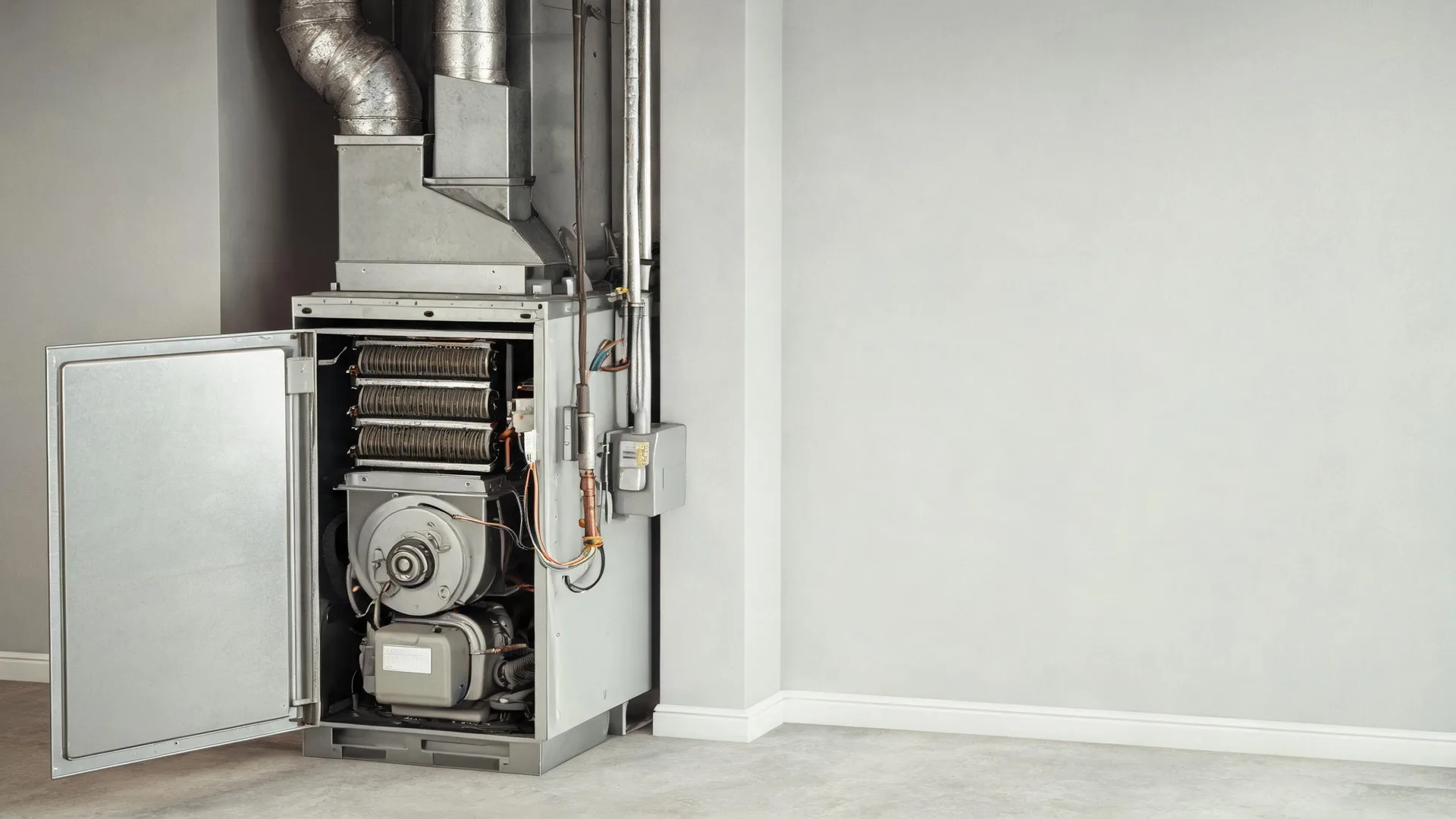
An unfinished basement featuring a forced-air furnace, exposed wooden ceiling joists, bare concrete walls, and miscellaneous items including cardboard boxes and coiled cables on the floor.

A new furnace would cut about $100 a year off heating for a typical Clinton County home.

  • A new high-efficiency furnace$430 a year
  • An older furnace$530 a year

Estimates for a typical Clinton County home, compared with an older unit built to the previous federal minimum, from EIA household energy data, Iowa fuel prices and NOAA climate normals. Your home will differ.

Repair makes sense when one part has failed and the heat exchanger is sound.

Replacement makes sense when the heat exchanger is cracked or the furnace keeps needing parts.

A diagnostic visit starts before any panel comes off. A tech will ask what the furnace was doing, the sounds, the smells, whether it was heating poorly or not firing at all, because that narrows down where to look first. Then the cover comes off and it's a sequence of checks: the flame sensor pulled and inspected, the igniter checked for a crack or a weak glow, the pressure switch and limit switch tested, the blower wheel looked at for wobble or buildup. A meter comes out to read voltage and amperage at the parts that are suspect, since a part can look fine and still be failing electrically. Gas pressure gets checked at the valve too, because too much or too little changes how the burners fire. The goal is to find the one part actually causing the problem, not to guess and start swapping things. Once it's found, a tech can tell you what it takes to fix it and what shape the rest of the furnace is in while everything's already open.