






Three lit brick homes on a tree-lined residential street photographed at dusk.

Furnace Repair in Spirit Lake, IA

Tell us about the job

Takes about a minute. No obligation.

RepairFurnace or heatingDickinson County, IA
Step 1 of 2

What ZIP code is the job in?

Furnaces in Dickinson County run from October through May. That's eight months of the year with the burner and blower cycling, not just the deep cold snaps. Add in the winter storms this area sees, and the system doesn't get much of a break once it starts. Parts that would last longer somewhere milder wear down faster here, and small issues like a weak igniter or a dirty flame sensor tend to turn into no-heat calls sooner than you'd expect. If yours is acting up, it's worth finding out exactly what's going on before it quits on you during a storm.

8 months
October through May, your furnace is on duty
10°F
the average winter night it heats against
57%
of homes here heat with gas, so most furnaces here burn gas
40 winter storms
in ten years, the nights a failure hurts most
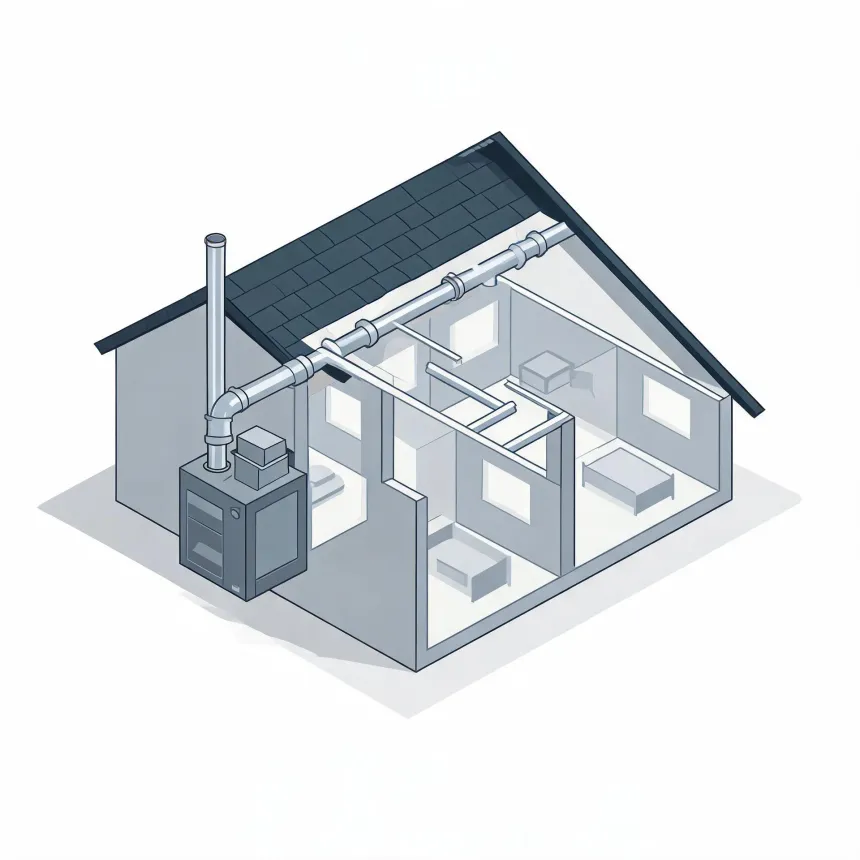
Isometric cutaway illustration of a small house showing interior rooms, ductwork running through the attic, and a furnace unit with a vertical flue pipe on the exterior wall.
Your furnace works hardest from November through March.

NOAA nClimDiv, 1991–2020 normals

A cracked heat exchanger or a failing limit switch gets worse every hour the furnace keeps cycling.

Shutting it off and calling for a diagnosis beats running it until it fails outright.

Half these furnaces are younger than the county itself

Half the homes here were built by 1979
Heat runs October through May
Winter nights average 10°F
October Is When Weak Parts Give OutFurnaces here sit idle all September, then start cycling for an eight month stretch, and whatever was already weak shows up fast.

If your furnace came with the house, repair is the right place to start. A furnace built in 1979 or later still has a lot of working life in it, and most of what goes wrong, a bad igniter, a failed control board, a clogged flame sensor, is a repair, not a reason to replace the unit. That holds even if yours is older. The thing that changes the math is a cracked heat exchanger, and you won't know if that's the problem until someone looks at it. Get the actual cause diagnosed before you assume the system is done.

Get the real cause found before the next storm hits

Your furnace has been cycling since October and won't stop until spring. A diagnosis now tells you whether it's a weak igniter, a dirty flame sensor, or something bigger, instead of guessing while it's down.

Find a contractor
A man in a cap, dark long-sleeved shirt and brown work pants walks up gray porch steps toward a dark blue front door, carrying a worn canvas tool bag filled with hand tools, with a potted shrub to the right.
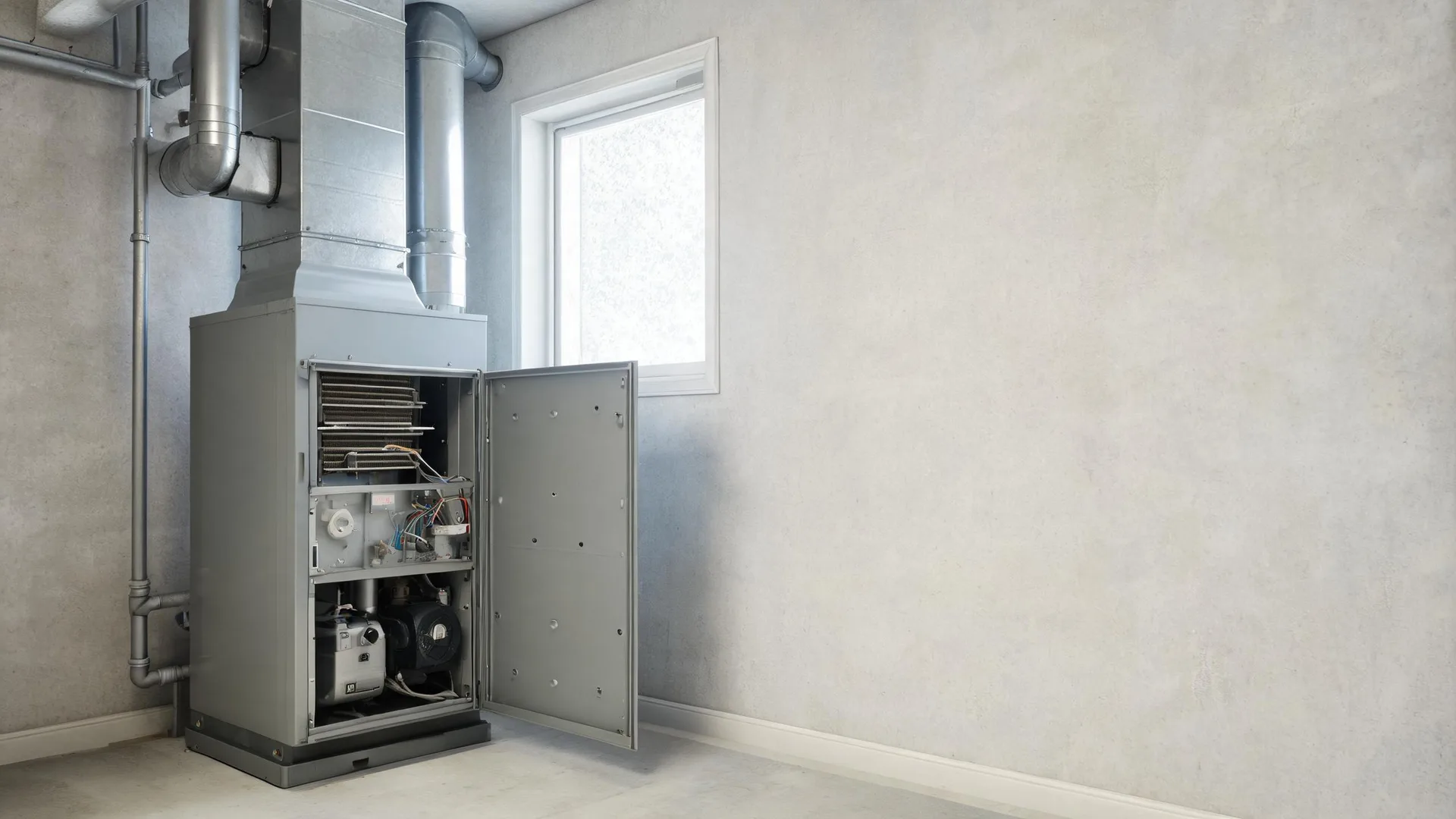
A gray residential gas furnace installed in an unfinished basement, connected to sheet-metal ductwork and PVC pipes.

The Warning Comes Before the Breakdown

A furnace gives warning before it quits. The burner might take two or three tries to light instead of catching right away. The blower might run longer than it used to, or kick on and off more than it should. You might hear a clicking at the start of a cycle that doesn't lead to flame, or notice the air coming out duller than it used to feel. A yellow flame instead of blue is worth a call on its own. None of these mean the furnace is done. They mean a part is wearing out while it still can be replaced on your schedule instead of theirs.

What You Can Check Yourself

Start at the thermostat. Make sure it's set to heat and the set point is actually above room temperature, since a bumped switch or dead battery looks exactly like a furnace problem. Check the air filter next and replace it if it's gray or clogged, because restricted airflow can cause a furnace to shut itself off mid-cycle. Walk around the house and check that return vents and supply registers are open and nothing's been pushed in front of them. If the furnace has a standing pilot, look for a small blue flame at the pilot assembly. If it's out, there's usually a relight switch and instructions printed right on the access panel.

What to Leave Alone

Don't open the burner compartment or go near the flame sensor, igniter or control board. These sit close to live electrical connections and gas lines, and they're easy to damage by hand. If the breaker for the furnace keeps tripping, leave it off and don't reset it more than once. A breaker that trips repeatedly is telling you something is drawing too much current, and resetting it again and again risks the wiring. Same goes for a furnace that smells like gas: don't flip switches or light anything near it, just shut off the gas supply if you know where the valve is and get out.

A gray forced-air furnace with metal ductwork stands in an unfinished basement with exposed wooden joists, concrete walls, and a single hanging light bulb.

A new furnace would cut about $120 a year off heating for a typical Dickinson County home.

  • A new high-efficiency furnace$510 a year
  • An older furnace$630 a year

Estimates for a typical Dickinson County home, compared with an older unit built to the previous federal minimum, from EIA household energy data, Iowa fuel prices and NOAA climate normals. Your home will differ.

Repair makes sense when one part has failed and the heat exchanger is sound.

Replacement makes sense when the heat exchanger is cracked or the furnace keeps needing parts.

A diagnostic visit starts before any panel comes off. A tech will ask when the trouble started and what it looks like, since a furnace that won't light at all points somewhere different than one that lights and then shuts off a few minutes later. From there it's a set sequence: check the thermostat call, check for power at the unit, check the flame sensor and igniter, check the pressure switch and the draft inducer, and watch a full cycle happen if the furnace will run one. A multimeter does most of the real work, reading voltage and resistance at parts that look fine but aren't passing current the way they should. The idea is to find the one part that's actually failed, not to start swapping parts and see what helps. By the end you should know exactly what's wrong and what it takes to fix it, not just that something is.