


A lit residential street at dusk featuring large two-story brick houses with glowing windows, mature trees, and a street lamp.

Furnace Repair in Des Moines, IA

Tell us about the job

Takes about a minute. No obligation.

RepairFurnace or heatingPolk County, IA
Step 1 of 2

What ZIP code is the job in?

Furnaces in Polk County run about eight months a year, October through May. That's most of the year spent heating a house through overnight lows that average 16°F in December and January. A furnace that runs that long, against that kind of cold, wears parts down faster than one that only kicks on a few weeks a year. The igniter, the blower motor, the pressure switch, all of them are cycling on and off night after night through the worst months. If yours is making a new noise or short cycling, that's usually wear catching up with it, not a one-off glitch. Worth having someone look at what's actually failing before it leaves you without heat on a night like that.

8 months
October through May, your furnace is on duty
16°F
the average winter night it heats against
66%
of homes here heat with gas, so most furnaces here burn gas
21 winter storms
in ten years, the nights a failure hurts most
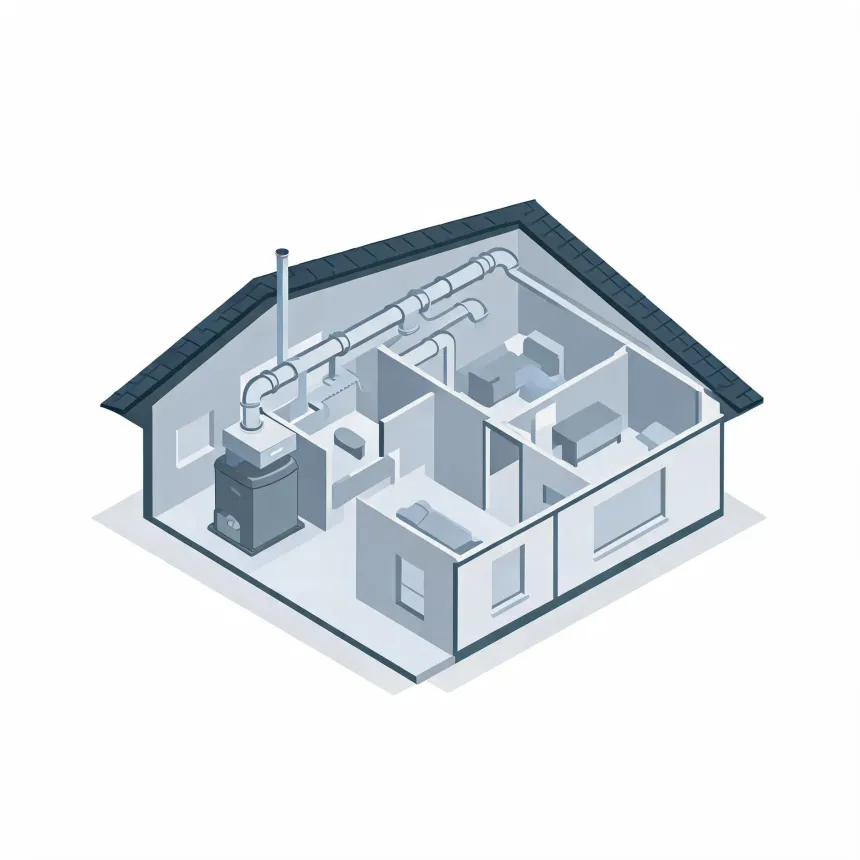
Isometric cutaway illustration of a single-story house showing interior rooms, ductwork running along the ceiling, a flue pipe through the roof, and a dark furnace unit in one corner.
Your furnace works hardest from November through March.

NOAA nClimDiv, 1991–2020 normals

An igniter cracks, a flame sensor coats over with soot, a pressure switch sticks. These are the parts that give out first.

Which one it is decides the call. A flame sensor is a quick clean or swap. A cracked heat exchanger is a different conversation.

If your furnace is original to the house, get it diagnosed, not replaced

Half the homes here were built by 1982
Heat runs October through May
Winter nights average 16°F
October is when a weak furnace gets found outFurnaces in Polk County switch on in October and run straight through May

A furnace that short cycles or won't stay lit through a night at 16°F needs to be looked at before the next cold stretch, not after. A tech can test the flame sensor, check the pressure switch and look at the heat exchanger in one visit, and tell you which of those is actually the problem. That matters more here than somewhere with a mild winter, because a furnace that quits in January doesn't get a break before it has to run again. Get the diagnosis right and the fix holds for the rest of the season.

Get it diagnosed properly

Your furnace works hard here, and that's usually what's behind the problem. Have it diagnosed properly so the fix lasts.

Find a contractor
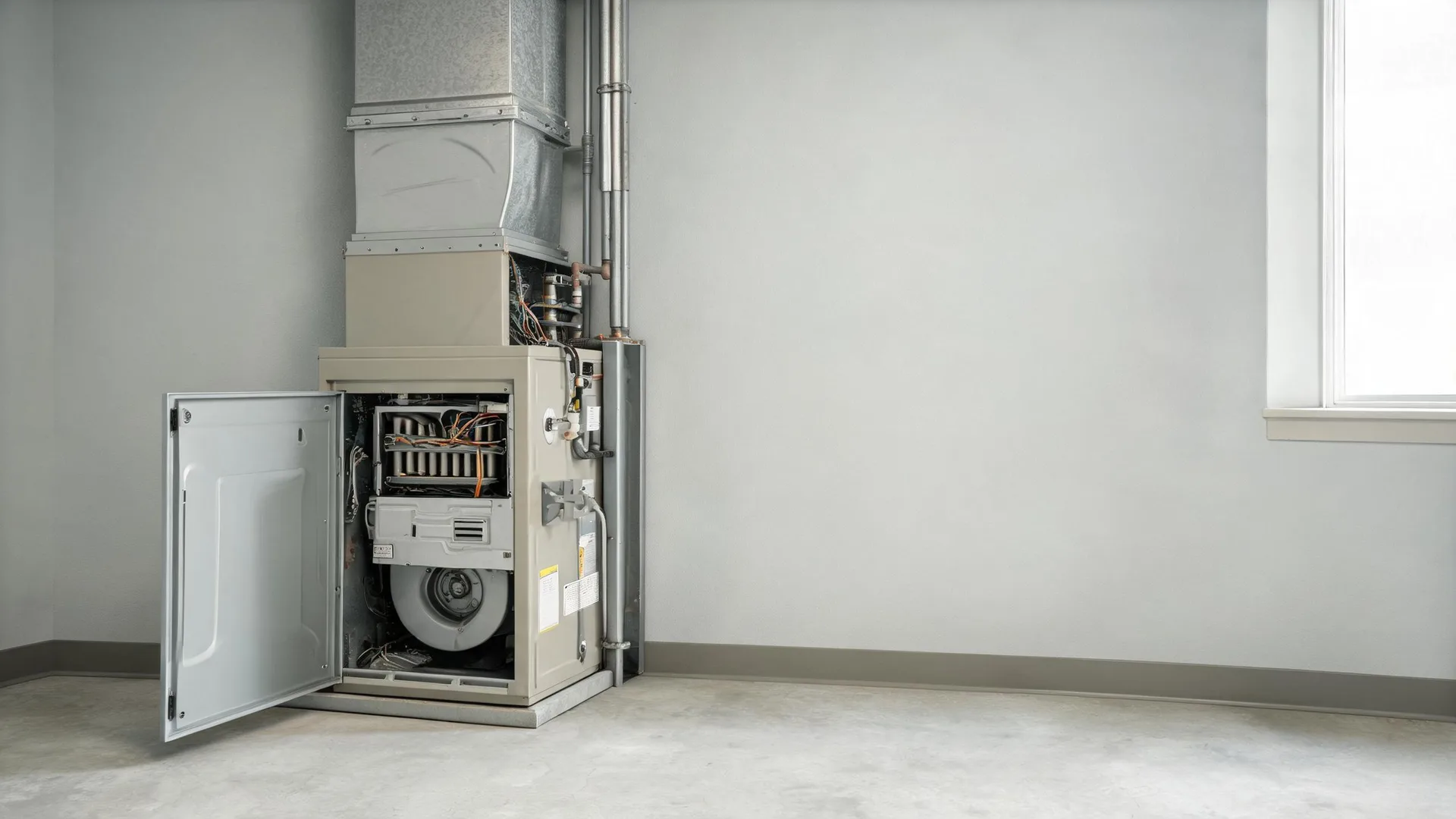
A gas furnace with attached ductwork, gas piping, and condensate lines installed in a concrete-block basement.

A newer furnace is worth repairing

If your furnace came with the house and the house is newer, repair is the better bet before replacement even comes up. Have the tech confirm what's actually failing, the flame sensor, the pressure switch, whatever it is, and fix that part. No reason to put money toward a new system when the one you have still has years in it.

A small problem can take the heat exchanger with it

A cracked igniter or a dirty flame sensor makes a furnace misfire or shut down early. That's annoying on its own, but not dangerous yet. Keep running the furnace through that fault and the burners fire unevenly, which puts heat where the heat exchanger wasn't built to take it. That unevenness is how a small ignition problem turns into a cracked exchanger.

Short cycling wears out the parts around it

A furnace that shuts off early and restarts again and again is hunting for a reason. A clogged filter, a failing limit switch, a draft problem at the inducer motor, any of those can cause it. Each restart is a hard start for the blower motor and the igniter. Parts built to cycle on and off at a normal pace don't hold up when something forces them to restart over and over.

An unfinished basement containing a forced-air furnace with metal ductwork, exposed wooden ceiling joists, a hanging Edison bulb, and bare concrete floors.

A new furnace would cut about $110 a year off heating for a typical Polk County home.

  • A new high-efficiency furnace$420 a year
  • An older furnace$530 a year

Estimates for a typical Polk County home, compared with an older unit built to the previous federal minimum, from EIA household energy data, Iowa fuel prices and NOAA climate normals. Your home will differ.

Repair makes sense when one part has failed and the heat exchanger is sound.

Replacement makes sense when the heat exchanger is cracked or the furnace keeps needing parts.

A diagnostic visit starts at the thermostat, not inside the furnace. The tech checks that the call for heat is actually reaching the unit before opening anything up. After that comes the ignition sequence. Does the inducer motor start. Does the pressure switch close. Does the igniter glow or spark. Does the flame catch and stay lit. Each step has to pass before the next one fires, so a furnace that won't stay on usually fails at one specific point in that chain. Finding that point is most of the job. Once it's found, the tech can tell you whether it's a part worth replacing or something that points to a bigger problem underneath.