



What winter here does to a heat pump
Your furnace or heat pump here runs eight months a year, October through May, and the overnight low over those months averages 16°F. That's the number that decides this. A standard heat pump starts losing ground below 40°F, and below about 35°F it usually needs backup heat to keep up. Here, the average winter night is already 16°F, well past both marks.
Look at how often that happens. About 140 nights a year drop to freezing or below, more than half the nights the heat is running. On every one of those nights a standard heat pump is working below the point where it heats at its full rating. About 14 nights a year hit 0°F or below, and that's where a standard unit struggles the most and leans hardest on backup heat.
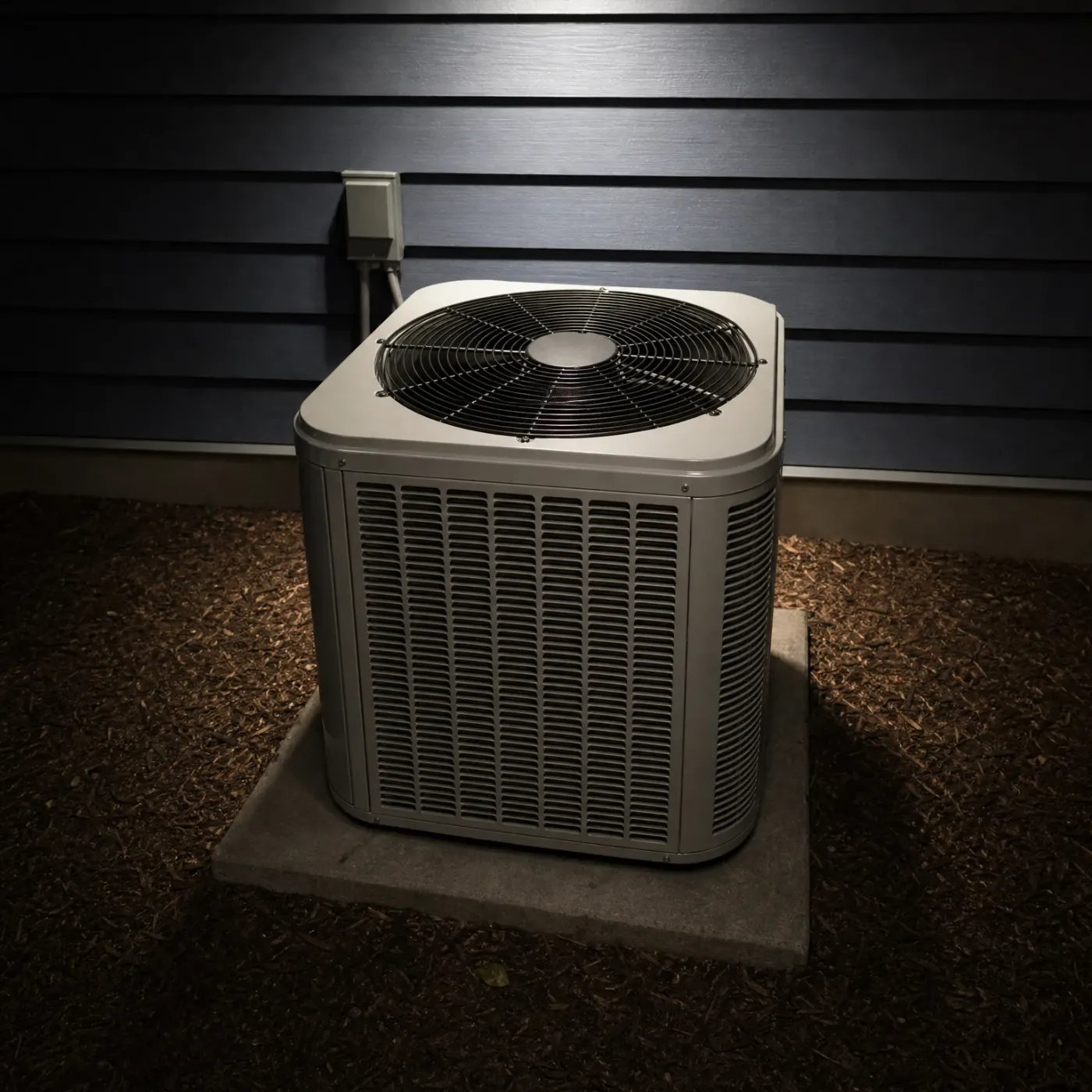
None of this means a heat pump won't heat your house. It means it won't do it alone on the coldest nights, not at standard efficiency. A heat pump built to the ENERGY STAR Cold Climate spec is tested to keep most of its heating power at 5°F, which is a different machine than the federal-minimum unit priced in the running-cost numbers above. If a heat pump is on the table here, that's the spec to ask about, not the base model.
Running cost follows the same line. At Iowa's prices, the federal-minimum heat pump works out to $1.79 per 100,000 Btu of heat, against $1.21 for a gas furnace. That gap doesn't even include what backup heat adds on the nights below 35°F. A furnace burns gas at 80 percent efficiency and gives you the same heat for less, every month the heat runs here.